Category Archives: Uncategorized

A Review of 2015 – Covers by Warhol, Blake, Voormann, Hirst & Banksy

My collection of record cover art by my favourite five artists continues to grow. 2015 provided almost fifty new covers on record and CD. The statistics show there were:
– Twenty-seven covers with Andy Warhol‘s art (eleven on CD) and four covers that were Warhol related – more of those later.
– Five covers (well three really) with Klaus Voormann‘s art,
– Five covers with Peter Blake‘s art
– Three covers with Damien Hirst‘s art
– Two covers with Banksy‘s art
– One cover with Nat Finklestein‘s portrait of Andy Warhol
– One cover with images of diverse pop artists works.

ANDY WARHOL COVERS
There were four really rare covers that I got hold of in 2015. These were:
1. Ultra Violet‘s 1973 album “Ultra Violet“, which I bought in April,
2. A copy of The Rolling Stones‘ “Sticky Fingers” nicely autographed by Andy Warhol,
3. A copy of The Rolling Stones‘ “Love You Live” autographed on the inner spread by Andy Warhol and
4. Carlos Chavez‘ “A Program of Mexican Music” with the rarer blue cover.

Other vinyl releases that I found during the year included.
“Tennessee Williams reading from The Glass Menagerie” with the alternative colour variation, I also bought two copies of The Rolling Stones‘ “Sticky Fingers“, an original US release with the title printed over the belt at the top left of the cover and the 2015 reissue with the working zipper, but with the brass drawpull in the shape of John Paiste’s “tongue” design.
Other LPs included The Velvet Underground‘s “Psychedelic Sounds From the Gymnasium” and two versions of The Velvet Underground‘s “Velvet Underground & Nico” – one a picture disc and the other the limited edition “45th Anniversary edition” with the original torso rear cover picture and a peelable banana on the front. I found a UK pressing of Artie Shaw‘s “Any Old Time“. There was also another bootleg, “In 1966 There Was…“, a double album on red vinyl and the official release “The Velvet Underground Live – With Lou Reed“. I also got hold of a Rolling Stones bootleg “Lonely at the Top“, purported to be a limited edition of only 55 copies. I happened upon a modern box set of Margarita Madrigal‘s “Magic Key to Spanish” with the original book and two LPs in a custom box that, however did not use Warhol’s art anywhere.

I also bought some vinyl singles and EPs: John Lennon‘s “Imagine / It’s So Hard” and “Jealous Guy / Going Down on Love” 7-inch singles, Debbie Harry‘s “In Love With Love” 12-inch picture disc, Diana Ross‘s “So Close / Fool for Your Love” and Paul Anka‘s “Happier / Closing Doors” 7-inch singles.

The CDs included both the Q Magazine various artists releases entitled “Lennon Covered #1” and “Lennon Covered #2“. Other official CDs were The Museum of Modern Art‘s various artists release “Open Ends: Musical Exploration in New York 1967 to 2000“, a first CD re-issue of Moondog‘s “The Story of Moondog” on the Prestige label and David Jones & Bill Shute‘s collection of children’s songs “Widdecombe Fair” with beautiful Warhol art on the gatefold cover and the CD booklet. There was also a promotional CD-r collected by MPHO (MPHO Skeef) with DJ Beware called “MPHO and the Art of Pop, Vol 1” with cover art including pictures of record covers and art works by a variety of American Pop Artists.
Sinner that I am, I also bought six bootleg CDs, three by The Rolling Stones: “Marquee ’71 + Sticky Out“, “Rare Tracks +” and “Stereo Baby“. The latter a three CD set in a foldout cover.

The Warhol-related issues included the bootleg LP of Lou Reed’s & John Cale’s “Songs for Drella” LP featuring Nat Finklestein’s Warhol portrait with tambourine and John Cale‘s live recording of “Two Songs for Drella” with cover portrait of Warhol by Robert Mapplethorpe. I also found a cheap sealed copy of “15 Minutes – Homage to Andy Warhol“. This various artists release includes four LPs, three CDs and prints by the artists featured. I am not really clear as to exactly what relationship, apart from the title,  this box set has to Andy Warhol, though.

PETER BLAKE COVERS
This was the area where I expected least and found more than I had ever expected. 2015 turned out to be an exciting year! While there was only one official release with Peter Blake‘s art I found four bootleg CDs. The official release is Mark Knopfler‘s “Tracker” LP which has a picture of Peter Blake‘s painting “I Love You” on its inside spread.

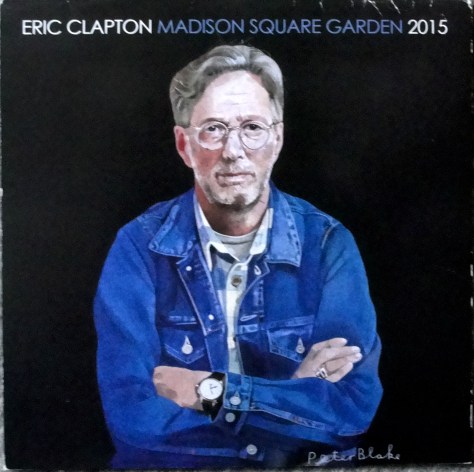
The bootleg CDs were all of concerts by Eric Clapton, who’s 70th birthday was on 30th March 2015. To celebrate this Clapton performed two concerts at Madison Square Garden in New York on May 1st and 3rd – he had intended to play the second concert on May 2nd, but the venue was booked for the New York Rangers playoff. A bootleg tripple CD was released on the Mid Valley label with the complete playlists from both nights entitled “Eric Clapton–Madison Square Garden 2015 – 70th Birthday Celebration” with a cover picture of Eric Clapton painted by Sir Peter Blake earlier in the year. Clapton followed up with seven concerts at London’s Royal Albert Hall between 14th and 23rd May. These concerts were also recorded and released in a 14 CD called “Eric Clapton–Royal Albert Hall 2015” set by Mid Valley using the same cover portrait of Eric Clapton. I managed to find the programme from both concerts on Ebay and Blake’s portrait of Eric Clapton is on both front and rear covers.
Finding these two bootlegs inspired me to look for other bootlegs of Eric Clapton’s live shows. I was amazed to find that what appears to be all of his live appearances – at least since the 1980s – seem to be available on bootlegs. However, only two of the hundreds available appeared to use Peter Blake‘s art. These are CDs of the first and fourth nights of Clapton‘s 1991 “24 Nights” series of concerts at The Royal Albert Hall. So I had to chase those, too.

KLAUS VOORMANN COVERS
I have several times thought that I had collected all of Voormann’s covers but I am continuously proved wrong. 2015 was no exception. The first cover I discovered was Harry Nilsson‘s 1982 LP “Flash Harry“, which has a 5 x 5 cm line drawing of Harry by Klaus Voormann on the rear cover. Then towards the end of the year I saw a copy of 10″ EP by Paddy, Klaus & Gibson called, not unsurprisingly “Paddy, Klaus & Gibson“. These three were the remaining members of Voormann‘s group The Eyes when guitarist/vocalist John Frankland left the band. The trio recorded three singles and it is these six songs that make up this EP. The record is a private pressing organised by orthopaedic surgeon Dr Dieter Hoffmann and only 300 copies were pressed, 100 on red vinyl, 100 on clear vinyl and 100 on back vinyl. In order to support this great effort, I ordered one copy of each vinyl colour! There is Japanese glamrock band called GLAY and Klaus drew the cover image for their 2015 CD “Music Life“.

There was, however, some not so good news – Thorsten Knublauch, from whom I had bought one of the copies of the Paddy, Klaus & Gibson 10″ – told me about a record with cover art by Klaus Voormann that I had never heard of. The record is a recording of a jazz radio programme. The cover picture is of a man lying in a hospital bed connected to drip bottles. The title is “Wer nie im Bett Programm gemacht“, or something like that. So far I haven’t been able to find a copy… So my Klaus Voormann collection is still not complete!

DAMIEN HIRST COVERS
I was surprised to see two promotional folders for Dave Stewart‘s 1992 “Heart of Stone” single appear on Ebay at ridiculously inflated prices. They didn’t sell and eventually the price came down to affordable levels when I hopped in. The CD singles came in A5 folders with slightly different texts and different catalogue numbers – explaining why I had to have both. In addition I found a promotional copy of the The Hours “Narcissus Road” CD with a cover that I had not seen before.

BANKSY’S COVER ART
There do not seem to have been any new record or CD covers that use Banksy’s cover art since 2008. I did manage to get hold of one version of Blur‘s “Think Tank” CD in a box set with postcards. Then in the last days of December I saw a copy of a test pressing of Junichi Masuda’s LP “Pokémon” with a hand sprayed image of Banksy’s “Flower Thrower” but with a coloured ball substituted for the flowers. There are purportedly on 100 copies of this test pressing and I managed to get one relatively cheap-

So, another successful year’s collecting. But I still guess that none of my collections are complete yet. So I look forward to 2016.

New cover art by Sir Peter Blake.

Towards the end of September, I came across a Rolling Stones CD with cover art by Andy Warhol that I had not seen before. A search for a possible source lead me to a seller in Japan from whom I bought a copy and thereby found myself on the seller’s mailing list. A newsletter arrived at the end of November and I scrolled through it to see if there were any another Stones CDs with Warholian art that I had missed–with no success. BUT–there was a CD box with a portrait of Eric Clapton that looked suspiciously like a recent Peter Blake portrait. Enlarging the cover picture showed that it really was by Peter Blake–and even had his signature. This was a 14 CD box of all seven concerts that Clapton played at London’s Royal Albert Hall between 14th and 23rd May 2015 to celebrate Clapton‘s 70th birthday that was on 30th March. The set is released on the Mid Valley label and must be a bootleg.
EC-RAH-2015_fr

Further Internet searches showed that Clapton had also played two concerts at Madison Square Garden on 1st and 3rd May as part of his birthday celebrations. There had been a common programme for all nine concerts–a LP-sized book with the same picture on one cover and the same portrait of the other but with the Madison Square Garden text.

EC-program-bk

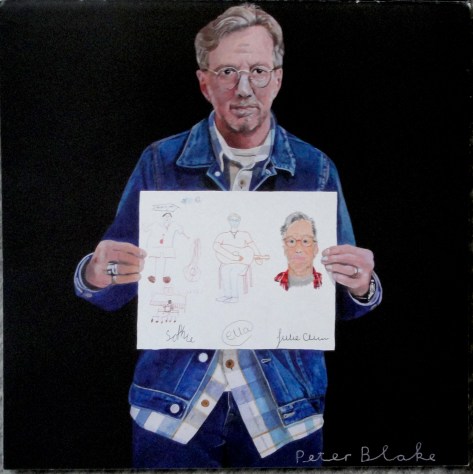
So I bought a copy! Inside was a further portrait of Eric holding a card with other  portraits, drawn by his daughters, Sophie, Ella and Julie:
EC-Program-inner

Well, I had to have the CD box to “complete” my collection of Peter Blake covers but when I returned to the Japanese site it was listed as being out of stock! A feverish Internet search ensued which eventually lead me back to an Ebay seller in Japan who had copies for sale and within four days it had arrived! And then I had another surprise. The same seller advertised a 3 CD set of the Madison Square Gardens concerts! The cover art was again taken from the programme cover:
EC-MadisonCD

So I placed an order for this one, too.

I then noticed that there was an official album of Clapton‘s Royal Albert Hall Concerts released on CD, DVD and vinyl called “Slowhand at 70 – Live at The Royal Albert Hall” but the cover art is not by Peter Blake.
Slowhand_at_70
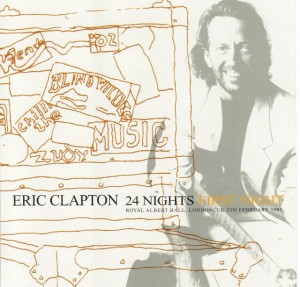
And then I started googling Eric Clapton bootlegs. I was astounded by the number available. It would seem that almost every concert Clapton has played since the early 1990s has been bootlegged. Thus it is completely logical that Reprise Records released a double CD and Double LP of Clapton‘s 1991 “24 Nights” series of concerts at The Royal Albert Hall in order to cash in on the interest in his live performances. I found that there were several bootlegs of individual concerts from the “24 Nights” series available. The majority had covers showing photographs of Clapton in various poses take at the concerts, but two–one with a recording from the first night (5th February 1991) and one from the fourth night (9th February 1991) used some of Peter Blake‘s drawings from the cover of the official release. Here is the “First Night” cover:
ericclap-24nights-first-night-300x287

and here is the “Fourth Night“:
ericclap-24nights-fouth-nights-300x294

The “First Night” is a double CD while the “Fourth Night” is a double CD-r.

These four CD sets are the first bootlegs that I have been able to discover that use Peter Blake’s art. I wonder if he knows about them? Probably not!

I shall continue to search for others.

Lou Reed & John Cale – Songs for ‘Drella’ and The Velvet Underground reunion

In 1968 John Cale and Lou Reed had fallen out during the recording “White Light / White Heat”, The Velvet Underground’s second album. They vowed not to play together again. However, they met at Andy Warhol‘s memorial service at St Patrick’s Cathedral on April 1st 1987 after having not had any contact with each other for many years. Apparently, Julian Schnabel suggested that they write a memorial album for Andy.

Warhol superstar Ondine had nicknamed him “Drella“–a contraction of Dracula and Cinderella and Reed and Cale decided to call their work “Songs for Drella“. They previewed the work at Brooklyn’s St. Anne’s Church in two concerts on January 8th and 9th 1989 before it was  complete.And these concerts were recorded and a bootleg LP appeared.
Warhol by Finkelstein

DoubleWarhol

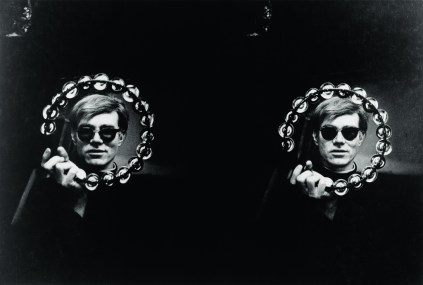
The record cover was a silkscreened copy of Nat Finkelstein‘s 1965 portrait of Andy Warhol holding a tambourine. John Cale recorded a single with two songs from the “Songs for Drella” project live on 27th July, 1989. These were “Style It Takes / Forever Change“. The cover showed two contractions of Robert Mapplethorpe’s portrait of Andy Warhol (C The Robert Mapplethorpe Foundation).

AW by RM

Cale_Drella_fr

The complete work was performed at a series of concerts in November and December 1989 and one performance filmed and released on DVD and Laserdisk. Reed and Cale recorded the work over the following two months for an album, which was released by Sire Records on 24th April 1990 on standard CD, a limited edition Digipak CD and on LP.

SongsForDrella
“Songs for Drella” CD with a Warhol self-portrait visible behind Lou Reed and John Cale.

A single “Nobody But You / Style It Takes” was released from the album.

A tour proved out of the question although Cale and Reed did perform together again in 1990 in Paris. They were joined by Sterling Morrison and Mo Tucker to play “Heroin“. This concert was also recorded and released on a bootleg entitled “Paris 1990“, with fluorescent cover art on a black background. The front cover showed a Warhol lily and the rear a portrait of Warhol in a diamond-shaped lozenge.

VU_PAris1990_fr_600

VU-Paris1990_bk

The arrival of Morrison and Tucker at the Paris concert lead to a further reunion concert in 1993 that was also recorded and released on CD and Laserdisk entilted “The Velvet Underground Redux Live MCMXCIII” and later as a four-LP set with Warhol’s banana as the cover art.

VU_1993_Laser_fr_600


The [Almost] Complete List of 45 RPM singles and EPs with Andy Warhol Cover Art

I started to compile a list of all vinyl singles (seven and twelve inch) and extended play (EP) 7-inch records early in 2013  (see Andy Warhol Art on 45s, Part 1) and published it on 26th June 2013 with the intention of completing the list within a couple of weeks. However, the challenge proved greater than I had anticipated and it has taken me just over two years to get anywhere near a reasonably complete list of all the 45 RPM records that have cover art by Andy Warhol. Experience has taught me never to claim that a list like this is complete but this is as near as I can get just now. I am sure that more records will turn up as soon as this list is published. So, if you can see that I have missed any, do not hesitate to contact me and I will add them to the list.

Just a note about the conditions for inclusion on my list.
1. I have omitted compact disc singles – obviously, they are not on vinyl.
2. I have also excluded singles whose covers simply have a picture of the parent album on the reverse.
3. I have omitted European pressings of RCA singles that simply repeat the American issues.

My apologies for including the records listed in Part 1 of this list. I felt it best to make a new chronological list.

Note: No. 13 on this list, “Progressive Piano” was scheduled for release by RCA as a 10-inch LP and a 2 x 7-inch EP set, but appears never to have been issued. Only lithographs of the cover design exist in The Warhol Museum.

While on the subject of RCA EPs released in the 1950s, I would point out that the company released Byron Janis‘ recording of “Rhapsody in Blue / Grand Canyon Suite” and Erica Morini‘s recording of Tchaikovsky‘s “Violin Concerto” on both on LP and as 3 x 7-inch EP sets. The third RCA Bluebird record with illustration attributed to Andy Warhol is the “Porgy & Bess / Symphonic Dances” album also released on LP and, I suspect, even as a 3 EP set. I have thus far never seen the EP set of this recording so I have not included it in my list.

On 10th June 2015 The Rolling Stones‘ Album “Sticky Fingers” was rereleased on both vinyl and CD with added tracks. A box set including a repressing of the “Brown Sugar / Bitch / Let It Rock” EP was included in the box set with the same cover as the 1971 and 2011 versions, using the rear cover photo from the “Sticky Fingers” album on the rear.

45-List-croppedSo, there is my latest attempt at a complete list. Suggestions for additions are very welcome.

“Ultra Violet” – an album by Ultra VIolet

Isabelle Collin Dufresne (1935-2014) was born and educated in France but moved to New York aged about 18 to live with a sister. She met Salvador Dali and became his lover. Dali introduced her to Andy Warhol in 1963 and, at Warhol’s suggestion, she took the moniker “Ultra VIolet” – a reflection of her habit of dying her hair violet of purple. She was an artist in her own right and an author, publishing an autobiography entitled Famous for 15 Minutes: My Years with Andy Warhol in 1988.

One aspect of her career that Wikipedia fails to mention is the recording of an LP in 1973. Capital Records A & R man Jeffrey Cheen heard Ultra Violet singing in a club and approached her after the show to suggest she record an LP. According to the interview Paul Maréchal had with her in 2008, she took singing lessons after the invitation to make the record and these significantly altered her singing style, much to Cheen’s disappointment. He felt her voice before the singing lessons had a more natural feel. Ultra Violet designed the cover at The Factory. Warhol had taken a number of Polaroid pictures for the cover but Ultra Violet and Warhol could not agree as to which to use, so Ultra Violet chose a photograph taken in 1967 by photographer/jazz record producer Lee Kraft, which showed Ultra VIolet’s profile poking her tongue out. One of Warhol’s Polaroid pictures was placed on the back cover.

Back cover of Ultra Violet's 1973 album with Warhol's Polaroid picture.
Back cover of Ultra Violet’s 1973 album with Warhol’s Polaroid picture.

Ultra Violet, in her interview with Paul Maréchal said that the album was never officially released, but copies were pressed and packaged and a number have found their way into collectors’ hands. Almost half of these copies have holes punched through the cover at top right, indicating that these albums are cut-outs, that could be sold at a lower price that the official $5.98 retail price. Some experts suggest that the hole indicates that the album was a promotional copy, but I doubt this.

Ultra Violet cover with cut-out hole at top right.

No one knows how many copies of the record exist. There are sixteen listed on Popsike.com, seven of which have the cut-out hole. There are only two copies catalogued on http://www.rateyourmusic.com, so I would hazard a guess that less than fifty copies in total have come to light, making this one of the rarest covers associated with Andy Warhol.

Andy Warhol – The Complete Commissioned Record Covers 1949-1987

Collectors of Andy Warhol’s record cover art  – and there are quite a few of them – have been waiting for this second edition of Paul Maréchal’s seminal work for quite some time. It was hoped that it would be launched during the “Warhol on Vinyl” exhibition at The Cranbrook Art Museum, but this was not to be. Anyway, it dropped into my lap yesterday. Paul Maréchal is an expert on Andy Warhol’s printed commercial works and has published “The Complete Commissioned Posters, 1964-1987” and “The Complete Commissioned Magazine Work” in addition to his seminal “Andy Warhol – The Record Covers, 1949-1987 – Catalogue Raisonné”, which was published in 2008 to coincide with the “Warhol Live” exhibition in Montreal.

It is amazing to think that not too much was known about Warhol as a designer of record sleeves prior to the arrival of Maréchal’s book and many people have become collectors because of it. Consequently, prices of the rare covers have escalated quite dramatically since it was published. Another result of the publication is the recognition that there may be more, as yet “undiscovered” record sleeves to be found and, so has proved the case. So it seems timely that a new edition of the book should appear.

So, who is this book for? Well, it will look great on the coffee table of any aficionado of vinyl record art. It is also a useful reference for potential sellers on Ebay and other online auction sites. But it doesn’t work for dedicated collectors of Warhol’s record cover art.

I regard myself as a fairly knowledgeable collector of Andy Warhol’s record cover art. I am a sort of purist in that I do not collect parodies of Warhol’s art on record or CD covers, but I do admit bootlegs and records and CDs released after 1987 (and there have been a considerable number). To date, I have over 120 individual covers in my collection. And “The Complete Record Covers, 1949-1987” comes as a disappointment to me. “The Complete Record Covers, 1949-1987” is in effect a reprinting of the first edition with the addition of twenty-one pages describing six “new discoveries”. Unfortunately the main part of the book has not been updated in any major way. I feel sure that Mr Maréchal has managed to find better examples of the covers pictured in the seven years since the first edition. He has not corrected some obvious errors and I shall bore you all by listing what I have found in the twenty-four hours since I got my copy home.

I will go through some issues that I have:
Cover No. 1: “A Program of Mexican Music”: There is a (rarer) blue version of this cover, which is not mentioned.
Cover No. 2: “Alexander Nevsky“: Pictured here is the green version of the cover, which along with a pink and orange version is a late 50s-early 60s reissue. The original 1949 cover was blue. We know that the green, pink and orange covers contained reissues as the record labels are the so called “six-eye” design rather than the dark blue Masterworks labels used in the late 1940s. Further his description of the standard format of early LP covers on the Columbia label omits the fact that it was the Company’s legendary art director Alex Steinweiss, who designed the basic format for these early covers with bold blocks of colour.
Cover No. 6: “Madrigal’s Magic Key to Spanish”: This description should have been totally rewritten. We know now that there were only two volumes of records, not the “at least five records” that are mentioned in the book. In addition, I am convinced that Maréchal or one of his collector associates could have found a better looking copy to photograph for the book.
Cover No. 7: “William Tell / Semiramide Overtures“. The book mentions that there is a double 7-inch EP set of this recording in addition to the 10-inch LP version pictured. But there are, in fact, at least two printings of the EP’s cover with differing rear covers. I would have like to see both variations pictured.
Cover No. 13: “Chopin Nocturnes” played by Jan Smeterlin: Pictured is volume II of a two record set. The “Complete Nocturnes” in a slip case is mentioned but I feel that pictures of all three would warrant a place.
Cover No. 16: The Joe Newman Octet – “I’m Still Swinging“: The various 45 RPM EPs are mentioned. They differ from the pictured LP in that the title is in blue rather than red. Picturing these would be a bonus for collectors. However, I don’t think adding pictures of the EPs from LP Cover No. 17 would add extra information, though they could be shown for completeness. Cover No. 22: “The Story of Moondog“: I confess I like the worn and dogeared picture of this cover shown in the book. The album is very rare and I imagine finding a better copy would be difficult, so I wouldn’t change it. Mention might, however, be made of the reissues of this LP (and this applies to the Archie Shaw as well).
Covers Nos 20, 21, 23 and 24: Kenny Burrell “Kenny Burrell“, Johnny Griffin “The Congregation” and Kenny Burrell “Blue Lights, Volumes 1 and 2“: There have been numerous reissues of these covers that could be mentioned. There are colour variations of the last two that perhaps could have been pictured.
Cover No. 24: “Tennessee Williams Reading from The Glass Menagerie…” A number of colour variations of this cover have appeared since the first edition of the book and some have the record’s catalogue number at bottom right rather that at the top.
Cover No. 25: I love this cover! So much so that I recreated it in 2013 for my own collection to celebrate the 50th anniversary of its production. Maréchal own one of the original 75 signed and numbered copies on a white background. This work was created by Warhol together with Billy Klüver and produced these by spray-painting record sleeves and then silkscreening the text – which was obviously borrowed from a newspaper advert or a supermarket sign – onto the coloured cover. As Maréchal notes in the book – there are five colour variations. White, red, green, yellow and orange. And I have never seen a picture of the orange cover. Maréchal speculates that the white defects on his cover are caused by the ink being applied too thickly and later peeling off. Having silkscreened this design myself I can inform him that the defects occur naturally as the paint is pulled over the screen. A set of my reproduced “Giant Size $1.57 Each” resided in The Cranbrook Art Museum as part of its collection of Warhol vinyl records.
Cover No. 27: The East Village Other “Electric Newspaper – Hiroshima Day – USA Vs Underground“: Maréchal motivates the inclusion of this album because of the Warhol’s contribution to the record – a track called “Silence“. Maréchal credits Warhol as the composer, stating he composed it in 1932. Which he notes as being highly unlikely. Possibly this short track is a homage to John Cale’s 4:33 a record of silence. Anyway, the cover has nothing to do with Warhol or The Factory and, in my opinion, has no place in this book.
Cover No. 29: “The Velvet Underground & Nico“: This is possibly Warhol’s most important and famous record cover. The record certainly is one of the most important records in popular music. The story behind the cover is more complicated than is stated in the book. The cover is remarkable for a number of reasons not mentioned. First, gatefold covers were unusual in 1967 and generally reserved for double albums. The Beatles’ “Sgt. Pepper’s Lonely Hearts Club Band” released after “The Velvet Underground & Nico” was another exception. The original rear cover of “The Velvet Underground & Nico” showed a photo of the band in concert with a light show showing the actor Eric Emerson, who had not been consulted in advance. When Emerson saw the cover he demanded payment. Rather than pay Verve Records, who released the album, recalled as many copies as they could find and stuck a large black label over the photograph. The photograph was airbrushed to remove Emerson on later printings. I feel this could have been mentioned and, as this is such an important recording, even pictures of the various printings included. Interestingly, recent reissues of this LP have included Emerson’s portrait.
Cover No. 32: The Rolling Stones “Sticky Fingers“: Along with “The Velvet Undergound & Nico” this is another of Warhol’s most important and best-known covers. There are subtle differences between the US and European releases of this album with the band’s name and the record title placed over the model’s right thigh on the European version and placed over the belt on the US version. Further there are other records that use the same design; a Mexican single (“Azucar Morena“) and EP and the European “Brown Sugar” single used the album’s rear cover design on the rear of the single’s picture cover. There was even a shaped picture disc that used the same design. The cover’s zipper originally had a large handle (if that is the right word) but this had to be changed to the smaller handle pictured in the book as it damaged covers packed together with them.
Cover No. 34: Ultra Violet “Ultra Violet“. Ultra Violet is quoted in the book as saying that this album was never released. It certainly is rare and only about twenty copies have appeared on Ebay. Almost half of these have the hole cut at the cover’s top right – a sign that the album is a “cut out” and therefore could be sold in record sales for a lower price than the recommended standard price. This suggest to me that the record was actually released, although Capitol Records could have pressed up a number of copies and then just decided to put them out on sale. There is a film of Warhol’s involvement in the making of this cover in The Warhol Museum.
Cover No. 36: The Rolling Stones “Love You Live“: Most original copies of this double album have coloured inner sleeves. There are promo copies with black and white inner sleeves (with the same design as the standard ones) and some later reissues also have these black and white inner sleeves (that actually look like silver – a colour Warhol loved). What is missing from Maréchal’s book is a mention of the promotional EP for this record, simply called “The Rolling Stones“. The cover shows four of the Polaroid pictures used in the cover design and on the plastic tablecloth pictured in the book. There is even a picture disc of the promo EP, which Guy Minnebach suspects is a bootleg.
Cover No. 40: Loredana Berté “Made in Italy“: According to Maréchal, Berté met Warhol in New York and cooked him Italian dishes. Christopher Makos took the photograph used on the cover and on a couple of singles (not mentioned in the book). I’m not one hundred percent convinced that Warhol was “commissioned” to do this cover and I am in two minds as to whether or not it should be included. Okay, it is a Factory product, so it’s in.
Cover No. 43: Original Soundtrack “Querelle“: No mention here of the single “Every Man Kills the Thing He Loves” taken from the album with the same cover picture.
Cover No. 44: The Rolling Stones “Emotional Tattoo“: This bootleg album first appeared in 1983. There were two versions (in identical covers) one on black vinyl and one on orange vinyl. This album is the only bootleg with Warhol art that is pictured in the book, although mention is made in the album’s description of three other bootlegs; Debbie Harry’s picture disc which is called “French Kissin‘” (in fact it is an LP entitled “Picture This!“), a Velvet Underground bootleg entitled “More Bermuda Than Pizza” (available as both a black vinyl LP and a picture disc) with artwork credited to Warhol – but it doesn’t look like Warhol’s work. And The Falling Spikes “Screen Test: Falling in Love With the Falling Spikes” which uses a detail from Warhol’s “Flowers” print. There are three cover variations of this last bootleg. I feel that if “Emotional Tattoo” is included, then several more bootlegs should be too. I’ll return to some other important ones later.
Cover No. 45: Miguel Bosé “Made in Madrid” and “Milano-Madrid“: The “Fuego ” single is mentioned but not the “Non Siamo Soli” single. There is even a 12-inch version of “Fuego“.
Cover No. 47: “The Smiths“: It is stretching it to include this cover as Warhol was certainly not commissioned to do this one. Cover No. 50: Debbie Harry “Rockbird“: This cover is a Stephen Sprouse design. He obtained Warhol’s permission to use the Camouflage painting as a backdrop to the portrait of Debbie Harry taken by “Guzman”. Guzman is the Canadian duo Constance Hansen & Russell Peacock and I think they should be named in the book. Warhol was certainly not commissioned to do this cover! But it is very much in a Warholian style with four colour variations.
Cover No. 51: MTV “High Priority“. Warhol’s last cover not completed before his death in February 1987. Since the first edition of the book, a second variation of this cover has been found with the shading to the “M” of MTV logo in yellow rather than the commoner red. Also, the yellow version has the song titles on the front cover in black and does not have a barcode on the rear suggesting to me that it may have been a promo.

Now onto the “New Discoveries“.
Covers Nos. 54 and 55: RCA Victor Bluebird releases. Byron Janis and Erica Morini. These LPs, probably released in 1957, are generally accepted as having illustrations by Warhol. There is, however, a third LP in the series – excerpts from “Porgy and Bess” coupled with Grieg’s “Symphonic Dances” (LBC 1059) that has an illustration suspiciously like a Warhol drawing. This one is not included. I wonder why.
Cover No. 56: Walter Steding “Secret Spy“: Interesting that this cover is included. It has pictures from Warhol’s music video. But there is another cover with similar provenace – Curiosity Killed the Cat’s video for their “Misfit” single. Warhol even appears in this video. Why isn’t this single included? The Swedish band Enola Gay released a single “Döda djur” in 1981 with Warhol’s picture “The Kiss” featuring Bela Lugosi. Should his be included? And why not include The Silver Apples’ “Fractal Flow” single with its Warhol portrait of band member, and former Factory associate, Simeon. Should Lou Reed & John Cale’s “Songs for Drella” and the single “Nobody but You” also be included?

So, now what about those bootlegs and later recordings? In his essay on Cover No. 29 (“The Velvet Underground & Nico“), Maréchal mentions Warhol’s film “Symphony of Sound” (1966). Stills from this film have been used on at least two album covers; “The Velvet Underground Live With Lou Reed” – an official release on the Mercury label – and on a bootleg. Then there are at least three other Velvet Underground bootlegs: “Paris 1990“,which features a fluorescent Warhol flower on the cover,  “NYC” and “Orange Disaster” – both with prints from Warhol’s “Deaths and Disasters” series. Another Rolling Stones bootleg “Lonely at the Top” appeared in late 2014, probably too late for a mention in this volume, which reused one of Warhol’s Mick Jagger portraits on its cover. And while on the subject of The Rolling Stones and Warhol’s Jagger portraits, there is a black and white version of the same portrait as used on the “Emotional Tattoo” and “Lonely at the Top” albums on the rear cover of Suntory D R Y Beer’s bootleg “Mick Jagger in Japan” (1988).

And on to CDs.
Maréchal does not mention any CDs. But here is just a list of some of the ones I know about.

1. Cultura by Cultura (2004)
2. Tobias Picker/Marc Bliztstein – “Keys to the City/Piano Concerto” (1988)
3. Christopher Galitas – “The Mystery of Do-Re-Mi” (2008)
4. Russell Means – “Electric Warrior” (1993)
5. “Andy Warhol from Tapes” – book with CD from the inaugural show at The Warhol Museum (1994)
6. Paul Anka -“Amigos” (1996)
7. Paul Anka & Ricky Martin – “Diana” (1996)
8. Paul Anka & Anthea Anka – “Yo Te Amo” (1996)
9. Karl-Aage Rasmussen – “Three Friends” (1998),
the list goes on and on… (I have compiled a better list in another Recordart post. Check that out if you are interested.

My final conclusion
Serious collectors of Andy Warhol’s record cover art were certainly hoping for great things from this second edition of Paul Maréchal’s seminal book. However, I think Prestel must have pressured Paul Maréchal to keep the new edition cheap by reusing all the pages from the first edition and only allowing the addition of the “New Discoveries”. I am sorry for him that this opportunity to make a really superb second edition was thwarted. I am sure he would have liked to have been able to do a better job. Maybe he will do it some day.

Icon Worship – Kate Moss on Record Covers

My blog is usually about record design and some of my favourite cover designers. This post is about an icon who appears on record covers.

According to a dictionary an icon is either: a devotional painting of Christ or another holy figure, typically executed on wood and used ceremonially in the Byzantine and other Eastern Churches, OR
a person or thing regarded as a representative symbol or as worthy of veneration.

I don’t suppose anyone would argue that supermodel Kate Moss is a 21st Century icon. Her face is on the covers of fashion magazines and there are coffee table books of photographs of her. She has even appeared on record sleeves. The first one that I have been able to identify is Dirty Funker‘s “Let’s Get Dirty” which used Banksy‘s Kate Moss portrait from 2005

Banksy's Warhol style Kate Moss portraits (2005)
Banksy’s Warhol style Kate Moss portraits (2005)

Apparently Kate Moss bought one but it was stolen in 2010 together with other Banksy works that she had bought.

Dirty Funker‘s use of Banksy‘s Kate Moss’ portrait on his record sleeve was not authorised by Banksy. But hey ho, who cares? A first pressing showed only Moss‘ face with no title or other text, while a second (more common) had a black Dymo tape with the record’s title across Moss‘ eyes on the front and across her mouth on the rear.

LetsGetDirty_1st_150

First and second pressings of Dirty Funker's "Let's Get Dirty" 12-inch single.
First and second pressings of Dirty Funker’s “Let’s Get Dirty” 12-inch single.

The February 2008 number of TAR Magazine contained a photographic essay of Kate Moss. And the magazine’s cover was adorned with Damien Hirst‘s portrait of Kate, with the right side of her face dissected down to the muscles.

TAR Magazine cover and the record sleeve.

624e2a543996df02ffa92fc2bee036be
The following Year Hirst released a single-sided 12-inch single in an edition of 666 copies pressed on white vinyl that used the TAR Magazine picture on its cover.

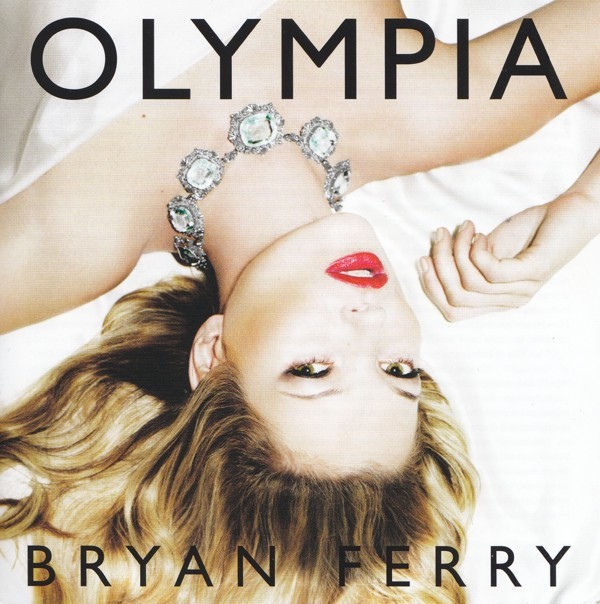
Bryan Ferry released his thirteenth album “Olympia” on 25th October 2010. The album was released as a CD, CD with DVD, a collectors’ edition with extra tracks as well as a limited edition LP. He seems to have been besotted with Kate as the album and five singles’ covers taken from it all bear Kate‘s portrait. There is a video of the photo shoot for the cover photo

The Olympia cover.
The Olympia cover.

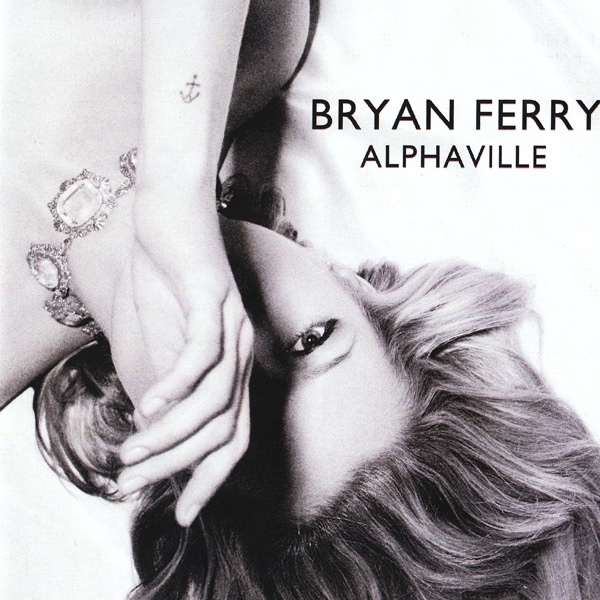
The Vinyl Factory in London released five limited edition 12-inch singles from the album in 2010 and 2011. All with cover photographs of Moss. These are “You Can Dance” (2010), “Shameless Remixes” (2010), “Alphaville” (2011), “Heartache by Numbers” (2011) and “BF Bass (Ode to Olympia) (Remixes)” (2011). The portraits of Kate Moss on these covers are by british photographer Adam Whitehead (born 1973).

You Can Dance cover.
Shameless Remixes cover.
Alphaville cover.
Alphaville cover.
The limited edition version of Alphaville.
Heartache By Numbers cover.
BF Bass (Ode to Olympia) Remixes cover.

Thus I have been able to find ten covers with portraits of Kate Moss released in less than 10 years. I think this fulfills the second definition of an icon. Perhaps I have missed a cover or two. Readers are very welcome to let me know of any I have missed.

More additions to my Warhol cover collection

When I first tried to collect all known record covers designed or illustrated by Andy Warhol I counted about sixty-five covers. I wanted to put on an exhibition of his record covers and but I had little knowledge about his early work in the 1950s and had no idea there were colour variations of some of the early covers. Paul Maréchal’s book “Andy Warhol: The Record Covers 1949-1987. Catalogue Raisonné” had not yet been published. I had the great good fortune to have made contact with Warhol collector Guy Minnebach who helped put on the exhibition by lending some of these early covers.

Since 2008 there has been an enormous amount of new knowledge about Warhol’s record cover art, greatly aided by Paul Maréchal’s book. Several record covers have been identified as being illustrated by Warhol. So the search has continued. Over the past months I have managed to find a further four Warhol sleeves; two vinyl covers and two CDs.

There has been considerable debate as to whether the three albums released in 1957 on RCA Victor Bluebird Classical label were illustrated by Warhol. However, they are now generally accepted as being Warhol covers. These three albums are:
– Byron Janis: Gershwin’s “Rhapsody in Blue” coupled with Grofé’s “Grand Canyon Suite” (LBC-1045)
– Indianapolis Symphony Orchestra (Sevitsky, cond.) Gershwin’s “Porgy and Bess” coupled with Grieg’s “Symphonic Dances” (LBC-1059).
– Erica Morini: Tchaikovsky’s “Violin Concerto” (LBC-1061)
I suppose the acid test of their acceptance will be seeing whether they are included in Paul Maréchal’s new book “The Complete Commissioned Record Covers” due to be published in early 2015. [Note added January 21st, 2016: The second edition of Maréchal’s book includes the Tchaikovsky “Violin Concerto” but does NOT include the “Porgy & Bess / Symphonic Dances” covers.)

Tchaikovky's Violin Concerto.
Tchaikovky’s Violin Concerto.
Cover of the "Porgy & Bess / Symphonic Dances" album.
Cover of the “Porgy & Bess / Symphonic Dances” album.
Byron Janis recording of "Rhapsody in Blue" and "Grand Canyon Suite".
Byron Janis recording of “Rhapsody in Blue” and “Grand Canyon Suite”.

Rarest of these three is, without doubt, the “Porgy and Bess / Symphonic Dances” and I had been looking for a copy since 2008 and just before Christmas 2014 I found one in lovely condition that I could afford. That completed my collection of the three Bluebird Classics albums.

From the sublime to the cor blimey. Like most other collectors of Warhol covers I keep regular checks of what is on sale on Ebay and other internet markets. There is one seller from Germany who manages to find some interesting records and CDs with covers by famous artists, not only by Warhol. It is always worth checking what is on offer on that site. Then trying to find the same item cheaper elsewhere. Well, I saw the Diana Ross “So Close” 7-inch single in a poster pack on the site with a ridiculous starting price. So the search began to find a cheaper copy. About ten minutes later the mission was accomplished.

The Diana Ross "So Close" single in its poster cover.
The Diana Ross “So Close” single in its poster cover.

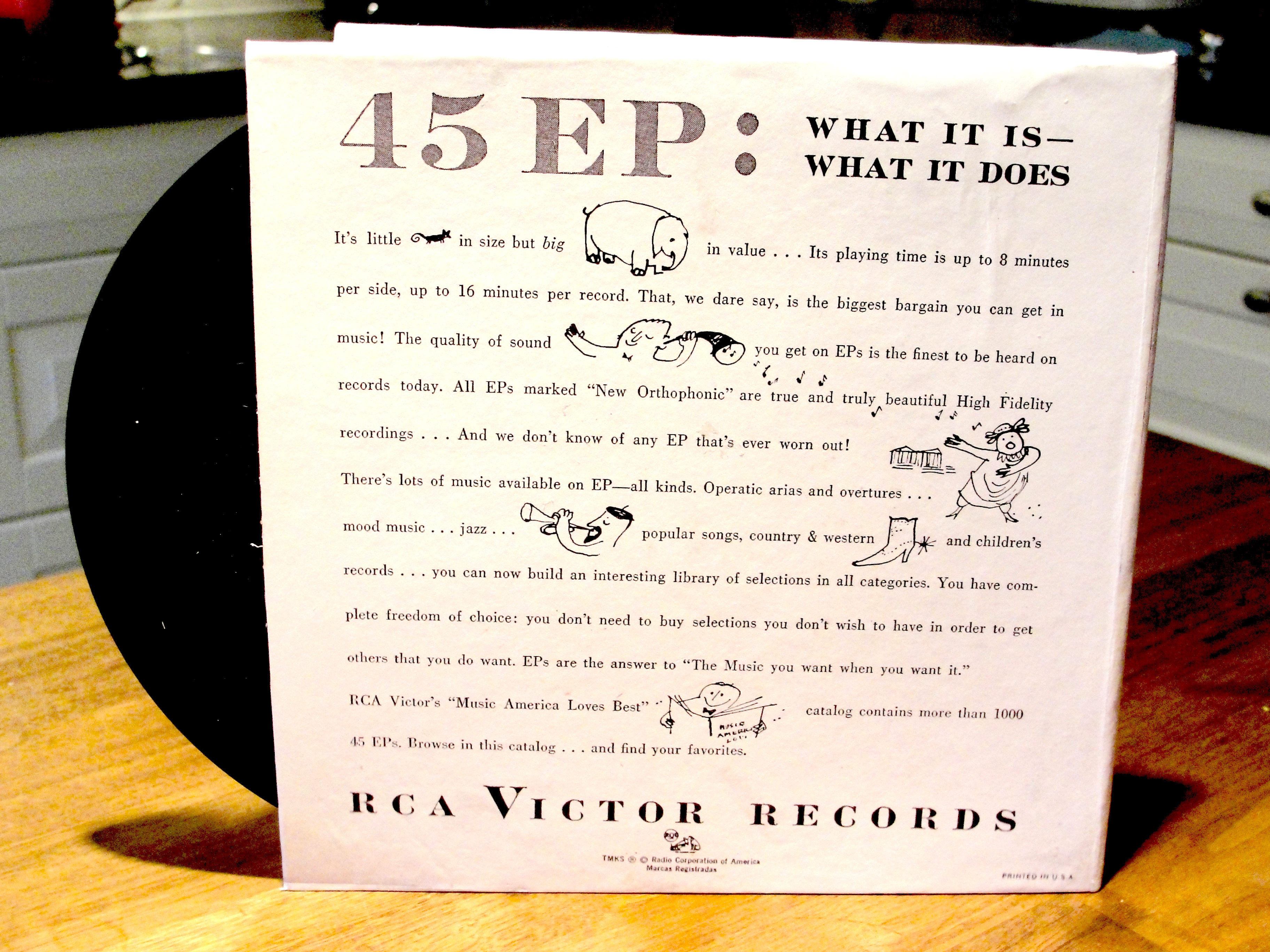
As readers of this blog may remember I have made mock ups of several extremely rare early Warhol covers. Among these was a cover for a double EP with the”Progressive Piano” design. As Warhol cover collectors know this disc was never released, but I wanted to add the cover to my collection. Lithographs of cover designs for both a 10-inch and 7-inch version exist in The Warhol Museum. So, having found the front cover image, I needed to find a rear cover that would possibly have been used. I went to the double EP of Toscanini’s recording of the William Tell and Semiramide Overtures on the RCA Victor label. It transpires that there are at least two variants of the rear cover design. The one I used is:

The rear cover used on the "Progressive Piano" mock-up.
The rear cover used on the “Progressive Piano” mock-up.

I have now managed to find the record with the alternative rear cover:

The alternative rear cover on the "William Tell" Overture" .
The alternative rear cover on the “William Tell” Overture” .

Perhaps I shall decide to make an alternative “Progressive Piano” sleeve using this rear cover.

Again, I saw a couple of CD from this German Ebay seller; both at rather inflated prices. One is a various artists CD called “Open Ends: Musical Exploration in New York 1960-2000” released in 2000 by the Museum of Modern Art. The cover image is nine of Warhol’s 1967 self portraits. ANd I found a cheaper copy after a short Internet search.

The booklet from "Open Ends: Musical Exploration in New York 1960-2000". Released by the Museum of Modern Art.
The booklet from “Open Ends: Musical Exploration in New York 1960-2000”. Released by the Museum of Modern Art.

Also on the German seller’s site was a CD entitled “The Mystery of Do-Re-Mi” with baritone Christopher Gabbitas accompanied by lutist David Miller with a starting price of $49. I found one on Amazon for $4. The cover uses a detail of Warhol’s rendering of Botticelli’s “The Birth of Venus” from his Renaissance Details series from 1987. Another CD that used another image from the same series was Karl-Aage Rasmussen’s “Three Friends: Works for Symphonetta” from 1993 that uses Warhol’s “The Annunciation”.

"The Mystery of Do-Re-Mi" by Christopher Gabbitas and David Miller. Image from Warhol's "Birth of Venus".
“The Mystery of Do-Re-Mi” by Christopher Gabbitas and David Miller. Image from Warhol’s “Birth of Venus”.

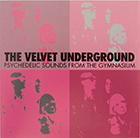
I also thought I had bought a copy of The Velvet Underground’s bootleg LP “Psychedelic Sounds From the Gymnasium”. But, I had not read the article description and was somewhat disappointed to find that I had ordered the CD. But the cover image is the same as that on the LP.

The Velvet Underground's "Psychedelic Sounds From the Gymnasium".
The Velvet Underground’s “Psychedelic Sounds From the Gymnasium”.

So there, I have been able to add another six Warhol covers added to my collection. There are still more out there. Some extremely rare and some not so rare. I will never manage to collect all the record and CD covers that have art by Andy Warhol, but I’m going to keep trying.

The Sources of Andy Warhol’s record cover art, Part 1 – The 1975 portraits of Mick Jagger

I have been planning a series of posts on the sources of Andy Warhol’s record cover art. Here comes the first of what I hope to be many. And I have chosen to start with some bootlegs – the source of the Mick Jagger portraits used on the “Emotional Tattoo” and “Mick Jagger in Japan” albums.

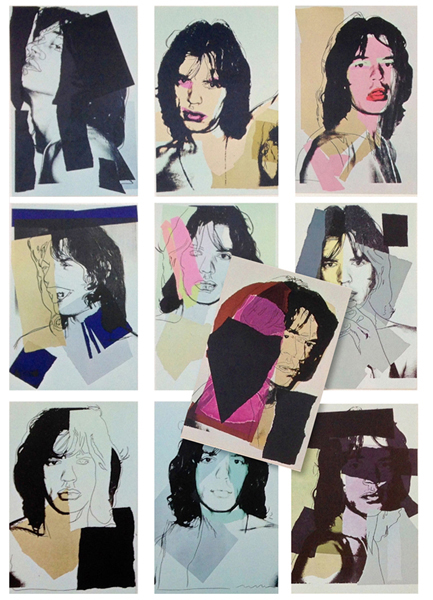
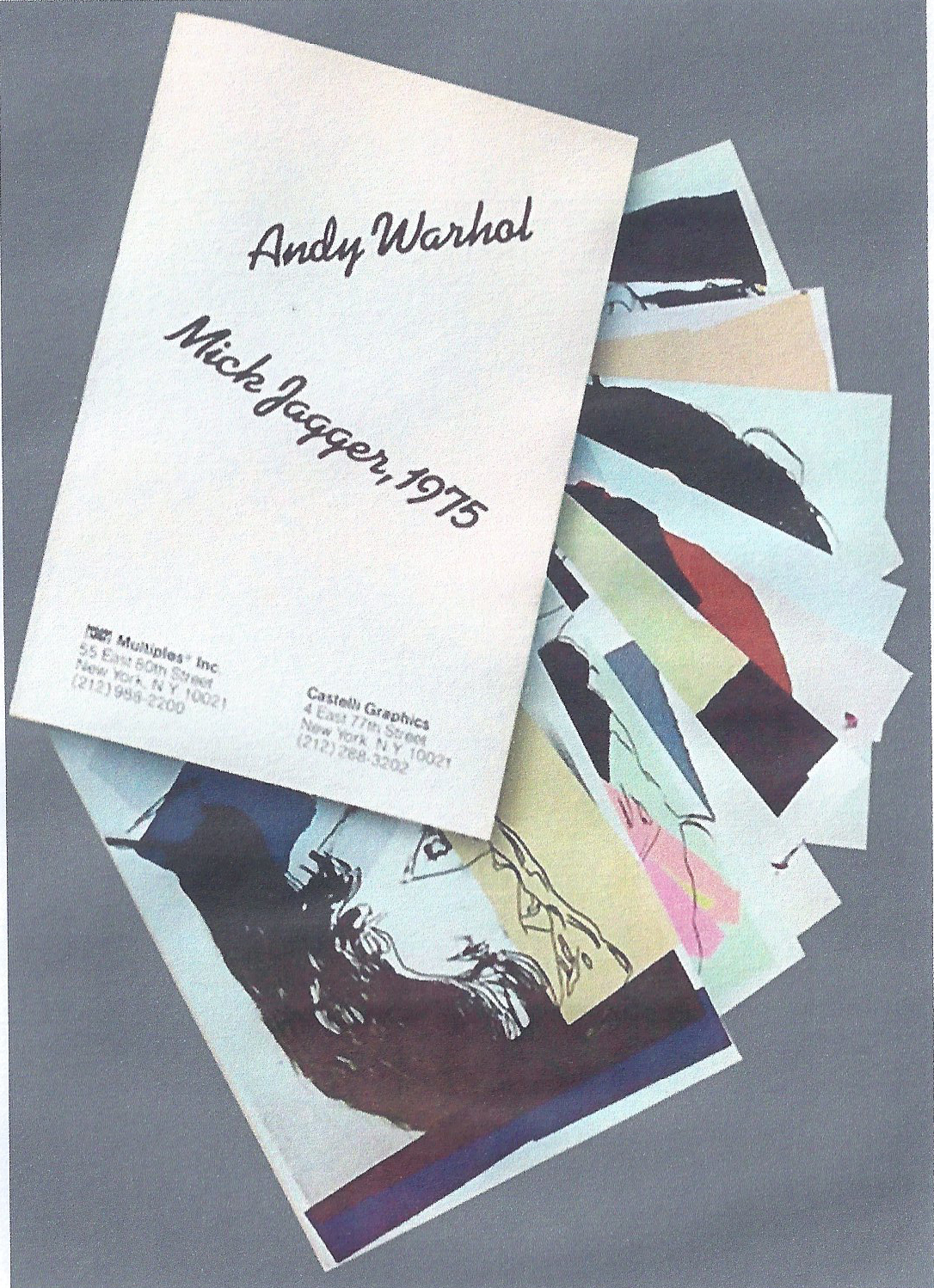
In 1975 Andy Warhol released a portfolio of ten silkscreen portraits of Mick Jagger. The portfolio was initially shown at the Leo Castelli Gallery in New York and Castelli made a folder of the ten portraits in postcard size (approximately 15 x 10 cm) for the launch. The portraits for the mini set were obviously photographed before Warhol or Jagger had signed them. After the launch, most of the mini portfolios were destroyed but a few were kept in Castelli’s safe and were sold at auction in 1999. A few have turned up signed by Warhol – but these all seem to have been signed later.

Jagger_Cards-2

The Castelli mini portfolio of Warhol's 1975 portraits of Mick Jagger.
The Castelli mini portfolio of Warhol’s 1975 portraits of Mick Jagger.

At least six bootleg LPs have used versions of these prints as their cover art. These are four versions of “Emotional Tattoo”, the “Mick Jagger in Japan” set and the latest, “Lonely at the Top”, released in late 2014. I have already discussed the various incarnations of The Stones’ “Emotional Tattoo” LP, which was first released in 1983 on black vinyl. Sometime later copies on orange vinyl began to appear in an sleeve identical to that of the black vinyl version. The sleeve was of fairly thin card and the Jagger portrait was slightly blurred, pale and lacked either Jagger’s or Warhol’s signature.

The reverse of the sleeve had the initials E.T. and a picture of the Extraterestrial. I had to kick myself for my stupidity when fellow WCCC member, Guy Minnebach, enlightened me as to why E.T. came to figure on the cover. E.T., of course, are the initials of Emotional Tattoo! So obvious! E.T. was popular in 1983, but rather “old hat” in 2014 when the album was reissued in a sturdier cover with a clearer version of the same Jagger portrait on the front (top row, right in the above picture), but this time with Warhol’s signature.It is interesting to compare both covers. Some important differences appear in the portrait which make me suspect that the portrait on the 1983 version is comes from another source.

The 1983 (left) and 2014 (right) issues of Emotional Tattoo.

The image on the 1983 version is coarser, paler and somewhat smaller than that on the 2014 reissue. The red colour on Jaggers face is missing and the brown area on the left is paler. The whole picture is “grainier” as if almost pixellated. Could it be a early scan or a photo of a photo? Further, there are two bluish colour bars over Jagger’s eyes in the 1983 version but only a turquoise bar over the bridge of his nose in the 2014 version. Warhol’s drawing of Jagger’s hair is missing in the 1983 version and the whole image is paler than the original print. Up to now, I have not been able to trace a source for the 1983 version of Jagger’s portrait.

The rear cover of the 2014 version shows all ten prints.

The rear of the 2013 re-issue album. Cleaner and better designed than the original.

Here the portrait used on the cover is second from the right on the lower row of prints.

So, there are four versions of the Emotional Tattoo bootleg; two that use the 1983 portrait (black and orange vinyl issues) and two that use the 2014 portrait (black and green vinyl issues).

However, there is a fifth bootleg that uses another of the Warhol Mick Jagger portraits – the Suntory D.R.Y. beer promo “Mick Jagger in Japan, released in 1988.

Mick Jagger in Japan - The Suntory D.R:Y. Beer promo from 1988.
Mick Jagger in Japan – The Suntory D.R:Y. Beer promo from 1988.

This portrait can be seen in the upper row on the rear of the 2014 Emotional Tattoo cover, second portrait from the right. On the Mick Jagger in Japan LP the portrait is in black and white and is boldly signed by Mick himself.

Last, but not least, there is the “Lonely at the Top” LP apparently released in Germany by Cat Records in a numbered edition of 55 copies. Cat Records seems to specialise in releasing Rolling Stones bootlegs.

Lonely at the Top album cover.

This image of Mick Jagger is identical to that included in the original portfolio of Jagger portraits and is identical to that used on the 2013 reissue of “Emotional Tattoo”. The image is crisp and has correct colour balance. The printers’ marks are visible on both sides of the image, which must have been taken from the signed portrait rather than from the mini cards as it shows Warhol’s signature at lower right.

I shall have to do some further research to try to find the original of the portrait used on the 1983 version of “Emotional Tattoo”. With a bit of luck, I shall return to this post with an update.

A review of 2014 – my collections grow

Readers of this blog will by now know that it deals with collecting record cover art by five designers

  1.     Andy Warhol
    2. Peter Blake
    3. Klaus Voormann
    4. Damien Hirst
    5. Banksy

When I sat down to put my thoughts together on the past year’s collecting I could not immediately recall any real high points. Then I started to look through my list of acquisitions and soon saw that 2014 had been another successful year. Let’s take things in order.

Andy Warhol
Well, I’ve managed to add twenty-one covers to my collection of Andy Warhol sleeves – surprisingly, the majority by The Rolling Stones. I have added three variations of the “Emotional Tattoo” bootleg cover. Frank Edwards very kindly sent me his extra copy of the 1983 version on orange vinyl in exchange for a set of “Giant Size $1.57 Each” covers and I bought the two variations of the 2014 numbered reissues of the album, one on black and the other on green vinyl.

Early in the year I had decided to go for the Rolling Stones singles with variations on the “Sticky Fingers” cover art. I had previously not been interested in singles or EPs but the wonderful RCA and RCA Camden covers with Warhol art have changed my mind. Anyway, fellow Warhol Cover Collectors Club member Guy Minnebach had tipped me off about the Mexican “Brown Sugar” singles (entitled “Azucar Morena” in Spanish). One was a two-track single and the other a three-track EP that happened to pop up on Ebay soon after he had told me about them.

The Rolling Stones “Azucar Morena” single in a fold out cover.

Rolling Stones “Azucar Morena” EP.

Then I had to add the original “Brown Sugar / Bitch / Let It Rock” single and a German pressing of the single, both of which used the “Sticky Fingers” rear cover photo on their rear covers. I also found a copy of the “Brown Sugar” shaped picture disc single to complete the set.

“Brown Sugar / Bitch” picture disc single.

When it comes to “classic” Warhol covers, I – like most collectors of Warhol’s cover art – had been looking for a cheap copy of the Lew White “Melodic Magic” EP. Well, I found the single on Discogs for $3.86 plus $12 shipping. Unfortunately, the record had no cover, but I bought another RCA Camden EP with the same rear cover list of other artists on the Camden label and peeled off the cover slick and stuck a Lew White cover slick in its place and – wonder of wonders – I have the Lew White EP, indistinguishable from the real thing – as it IS the real thing (almost) and all for about $40!

The next “classic” cover I managed to get hold of was the “Alexander Nevsky” re-issue sleeve with the green colour blocks. I already had both the original “blue” and the re-issue “orange” covers. Now all I need to find is the “pink” cover variation.

My three “Alexander Nevsky” covers.

When I first started to seriously collect Andy Warhol’s record cover art I saw Wilhelm Loibner’s “Ballet From Vienna” listed as a Warhol cover. The cover is a solarised photo credited to William Hughes. The rear cover has no image. Guy Minnebach informed me that the original copies of this LP had an inner sleeve with Warhol’s drawing of part of an orchestra, the same image as used o the cover of “4 Divertimenti”. The “Ballet From Vienna” cover appears on Ebay with monotonous regularity, but almost NEVER with the inner sleeve. However, one did turn up advertised from Spain in mint condition so I added it to my collection.

“Ballet From Vienna” Front of inner sleeve and front cover.

The other Warhol covers I managed to find included Diana Ross’ “Muscles” and “So Close” seven-inch singles and Billy Squier’s “Everybody Wants You” single.

And then there was an unusual CD that came up on Ebay in August. It was a Japanese promotional double CD with a line drawing of an ear and some arrows with the sole word “ear” beside the drawing. The handwriting was so like Andy Warhol’s that I took a chance and bought the set. Guy Minnebach immediately recognised the drawing as one of a series in a Warhol portfolio entitled “Playbook of you S Bruce 2:30-4:00”.

The other covers with Warhol art were two Velvet Underground bootlegs; “NYC” and “Orange Disaster” which both had pictures from Warhol’s Deaths and Disaster prints.

Peter Blake

There were no new record sleeve designs by Sir Peter Blake in 2014 but one old one did surface – the rejected cover for the group Landscape’s 1982 album “Manhattan Boogie-Woogie”. I saw an art gallery advert for a 2009 silkscreen of the cover image. I managed to find a high-resolution copy of the image and could resize it to LP-format and get several slicks printed. I stuck one slick of the front cover to one of the rear cover from the issued album and there was (my version of) the original cover restored.

Klaus Voormann

2014 saw many additions to my Voormann collection. The first cover I found was the last cover needed to complete my set of all twenty “Pioneers of Jazz” EPs. I had managed to find nineteen previously and been searching the Internet for Volume 18, the only one I lacked. In February I finally found it.

The next cover I found was George Harrison’s “When We Was Fab” promo box with the seven inch single. I already had the twelve-inch version and this was a nice addition. I felt I had just about completed my Voormann collection when I found some purely German releases: “Stinker” LP and seven inch single “von Drüben” by Marius Müller-Westernhagen.

Klaus Voormann’s first official cover was for a band called The Typhoons about which I have failed to find any information. Klaus has informed me that he never met the band and could only say that it was a German combo active in the early sixties. Heliodor records had released their cover of “Walk… Don’t Run”, the old Ventures hit. I had made a copy of the cover from an image on Klaus Voormann’s portfolio and I have seen a cover in poor condition sell on Ebay for over €100 but never seen the record until one turned up without the cover. So, true to form I bought the single to live in the cover I had made. I’m still looking for a proper cover…

I had already bought Klaus Voormann’s album “A Sideman’s Journey” on LP with a limited edition poster and eyed the limited edition box set, which included the album on CD, a DVD of the making of the album, a book of drawings and the poster – signed by Klaus. The box was expensive and I felt I did not really need it until a second-hand copy came up for half the normal price.

My friend, gallery-owner Daniel Brant found two copies of Voormann’s poster of John Lennon and Paul McCartney eating breakfast in the Abbey Road canteen during the “Revolver” sessions and he let me have a copy.


The last item needed to complete my Voormann collection was the CD of covers entitled “A Guide to Modern Country Living” by The Twang. There is, however, one cover that has only been released as a digital download and that is “Picasso’s Party” by a band called The Dogs of Bali. I have the download.

So, with the exception of a proper cover for the “Walk… Don’t Run” single, my Klaus Voormann Collection seems complete – at least until Klaus produces more cover designs.

Damien Hirst

This has probably been the year when I have obtained the largest number of Damien Hirst covers. There were three covers for Babyshambles, including the LP “Prequel to the Sequel” and the two singles from the album, “Nothing Comes From Nothing” and “Fall From Grace”.

Next was The Red Hot Chili Peppers’ LP “I’m With You” with the cover picture of a fly on a medicine capsule. Then Joe Strummer & The Mescaleros promo CD “Tony Adams (The Morning Sun)” and the very rare twelve inch EP “Yalla Yalla”. Somehow, Thirty Seconds to Mars had been allowed to use one of Damien Hirst’s spot paintings for the cover of their CD “Love, Lust, Faith + Dreams”. I got hold of the limited edition box set of the album thinking the box and LP cover were also designed by Damien Hirst – but they aren’t! However, the box set did include a book with the spot painting on the cover. I had to get the CD as well for completeness. A seller in Germany advertised a twelve-inch EP of Dave Stewart’s “Heart of Stone (The Dance Mixes)” which I had never heard of. I could not find a copy elsewhere so I bought his expensive copy. Then I found out there was another remix EP of “Heart of Stone (The Sure Is Pure Remixes)”. That one was easy to find and did not cost an arm and a leg.

My final Damien Hirst find for the year was the USB promotional version of The Hours’ “See the Light” album. A nice little skull-shaped USB stick.

Banksy

I have not been able to find any new records with Banksy images in 2014. My collection of Bansky records has been touring Sweden throughout the year and I sincerely hope that they will return home in 2015.

Meanwhile, I wish all my readers a Happy and Prosperous New Year – and wish you all success with your collecting in 2015.