I used to be a music nerd with a large collection of all sorts of recorded music, though mainly a vinyl freak. I started out in the sixties, got swept away by psychedelia and into music posters which I continued to collect up until 2013, when space shortage meant I had to sell the major part of my collection. I had already started collecting record cover art and had large collections of art by Vaughan Oliver (4AD) and Neville Brody (Fetish Records), which unfortunately had to go. My collections of Andy Warhol’s, Sir Peter Blake's and Banksy’s and the Swedish band kent’s record covers have been exhibited in major exhibitions both in Sweden and internationally. I also have collections of David Shrigley’s, Damien Hirst’s, Klaus Voorman’s, Cindy Sherman’s and Richard Prince’s record cover art and a couple od Jean-Michel Basquiat’s covers.
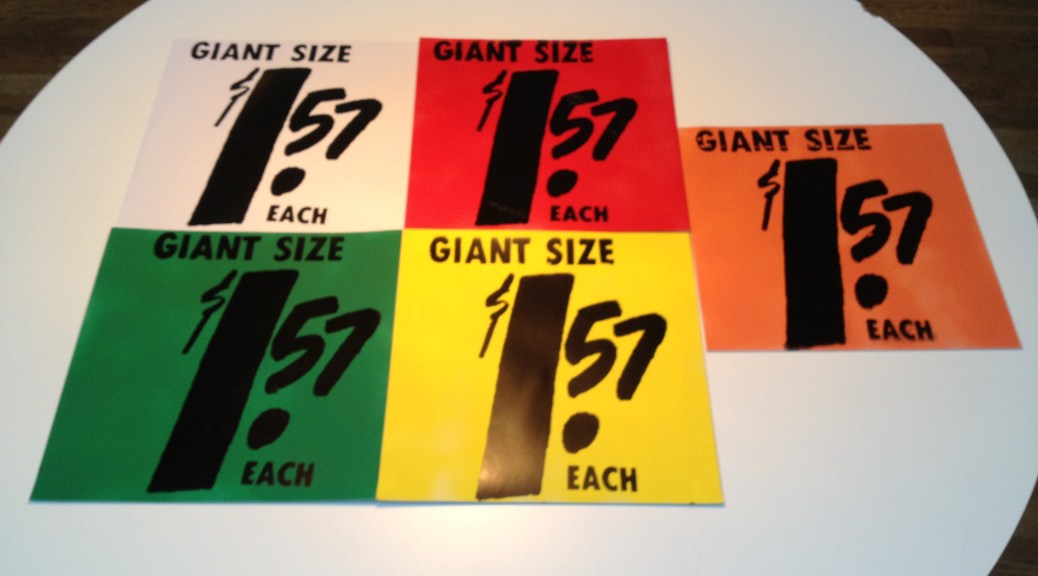
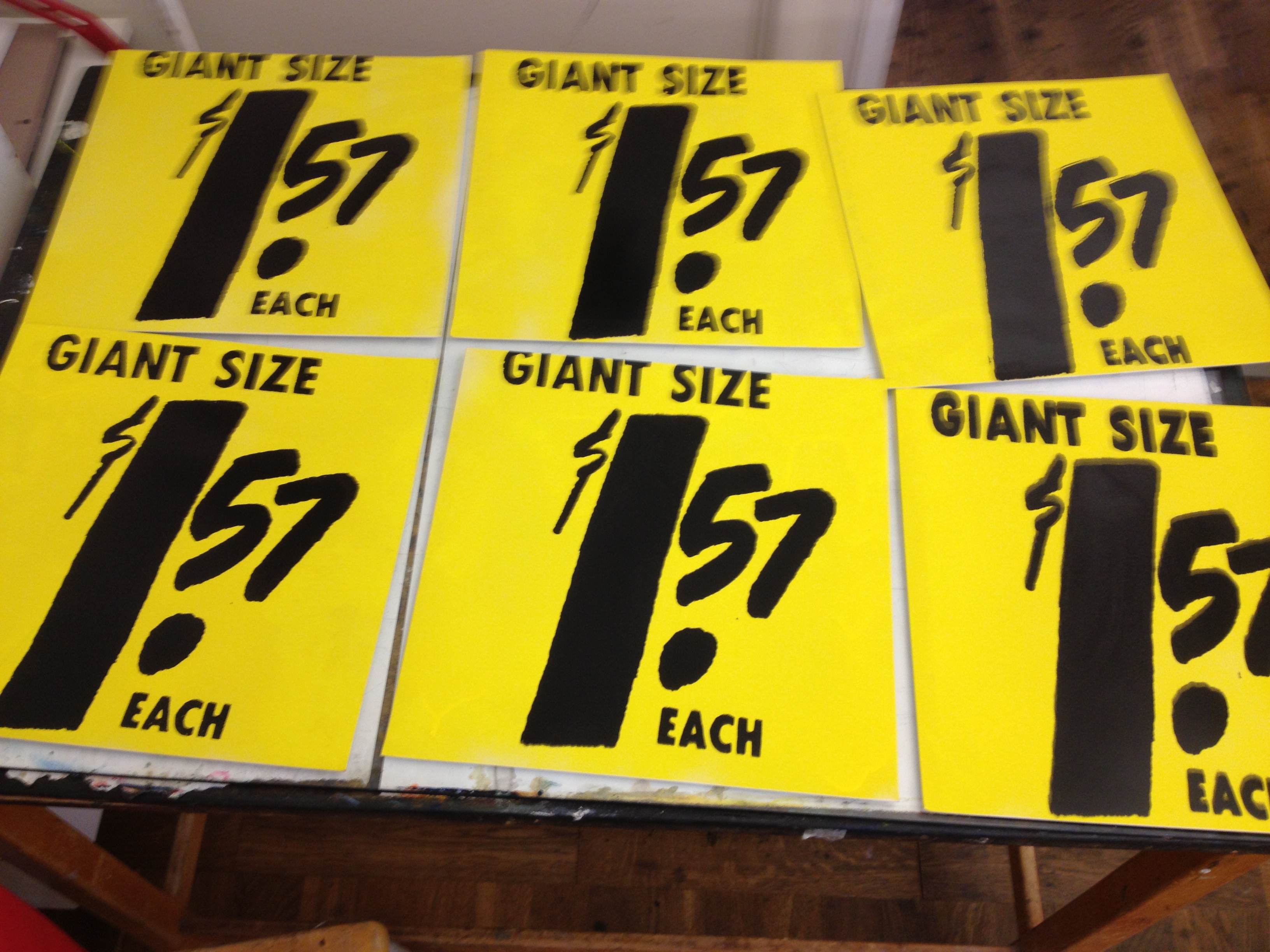
Andy Warhol produced the “Giant Size $1.57 Each” sleeve in five variations with the help of Billy Klüver, who had recorded the interviews with the artists involved in the “Popular Images” exhibition at the (now defunkt) Washington Gallery of Modern Art that ran from 18th April until 2nd June, 1963. The exact history is not known. A first edition of 75 sleeves with black image screened directly onto the coated stock record sleeve, each signed and numbered on verso was produced in 1963. He could even have printed the coloured covers at the same time or, having saved the screen, made them in 1971. Editions of 75 copies each, silkscreening the black “Giant Size” image onto sleeves that he had first spray painted. There were yellow, green, red and orange editions. These were sold in 1971.
Many covers have included the record from the “Popular Images” exhibition, possibly because Billy Klüver had a stock of the LPs. The record, comprising interviews with all eleven artists whose works were shown at the exhibition was recorded by Billy Klüver and originally came in a cover designed by Jim Dine. It seems, however, that the “Giant Size” cover was not shown at the exhibition.
Copies of the cover with or without the record have changed hands for anywhere between $10,000 and $20,000, making them unattainable for most collectors of Andy Warhol’s record sleeve art.
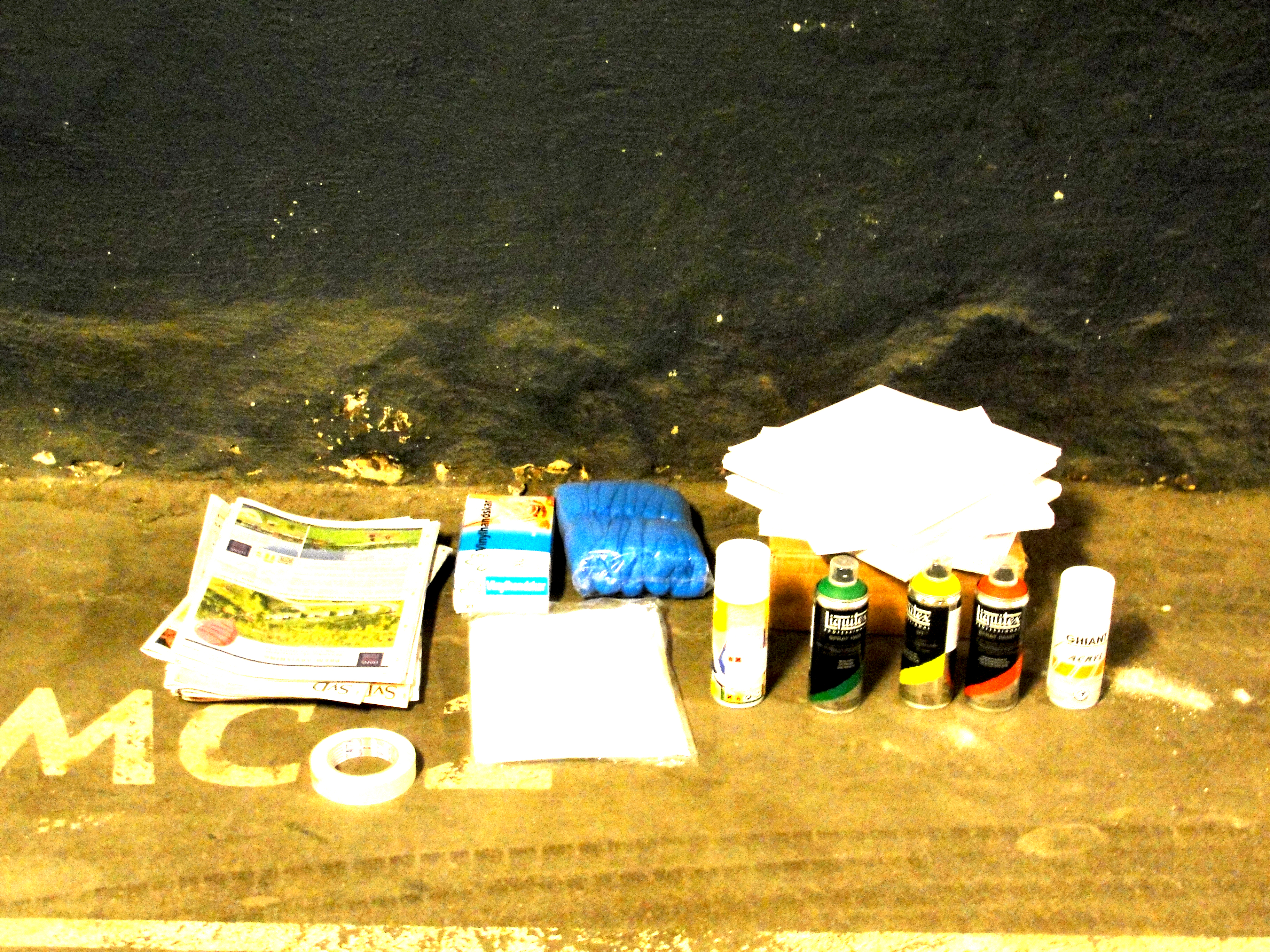
However, the technique should be easy to replicate and the “Giant Size $1.57 Each” image is easy to find and reproduce. All that is needed is the right materials. Sufficient 12-inch record sleeves, spray paints, a silk screen and emulsion for transferring the image from overhead film to the screen. Then acrylic paint to screen the image onto the pre-prepared covers.
So, having foraged for all the materials I set to work and spent 2 1/2 hours spraypainting record sleeves in the four colours.
Until all four colours were sprayed.
I had put my name down to go a silkscreen course and was one of six “pupils” to participate on the weekend of October 12-13th. I intended to make ten sets of five covers and silkscreen the “Giant Size $1.57 Each” design onto two T-shirts.
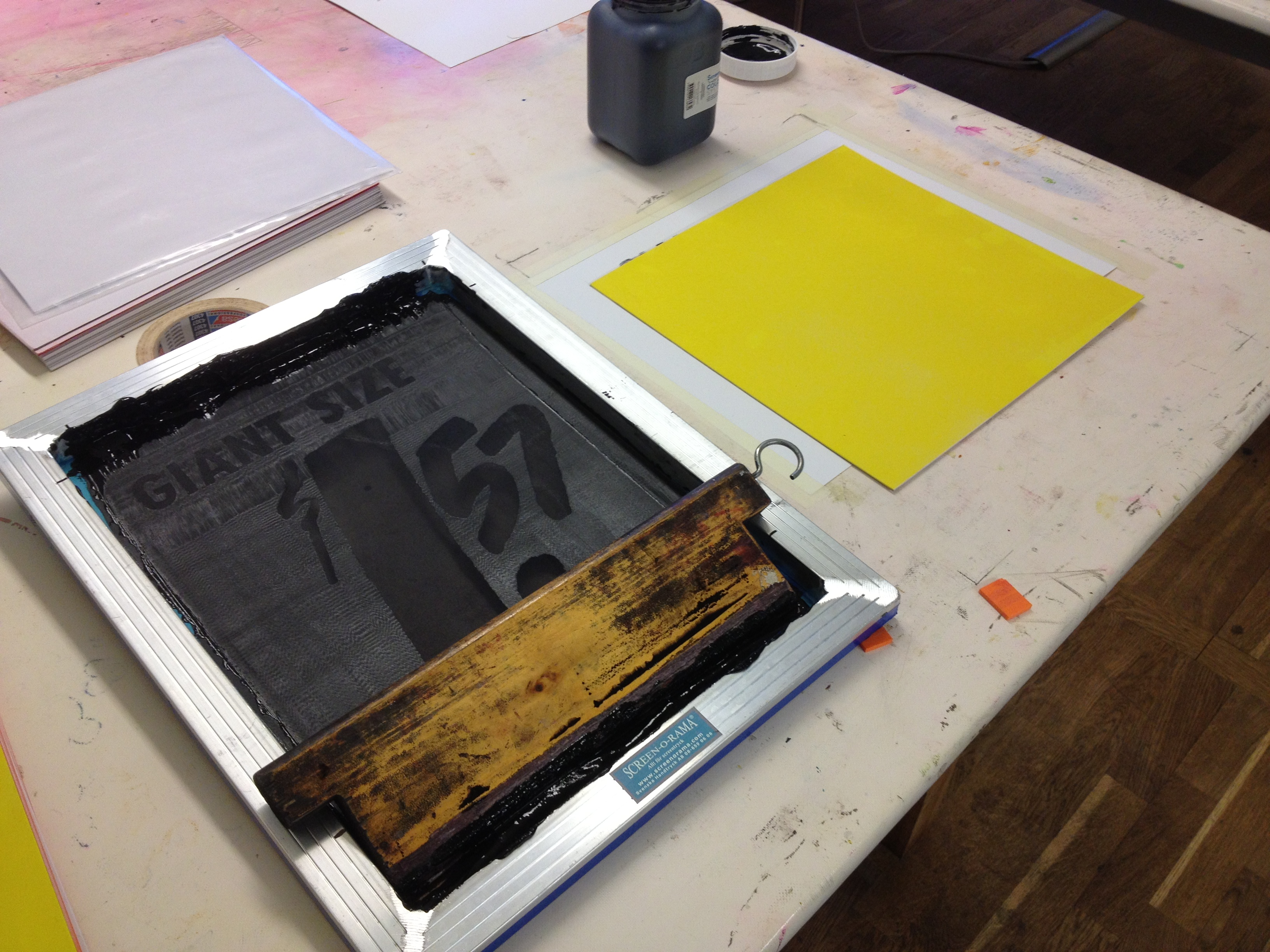
The silkscreen with the “Giant Size $1.57 Each” image in reverse together with the overhead from which the image was taken.
Then I got down to silkscreening the covers, beginning with the yellow ones. Orange, green and red covers followed and finally, when had learned the technique better, I screened the white, unsprayed sleeves. I had ordered 50 covers – so no room for error. Unfortunately there were a few poor screens so I will need more covers to complete the ten sets I had planned.
The five members of our informal Warhol Cover Collectors Club have contributed to the production of these covers and will each receive a set of all five colours,
Silkscreening the first cover.The first yellow sleeves screened.One set of five screened sleeves.
In my recent list of the rarest Warhol record covers, I put the “Night Beat” promotional box of three 45 RPM EPs at number 2. Top of the list is the “Progressive Piano” cover, which was never released. However, there is – as far as I know – only one known copy of the “Night Beat” box; the one in Paul Maréchal’s collection. Not even The Warhol Museum has a copy. Matt Wrbican, Chief Archivist at The Warhol, told me in a recent email, that the radio stations that received the “Night Beat” boxes would, in all probability, have thrown them away once the episode had been broadcast, which probably means that very few have survived. Indeed, I have never seen a copy appear on Ebay or in art galleries.
So what is a poor collector to do if he/she wants to complete a collection? The answer, of course, is to make a copy. Using the picture in Paul Maréchal’s book as a starting point and with the help of my daughter who performed some Photoshop magic and Urban Westling, at Urban Print, who did some further tweeking in InDesign and printed the result, I made a slick that would cover a standard EP box. Once I had the slick it only took about fifteen mintes to glue it over the old, discarded box of EPs and the result was way beyond my expectations.
The “Night Beat” box
My main problem has been finding suitable boxes here at home in order to supply all the members of The Warhol Cover Club with their own boxes. Founder member, Kevin Kinney and his wife have volunteered to find more boxes for me and as soon as they arrive I will make more boxes.
Like most collectors of Andy Warhol’s record cover art, I follow the covers advertised on Ebay. All too often sellers call their object “the rarest Warhol cover”. Niklas L challenged me to make a list of what I considered to be rarest covers. I thought I’d list the Top 20 rare covers. It is, of course impossible to rank them exactly, but here is my first attempt, keeping official releases and bootlegs apart. I hope publishing this list will stimulate readers to criticise and comment.
a. Official releases
No.
Artist
Title
Comment
1
Various Artists
Progressive Piano
Rare because it was probably never released. Lithographs of the cover design exist, however.
2
Frank Lovejoy
Night Beat
Probably only 1 known copy
3
Andy Warhol
Giant Size $1.57 Each
Available in four colour variations. Black on white background (edition of 75 signed and numbered), black on yellow (edition of 75 unsigned, unnumbered), Black on green (edition of 75 unsigned, unnumbered) and black on red (edition of 75 unsigned, unnumbered)
4
Century Symphony Orchestra
Waltzes by Johann Strauss, Jr.
5
Ultra Violet
Ultra Violet
Most copies seem to be cut-outs
6
CBS Radio show
The Nation’s Nightmare
Possibly 2 colour variants, one brown and one more grey.
7
Arthur Fiedler & Boston Pops
Boston Pops Latin Rhythm
8
Johnny Griffin
The Congregation
Original Blue Note LP
9
Jan Smeterlin
Chopin Nocturnes (Complete)
2 LP set in slip case
9a
Jan Smeterlin
Chopin Nocturnes (vol 1)
Single LP
9b
Jan Smeterlin
Chopin Nocturnes (vol 2)
Single LP
10
Wolfgang Amadeus Mozart
4 Divertimenti
11
RATFAB
Det brinner en eld / Mörka ögon
Sweden only single
12
John Wallowitch
Another Side of John Wallowitch
His first album is easier to find
13
Walter Steding & The Dragon People
The Joke / Chase the Dragon
14
Cool Gabriels
Cool Gabriels
15
Moondog
Story of Moondog
Original on Blue Note
16
J. J. Johnson, Kai Winding & Bennie Green
Trombone by Three
16 RPM version on Prestige
17
Margarita Madrigal
Madrigal’s Magic Key to Spanish
More valuable with the book
18
Various Artists
MTV – High Prority
The version with yellow shading to the MTV logo
19
Velvet Underground & Nico
Original ”Torso” back cover
19a
Velvet Underground & Nico
”Torso” cover with black sticker
20
Art Gallery of Toronto
Cronenberg on Warhol
Limited edition CD – 2 copies have surfaced to date.
21
Jeanne Moreau & Günther Kaufmann
Each Man Kills the One He Loves / Young and Joyful Bandit
7” single
Bootlegs
No
Artist
Title
Comment
1
Rolling Stones
Emotional Tattoo
Some copies have orange vinyl
2
Velvet Underground
Screen Test: Falling in Love With the Falling Spikes
There are three colour variants of this release: one with a blue flower, one with a black and white cover and a re-release with a red cover
It has been a great week for my collection of Warhol covers. Forst I received the two CDs that Frank Edwards told me about. First, the Tobias Picker / Marc Bliztstein CD “Keys to the City / Piano Concerto”. This CD uses Warhol’s poster design for the Brooklyn Bridge centenary in 1983 as its cover image. Tobias Picker pianist and composer apparently has Tourette’s syndrome. But this doesn’t seem to affect his musicianship. He wrote the piano concerto “Keys to the City in 1982, when he was 28 years old, and it won the competition. Marc Bliztstein (born 1905-64) wrote his Piano Concerto in 1931. Bliztstein was murdered in Martinique in 1964.
Warhol’s poster for the Brooklyn Bridge Centenary 1983.
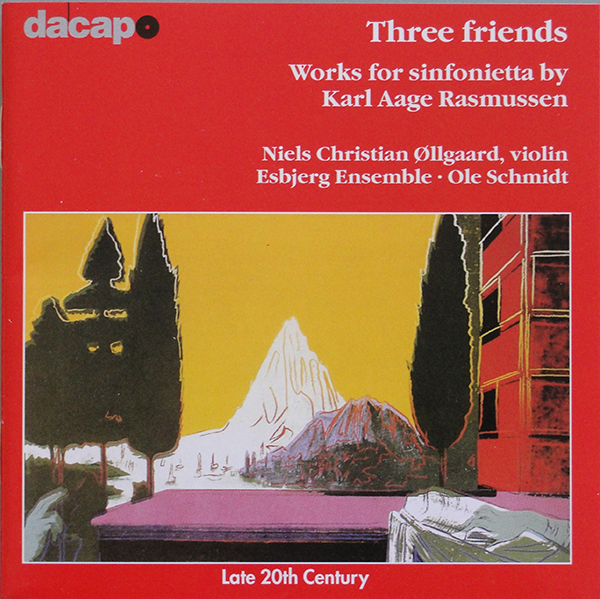
Second, Karl Aage Rasmussen’s “Three Friends”, has Warhol’s picture “The Anunciation” on the cover. This image came from Warhol’s series of Renaissance Details published in 1984. Rasmussen (born 1947) wrote “Three Friends” in 1995 and this recording was made in Esbjerg, Denmark, in May 1998.
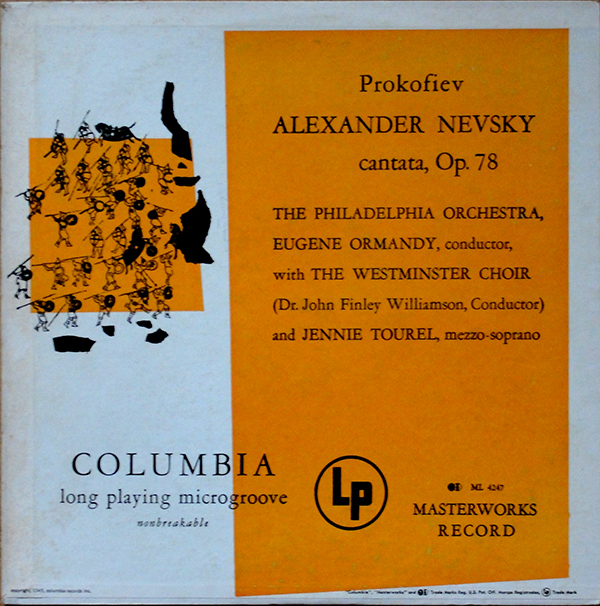
In addition, my copy of Prokofiev’s “Alexander Nevsky / Cantata #47” with the orange cover arrived today. It has the late pressed Columbia 6-eye labels with the word “unbreakable” to the left of the spindle hole indicating it to be a late pressing. As I have already stated in an earlier post, the 6-eye label was used on Columbia Materworks pressings between 1955 and 1962. The placing of “unbreakable” to the left of the spindle hole indicates that this LP was probably pressed nearer to 1962 than to 1955.
Other copies of this title with the same orange cover that have appeared on Ebay alla ppear to have the same 6-eye label. This supports my thesis that the various cover colour versions are probably later pressings than the original blue colour cover. I would be interested to know whether the green and pink cover versions have the 6-eye label or the original dark blue “masterworks” label. Perhaps readers could let me know.
Some time ago founder member of the Warhol Cover Collectors Club, Kevin Kinney, found a variant of the “MTV – High Priority” LP cover that few, if any, of us knew existed. Instead of the red shading to the MTV-logo on the front, the shading was yellow and the titles along the top of the front cover were in black print instead of white, red and blue. I’ve been checking every copy that I have seen on Ebay looking for a yellow version but to no avail. Then one came up a week or so ago and I was about to “buy it now” when it disappeared. Fellow collector Niklas L had seen it first and nabbed it! But, having sent Niklas some of my fabricated “Progressive Piano” and other covers for his collection he very generously thanked me by sending the yellow “MTV – High Priority” album together with André Heller’s “Stimmenhögen” LP. Even this turned out to be unusual. Two versions were listed on Rate Your Music – one on the Electrola and one on the HMV label. The copy Niklas sent me was also on the HMV label, but with a completely different catalogue number from those listed on RYM.
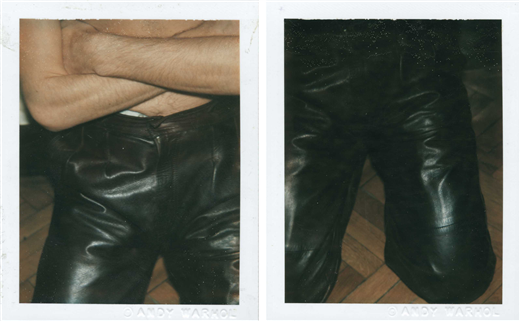
The only reason to have the Heller LP is the fact that the booklet inside the gatefold has a little Warhol drawing on one page (pictured above). In 1981 Heller was photographed by Warhol and two Polaroids from this session were recently sold by Christies.
Two original Polaroid prints of André Heller taken by Andy Warhol in 1981 recently sold at Christies.
The picture in the lyric booklet is probably Warhol’s portrait of Heller which, judging by Heller’s pose with arms crossed must have been done on that occasion. It fits with the Polaroids, which show him bare to the waist, arms crossed and wearing leather trousers. I suppose Heller chose to include the drawing to show that Warhol had done a portrait of him. I do not suppose that Warhol did the drawing specifically for this record cover. One could argue that the Swan Lake and Daphnis & Chlöe albums from 1955 with Warhol drawings fall into the same category, but Warhol did those drawings specifically for the albums and they illustrate the ballet content. However, one could say that the portraits on the covers of many albums definitely listed as being Warhol covers (Aretha Franklin, Billy Squier, Paul Anka, Liza Minnelli, John Lennon etc.) were not painted specifically for the record covers. So do I include the Heller album as a bona fide Warhol cover or not?
An unusual copy of Prokofiev’s “Alexander Nevsky” LP came up on Ebay last week. This had the original 1949 cover design but with orange colour blocks. I have previously seen blue, green and pink versions, but never an orange one. and I wonder if the colour variations were later pressings of the album. This one definitely is. The record has Columbia Records’ “6-eye” label rather than the Dark blue Columbia Masterworks label used since the introduction of the LP in 1948. According to Ron Penndorf’s Labelography the grey”6-eye” label was introduced in 1955 and phased out in 1962. As may be seen from the label picture, the designation “Unbreakable” appears to the left of the spindle hole, indicating – again according to Labelography – that this is a later pressing; probably late fifties or early sixties. I find it fascinating that Columbia chose to keep the original cover design from 1949 on this repressing rather than commission a new cover.
Damien Hirst has not yet designed many record covers. So far I have identified only twenty-three. I am primarily interested in those covers released on vinyl, but for completeness have also included CDs in my list on http://www.rateyourmusic.com (http://rateyourmusic.com/list/rockdoc/damien_hirsts_record_cover_art/). There are three quite rare vinyl issues: The most soughtafter is “Use Money, Cheat Death” by Damien (spellt on the record as Damian) Hirst that uses the Kate Moss portrait with half her face dissected away as the cover image. This picture was originally on the cover of the February 2006 issue of TAR magazine. The other two rarities are Dave Stewart’s “Greetings From the Gutter” and the original release of Joe Strummer & The Mescalino’s “Rock Art & the X-ray Style“, which has since been re-issued on vinyl with the same cover.
Three new Damien Hirst covers have been released so far this year. In May the group 30 Seconds to Mars released their fourth album “Love Lust Faith – Dreams” with Damien Hirst artwork. Quite pretentiously, they have released the album in three formats – a standard CD, a Super Deluxe Pack (price $295, and includes double white viny LPs a 100-page photo book, lithographs and an autographed CD) and a Super Duper Deluxe pack (price $999, which includes all the stuff in the Super Deluxe pack plus a pair of drumsticks, plectrums, a t-shirt, triad USB and a personalised message from the band.)
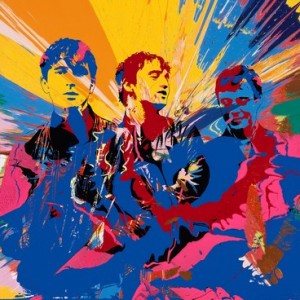
British group Babyshambles released their fifth full length album on 2nd September 2013 with cover art by Damien Hirst who used a photo of the band taken by Pennie Smith (who, you will remember, took the photo of The Clash used on their “London Calling” album.) NME reports on how Hirst came to design the cover “bassist Drew McConnell said: “It happened kind of naturally and in the spirit you’d hope for. We asked Damien to suggest someone to put something together, then to our amazement he offered to do it himself. The fact that he used a pic taken by Pennie Smith, who shot all those iconic photos of The Clash (Damien’s old pal Joe Strummer’s band), just makes it make even more sense.” “Nothing Comes to Nothing”, the first single from the album also comes in a Damien Hirst designed cover.
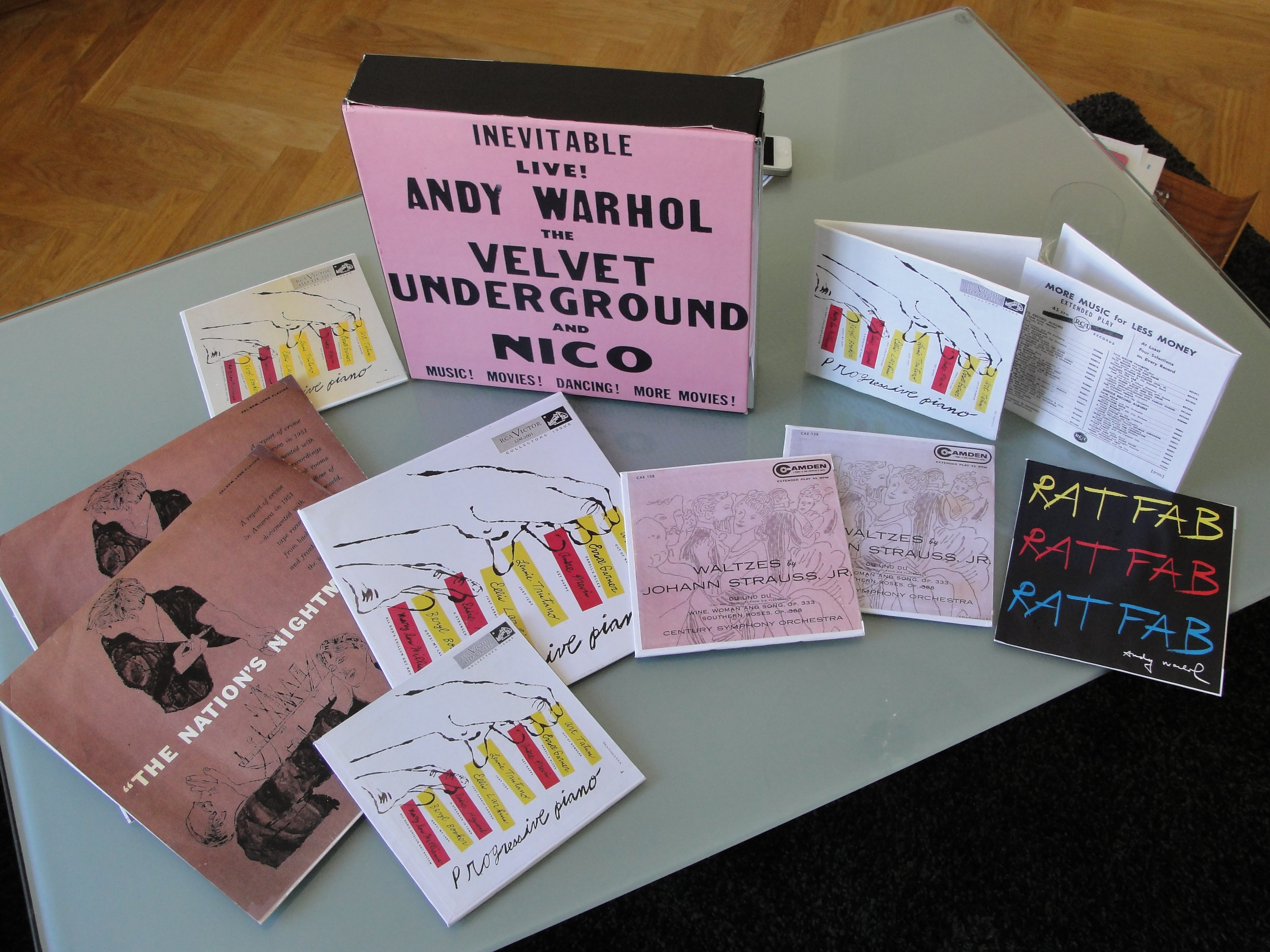
I blogged about my longstanding project to make mock-ups of rare or unobtainable Warhol covers and this weekend I realised my plan. I have made a number of copies of covers for the “Progressive Piano” album – as a 10″ LP, as well as single and double 7″ EPs and also covers for The “Waltzes by Johann Strauss, Jr.” EP. I have made two versions of this cover, one that includes the “Printed in U.S.A.” test at lower right and one that does not. I also amused myself by attempting to make reproduction “Nation’s Nightmare” covers. This side project proved more difficult that I had anticipated and I was satisfied with the result only after three rather ragged versions. But, the cover looks to be in far better condition than my original! I have managed to Photoshop out many of the marks of wear and tear and these covers have no edge splits. I could not resist the temptation to make a copy of the RATFAB cover, Just for fun.
I bought the box set of the “Warhol Live / Andy Warhol – The Record Covers, 1949 – 1987” when it was forst published in 2008. But my copy mysteriously disappeared a couple of years later. Frank Edwards supplied me with a replacement copy of “Andy Warhol – The Record Covers, 1949 – 1987”, for which I am eternally gratreful. But I missed the “Warhol Live” book. So I invested once more and the new set arrived yesterday. It really is a beautiful and interesting read. There is so much information that I had never known. It is worth checking out.
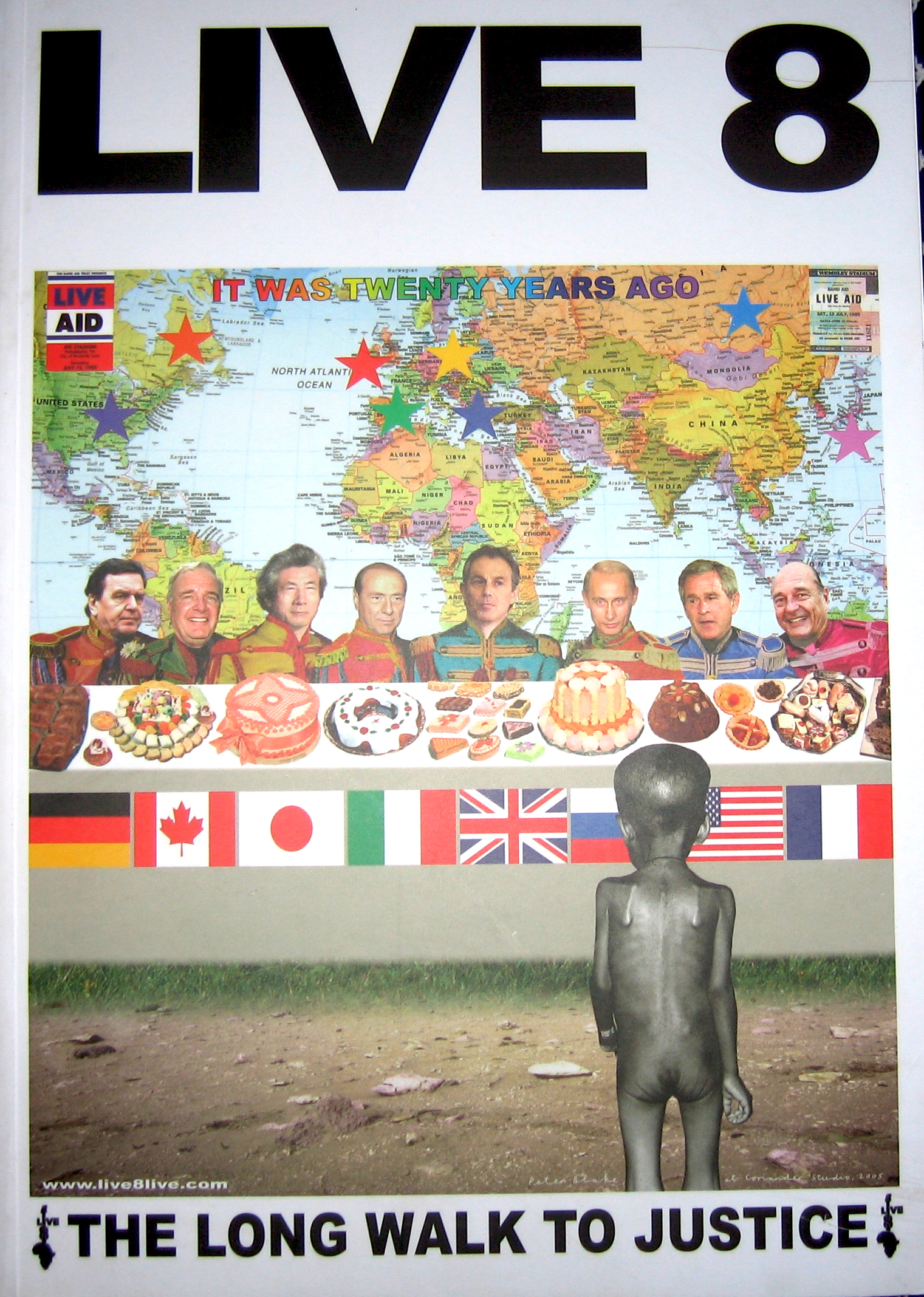
Sir Peter Blake is best-known for the cover to The Beatles’ “Sgt. Pepper’s Lonely Heart Club Band” album which he designed together with his then wife Jann Haworth and photographer Michael Cooper. In the forty-six years since that cover was released, Peter Blake has only designed 22 more covers of which 19 were actually released. One of the better-known released covers is the design for the “Do The Know It’s Christmas” single, released in 1984. What is less well-known is that Peter Blake also designed the poster and programme for the Live Aid and Live 8 concerts.
Until last month, I had not heard that he had also designed the cover for Q Magazine’s February 2006 issue that published a list of the 100 greatest albums of all time.
A copy of this classic Peter Blake design arrived last week, complete with targets, flags, drink logos and pictures of the record covers, so that I didn’t need to open the magazine to see that Radiohead’s “O.K. Computer” was voted best album of all time. By the way, it’s not an album I like at all. Peter Blake is quoted in the magazine as saying his favourite is Talking Heads’ “Remain in Light”, but that isn’t in Q’s list.
Another piece of useless information is that Peter Blake is, to my knowledge, only the second cover designer to actually appear on a cover that he had a hand in designing. He apears, dressed as Moses, on the cover of Madness’ de luxe compilation “Oui Oui, Si Si, Ja Ja, Da Da”. The other artist was Martin Kann, a Swedish designer responsible for most of the cover art for the Swedish band bob hund. He put himself on the cover of bob hund’s 1996 album “Omslag: Martin Kann” (literally – Cover: Martin Kann). I know that Andy Warhol’s portrait has appeared on several covers, but none on which he has had a hand in designing.
A recap. Between 23rd July and 31st August 2008, the first exhibition of Andy Warhol’s record cover art was shown at Piteå Museum, Piteå, in the north of Sweden. The exhibition was entitled “Happy Birthday, Andy Warhol” as it coincided with what would have been Warhol’s 80th birthday on 6th August 2008.
One month later, my friend Tomas Ersson, visited me and I told him about the exhibition and he mentioned that he had recently read an article in a magazine where a Swedish musician told a story about how Andy Warhol had designed the cover for a single by the band he had been in as a 15-year-old. Unfortunately, Tomas could not remember where he had read the article, but he promised to try to locate it. A few days later he mailed me the article and my hunt for the RATFAB single started.
I lost the article but have always credited Tomas with being the one who tipped me off on the existence of the cover. He has recently helped find the article again and here is the link: http://cafe.se/tomas-alfredsson/
The article is in Swedish and, coincidentally was published on Andy Warhol’s birthday, 6th August 2008, in the Swedish magazine Café. The article is actually an interview with Tomas Alfredsson, a Swedish film producer. At the end of the interview he was asked whether it was true that Andy Warhol had designed the cover for a single by the band in which he had been the drummer.
Here’s the text where he explains how Warhol came to design the cover.
Andy Warhol’s design for the RATFAB single cover.
TAW: “Till sist måste jag fråga om det är sant att Andy Warhol gjorde skivomslaget till ditt gamla rockbands enda singel. TA:– När jag var i 15-årsåldern var jag trummis i ett band som hette Ratfab, Roland And The Flying Albatros Band. Vår basist, Calle Häggqvist, hade en mycket originell farfar, Arne Häggqvist. Han bodde i en liten tvåa i Fruängen med sin stora konstsamling och anordnade litterära salonger i källaren. Arne var svensklärare, översättare, skribent och förläggare. Han introducerade Sartre på svenska, var ett socialt geni och lärde känna många intressanta, märkliga och berömda människor över hela världen. Han skrev Största cocktailboken, som mig veterligen fortfarande är den största cocktailboken. Arne var också konstexpert och skrev den första boken om hur man värderar konst.
TAW: Och han var vän med Andy Warhol? TA: – Han hade träffat Hemingway och Salvador Dali och översatt Dalis böcker. Och så kände han Andy Warhol. Varje sommar sålde Arne en tavla ur sin konstsamling för att finansiera en resa åt honom och barnbarnet Calle. Den här sommaren skulle de åka till New York och träffa självaste Andy Warhol på The Factory. När vi i bandet fick höra det här sa vi till Calle: ”Du måste fråga om han inte kan göra vår logotype!” Och när Calle satt där med Warhol så frågade han faktiskt. Warhol sa: ”Det kan jag väl göra.” Han tog fram ett Andy Warhol-brevpapper och gjorde några olika förslag som han signerade.
TAW: Hur såg de ut? TA: – Han skrev vårt bandnamn med fetkrita och så signaturen under. Vi blev alldeles febriga av det här och trodde att det skulle kompensera våra brister som musiker, vilket det förstås inte gjorde. Men vi tryckte i alla fall upp en singel och en t-shirt. Och det är ju angenämnt att få vara i sällskap med Velvet Underground och Rolling Stones, även om innehållet i vårt fall inte är lika rafflande som utsidan.”
Here follows a translation:
TAW: Finally, I have to ask if it is true that Andy Warhol designed the cover to your old rock band’s only single?
TA: When I was about 15 i was the drummer in a band calleed Ratfab, Roland and the Flying Albatros Band. Our bass player, Calle Häggqvist, had a very original grandfather, Arne Häggqvist. He lived in a little two-room flat in Fruängen with his huge art collection and organised litterary solons in the basement. Arne was a Swedish teacher, translator, writer and publisher. He introduced Sartre in Swedish, was a social genius and became acquainted with many interesting, remarkable, weird and famous people all over the world. He wrote “Största Cocktailboken2 (The Biggest Cocktail book), which is, as far as I know, still the biggest cocktail book. Arne was also an art expert and wrote the first book on how to evaluate art.
TAW: And he was a friend of Andy Warhol?
TA: – He had met Hemingway and Salvador Dali and translated Dali’s books. And he knew Andy Warhol. Every summer Arne sold a painting from his art collection to finance a trip for himslef and his grandson Calle. That summer they were going to New York and would meet Andy Warhol himself at The Factory. When the band got to hear of this we told Calle: “You must ask if he can make us a logo!” And when Calle satt there with Warhol, he actually asked him. “Sure I can.” He produced an Andy Warhol letterpaper and made a few suggestions that he signed.
TAW: What did they look like?
TA: – He wrote the band’s name in pastel and signed underneath. We were totally wild because of it and thought that it would compensate for our musical shortcomings, which, however, it did not. But we pressed a single and a T-shirt. And it was cool to find ourselves in the company of Velvet Underground and Rolling Stones, even if the contents in our case wasn’t as exciting as the outside.”
So, that’s the whole story. Thanks again Tomas Ersson for coming up with the goods!