Tag Archives: Record cover art

Madonna’s “Celebration” Album

Madonna originally released her 36-track greatest hits album “Celebration” in 2009 as a double CD , BlueRay set and a limited edition 4LP set in a gatefold cover. The vinyl version soon became a collectors’ item with copies selling for up to $850. I imagine that a vinyl reissue to coincide with Madonna’s 2024 world tour must be an irritation for collectors who have the original version. Released on March 1st, 2024, the vinyl reissue is difficult to differentiate from the 2009 original, The covers, with the classic Mr. Brainwash portrait of Madonna, appear identical.

The original 2009 sticker on the left, compared with the re-issue sticker on the right.

But once the shrink wrap had been removed together with the sticker collectors will have to look at the record’s spine to be able to decide which version they have .

The original release is on the Warner Bros. label while the reissue is credited to Warner Music, or just plain “Warner” on the spine, and the catalogue number is given both with the spine number and the full barcode number on the reissue.

It’s impossible to tell if the reissue will also become a collectors’ item as I haven’t been able to find out if it is a limited edtion. I popped into one of Stockholm’s biggest record shops yesterday (8th June, 2024) and they didn’t have a copy, so perhaps it is fairly limited. Anyway, I’ll keep both my versions. But there is a limited edition od the reissue — 500 copies include a lithograph of Mr. Brainwash’s cover portrait of Madonna.

Barney Bubbles – the Anonymous Record Cover Designer.

One of the first things I look for when I see a record cover I like — or have just bought — is to check the liner notes, back cover or possibly the printed inner sleeve to find out who was responsible for the cover artwork/design. I never knew I had a collection of Barney Bubbles’ record covers despite having (at least) thirteen in my record collection. If he did allow a designer credit he would, as often as not, use a pseudonym.

I suppose I knew that Barney Bubbles (born Colin Fulcher on 30th July 1942, died 14th November 1983) had designed the logos for Stiff and F-beat record labels but none of my Elvis Costello albums or my Wreckless Eric records mentioned a designer. I did like a couple of Hawkwind’s covers, but I never bought any. No mention of a designer on those anyway. Other artists include Nick Lowe, Ian Dury, Quintessence and Billy Bremner. Barney Bubbles even released his own album, Ersatz, credited to The Imperial Pompadours

I recently starteed reading Kenneth FitzGerald’s Process Music: Songs, Stories and Studies in Graphic Design. FitzGerald writes beautifully — the book is a collection of his writings on graphic design with focus on a number of designers, one of whom is Barney Bubbles. There I read descriptions of many covers but there aren’t any pictures, so I was constantly searching Discogs to see what FitzGerald was describing. Then I found Discogs list of seventy-two Barney Bubbles cover designs, though incomplete, it is a good way to see images of most of his covers.

Here are a couple of other Barney Bubbles covers not included in the Discogs list:

These eclectic designs show that Barney Bubbles knew his design history. The Art of Roger Bechirian cover referencing Alex Steinweiss’ early designs for Columbia Records in the 1940s and fifties.

FitzGerald is impressed by the sheer amount of work Barney Bubbles produced between 1977 and his death at the age of forty-one in 1983. In addition to record covers he designed advertising material, posters and was an accomplished draughtsman and painter. He was suppported by Stiff Records, and later Radar Records, founder Jake Riviera.

Paul Gorman, who manages Barney Bubbles’ estate, has written a book, about Barney Bubbles’ art. Reason to Be Cheerful: The Life and Work of Barney Bubbles that was originally published in 2010 and an updated version came out in 2022. There is also a 500 copy, limited edition, box set of Barney Bubbles’ work called A Box of Bubbles.

A Couple of Banksy-style Covers Not by Banksy.

There are now over one hundred record and CD covers with artwork by Banksy or with works modified from original Banksy designs, most of which are unauthorised. With the escalation in value of Banksy prints in recent years, even record cover prices have soared and it seems impossible that normal people will be able to collect all of the known ones. It seems previously unknown covers with Banksy art appear almost weekly. Some less than scrupulous people are selling records or CDs with street art as possible Banksy covers. Auction site (such as Ebay) buyers can also be lured to buy records with grafitti art covers that happen to include a song with Banksy in the title — and there are a number of these.

Two have arrived in my collection. The first was U. K. Subs’ Ziezo album released in 2016. Track 4 on side B is called Banksy and the cover image could, at a stretch, be a stencilled work. I bought this as an interesting special edition record — pressed on tri-colour vinyl and the cover signed by the band.

The cover of the U. K. Subs’ Ziezo LP.

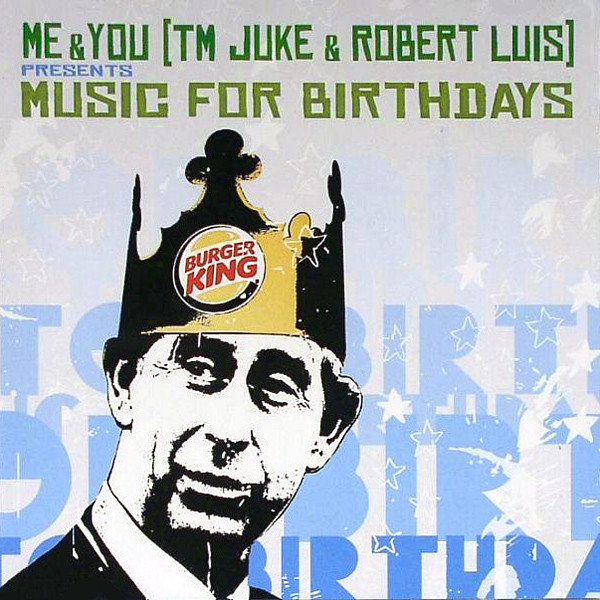
The second is a more recent purchase. It is a rare promotional compilation double CD called Music for Birthdays on the Rebtuz label. Generally only available as a download, this album also contains a song entitled Banksy Fashion (track 8 on CD 2.) However, I bought it for the cover image Burger King by the Norwegian street artist Dolk (Dolk Ludgren). Some people have suggested that Dolk may be a pseudonym for Banksy, who as far as we know has never done any murals in Norway. Dolk, though is the genuine article. Originating in Bergen, where his career started, he became famous for his portrait of the Norway’s Crown Prince Haakon wearing a Burger King crown. In 2006 he remade the image this time portraying Prince Charles wearing the Burger King crown instead of Haakon. A print edition of 250 was made.

The Music for Birthdays double CD uses an authorised version of Dolk’s Burger King on the booklet cover.

The booklet cover for the promotional CD Music for Birthdays.

Some New Thoughts about Collecting Banksy’s Record Cover Art.

It seems that this blog has become a reference work for information on record and CD covers with cover art by the artist known as Banksy. And I find it very flattering. My aim, way back in the 00s, was to catalogue all record and CD covers with Banksy’s art, irrespective of whether or not the release used an authorised Banksy image. To date I have catalogued about 100 releases.

Banksy’s art has been sold as paintings, stencilled prints or silkscreen prints, the latter being the most commonly available. The prints are commonly limited editions, often in editions of 100 or 250 which may be signed or unsigned. Both are becoming scarce and command very high prices; witness the recent sale of Banksy’s painting Love is in the Bin for GBP 18 million. Signed prints of his more iconic works are currently (October 2021) on offer for GBP 100,000 to 200,000.

I bought Blur’s Think Tank LP when it was released in 2003 and the promotional Parlophone and Observer CDs around the same time. However, I didn’t start seriously collecting Banksy’s record cover art until around 2005. Back then I could buy the records as they were released and they cost no more that other 12″ records, so my set of Dirty Funker’s Future 12″-ers cost GBP 6.99 each; likewise my set of Dirty Funker’s Laugh Now / Keep It Real 12″-ers (there’s a set for sale on Ebay just now for GBP 10,000). The most expensive release I bought was Dirty Funker’s Let’s Get Dirty (the first press without the Dymo strips across Kate Moss’s eyes) from a fellow collector for GBP 100. I added more and more records and CDs as time went on.

Once upon a time, the most expensive Banksy covers were the two he had purportedly stencilled himself: the Capoeira Twins’ promotional 12″ 4 x 3 / Truth Will Out and Röyksopp’s promotional Melody A.M. double LP; each produced in editions of 100 copies, comparable to Banksy’s limited edition prints. However, the records have been selling for about a tenth of what an equivalent print would cost.

So, when I started collecting, the covers were affordable and remained so until about 2015 when prices began to rise. Now, however, many collectors are competing to find Banksy’s record covers and prices have skyrocketed. I am amazed (and shocked) to see someone trying to sell copies of Dirty Funker’s Flat Beat 12″ for between EUR 815 (about GBP 700) and AUD 6,500 (about GBP 3,500), and copies of Queen & Cuntry’s Don’t Stop Me Now are for sale on Ebay for about GBP 4,000! These prices are stimulating the production of forgeries. I am not sure all the copies offered for sale nowadays are 100% genuine.

Apart from the question of forgeries, there are other ways unscrupulous producers are cashing in on the willingness of collectors to fork out large sums for limited edition covers. These seem to be on the increase. Take TV-Age’s beautiful The Player EP (an apparently hand screened cover in an unnumbered edition, said to be 100 copies) or Boys in Blue’s two 12″ singles Funk da Police (unnumbered edition, said to be 100 copies) and Strawberry Doughnut / Thick as Thieves (numbered edition of 250 copies). In my view these have been produced exclusively to lure collectors of Banksy covers to pay large sums for worthless music.

Another group that is cashing in on the widespread interest in collecting record cover art are the Israeli producers of picture discs with art by a variety of artists ranging from Banksy (like this one) to Warhol. They sell via Ebay and generally cost around USD 300 for a single-sided, generally unplayable, 12″ single. I made the mistake of buying a couple of these to test. I hope nobody else will fall for the con.

Thus I have now decided in future to concentrate only on official releases with Banksy’s art. Several CDs and cassettes have recently surfaced that are unoffical and I will not join in the bidding for these, nor will I go for the latest Boys in Blue 12″. Let’s all agree to boycott the speculative releases and just concentrate on the legitimate ones.

Sonic Youth, Kim Gordon and Richard Prince — Some Record Covers.

I have only seen Sonic Youth live once. That was at Hultsfred”s Festival in 2002. The concert can be seen on YouTube. I don’t remember too much about the show, only Kim Gordon’s pink dress and that I thought there were very few people gathered for such a major band. The video, however, makes it look like there was a huge crowd.

I recently discovered that Kim Gordon was an art school-trained artist as well as a musician and that she had designed record covers. Quite unknowingly, I actually had one of her cover designs in my collection — Ciccone Youth’s 12″ maxi single Into the Groove(y)/Burnin’ Up. It was Guy Minnebach who pointed this out.

Kim Gordon’s cover for Ciccone Youth’s single.

Sonic Youth have used other monicas than Ciccone Youth. In 2004 the band released an album called simply Sonic Nurse, with Richard Prince’s painting of a nurse as its cover art. There were four different paintings on this beautiful cover.

This was my first contact with Richard Prince’s art. To my mind it established a relationship between him and Sonic Youth. Prince is known as a painter and photographer and has even used found objects such as cars. He is also a musician and in 2015 recorded a song, Loud Song and released it on a CD.

Loud Song CD with photo of Richard Prince’s barn covered in vinyl records.

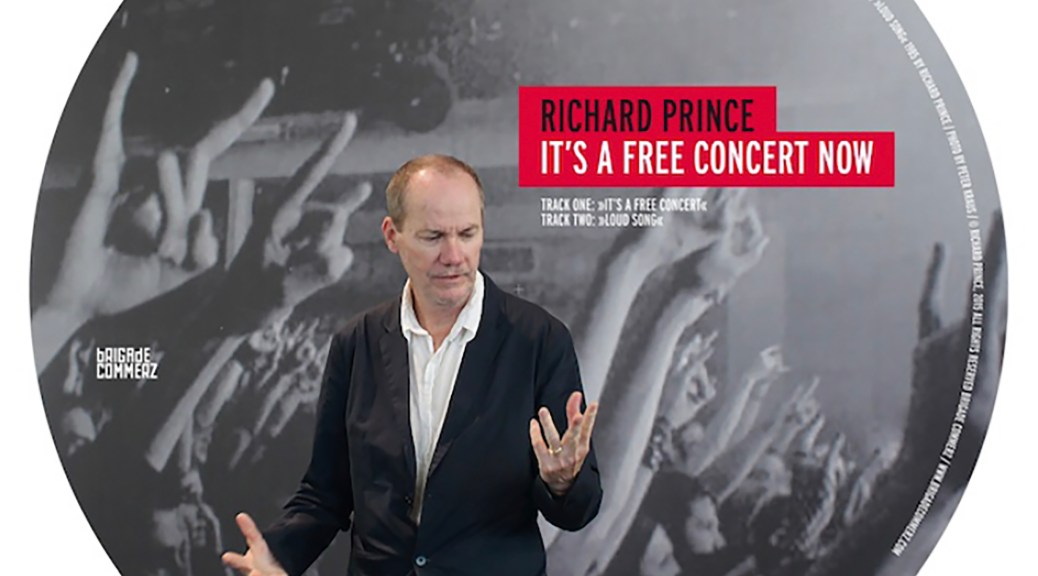
There was an exhibition of Richard Prince’s art in 2016 called It’s a Free Concert Now and for that exhibition Prince produced a limited edition, single-sided 12″ picture disc with the same title and two tracks, It’s a Free Concert Now and Loud Song. There were 25 numbered and signed copies and 25 unnumbered, unsigned copies.

Richard Prince used a detail from one of Kim Gordon’s paintings for the cover of his limited edition 12″ single Loud Song released in 2016. One edition of 250 was signed and numbered and the record pressed on white vinyl. However, my copy, while signed, is unnumbered and the record is pressed on black vinyl. I don’t know the size of this edition.

In 2019, The Warhol Museum in Pittsburgh released a double album by Gordon, Bill Nace, Steve Gunn & John Trusinsky of the Sound for Andy Warhol’s KISS concert, held the previous year at the Museum. The cover art was made up of stills from Andy Warhol’s Kiss film. The clear vinyl records also had similar stills on their labels.

Sound for Andy Warhol’s KISS.

A further Kim Gordon cover has appeared. The band Talk Normal released a 7″ single called Lone General in 2011 with cover art by Gordon, with very abstract impressionistic drips! This limited edition single was released on both black and clear vinyl.

The cover of the Lone General 7″ single.

I am on the lookout for more covers by both Richard Prince and Kim Gordon to add to my collection.

Klaus Voormann’s Career Review–“It Started in Hamburg”.

Klaus Voormann celebrated his 80th birthday on 29th April 2018. He has given his many fans a belated birthday present in the form of a book reviewing his more than 60-year career as a graphic artist. He calls the book “It Started in Hamburg” and is available from his website.

Klaus Voormann‘s career started at art school where he obviously developed a special interest in record sleeve design, making–as he states in “It Started in Hamburg“–with a fascination for the cover art of Blue Note Records. The book features a number of mock ups of record sleeves by jazz artists including Sonny Rollins, Jimmy Guiffre, Sonny Stitt, Bob Cooper and Bud Shank.

Voormann was truly the right man in the right place in 1960s Hamburg. Together with Astrid Kirchner he stumbled on The Beatles playing Hamburg’s Star Club, befriended them and showed one of his record cover designs to John Lennon. He played in the German group The Eyes, designing the cover of one of their singles and designed the cover for British band The Typhoons‘ German release of The Ventures hit “Walk Don’t Run“.

The_Eyes_7_400
The Eyes “She / Peanut Butter” single cover drawn by Klaus Voormann.

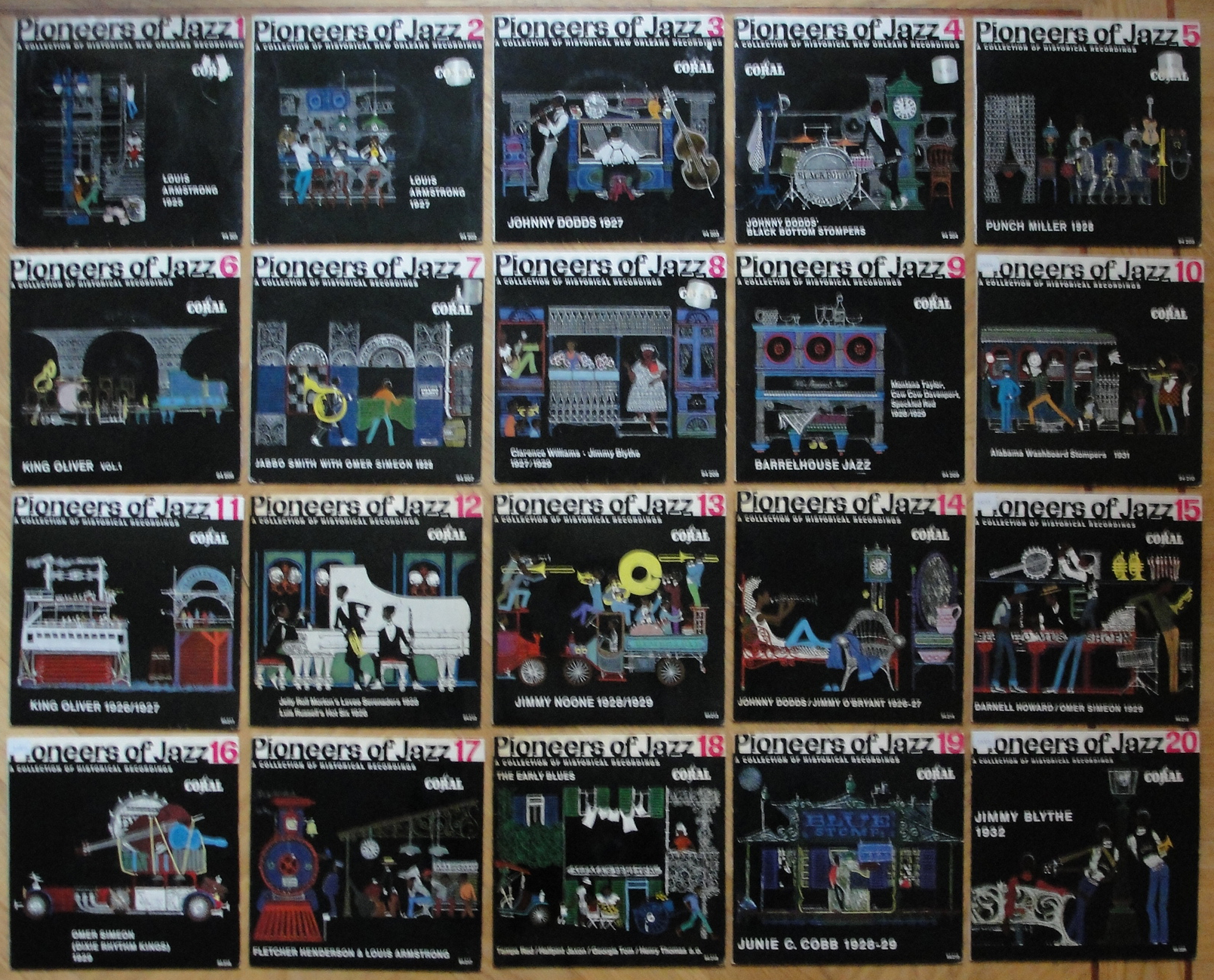
In 1962 he was asked to design the covers for a series of twenty jazz EPs called “Pioneers of Jazz” on Deutsche Grammophon’s German subsidiary Coral Records. At about the same time he drew the cover for an LP entitled “Ver nie in Bett Programm gemacht“, said to be a recording of a radio programme.

PioneersOfJazz_Complete_1
All twenty of Coral Records series “Pioneers of Jazz” released in 1960 with cover illustrations by a young Klaus Voormann.

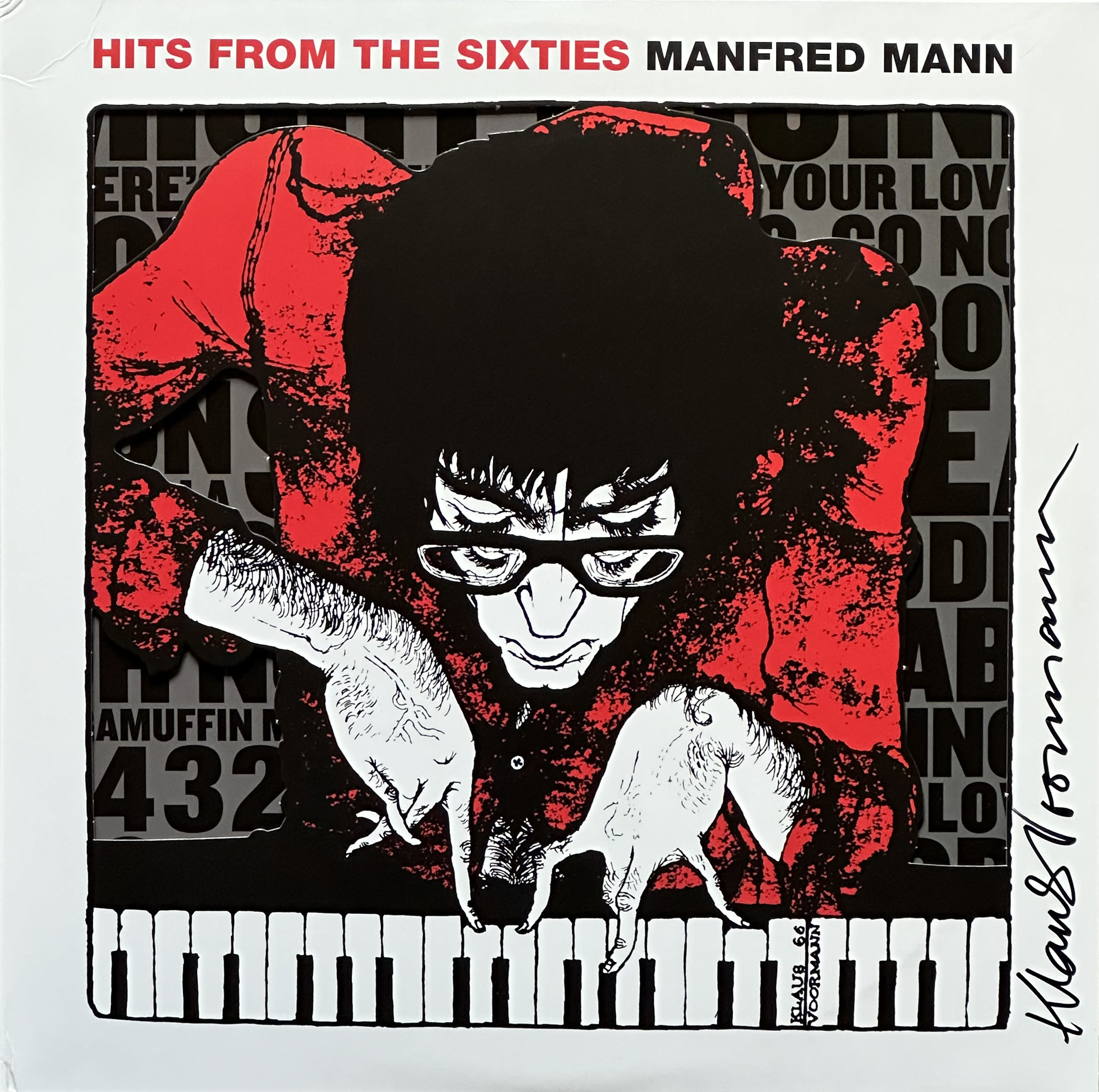
Voormann moved to London in the mid sixties. In March 1966 John Lennon phoned him and asked him to design the cover for The Beatles’ album “Revolver”, for which he was to win a Grammy. Besides graphic design, Voormann continued his musical career joining Manfred Mann‘s band in 1966 when Paul Jones left and Mike D’Abo took over the role of singer. He designed the cover for the band’s 1966 album “As Is“, released in October that year.

It Started in Hamburg” summarises Voormann‘s career. The 221 pages are divided into two sections: open the book one way and the text is in English. Turn the book over and you can read it in German. However, there does not seem to be any duplication of pictures. A few of Voormann‘s early attempts at producing jazz covers (see above) are included along with thirty-four of his published covers. There are pictures of the covers of ten of the “Pioneers of Jazz” series, along with one of the two Bee Gees covers (“Idea“)he designed and details of how cover art for The BeatlesAnthology” series came about. The limited edition comes with a USB with excerpts from Klaus’s film “Making of The Beatles “Anthology” artwork”, and little additions like an original drawing from the serial “Revolver–Birth of an Icon” and some film negatives.

His poster design and the design for his recent book “Revolver–Birth of an Icon“, about the design of the cover for “Revolver“, are also represented. His graphic self portrait and portrait of John Lennon remind me of some of Chuck Close‘s portraits, graphically breaking down their faces.

It Started in Hamburg” is an important addition to any collection of Klaus Voormann’s art–my copy of the limited edition of turned out to be No. 3/80. I offer my sincere congratulations to Klaus on his 60 years of art and music. May he continue for many more!

I’m Talking – “Lead the Way”, an Australian Single With a Warhol Cover.

Warhol cover collectors are constantly on the look out for previously unrecognised records with Andy Warhol’s  art on the cover. Warhol Cover Collector Club (WCCC) member Kevin Kinney seems to have an eye for them. He recently reported an 1985 Australian single by a band (improbably) called I’m Talking that reproduced Warhol’s print from around 1962 titled “Marilyn’s Lips”

marilyns-lips-c-1962
Andy Warhol’s “Marilyn’s Lips” print.

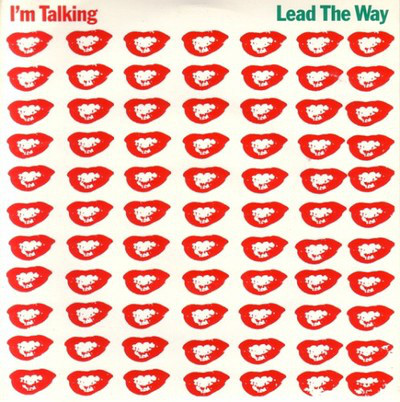
I’m Talking was formed in Melbourne, Australia in 1983 and had top ten hit singles in Australia with  “Trust Me”, “Do You Wanna Be?” and “Holy Word” Their 1986 album, “Bear Witness” made the top 15 in the Australian album charts. The band released ten singles between 1984 and 1986 and the “Bear Witness” LP in 1986 (there was also a compilation album “Dancing”, released in 1988). “Lead the Way”, the band’s third single was released in 1985 as a two-track seven inch and a limited edition three-track twelve inch maxi single, both with the same cover.

Lead the Way-7"
I’m Talking’s “Lead the Way” 7″ single cover.

While each panel of Warhol’s original has 84 (12 x 7) images, the I’m Talking cover only shows 77 (11 x 7) images, but the cover art is unmistakably based on the left-hand panel of Warhol’s original(note the two sets of lips at bottom right on the cover, that match the botton two lips on the left-hand panel of Warhol’s original.) There is, however, no credit anywhere on the cover or record. I suppose that as the record was only released in Australia and New Zealand, Andy Warhol would not have heard about the use of his image on the cover.

Thank you Kevin for tipping us off on this one.

More Kate Moss on Record Covers.

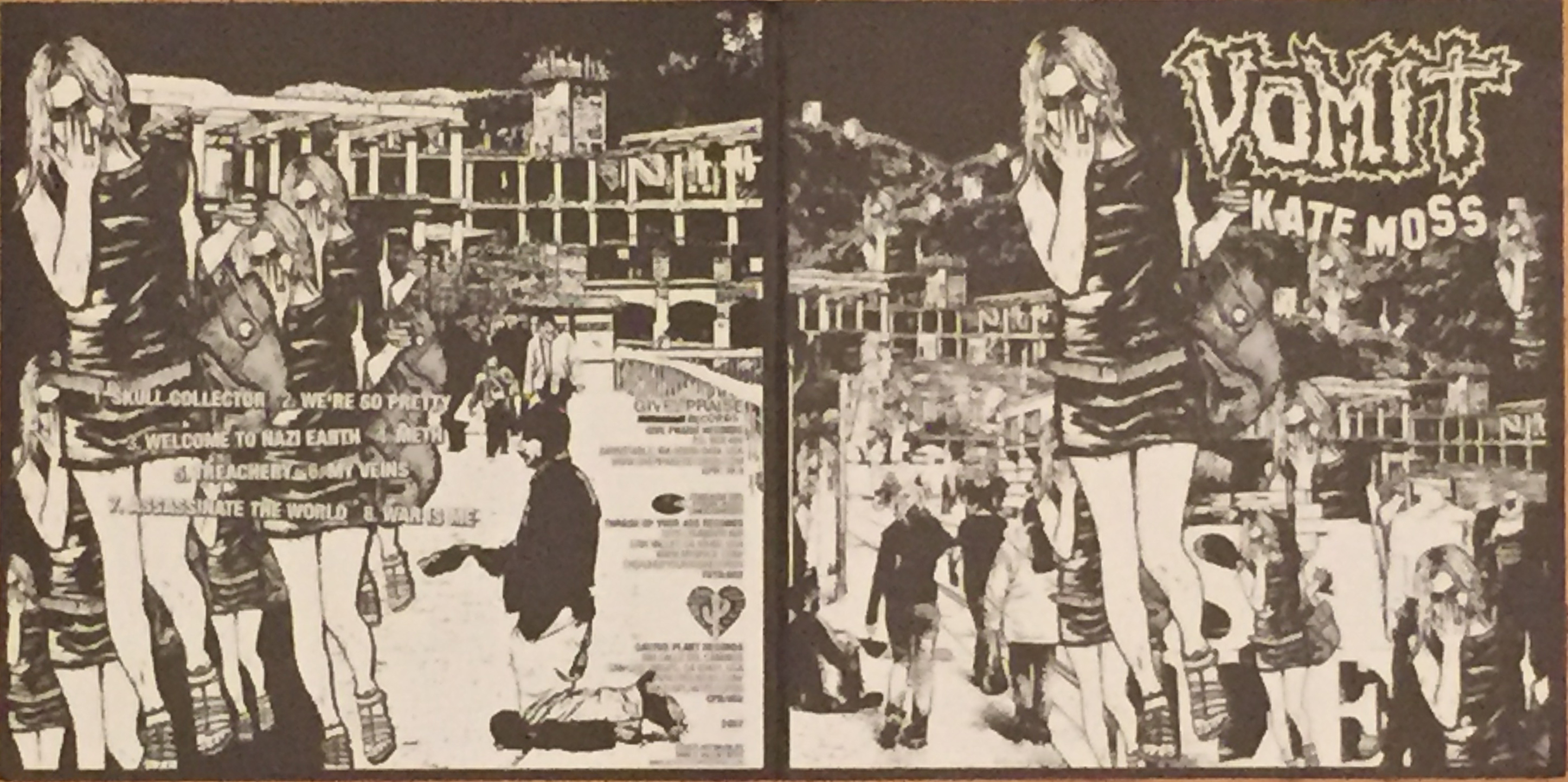
I really felt as though I had exhausted the subject of record covers showing Kate Moss‘ portrait in my previous post. No sooner had the proverbial ink dried than two more covers appeared. The first is a 7-inch single-sided EP by American punk/hardcore/grunge band Vomit, entitled “Kate Moss” on the Give Praise record label.

Now, a search of Discogs will reveal more than ten bands that have used the name Vomit. The Vomit in question seem to only have released this one “Kate Moss” EP.

Vomit-Kate-Spread
The gatefold cover of Vomit’s 7″ single-sided EP “Kate Moss” with at least thirteen portraits of Kate.

Then I was reading about the two CD and one DVD set of Bryan Ferry‘s 2010 “Olympia” album. I already have the limited edition Vinyl Factory LP version of this, that includes the cover portrait of Kate Moss but without the text–obviously intended to be framed and hung on a teenager’s wall. I hadn’t considered the box set as I felt it probably wouldn’t add anything to the LP version. Well, I was wrong. The 40-page book that houses the discs contains many more photos from Adam Whitehead‘s sessions for the album. The DVD has an interview with Bryan Ferry on the making of the “Olympia” album and the “You Can Dance” video as well as a video of behind the scenes activity in the making of the “You Can Dance” video.

Olympia box-fr complete
The box set of Bryan Ferry’s “Olympia” album contains a 40-page book and 2 CDs and a DVD.

The pictures are stunning. Here are a selection:

The CDs and the DVD included in set come in card covers, two of which have different cover photos from the LP and deluxe box.
Olympia Box CD1-frOlympia Box CD2-frOlympia Box CD3-fr

CD1 has the album cover photo, while CD2 and the DVD cover have different photos. You will have to examine the covers of the CDs to spot the very subtle difference (hint look at Kate’s right hand).

And just when the thrill of finding the box set sort of settled, I came across an Ebay ad by my least favourite seller Majestic Music & Art. I consider this seller to be quite ruthless in his (I presume it is a “he”) price-setting. Many years ago, I bought a couple of albums from Majestic Music & Art that were poorly packaged and arrived damaged. They would not discuss a return or a refund and I promised myself never to buy from them again. But in mid-March 2017 they posted this ad for a copy of the Luke Fair remix of Primal Scream‘s (and Kate Moss‘) “Some Velvet Morning” (the old Lee Hazlewood classic). This single normally comes in a plain black generic cover, but Majestic Music & Art advertised a copy with Kate Garner‘s famous 1992 portraits of an 18-year-old Kate Moss affixed to front and back covers.

Despite my promise to myself never to buy from Majestic Music & Art, I did buy the 12″ single to add to my collection. I knew of Kate Garner‘s Kate Moss portraits from an exhibition of Russell Young‘s recent screen prints at London’s Halcyon Gallery. Russell Young’s portraits are really wonderful–some are as big as 200 x 200 cm and covered in diamond dust, so they really sparkle!

Kate Moss‘ name crops up in music as a songwriter and artist–several tracks by other artists/bands are entitled “Kate Moss“. Examples include Arab Strap‘s 1996 album “The Week Never Starts Around Here” that contains a track entitled “Kate Moss“, but there is no picture of her on the record cover. German rocker Maximilian Hecker‘s 2003 CD “Rose” also has a song called “Kate Moss” as its first track. Again, there is no portrait of her on the cover. I don’t suppose these will be the only songs called with this iconic title.

Record collecting – a love affair or an addiction?

Okay, as you probably have gathered if you read my blog, I live in Sweden. This is not a very important piece of information, but it explains why this post was inspired (probably not the right word) by a recent book and a magazine number. The book, by Olle Johansson, is called “En skivsamlares memoarer” (ISBN 9789163776618, Rabarber förlag, Stockholm, 2015), which translates to “A Record Collector’s Memoirs” and the magazine is the Spring 2016 number of the Swedish music magazine Sonic–a 116 page special number entitled “Alla talar om skivsamlande“, again in translation “Everyone is talking about record collecting“.

Most people would not see any difference between a record collector and a music collector, but there is huge difference and these two publications illustrate it perfectly. Olle Johansson is a MUSIC collector. He is not interested in the format the recording is presented on. He does not care about record labels, catalogue numbers, or the cover art. He wants the music, and it doesn’t matter if it is a reissued CD or vinyl. He doesn’t search for original pressings or special editions. He just wants the music or the artist.

A record collector, however, cares about all, or at least some, of these things. There are those who collect a particular artist–and must have EVERYTHING released by that artist, including unofficial (bootleg) releases. Alternatively, the collector may collect a particular record label, quite independently of the type of music released (though the label will probably have released music that suits the collector’s taste). Then there are collectors who will collect a particular format– say 1960s EPs, or picture discs; the options are endless. And there are strange types, like me, who collect record cover art. Even here there are subdivisions; record cover art by a particular artist, cover art by any famous artist, or cover art that uses a particular design feature or a certain typography.

There are loads of books on record cover art and others on greater or lesser celebrities’ record collections. One recent, almost encyclopaedic one is Eilon Paz‘s “Dust & Grooves: Adventures in Record Collecting“. Paz visited record collectors and photographed them with their hoards of vinyl–everything from rare 78s to the world’s largest collection of coloured vinyl records. Sonic magazine interviewed musicians, DJs, record collectors and record buyers at record stores. I used to have a library of books about record cover art. I have only kept a few that I really treasure. These include Nick de Ville‘s “Album: Classic Sleeve Design: Style and Image in Sleeve Design“, Richard Evans‘ “The Art of the Record Cover“, Paul Maréchal‘s “The Complete Commissioned Record Covers“, Jennifer McKnight-Trontz’ & Alex Steinweiss’For the Record: The Life and Work of Alex Steinweiss, Inventor of the Album Cover” and the catalogue from Stockholm’s Nationalmuseum’s 1981-2 exhibition “Ytans innehåll: utställning av skivomslag” [“The Surface’s Contents: An Exhibition of Record Covers“].

Where did my collection begin? Born in the mid forties, I was raised on vinyl records. My father loved music and had a few hundred LPs and a few 78s. In my late teens I had a friend, Chris,  who worked on Saturdays at The Chelsea Record Centre, a shop on The King’s Road, Chelsea. We used to go to pubs and listen to R ‘n’ B and, when I went to University we started going regularly to the 100 Club on Oxford Street. We could see The Pretty Things, The Graham Bond Organisation or The Artwoods. One night–I suppose in 1964 or 1965– we went to see Bo Diddley and his famous band (who I had at that time only heard of through some Buddy Holly recordings.) Well, to call that concert mindblowing was an understatement.

The first records I bought were LPs–Eddie Cochran‘s “Memorial Album“, “The Buddy Holly Story” and John Lee Hooker‘s “Don’t Turn Me From Your Door“. One evening in late November 1963 my friend Chris came home with a copy of “With the Beatles” and we spent an evening just playing and replaying the album. And almost a year later on the 24th October 1964, Chris and I went to the Gaumont State Cinema in Kilburn to see The Beatles–I can’t say we heard them because of all the screaming. I still have the “Four Aces” programme from the concert! I started buying records and became a regular at two of London’s independent record shops that imported American albums; One Stop Records in South Moulton Street and Musicland in Berwick Street.

In early 1967, My brother, who had been living in America, returned to England and presented me with a bundle of records including Big Brother & The Holding Company‘s eponymous first album (on the Mainstream label), Country Joe & The Fish‘s “I Feel Like I’m Fixin’ to Die“, The Jefferson Airplane‘s “Takes Off” and “Surrealistic Pillow“. I  bought The Doors‘ first album, which was one of the greatest albums of 1967, at One Stop, and they recommended an album by The Velvet Underground & Nico, which I bought but didn’t really get into. I liked the cover, though. Then I discovered bluebeat, ska and reggae and for the first time bought singles. Prince Buster, The Ethiopians and Desmond Dekker before finding Phil Spector and then soul music in the form of Doo Wop with Clyde McPhatter & the Dominoes, The Coasters, The Drifters, Don Covay, Joe Tex and, of course, Otis Redding. Thus far, I was still a music collector.

Then in April 1971, I bought The Rolling Stones‘ “Sticky Fingers” with its Andy Warhol designed cover. I already had The Velvet Underground & Nico, so this was my second Andy Warhol cover. I also had two covers by Peter Blake: “Sgt Pepper’s Lonely Hearts Club Band” and The Pentangle‘s “Sweet Child“. So I had the beginnings of two cover art collections. In the early 1980s I stumbled across an album by The Cocteau Twins and soon started collecting albums on the 4AD label designed by Vaughan Oliver and Nigel Grierson (as 23 Envelope) and Vaughan Oliver and Chris Bigg (as v23). I also found Fetish Record‘s “Final Testament” and collected every cover I could find with Neville Brody‘s art.I also had all three of Joy Division‘s albums but didn’t start collecting Peter Saville‘s record covers in any systematic way, though a few did find their way into my collection. In the early 2000s I fell for Rob Jones‘ work–both as a poster artist for the White Stripes, The Raconteurs and Dead Weather–and for his record cover art. I also collected Swedish designer Martin Kann‘s covers for the band bob hund. All the while my collection of covers by Warhol and Blake grew. I also found that I had many covers by Klaus Voormann and then Damien Hirst produced a few record covers that found their way into my collection. In about 2008  I picked up a couple of albums with cover art by the artist known as Banksy and managed over the course of two years to collect almost all the covers bearing his art.

When I retired in 2010 it was apparent that my wife and I would have to move to a flat and that I would not be able to take my collection of records, posters and CDs with me. I had to downsize. I decided only to keep my collections of record cover art. I said “good bye” to my 4AD, Martin Kann, and Rob Jones records and kept only my Banksy, Blake, Hirst, Voormann and Warhol collections. So now I am a RECORD collector rather than a music collector. The music is secondary to the cover art.


Lou Reed & John Cale – Songs for ‘Drella’ and The Velvet Underground reunion

In 1968 John Cale and Lou Reed had fallen out during the recording “White Light / White Heat”, The Velvet Underground’s second album. They vowed not to play together again. However, they met at Andy Warhol‘s memorial service at St Patrick’s Cathedral on April 1st 1987 after having not had any contact with each other for many years. Apparently, Julian Schnabel suggested that they write a memorial album for Andy.

Warhol superstar Ondine had nicknamed him “Drella“–a contraction of Dracula and Cinderella and Reed and Cale decided to call their work “Songs for Drella“. They previewed the work at Brooklyn’s St. Anne’s Church in two concerts on January 8th and 9th 1989 before it was  complete.And these concerts were recorded and a bootleg LP appeared.
Warhol by Finkelstein

DoubleWarhol

The record cover was a silkscreened copy of Nat Finkelstein‘s 1965 portrait of Andy Warhol holding a tambourine. John Cale recorded a single with two songs from the “Songs for Drella” project live on 27th July, 1989. These were “Style It Takes / Forever Change“. The cover showed two contractions of Robert Mapplethorpe’s portrait of Andy Warhol (C The Robert Mapplethorpe Foundation).

AW by RM

Cale_Drella_fr

The complete work was performed at a series of concerts in November and December 1989 and one performance filmed and released on DVD and Laserdisk. Reed and Cale recorded the work over the following two months for an album, which was released by Sire Records on 24th April 1990 on standard CD, a limited edition Digipak CD and on LP.

SongsForDrella
“Songs for Drella” CD with a Warhol self-portrait visible behind Lou Reed and John Cale.

A single “Nobody But You / Style It Takes” was released from the album.

A tour proved out of the question although Cale and Reed did perform together again in 1990 in Paris. They were joined by Sterling Morrison and Mo Tucker to play “Heroin“. This concert was also recorded and released on a bootleg entitled “Paris 1990“, with fluorescent cover art on a black background. The front cover showed a Warhol lily and the rear a portrait of Warhol in a diamond-shaped lozenge.

VU_PAris1990_fr_600

VU-Paris1990_bk

The arrival of Morrison and Tucker at the Paris concert lead to a further reunion concert in 1993 that was also recorded and released on CD and Laserdisk entilted “The Velvet Underground Redux Live MCMXCIII” and later as a four-LP set with Warhol’s banana as the cover art.

VU_1993_Laser_fr_600