I used to be a music nerd with a large collection of all sorts of recorded music, though mainly a vinyl freak. I started out in the sixties, got swept away by psychedelia and into music posters which I continued to collect up until 2013, when space shortage meant I had to sell the major part of my collection. I had already started collecting record cover art and had large collections of art by Vaughan Oliver (4AD) and Neville Brody (Fetish Records), which unfortunately had to go. My collections of Andy Warhol’s, Sir Peter Blake's and Banksy’s and the Swedish band kent’s record covers have been exhibited in major exhibitions both in Sweden and internationally. I also have collections of David Shrigley’s, Damien Hirst’s, Klaus Voorman’s, Cindy Sherman’s and Richard Prince’s record cover art and a couple od Jean-Michel Basquiat’s covers.
I begin to repeat myself! I know I should never, NEVER, say that I’ve completed a collection, but this time I may actually have… I have finally got hold of all the covers on my Kate Moss Cover List. Just publishing this post, will, I’m sure, unearth more. But for now, what the heck, I’ll say I’ve got ’em all.
So here, in alphabetical order, are the new additions:
BABYSHAMBLES – “Shotter’s Nation” – Parlophone LP
BRYAN FERRY – You Can Dance Remixes – Vinyl Factory 12″
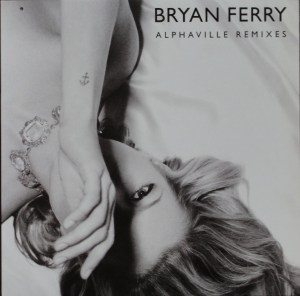
BRYAN FERRY – Alphaville Remixes – Vinyl Factory 12″
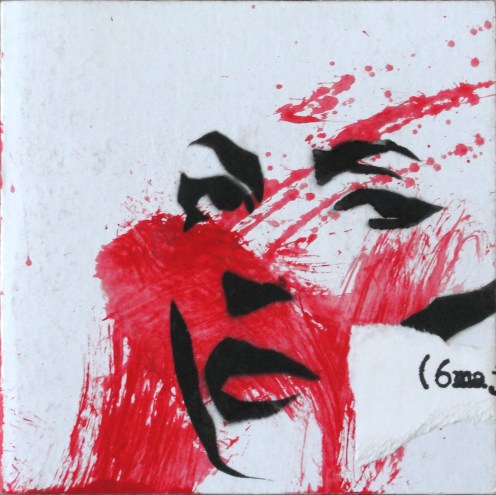
6majik9 – Kate Moss – Musicyourmindstilllove you CDr
PRIMAL SCREAM & KATE MOSS – Some Velvet Morning – Columbia 12″
2007 6majik9 “Kate Moss” CD-r with handmade cover. Music Your Mind Will Love You.
2003 – Primal Scream & Kate Moss “Some Velvet Morning”, Columbia 12″.
The “Shotter’s Nation” album was Babyshambles‘ third full length album after “HQ Sessions Second Wave” and “Down in Albion“. The album artwork is credited to Pete Doherty and Traffic and the cover painting to the French artist, painter, writer (5 novels so far) and photographer Alizé Meurisse, who has designed several covers for Babyshambles and Pete Doherty. Despite being released as recently as 2007, the vinyl album has become quite scarce. I assume the female figure on the cover with her back to the viewer is Kate Moss.
The Vinyl Factory released seven limited vinyl editions of Bryan Ferry‘s 2010 album “Olympia” and remixes of six singles taken from it. All featured portraits of Kate Moss in various poses photographed by Adam Whitehead. The first was “You Can Dance Remixes” and then came “Alphaville” remixes on two separate 12″ EPs, then “Heartache by Numbers“, which thus far I have only identified as a rare Dutch promotional CD single. The final two 12” EPs are “Shameless” and “BF Base (Ode to Olympia)“. The arrival of the “You Can Dance Remixes” and the second “Alphaville” 12-inchers completes my collection of all seven Bryan Ferry/Kate Moss covers.
6majik9 is a loose Australian collective fronted by Michael Donelly who formed Music Your Mind Still Love Records which released a number of CD-rs in limited numbers (usually less than 100 copies) with hand painted covers. The “Kate Moss” CD-r comes in a handmade card cover with a stencilled portrait of Kate in black and with a hand-painted red slash that varies from cover to cover. The rear cover has a stencilled pentagram. Mike Donnelly has told me that it was he who made the “Kate Moss” cover by stencilling the face and painting the red overlay.
The final addition is the oldest cover (from 2003) featuring Kate Moss;Primal Scream and Kate Moss “Some Velvet Morning” with cover design by INTRO and illustrated by British illustrator Julie Verhoeven, who has designed the cover of Kasabian‘s “Empire” and several for Nouvelle Vague.
Now I can show all the Kate Moss covers in a single post. Here they are in chronological order:
2003 – Primal Scream & Kate Moss “Some Velvet Morning”, Columbia 12″.2007 Babyshambles “Shotter’s Nation” Parlophone LP.
2007 – Dirty Funker “Let’s Get Dirty” Spirit Records singles
2007 – Dirty Funker “Let’s Get Dirty” Spirit records.
Left: First pressing. Right: Second pressing.
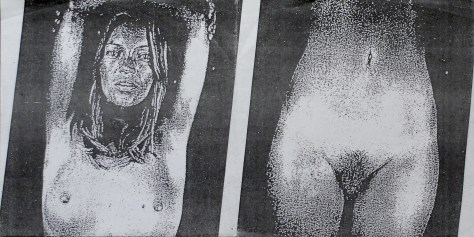
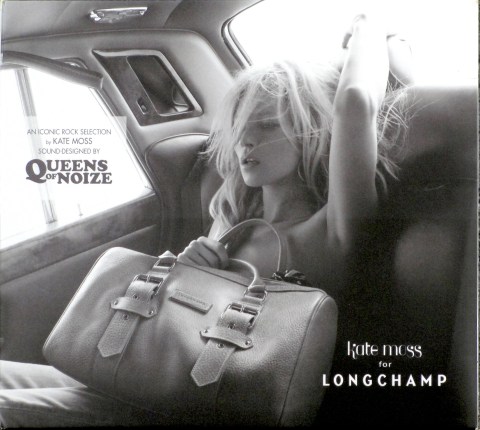
2007 6majik9 “Kate Moss” CD-r with handmade cover. Music Your Mind Will Love You.2008 The Unholy Two’s “Kutter/Porkys” single. Uses Chuck Close’e photographs of a nude Kate Moss. Columbus Discount Records.2009 Damien Hirst’s “Use Money, Cheat Death” 12″ single, with his portrait of Kate Moss.2010 Various Artists compilation. “Kate Moss for Longchamp – an Iconic Rock Selection by Kate Moss” – Promotional CD2010 Bryan Ferry “Olympia”. Limited edition LP. Vinyl Factory.
So there you have it! All eighteen covers that I have found featuring Kate Moss. Now I’ll sit back and wait for someone to point out a cover I haven’t found.
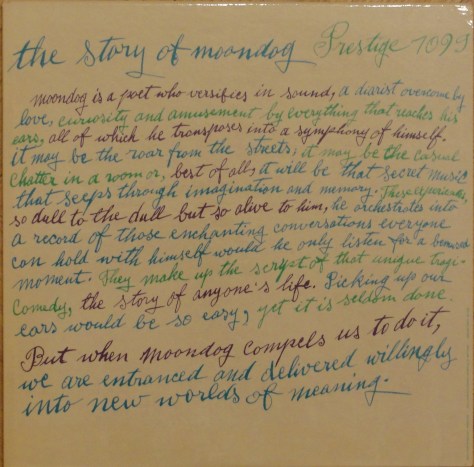
My collection of Andy Warhol‘s record cover art is nearing completion. There are only a few original covers left to find. Moondog‘s album “The Story of Moondog” is one I have been chasing since I started collection in earnest nearly ten years ago. You can read more about the Moondog album in my previous Recordart post. The album was released on the Prestige label in America in 1957 on LP and somewhere I have read that there were probably about 5,000 copies pressed records originally. The record doesn’t seem too rare as copies regularly appear on Ebay but most copies I have seen have been in very poor condition with the cover severely yellowed or stained.
Towards the end of November 2016, I saw what looked like a perfect copy advertised on Discogs and from Spain. Photos showed it to be a really pristine copy with only minor yellowing of the front cover.The record itself was in near mint condition but I couldn’t afford the asking price! I made a cheeky offer which, to my surprise, was accepted. One big advantage of buying it from Spain is that there would be no import charges for items sold within the European Union.
The seller wanted payment via Payoneer–a service I had never heard of and that took over a week to process my payment. So by the 12th December I hoped my record would be on its way. Then fate took a hand. The seller’s father fell ill and ended up in hospital, so the seller had to leave Madrid and my Moondog album to go to his bedside. Having paid, I was naturally worried that this was a ruse and that I might never receive the record. However, the seller kept in regular contact and apolgising for the delay. Sadly his father died in early January and a week later the seller had returned to Madrid and could ship the record, which arrived in perfect condition on 17th January.
the cover is is amazing condition with absolutely no ringwear, only very minor yellowing and crisp corners, an intact spine with clear printing and a near perfect rear cover. I hadn’t expected the front cover to be laminated, but this copy’s was.
So, now there are only three important Warhol covers to find…
Sergei Prokofiev‘s cantata “Alexander Nevsky, Opus 78” was written in 1938 as the soundtrack to Sergei Eisentein’s film of the same name. “Alexander Nevsky” was Prokofiev’s third film score; the others being “Lieutenant Kije” (1934) and “The Queen of Spades” (1936).
The first American performance took place on 7 March 1943 in an NBC Radio broadcast with Leopold Stokowski conducting the NBC Symphony Orchestra and Jennie Tourel (mezzosoprano) as soloist. Eugene Ormandy gave the first concert performance of “Alexander Nevsky” a fortnight later, on 23rd March 1943 with the with the Philadelphia Orchestra, the Westminster Choir , and Rosalind Nadell as soloist and in 1945 recorded the work in English for Columbia records with Jennie Tourel as soloist. The recording was forst released as a a 78 RPM album with cover art by Alex Steinweiss.
Alex Steinweiss’ cover for the 1945 recording of Alexander Nevsky.
When Columbia Records introduced the 33 1/3 RPM long playing album in 1948 many of the old 78 RPM recordings were released in the new format. Alex Steinweiss, Art Director at Columbia, had not only designed the cover structure for the LP . The very first Columbia LP covers used a generic design based on the simplified capital of a Corinthian column.
First cover design for Columbia LPs.
Steinweiss‘ next development was a new basic design layout with space for an illustration.
Early Columbia LP cover with illustration.
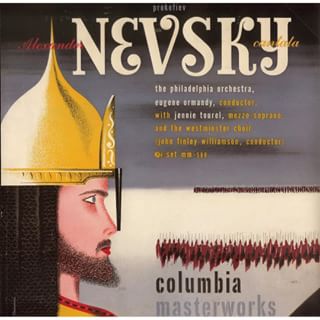
Then his layout evolved with large blocks of colour on the front over which the record’s title and other information were printed. He also provided space for an illustration. These covers were introduced in 1949 and Steinweiss, who by this time was inundated with work, commissioned outside artists to provide the illustrations. These included the young Andrew Warhol as well as Jim Flora, and less well known artists such as Darryll Connoly. The 1949 re-issue of Ormandy‘s recording of “Alexander Nevsky” used this cover variation.
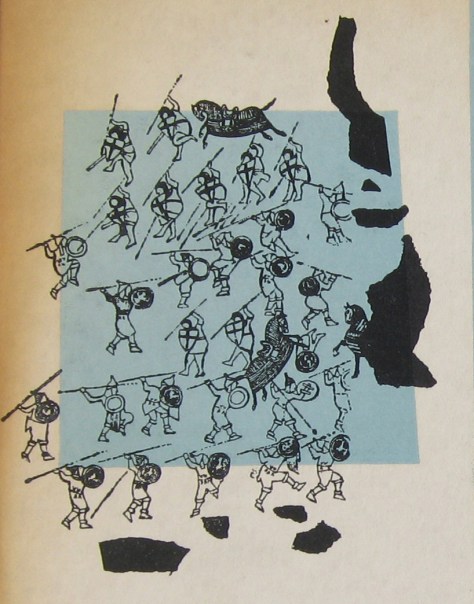
Andrew Warhola had graduated from the Pittsburgh College of Art and moved to New York to start work as a commercial artist. He contacted record companies trying to get commissions. Columbia Records was one he contacted. Steinweiss gave the young artist three commissions. The “Alexander Nevsky” was the second after Warhol‘s illustration for the re-issue of Columbia’s record “A Program of Mexican Music” by Carlos Chavez. Ten years had passed since Eisenstein‘s film was made but it was probable that Warhol saw the film at some stage. Guy Minnebach suggests that the his drawing was probably made from a film still.
Warhol’s illustration for the cover of Alexander Nevsky showing the “Battle on the Ice”.
The first pressing–identifiable by the dark blue label “Columbia Masterworks” labels on the record itself and the fact that the front cover slick was pasted onto the front of the cover, that folded over onto the rear and included the information on the spine.
The first Columbia Records LP label was dark blue.
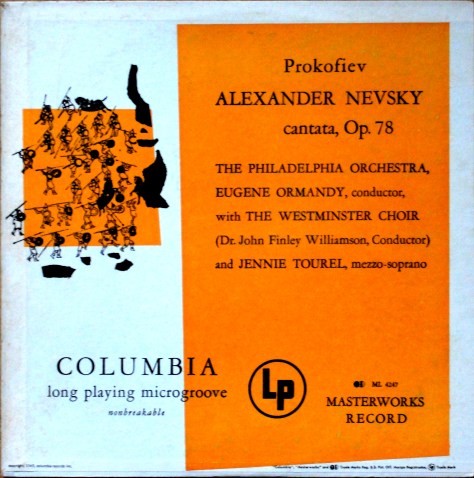
this first issue’s cover appeared in two shades of blue: the most common is a shade of pale
blue, but there is also a darker turquoise variation.
Sometime later, in the late 1950s or early 1960s, Columbia re-released this album.By this time the method of manufacturing LP covers had changed and the rear slick was pasted on first and overlapped the edges of the front cover and the spine text was now printed on the rear slick. Front slicks were then pasted onto the front, leaving a small margin of visible rear slick.
The lower right corner of the 1950s Nevsky cover showing the front cover slick overlapping the rear slick.
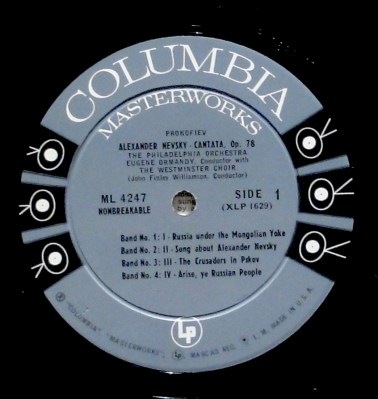
At least three different colour variations of This re-issue’s records had the modernised Columbia Records labels, known as the “six-eye” label because of the six Columbia logos at three and nine o’clock.
Columbia Records’ “six-eye”label introduced in the mid 1950s.
Three colour variations of the front cover art were produced over the years. I don’t know if this was intentional or due to the printers’ own decisions. There were green, orange and pink covers.
I had hoped to be able to picture my own pink copy, but I haven’t managed to find one yet. This picture is from a recent Ebay sale that I bid on, but failed to win.
I only found my copy of the turquoise cover in early January 2017 and thought at first sight that it was one of the later green covers, though with the record with the dark blue label. I had to compare them to see the difference.
The picture shows the green cover on the left and the turquoise cover on the right. The difference is obvious, even without being able to see the difference in the way the covers are constructed.
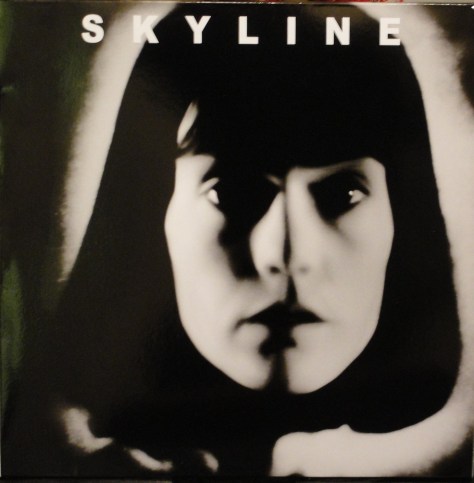
I don’t know anything about the band called Skyline, but they released a 12″, 5-track bootleg album in 1978 on the Four Stars label (catalogue No. FS001) with a cover picture of Manhattan. On the rear of the cover the photo was credited to “A. Warhol.”
The album had totally impossible credits beside the “Warhol” cover credit. The musicians were listed as Johnny Thunders (Lead Vocals, Guitar), Lonnie Davis (Keyboards), Peter Ford (Drums, Percussion) and Charles La Croix (Bass, Keyboards, Vocals). However, the album became a kind of underground disco hit and was re-issued with a different cover.
Skyline’s 1978 EP “I’m Gonna Fall in Love” with cover picture of Susanne de Maria from a Warhol screen test.
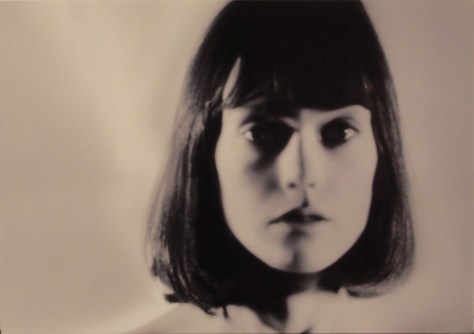
A few years ago Guy Minnebach, who has an encyclopaedic memory about Andy Warhol‘s art, and Raimund Flöck recognised the cover photo of Susanne de Maria as being from one of Andy Warhol‘s 1964 screen tests and is published in a book of them. And since then this version of the record has been in demand not only by fans of the disco music but now also by collectors of Andy Warhol‘s record cover art. Interestingly, the original bootleg lacked the photo credit to A. Warhol on the rear. I have been looking for a copy for my collection and saw one recently on Ebay on which I bid unsuccessfully. However, I noticed in the photos on Ebay that the cover had the “Photo by A. Warhol” credit on the rear cover and also included a photo of Susanna de Maria (note the correct spelling of Susanna), which sparked my curiosity..
About a month later the seller contacted be via a second chance offer and told me he had another copy for sale, and a deal was done. The record duly arrived and I realised this must be a reprint of the original 12″. It is on a different label–Paint the Case Productions–and has no obvious catalogue number. Included in my copy were two photos of Susanna de Maria; one with “No 49” on the rear and the other with “No 49 out of 50” on the back. Could it be that this repressing was limited edition of just 50 copies?
The repressed version of Skyline’s 12″ EP.
As anyone can see, the image is much less sharp than on the original 1978 pressing (no, it’s not due camera shake). Even the included photos of Susanna are not 100% focused.
One of the posters included with the album.
Anyway, the album is a nice addition to my collection of Andy Warhol covers. But I suspect I’ll still look for one of the original 1978 pressings.* After a discussion with Guy Minnebach who originally recognised the photo as being from one of Andy Warhol‘s screentests, I conclude that this must be a bootleg of a bootleg! Guy pointed out that bootlegs have previously always been about making music recently an LP version of Paul Anka‘s “Amigos” album appeared. This album was only officially released on CD so the vinyl version seems to be a bootleg only produced for it Warholian cover art. This seems to be the reason for the new pressing of the Skyline album.
*I finally found a copy on 8th August 2017. Hooray!
2016 is drawing to a close and it’s time for a summary. It’s been a great year with important additions to all five of my chosen artists’ collections. Perhaps the biggest thrill, however, was being invited to show my collection of record covers by the artist known as Banksy in the major retrospective at Rome’s Palazzo Cipolla in May.
I realized some time ago that collecting all the record covers that five artists have produced would be a full time job and had promised myself that I would not start collecting any additional artists. However, this year I succumbed to temptation and added two more artists to my list of collectible record covers. The first was not really a designer, but an icon. I realized that I already had some of the rarest covers with portraits of Kate Moss and that collecting the ten or so remaining covers might not be too difficult. The second artist I started to collect is Jeff Koons. So far, though, I have only found three covers with his art, so that hasn’t been too taxing.
I’ll take you through the additions to my collection artist by artist.
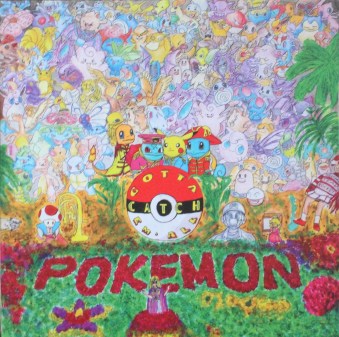
Banksy: Well. It’s been a poor year for new record covers with Banksy art. However, I did find one by Junichi Masuda, who composes for computer games and is a director at Pokémon. He released an album in 2015 called simply “Pokémon” with a cover that was a pastiche of the “Sgt. Pepper’s Lonely Hearts Club Band” cover
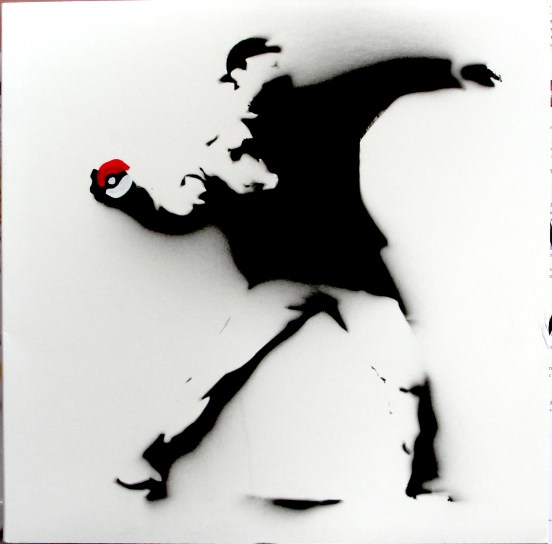
There are at least three different variants of this album pressed on coloured vinyl: blue/red swirl, red/white swirl and red/clear swirl. each colour was released in limited editions of 500, 200 and 100, respectively. But, there was also a test pressing released in a limited edition of 100 with a completely different cover:
This is a hand-sprayed version of Banksy‘s “Flower Thrower“–but instead of throwing flowers he is about to throw a Pokémon ball. As I mentioned, there were intended to be 100 copies of this cover, but the stencil didn’t last for the whole edition and the last few copies were given a different design: Again this was based on Banksy‘s “Girl With Balloon” design. Probably less than ten covers had this design. However, I had the “Pokémon” album with the “Sgt Pepper” cover and the “Flower Thrower” cover, so I didn’t think this particularly “Banksy” enough to include in my collection.
When the invitation to show my Banksy collection in Rome arrived I decided that I had to get the original first pressing of the Paris Hilton CD “Paris“. Luckily two came up on Ebay at prices way below what the CD had been auctioned for just a couple of years ago, so I made what I thought was a cheeky offer and, to my surprise, my offer was accepted. My joy was, however, tempered a couple of weeks later when the other copy sold for less than I had paid. Oh, well. At least the CD could be included in the Rome show.
Sir Peter Blake: It’s been a good year for my Peter Blake collection with some new releases and some older items that I had missed.
I have already owned up to my obsession with Eric Clapton‘s “24 Nights” recording. Well this year I have really fed it.
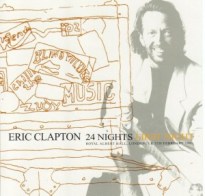
The first additions to my collection were two bootleg CDs from the “24 Nights” concerts at the Royal Albert Hall. These were for the first and fourth nights, respectively. Both CDs had original artwork that incorporated Peter Blake’s drawings.
I also bought the 7″ single “Wonderful Tonight/Edge of Darkness” with its Peter Blake cover.
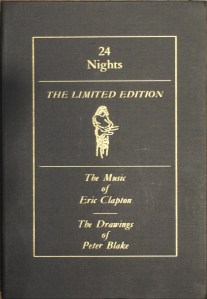
Then, finally, I splashed out on the magnificent “24 Nights Limited Edition–Music by Eric Clapton/Drawings by Peter Blake” box set published by Genesis Publications in 1991. I was lucky enough to find one of the promotional copies (Number XXV/200), signed by both Clapton and Blake. The box set contains two CDs “24 Nights” that include 3 previously unreleased tracks, purported not to be available anywhere else.
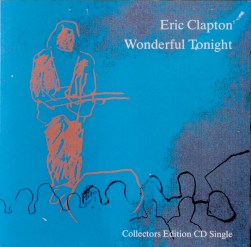
Well, that proved untrue as I found a “Collectors Edition” CDEP entitled “Wonderful Tonight” that included these three tracks among the six on this double CD.
The cover of the Collectors Edition CD EP of “Wonderful Tonight”.
I June, I was walking along St Eriksgatan in my hometown, Stockholm, where there still are several record shops and secondhand record stores and as I passed The Beat Goes On I noticed a record with Peter Blake‘s 2015 portrait of Eric Clapton on the cover. It was the newly released “I Still Do” double album and I bought it on the spot.
The front and rear covers of Clapton’s 2016 album “I Still Do”.
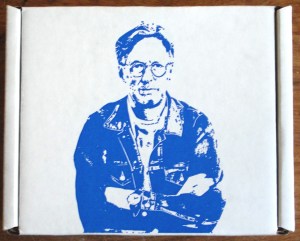
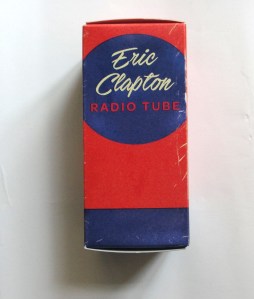
Then I started to do some research and found that Eric Clapton‘s own site had sold limited editions of the album–a box set with the CD, a photo and a USB in the form of a radio valve with the album including two extra tracks and a film of an interview with Clapton and the album’s producer Glyn Johns. The box had sold out on Clapton‘s site, so I turned to Ebay and a search quickly turned up some affordable copies and I ordered one. Sweden’s postal service is not what it once was and I still hadn’t received the box after a month. I had been tracking the parcel and to my horror found that Postnord (the Swedish postal service) listed the parcel as “delivered”. But I couldn’t find it anywhere. I was desperate. After a further ten days or so I decided it was lost forever and ordered a second copy. A few days later, when the second copy was already on its way, the original parcel turned up! So now I have two copies, one still sealed. Then I saw that there was a further limited edition with just the USB in a box like radio valves were sold in. I found a cheap copy in Australia and after 4-5 weeks it duly arrived. Then in August, one of the moderators on the Rate Your Music site tipped me off about a Blake cover that I had never heard of. It turned out to be the only classical music cover Peter Blake has so far designed. It was a recording of George Gershwin‘s “An American In Paris” coupled with “Rhapsody in Blue” and Ferde Grofé’s “Piano Concerto in F” played by Steuart Bedford and the English Chamber Orchestra.
The cover art for Music For Pleasure’s 1983 album of Gershwin’s “Rhapsody in Blue/American in Paris” LP.
In addition to the recordings, I have managed to find some rare memorabilia relating to Blake’s record covers. I found one of Sony Music’s Peter Blake dartboards given away as prizes for a competition in connection with Oasis‘ “Stop the Clocks” release. The dartboard figured on the cover of the LP and CD versions of “Stop the Clocks” and on the CDs themselves as well as on the covers of the limited edition double 7″ and CDEP also entitled “Stop the Clocks“.
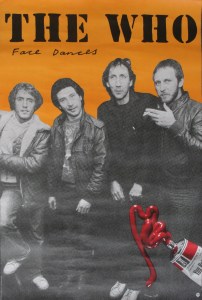
And I found a tour poster for The Who‘s 1981 Face Dances tour of the US in mint condition. I also got hold of copies of the programme sold at Eric Clapton’s 70th birthday concerts at Madison Square Garden and The Royal Albert Hall . These are LP sized with the same Peter Blake portrait of Clapton as on the “I Still Do” album cover. I fully expected that this portrait would be used on the cover of the triple LP set “Slowhand at 70” which was the official release of the Albert Hall Concerts. But I hadn’t realised that Clapton was saving it for the “I Still Do” cover.
In addition I bought two music-related books:
a. Paul Weller‘s “Surburban 100“; a collection of Weller‘s song lyrics with cover designed by Weller‘s friend Peter Blake.
The copy I bought was even signed by Paul Weller–an added plus!
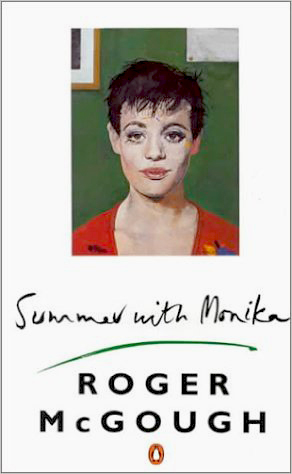
b. I already had the first paperback edition of Roger McGough‘s “Summer With Monika” with Peter Blake‘s rather racy cover painting of a nude woman lying on her bed. Penguin Books decided that they couldn’t use that cover picture so they chose another rather more platonic Blake painting for their edition.
My new copy is signed by both Peter Blake and Roger McGough.
Damien Hirst: As far as I am aware there has only been one new release with Damien Hirst‘s art so far this year–Jeff Wootton‘s brilliant solo album “The Way the Light“. For those who don’t know of Jeff Wootton he is a 29-year-old guitarist from Manchester who has an impressive CV. He has played with Damon Albarn (in Gorillaz, among other combinations), with Noel Gallagher in Gallagher’s post-Oasis band High Flying Birds.
“The Way the Light” was released in February 2016 as a digital download and as a 500 copy numbered, limited edition vinyl album which included a lavish booklet with 10 new spin paintings by Damien Hirst. Even the LP’s back cover had a spin painting.
Jeff Wootton’s 2016 album “The Way the Light”Damien Hirst’s spin painting on the rear cover of the “The Way the Light” album (almost identical to that illustrating track 7 in the booklet.
The limited edition sold out in just over six months.There were a number of promotional singles, tracks from the album. released either as downloads or on CD or CD-rom. I have managed to find three of these CD/CD-roms (there might be a fourth, which I have to trace). These are “The Eternal” (a one-track CD-rom with no catalogue number), “Sonik Drips” (a one-track CD-single with catalogue number JWPROMO02) and “Reverie” (another one-track CD-single with catalogue number JWPROMO04) . Each has a Damien Hirst spin painting on its inlay.The “The Way the Light” album had a Japan-only release as a CD with an extra track (“The Eternal Reconstructed“).
During the autumn I saw a copy of “The Way the Light” for sale on Ebay and snapped it up to find that it was unnumbered! I suppose it must be a promotional copy, but it didn’t have any indication, other than the lack of a number, that it was. So now I have both a numbered (No. 409) and an unnumbered copy.
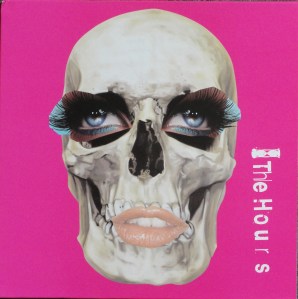
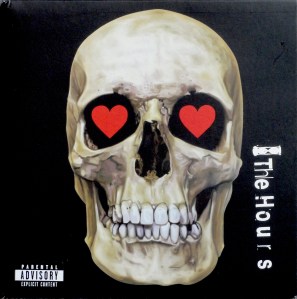
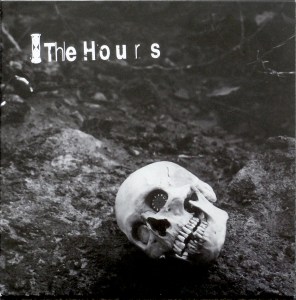
I have spent much of 2016 searching for the five singles produced by The Hours in 2006-7. I had four of these in my collection but they mysteriously vanished–I suspect when I sold the bulk of my record collection in 2013. They are limited editions with picture covers designed by Damien Hirst and Jason Beard and inner picture inner sleeves, too. The singles are “Ali in the Jungle/Nothing“, “Back When You Were Good/Back When You Were Good (remix)“, “Love You More/Mum and Dad“, “Ali in the Jungle/For a Moment” and “Big Black Hole/Killing Time”. I managed to collect then all again–but they cost quite a bit more this time around.
4. Klaus Voormann: I have a great many additions to my Klaus Voormann collection this year. 2016 saw the 50th anniversary of the release of The Beatles’ “Revolver” with its Klaus Voormann cover art. Apparently, Robert Whittaker had taken photos of the Fab Four for a cover, but John Lennon wanted something different and contacted Klaus, who was then living in London and playing with Manfred Mann. I already had my copy of revolver signed by Klaus but I bought his lovely book “Revolver 50: Birth of an Icon” from him and received a beautiful signed copy. I also found that he had written another book about his time with The Beatles called “Four Track Stories” and he sent be a signed copy of that too, with a signed postcard!
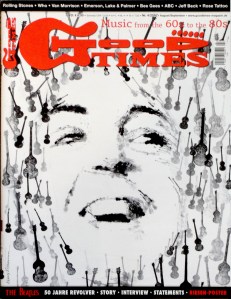
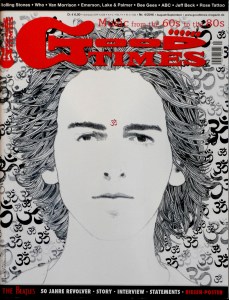
The German music magazine Good Times devoted its August/September number this year to “Revolver” and there were five different covers; four of which each had a new portrait of a Beatle, drawn in Revolver style by Klaus Voormann, on the covers and the fifth had a composite of all four Beatles. The magazine has also produced t-shirts with Voormann‘s Beatle portraits, but I haven’t invested in those.
I discovered a really poor booklet published in America purporting to be a catalogue of Klaus Voormann‘s record covers. When it arrived I found out that it only included covers listed in Wikipedia. The only useful information I got out of it was the fact that Klaus had designed covers for two CD-singles by Wet, Wet, Wet that I had not heard about. They were easy to find–and cheap! CD 1 and CD 2 cover art for Wet Wet Wet’s 2007 single “Too Many People”
Klaus also designed the covers for two CDs by his friend Volkwin Müller which Thorsten Knublauch told me about. The first called “Strawberry Songs” was by Volkwin & Co and released in 2012.
Volkwin Müller’s “Strawberry Songs” CD with Klaus Voormann’s portrait of John Lennon.
The second was simple titled “Volkwin” and released earlier this year.
The cover of Vokwin Müller’s CD “Mit anderen Augen” with Klaus Voormann’s portrait of him.
Klaus Voorman even had time in 2016 to design the cover for Albert Lee & Hogan’s Heroes‘ CD “Frettening Behaviour“.
Cover art for Albert Lee & Hogan’s Heroes CD “Fretterning Behaviour”.
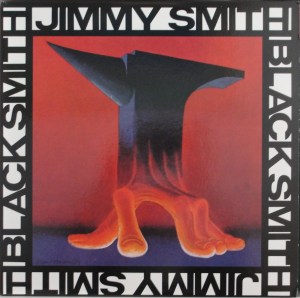
Another unexpected find was the cover of Jimmy Smith‘s 1974 album “Black Smith“. I had no idea that Klaus Voormann had designed a cover for Jimmy Smith until i saw a copy advertised on Ebay with cover art credited to Klaus. I found a mint copy for a couple of dollars on Discogs.
The last Voormann cover I bought this year was a signed copy of the single “Lu La Le Lu“– a Klaus Voormann song he recorded for Apple in the sixties but that was not released until now. The song was recorded and released by Wishful Thinking in 1972. This single issued for charity had a remixed version of Klaus Voormann‘s recording on the A side and Wishful Thinking‘s version on the B side.
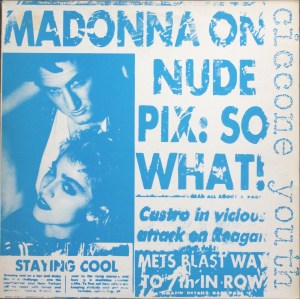
Andy Warhol: I managed to find fifteen covers with Warhol designs, only four of which were actually released in Andy‘s lifetime. These are Artie Shaw‘s EP “Both Feet in the Groove“, Aretha Franklin’s “Jimmie Lee” and “Rock-a-Lott” 12″ Maxi singles and a rare Debbie Harry 12″ picture disc version of “In Love With Love“. I also found a copy of Sonic Youth‘s “Into the Groove(y)/Burnin’ Up” 12″ single released under the moniker Ciccione Youth. The cover is a play on Warhol‘s design for Madonna‘s Wedding photo, but the cover isn’t really a Warhol cover. There are a myriad of different re-issues of the magnificent “Velvet Underground & Nico” and I collected a couple of picture disc versions this year–one in a die-cut card cover, the other in a transparent plastic sleeve. Both apparently produced in Russia. The version in the die-cut cover is quite rare and the disc differs slightly from the version without the cover.
Vinyl Lovers picture disc in die-cut card sleeve.
A group called Land of Sex & Glory released a 7″ single called “I Always Wanted to Be Andy Warhol’s Movie Star” in 1984 in a poster sleeve and I found a mint copy. Another 7″ single that I bought was The Weaklings‘ “It’s So Criminal/Real Cool Time” with cover photo by Richard Avedon of Warhol‘s scarred abdomen after he had been shot by Valerie Solanas.
Richard Avedon’s photograph of Andy Warhol’s abdomen after he was shot in 1968 on the cover of The Weaklings’ 1999 single.
There were some CDs with Warhol art that I picked up just for fun. Marilyn Monroe‘s “Happy Birthday Mr. President“, “Warholes or All Andy Would Enjoy (And Fear) / Warhol Memory Disorder” by unpronounceable Lengow & Heʸᵉrmeᵃʳs, Otomo Yoshihide & Sachiko M. that has a Warhol cow on the cover punctuated with bullet holes. The final CD with Warhol‘s art was “John Cage to David Byrne: Four Decades of Contemporary Music” a various artists compilation released in conjunction with the exhibition “Jasper Johns to Jeff Koons: Four Decades of Art from the Broad Collections“. The exhibition showed at the Los Angeles County Museum of Art from 7th October 2001 to 6th January 2002. The inlay had pictures of works by several popular 20th Century American artists, including Jasper Johns, Andy Warhol, Jeff Koons, Sharon Lockhart, StephanBalkenoi, and Jean-Michel Basquiat.
However, my greatest finds were made as the 2016 faded. At the beginning of December I found a near mint copy of Moondog‘s “Story of Moondog” on the Prestige label, a mint copy of Skyline‘s bootleg album with Warhol’s portrait of Susanna de Maria, and the turquoise variant of the 1949 “Alexander Nevsky” album with Warhol‘s illustration. These haven’t yet arrived so I’ll have to post pictures in the new year.
Miscellaneous: As I mentioned at the beginning of this post (but which you have probably forgotten by now) I have started collecting two further artists, Jeff Koons‘ record cover art and covers with Kate Moss‘s portrait.
A. Jeff Koons: I have thus far only discovered three covers with Jeff Koons‘ art: Everyone know about Lady Gaga‘s “ARTPOP” album but the other two are less well-known. Tenor saxophonist Arthur Doyle‘s single-sided 12″ “Live at the Alterknit” released in 2008 and the “John Cage to David Byrne: Four Decades of Contemporary Music” CD that I mentioned in the section on Andy Warhol.
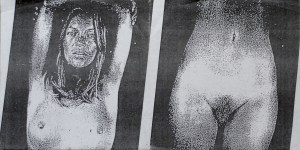
B. Kate Moss covers: I already had both versions of Dirty Funker‘s “Let’s Get Dirty” 12″ with their Banksy portraits of Kate on front and rear covers, Damien Hirst‘s “Use Money, Cheat Death” single-sided, white vinyl 12″ and a compilation promotional CD for handbag manufacturers Longchamp that was compiled by Kate and called “Kate Moss for Longchamp – An Iconic Selection by Kate Moss”. This year’s additions to the Kate Moss collection include The Unholy Two‘s “Kutter/Porkys” 7″ single that uses what looks like photocopies of Chuck Close‘s 2005 portraits of a nude Kate Moss. The outer spread of The Unholy Two’s “Kutter/Porkys” single.The inner spread of The Unholy Two’s “Kutter/Porkys” single.
I also found a dealer in California who was offloading three of Bryan Ferry‘s limited edition singles from his 2010 album “Olympia“. The Vinyl Factory in London had produced these beautiful six 12″ in strictly limited editions of 200 or 300 copies and they sold out almost immediately.
Having got these, I found a copy of of the Vinyl Factory limited edition “Olympia” album with its art portrait of Kate enclosed. So that was added to my collection.
There is also a digital download with all the remixes of the tracks on the Vinyl Factory remix singles, with a playing time of about 4 hours called “Olympia Remixes”
I also found a Dutch promotional CD of “Heartache by Numbers” which I also added to my collection.
As far as I can tell there are fifteen covers with Kate Moss‘s portrait and I now have ten of them. Those outstanding are the two remaining Bryan Ferry 12″ Vinyl Factory singles, “You Can Dance” and “Alphaville“, Babyshambles‘ album “Shotter’s Nation“, Primal Scream and Kate Moss “Some Velvet Morning” and possibly 6majik9‘s “Kate Moss” CDS.
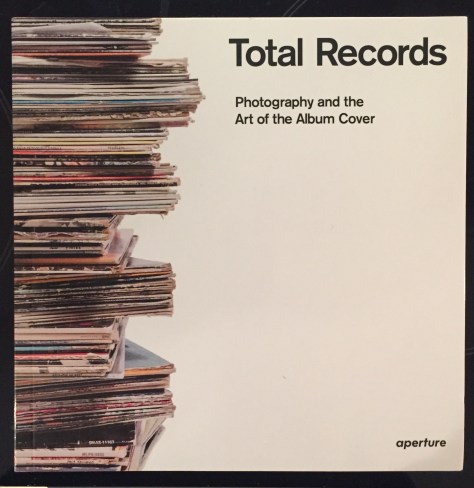
I just found out that I had missed yet another major exhibition of record cover art, this time in Arles in southwest France. The exhibition, called “Total Records” was first presented at Les Rencontres d’Arles from June to September 2015 and is said to be travelling round France. The exhibition catalogue has just (October 2016) been published as a free-standing book also called “TOTAL RECORDS – Photography and the Art of the Album Cover”.
The cover of the “Total Records” book.
I bought the 448 page book as it promised an introduction to how photographers and the record covers they took photographs for came together. However, the short introduction in English at the start of the book doesn’t live up to the promise. You have to turn to the end of the book for the full stories but, unfortunately for me, this section is only in French. Quelle horreur! Zut alors! and all that.
The book is divided into twenty-five “chapters”, some devoted to a single photographer and others more thematic with titles such as “Below the Belt” and “B-side America: Riverside, Bluesville and Yazoo”. There is a section called “Photo-Copy” which shows how some cover art has spawned plagiarism (The Rolling Stones’ “Sticky Fingers“, The Beatles’ “Abbey Road” and “Sgt Pepper’s Lonely Hearts Club Band“.)
But the photographs are great. Most pages picture a single cover. Not surprisingly, as the exhibition is French, there are many French covers. Johnny Halliday and Sylvie Vartan figure prominently alongside less well known French artists including a lovely cover of Catherine Deneuve’s “Souviens-toi de M’Oublier” with cover photo by Helmut Newton. There are also Newton’s photographs on the cover of Sylvie Vartan’s album “Au palais des congress“.
The first cover pictured in the book is Alex Steiweiss’ “Smash Song Hits by Rodgers and Hart“–Steinweiss’ first picture cover for Columbia Records from 1940.
Alex Steinweiss first picture cover for Columbia Records “Smash Song Hits by Rodgers & Hart” from 1940.
The first two chapters in the book, “The Sound I Saw” and “Aural Reappropriation” act as an introduction to the variety of photographs in record cover art and include covers by a multitude of photographers and make up nearly 30% of the book. These include cover photos by Andy Warhol (“This Is John Wallowitch“), Nobuyoshi Araki (Björk’s “Enjoy” and “Possibly Maybe” and Mango Delight’s “Conglomerate of Crazy Souls“), Annie Liebowitz (Cyndi Lauper’s “Change of Heart“, John Lennon’s “Interview Disc” and The Jim Carroll Band’s “Dry Dreams“), Herb Ritts (John Travolta/Olivia Newton-John “Two of a Kind” and Madonna’s “True Blue“). There is even Arthur Doyle’s “No More Crazy Women” with its Cindy Sherman cover photo (see my previous post on Cindy Sherman’s record cover art). Robert Mapplethorpe is represented with the classic Patti Smith cover for “Horses“, Taj Mahal’s “Taj” and Laurie Anderson’s “Strange Angels“.
Following these introductory chapters are sections/chapters devoted to individual photographers. First off are Jean-Paul Goude and Anton Corbijn. Corbijn is, of course, well known for his covers for Depeche Mode and U2. Jean-Paul Goude is best known for his cover photos of Grace Jones and eight of them are pictured in the book. It is a selection of Corbijns photos for U2 that are featured–mainly from the “Joshua Tree” sessions.
Next are eight of Jean-Baptiste Mondino’s covers, including covers of albums by Madonna, Björk, The Eurythmics and Prince.
The chapter after is reserved for Andy Warhol’s photographic covers. “This Is John Wallowitch” appeared in the first section of the book and this section includes the covers for “The Velvet Underground & Nico“, Miguel Bose’ s “Milano/Madrid“, Paul Anka’s “The Painter“, “Silk Electric” by Diana Ross and the cover of the “Muscles” single from the album and finishing with the cover of The Rolling Stones’ “Love You Live” album with a page devoted to the polaroid pictures on which Warhol based the cover design. “Sticky Fingers“, the other Stones album Warhol designed, appears in the section Photo-Copy along with several pastiches.Obviously, in a book on the photography and the art of the album cover, I wouldn’t expect any of Warhol’s graphic covers to be included–and there aren’t any, with the possible exception of “The Velvet Underground & Nico” cover. I’m not sure how much photography was involved. Did Warhol actually photograph the famous banana?
More chapters are devoted to the work of David Bailey (more Rolling Stones covers), Lucien Clergue And Lee Friedlander’s photography for jazz artists on the Atlantic label. The jazz theme is logically continued with a chapter devoted to some of the Blue Note label’s photographic covers with photography by Frank Wolf. And the label theme continues with a chapter on covers from the ECM label photographed by a variety of photographers. Other labels highlighted include Brazil’s Elena Records, ESP-dosc and a chapter devoted to the American Bluesville, Riverside & Yazoo labels before moving on to a chapter of Hipgnosis designs including the usual Pink Floyd covers (but happily, not the “Dark Side of the Moon” cover which I feel has become a cliché).
In the next chapter, aptly titled “Transartistic” there are covers by Robert Rauschenberg (Talking Heads’ “Speaking in Tongues”), Paul Bley (“Paul Bley Quintet“) and Andy Warhol’s “Index” book with the Lou Reed flexidisc. Even Jeff Koons’ cover for Lady Gaga’s “Artpop” and Damien Hirst’s cover for Dave Stewart’s “Greetings From the Gutter” are included.
One of the best chapters is entitled “Propaganda and Slogans” which includes thirty eight covers ranging from the clenched fist on the cover of The BlackVoices album “On the Streets in Watts” to Rage Against the Machines album with the self-imolating buddhist monk on the cover.From this provocative chapter with covers portraying Che Guevara, Charles de Gaulle,Malcolm X and Martin Luther King the book goes “Below the Belt2 with a selection of “racier” covers such as The Jimi Hendrix Experience’s ” Electric Ladyland” (The British cover with the nude models photographed by David Montgomery), Roxy Music’s “County Life” and more Rolling Stones in the form of both versions of the “Beggars Banquet” cover (the originally released version with the white cover which simply stated the group’s name and the record’s title as well as the version The Stones originally wanted with the lavatory interior scene, first released in 1986.
The final three chapters, “A life on Vinyl:David Bowie and Johnny Halliday”, “Word and Image” with many spoken word albums (Allen Ginsberg, Albert Camus, Jack Kerouac, etc.) and “from Grain to Groove”, a homage to the Soundtrack album cover, round off this nice book.
I think this is one of the nicest books on record cover design which I will keep alongside Alex Steinweiss’ “The Inventor of the Modern Record Cover“, Nick de Ville’s “Album: Classic Sleeve Design–Style and Image in Sleeve Design” and Richard Evan’s “The Art of the Album Cover“. I would have been thrilled to see the exhibition and have been able to see the covers full size. But the covers in “Total Records” are beautifully photographed by Romain Riviere and do them justice.
Cindy Sherman and Jeff Koons are two contemporary artists working in totally different media. Cindy Sherman (born 19th January 1954) is a photographer who specialises in self portraits in which she disguises herself in costume and in various situations. She is considered a conceptual artist.
CINDY SHERMAN
I have thus far managed to find six record, video and cassette covers with cover art by Cindy Sherman.The earliest recording I have found that has one of her photographs on its cover was for the television production “Two Moon July” which featured the music of Laurie Anderson, David Byrne (with whom Cindy Sherman had a relationship from 1991 to 2005), Philip Glass and others. The programme was released on VHS in 1986 and on Laserdisk the following year with Cindy‘s photograph of the Empire State Building on the cover.
The cover of the “Two Moon July” Laserdisk.
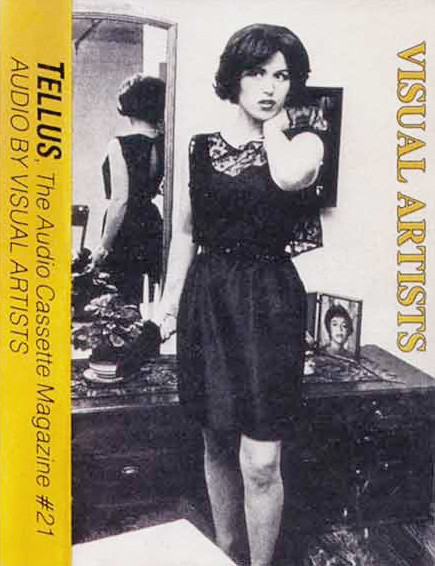
In 1988, one of her self portraits was used as the cover art for a cassette of visual artists talking. The cassette was released as Tellus Magazine #21 entitled “Tellus #21: Audio by Visual Artists“. Tellus was a bi-monthly cassette magazine that was founded in New York in 1983.
Cindy Sherman’s self portrait on the cover of the cassette magazine Tellus from 1988.
Sherman was involved with the female band Babes in Toyland in the 1980s and even appeared in one of their videos. Her photographs appeared on the covers of two of the group’s records “Fontanelle” (1992) and “Painkillers” (1993).
Babes in Toyland’s 1992 LP “Fontanelle” and 12″ “Painkillers” with cover photos by Cindy Sherman.
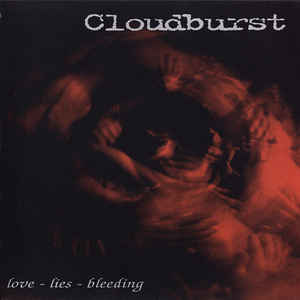
The punk band Cloudburst released two singles. The first, released in France in 1999 was a purple vinyl, three-track 7″ EP entitled “Love-Lies-Bleeding” and had a Cindy Sherman painting as its cover art.
Cloudburst’s 1999 single cover with Cindy Sherman painting.
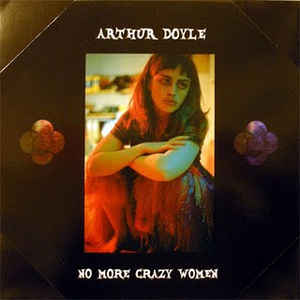
The latest cover i have been able to find is a five-track, single sided, yellow vinyl 12″ EP called “No More Crazy Women” by tenor saxophonist Arthur Doyle. I’ll be returning to Arthur Doyle in my list of Jeff Koon‘s cover art.
The cover of Arthur Doyle’s “No More Crazy Women” 12″ EP-
JEFF KOONS
There only seem to be three record or CD covers with Jeff Koons’ art. Or that is all I have hitherto been able to find.
Eli and Edye Broad have built up a magnificent collection of American postwar art which is housed at The Broad at 221 S. Grand Avenue, Los Angeles and is open to visitors. The Los Angeles County Museum of Art hosted an exhibition of 100 works from the Broad Collection from 7th October 2001 until 6th January 2002. The exhibition was called “Jasper Johns to Jeff Koons: Four Decades of Art from the Broad Collection“. In conjunction with the exhibition a CD was released called “John Cage to David Byrne: Four Decades of Contemporary Music“. The exhibition later transferred to The Corcoran Gallery of Art in Washington DC (16th March-3rd June 2002).
The CD was a compilation of 13 tracks by artists from David Bowie (“Rock ‘n’ Roll Suicide“) to John Cage (“Atlas Eclipticalis”) via The Velvet Underground (“Femme Fatale”), Dizzy Gillespie (“Be Bop”) and Klaus Schulze (“Floating”).
The “John Cage to David Byrne: Four Decades of Contemporary Music” CD cover with a detail of Jasper Johns’ “Flag” and Jeff Koons’ “Rabbit”.
The CD booklet also contains pictures of other artworks from the Broad Collection, including Andy Warhol‘s “Elvis” (1963), Jean-Michel Basquiat‘s “Horn Players” (1983), Sharon Lockhart‘s “Untitled” (1996) and Stephan Balkenhol‘s “Large Woman with Green Pants” (1996). The rear inlay shows Roy Lichtenstein‘s “I… I’m Sorry” (1965-1966).
The second release with Jeff Koons‘ art is another Arthur Doyle record. This time another single-sided, two track 12″ single with cover that shows Koons‘ print “Donkey 1999” from 1999 produced in an edition of 99 copies. The cover, once again, has two corners cut off.
Arthur Doyle Trio’s “Live at the Alterknit” cover.
And the third Jeff Koons cover is the best known. Lady Gaga‘s “ArtPop” from 2013. For this cover Koons acted as photographer.
I will keep looking out for more covers with art by Sherman and Koons and will probably update this post sometime in the future.
Last month I saw an exhibition at the Tel Aviv Museum of Art entitled “Fakes“. The centrepiece of the show was a collection of paintings by the Dutch forger Henricus Antonius “Han“ Van Meergeren, who in the 1940’s painted several “Vermeer” paintings that fooled the experts and even Herman Göring bought one. Van Meegeren was uncovered and tried and to prove he had painted the forgeries, he produced another. His paintings are, however, so good that they are collectors’ items in their own right. The exhibition chose to illustrate the diffuse boundary between a copy, a reproduction and a forgery. There was even a listening station where one could listen and compare George Harrison‘s “My Sweet Lord” with The Chiffon‘s “He’s So Fine“, which Harrison was judged to have plagiarised.
Now I’m not going to suggest I’m in van Meegeren‘s league, but I do like a bit of reproduction… They had to give up trying to make a catalogue of Andy Warhol‘s prints as there were so many reproductions and fakes that judging which should be included and which should not proved impossible. There are many artists who have been “inspired” by Warhol’s art, ranging from Steve Kaufmann, who had worked with Warhol at The Factory to Elaine Sturtevant, who painted Warhol images from memory. As a collector of Warhol‘s record cover art, I realised that there were some rare covers that I was never going to be able to afford (Moondog‘s “The Story of Moondog“, John Wallowitch‘s “The Other Side of John Wallowitch” and a couple of rare bootleg albums). So, if I wanted them in my collection–and the solution seemed easy–just make reproductions!
I started in 2013 when I decided to produce a set of covers of Warhol‘s 1963 “Giant Size $1.57 Each“. The nearest I had come to a real one was when, in 2008, I tipped Guy Minnebach off about one being auctioned in Japan. His has been exhibited in several exhibitions. Warhol had spraypainted record covers in four colours; red, green, orange and yellow and then silkscreened the “Giant Size $1,57 Each” on top. He also silkscreened onto plain white covers. So I bought a batch of record covers and the cans of spraypaint, and set to work. I prepared 50 covers and took a course in silkscreening to finish the job.
There were several other covers I couldn’t afford, including the Lew White “Melodic Magic” and “Waltzes by Johann Strauss, Jr.” So I bought card of about the correct thickness, photocopied the cover art and the rear cover texts and glued them all together. Later I realised that I could get a more accurate reproduction if I took an RCA Camden EP sleeve (luckily all Camden EPs have generic back covers, so I could take just about any Camden EP cover for these projects), removed the front cover image with sticky tape and stuck the photocopied slick over where the original picture had been. Then I had a bit of luck when I bought a copy of the Lew White “Melodic Magic” EP (without a cover) for $3.86 to complete the set. I’m still looking for a copy of the Strauss Waltzes disc.
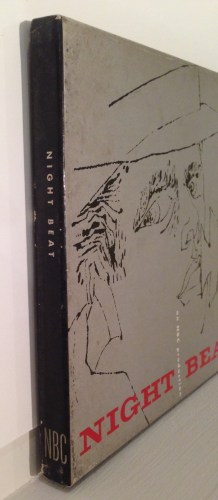
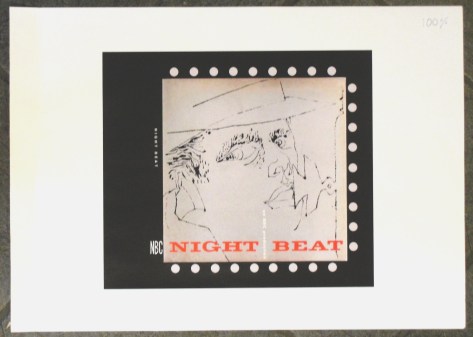
The third rarity that I wanted to make was the incredibly rare (perhaps only one copy exists) “Night Beat” box. There was a picture of in Paul Maréchal‘s book so I set to work. I bought several RCA Victor boxes of EPs and made up a cover slick in Photoshop. I was well pleased with what I thought was a perfect reproduction. However, when the original went on show at the “Warhol on Vinyl” exhibition at the Cranbrook Art Museum I found out that I had not made a true copy. The box’s spine should have the set’s title and the NBC logo rather than the dots I had used.
Back to the drawingboard! Step One: I needed more RCA boxes, and luckily I found a seller in America who had six for sale cheap. Step Two: I needed a photo of the spine of the genuine box to copy. Here fellow WCCC member Niklas Lindberg came to my rescue and mailed over a picture.
Step Three: More photoshopping. Step Four: Off to my local printer. I told him the box’s front cover image had to be 19 cms in height. He duly produced prints with the image 19 cms high. But these were too large (mea culpa!), so he made a second run with 5% smaller images. These turned out to be just too small, so I had to ask him to print a third copy 3% larger than the second printing. Finally the size was dead on.
The print on A3 paper as it came from the printer.
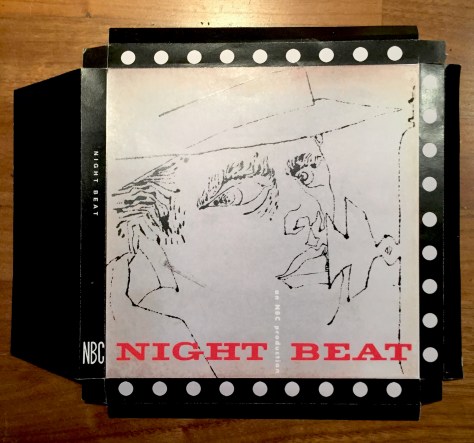
Step Five: Cutting the prints to fit the box required some practice, which I eventually mastered.
The cover print cut and folded ready for gluing.
Step Six: Gluing the slicks to the boxes. Thank heavens for spray glue!
I got home from the printer at 6.10 p.m. and had nine boxes completed by 9.30 p.m.!
Completed “Night Beat” boxes.
During the day I also managed to make mock covers of Moondog‘s “The Story of Moondog” and John Wallowitch‘s “The Other Side of John Wallowitch” as well as a new version of Banksy‘s Capoeira Twins promo cover for “4 x 3“. And I made a cover of Peter Blake‘s “Vintage Blake” print from 2012.
Robert Allen Zimmerman (24th May 1941), better known as Bob Dylan, is a music genius who has caused controversy throughout his career. He was accused of being a sell-out in 1966 when he moved on from his folk-rock roots to more electric rock music with three impressive albums recorded in 14 months: “Bringing It All Back Home“, “Highway 61 Revisited” and “Blonde on Blonde“. These were my introduction to his oeuvre: a fellow student, John Froude, came into the college canteen one day in 1966 in a state of considerable excitement. I was sitting with a couple of friends and John could hardly control himself. He had just heard that his hero Bob Dylan was about to release a new album and he felt we all should look out for it. The album in question turned out to be “Blonde on Blonde“. I bought an import copy as there was always a delay in releasing American albums in the UK at that time. Suffice it to say that I was hooked and immediately bought both “Bringing It All Back Home” and “Highway 61 Revisited“. From then on I bought every Dylan album from “John Wesley Harding” to”Saved“. Then I got bored and stopped buying his albums until 1997’s “Time Out of Mind” and I was on the train again until “Modern Times“, buying all the “Bootleg Series” sets in between. “Tempest” was the last album I bought before selling the major part of my record and CD collection in May 2013. I bought the “Complete Bob Dylan Albums, Volume 1” on USB so I still have ALL his albums up to and including “Tempest“.
I had also bought two books of Dylan‘s lyrics and used them often to check my memory of songs that popped up in my head. I think I bought a paperback copy of “Tarantula” a long time ago, but perhaps my memory serves me wrong. I definitely bought “Chronicles” when it first came out and the six-track CD that went with it. In 2003 I bought Christopher Ricks‘ “Dylan’s Visions of Sin“. An academic’s analysis of Dylan‘s poetry.
I have always seen Dylan as a poet and so, apparently, have many others; including, most recently The Swedish Academy who decided to award the 2016 Nobel prize for literature to Bob Dylan “for having created new poetic expressions within the great American song tradition.”
I should have been elated. But I wasn’t. I couldn’t make up my mind whether or not it was fair to give a rich American musical the literature prize. After all, he had already been awarded The Polar Prize, which honoured his music AND poetry.
So in my uncertainty as to whether I considered that Dylan should–or should not–have been awarded the Nobel Prize, I returned to Christopher Ricks (now Sir Christopher Ricks, for his services to literature). Ricks (born 18th September 1933) as born in Beckenham, studied at Oxford University and, after military service, became a Fellow at Worcester College, Oxford and later became Professor of English at Bristol University. In 1982 Ricks became King Edward VII Professor of English at Cambridge. Four years later he moved to Boston University and in 2011 became Professor at New College of the Humanities in London. He was knighted in 2009.
Christoper Ricks convinces me not only that Bob Dylan considers himself a great poet but that Ricks also joins him in considering him a great poet who can be read from the printed page or heard via concerts or recordings. So, who am I to disagree. Bob Dylan IS a worthy winner of the 2016 Nobel Prize for Literature.
Klaus Voormann has a greater claim to being the fifth Beatle than most. If I had to rank the contenders, I’d put Brian Epstein on the top of my list, followed very closely by George Martin and then, probably, Klaus at number 3. After all, he knew them and became friends with them in Hamburg. He lived for a while with Ringo and George and was the one John phoned when The Beatles needed a cover for their seventh, at the time unnamed, album that became “Revolver“. Later Klaus played on many recordings with individual Beatles (including George Harrison‘s “The Concert for Bangladesh“) and was a founder member of the Plastic Ono Band. So other “contenders” for the title of the fifth Beatle such as Pete Best or Murray the K (Murray Kaufman, born February 14, 1922 – died February 21, 1982) don’t come close.
Quite apart from being an accomplished musician, Klaus Voormann has pursued a successful career as an illustrator. He is a master at portraying TheBeatles as they were in the sixties and has produced posters of Lennon and McCartney in the Abbey Road canteen, John Lennon and Paul McCartney. The latest set of Beatles portraits appeared on the covers of the August/September 2016 German music magazine “Good Times“. This issue had five different covers.
The magazine contained an interview with Klaus on the 50th anniversary of “Revolver” and each magazine included an A2 poster of the cover portrait.
There was even a promotional brochure that pictured all five magazine covers.
While researching Klaus‘ book “The Birth of an Icon-Revolver 50” (see my previous post on this) I stumbled across another of his books that I had previously missed completely. In 2005 he published “Four Track Stories“, an illustrated paperback describing The Beatles‘ time in Hamburg.
This first edition is autographed on the flyleaf:
I ordered my copy directly from Klaus‘ website and it arrived in less than a week. There was a discussion about the shipping cost and Klaus refunded the shipping together with an autographed postcard with a personal message:
In our mail exchanges I asked if he knew of any record or CD covers that he had designed that were due for release and he asked which covers I already had. So I mailed him my list of 80 of his of his record covers with an apology that I only had 78 of them. So far he hasn’t replied about any new covers in the pipeline.

















 Again this was based on Banksy‘s “Girl With Balloon” design. Probably less than ten covers had this design. However, I had the “Pokémon” album with the “Sgt Pepper” cover and the “Flower Thrower” cover, so I didn’t think this particularly “Banksy” enough to include in my collection.




































 recordart