In September 2023 I wrote about the implications of photographer Lynn Goldsmith’s successful legal action against the Andy Warhol Foundation and Condé Nast over Warhol’s appropriation of her portrait of Prince. The Supreme Court ruling established a notably stricter interpretation of “transformative use” than many in the art world had anticipated. You can read that post [here].
A recent Swedish television documentary has prompted me to revisit the subject.
Jag är inte här, jag drömmer (I’m not here, I’m dreaming), broadcast on SVT on 26 April 2026, profiles Cecilia Edefalk (born 1954), one of Sweden’s most celebrated contemporary artists. It is a sympathetic portrait, following her career from when she left art school to the present day. Distinguished critics including Daniel Birnbaum — former director of Moderna Museet and one of the most respected voices in the international art world — speak warmly about the importance of her work, noting that she borrows from mass media and advertising, adding or subtracting to make something new.
Nobody asks the obvious question.
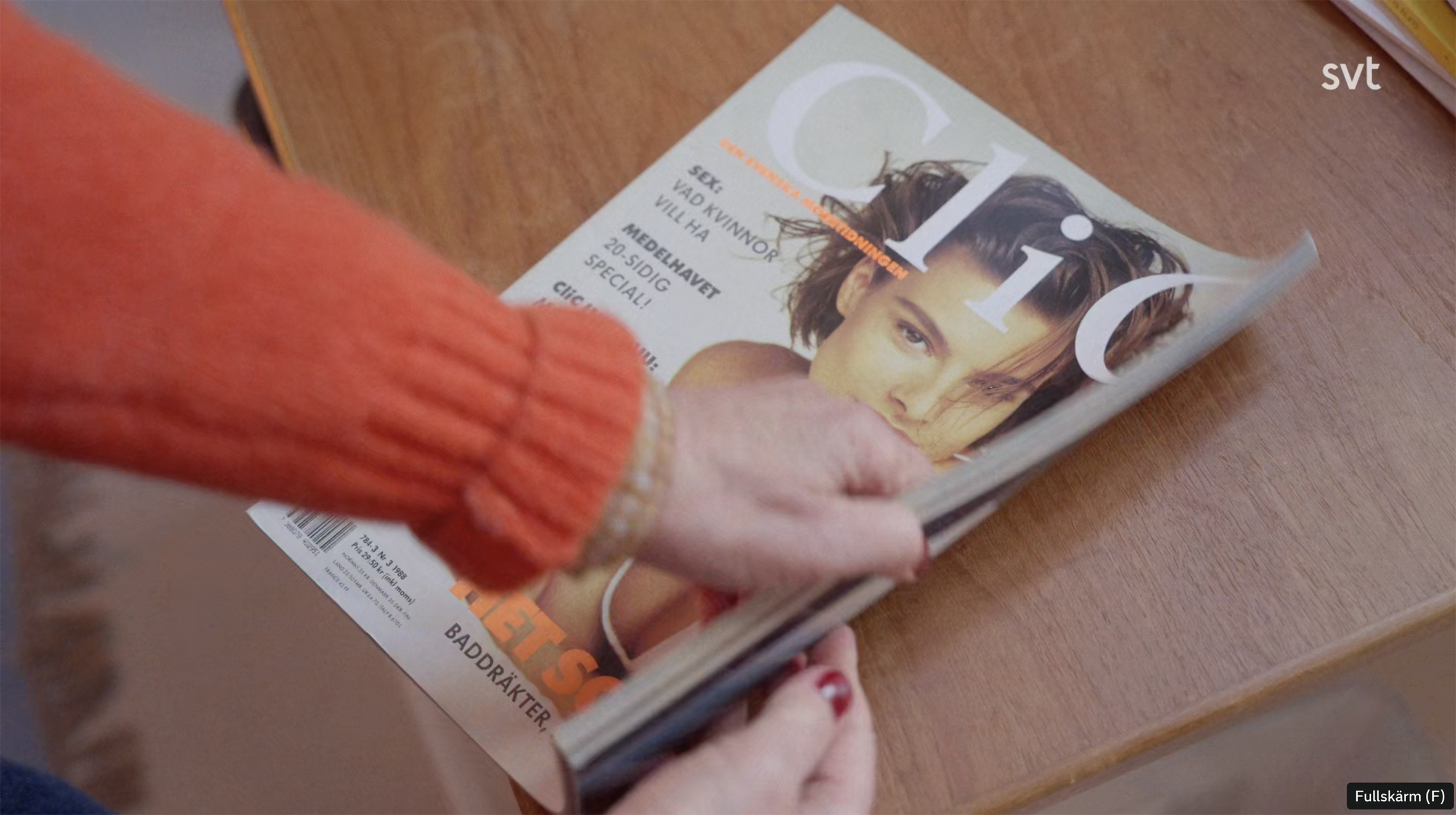
In one remarkable sequence, Edefalk holds up her source material for one of her better known paintings— a double page spread from Clic magazine, issue 3, 1988. Clic was founded by Cay Bond in 1981 as a forum for Swedish fashion design, using Swedish photographers throughout its run. The photograph shows a man applying suntan lotion to a woman’s back. Edefalk explains her modifications: she removed the suntan lotion bottle, painted the woman nude by removing her bathing costume, and changed the background colour from grey-brown to blue. The result, rendered at monumental scale in oil, which she painted in at least seven versions of varying sizes, has been exhibited internationally and commands serious prices.
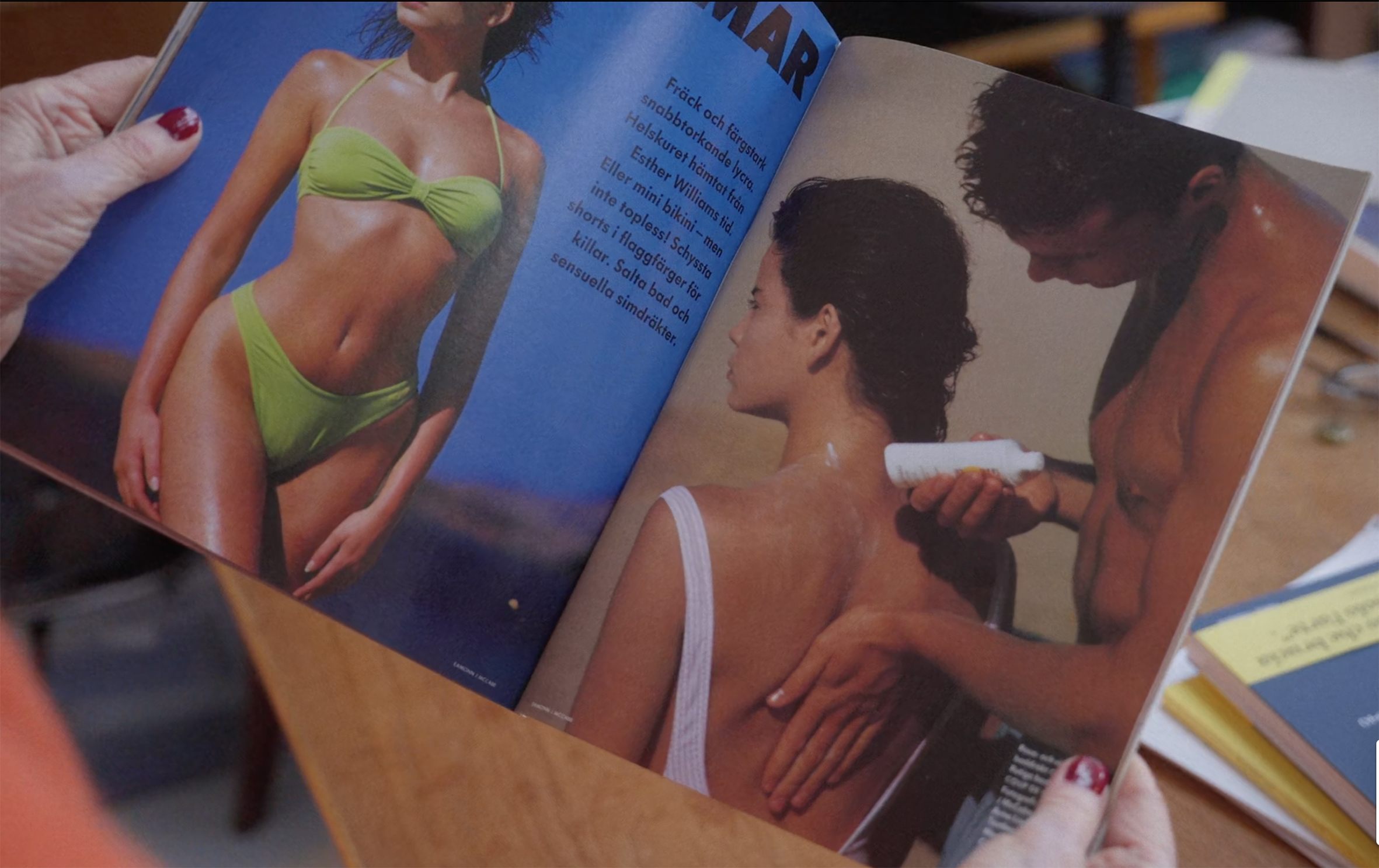
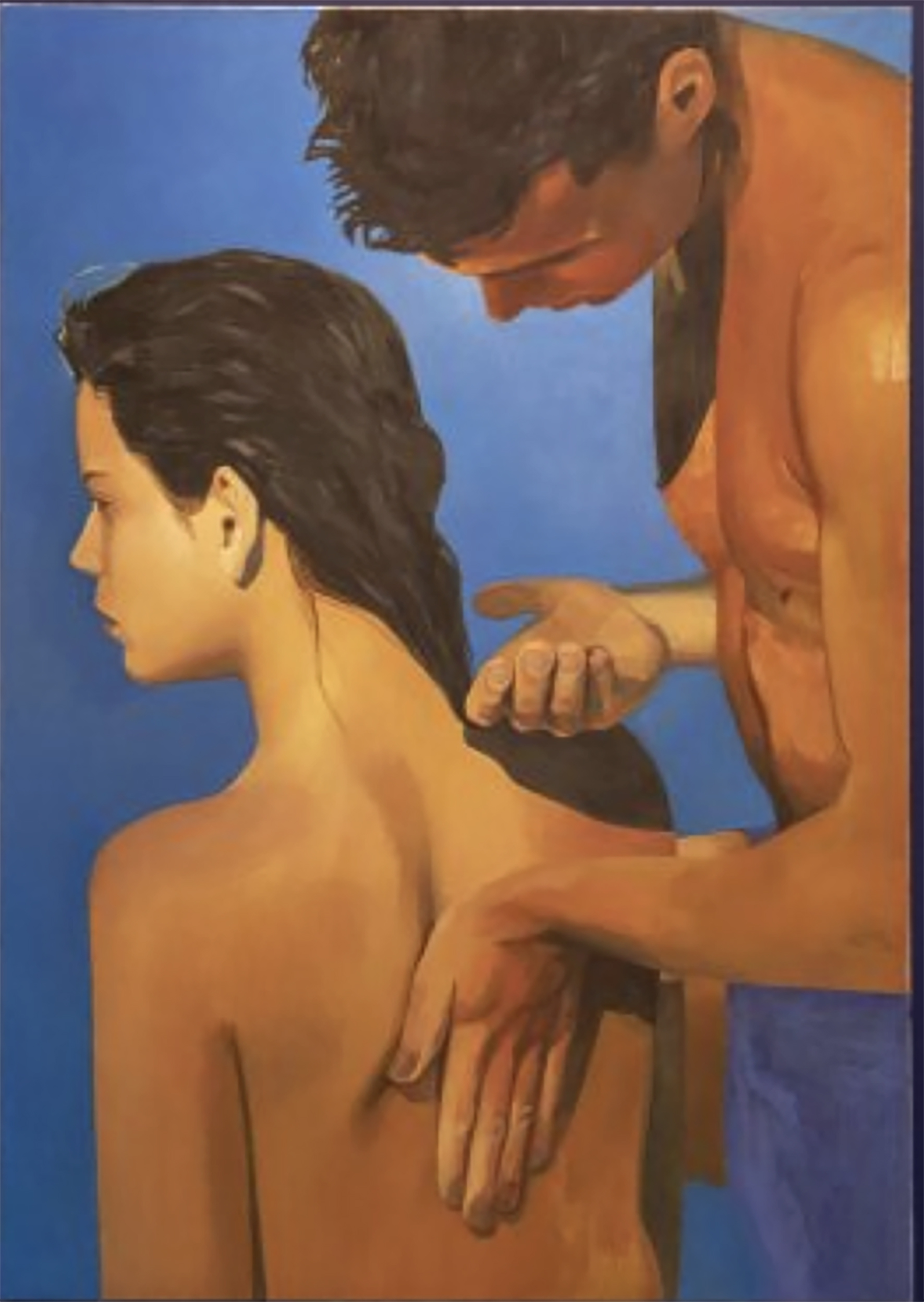
The photographer — almost certainly a Swedish professional working on commission for a Swedish publication — is not mentioned. Neither is the question of credit, compensation or consent. The model, painted nude without her apparent knowledge or agreement, is similarly absent from the conversation.
Edefalk has produced this and similar works in multiple identical versions of various sizes — a strategy echoing Warhol’s silkscreen series. But where Warhol’s multiples worked through the silkscreen process itself, introducing colour variations and surface irregularities that were intrinsic to the meaning, identical painted versions in different sizes raises a different question: if the work is genuinely transformative, why does it need to be reproduced identically, many times, at different scales? One might argue that the source photograph is doing most of the artistic heavy lifting.
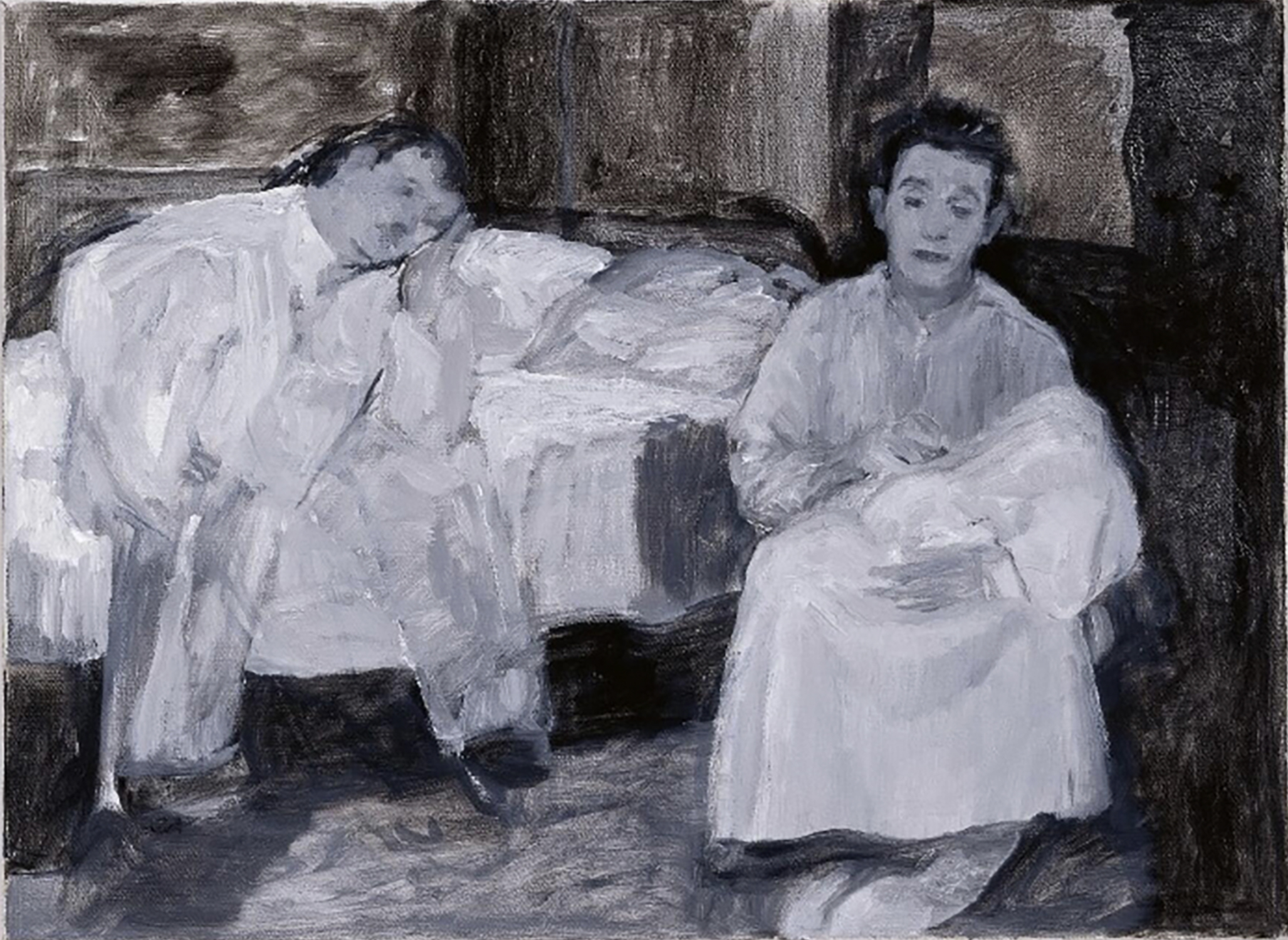
Edefalk has also painted a series of works based on Laurel and Hardy film stills — among them “Family” (1999), now in the collection of the Museum für Moderne Kunst in Frankfurt. The source is a bedroom scene from a 1932 film, reproduced in monochrome — which, it should be noted, is also the tonality of the original black and white film still, making the nature of the “transformation” somewhat difficult to identify. In fairness to Edefalk, a 1932 film still was almost certainly in the public domain in 1999, and the legal landscape around appropriation at that time was considerably more permissive than it is today. The post-Goldsmith world asks harder questions than the art world of 1999 was inclined to. Whether MMK Frankfurt — acquiring the work in full knowledge of its source — would approach the matter differently today is an interesting question that nobody appears to be asking.

However, Edefalk’s use of copyrighted material has not been entirely unchallenged. Swedish photographers raised objections and there was press coverage of the copyright implications. She and her supporters have their answer — Birnbaum’s formulation of “borrowing to make something new” is the standard defence of appropriation art, and it is not without merit. The question is whether removing a suntan lotion bottle, undressing a model and changing a background colour constitutes making something sufficiently “new” — particularly in the light of the post-Goldsmith legal landscape.
The precedents are not encouraging for appropriation artists. Patricia Caulfield successfully sued Warhol for using her photograph of hibiscus flowers as the basis for his celebrated Flowers series. Richard Prince has faced multiple legal challenges over his appropriation of other photographers’ work, with largely unfavourable results. And the Supreme Court’s Goldsmith ruling confirmed that even an image unmistakably bearing an artist’s signature style may not clear the transformative use bar if it serves a similar commercial purpose to the original.
Against this backdrop, Elaine Sturtevant’s practice stands out as the most philosophically rigorous position in the appropriation canon. Sturtevant copied works by Warhol, Duchamp, Beuys and others — but from memory rather than directly from the originals. The inevitable drift introduced by memory made her copies meditations on the nature of the original rather than reproductions of it. She was also admirably transparent about her method. That combination of philosophical intent and acknowledged practice is rather different from simply painting from a magazine spread.
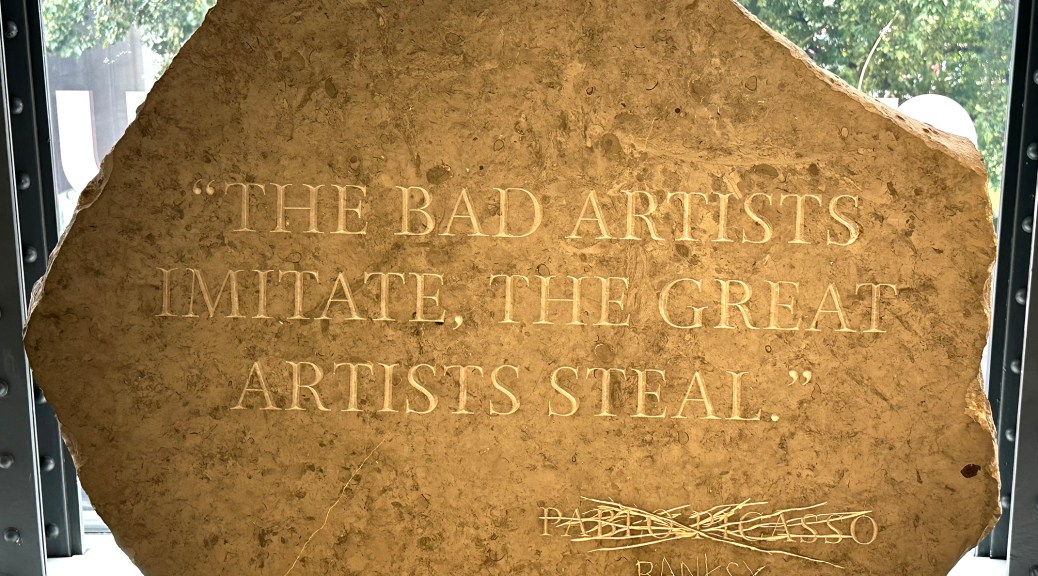
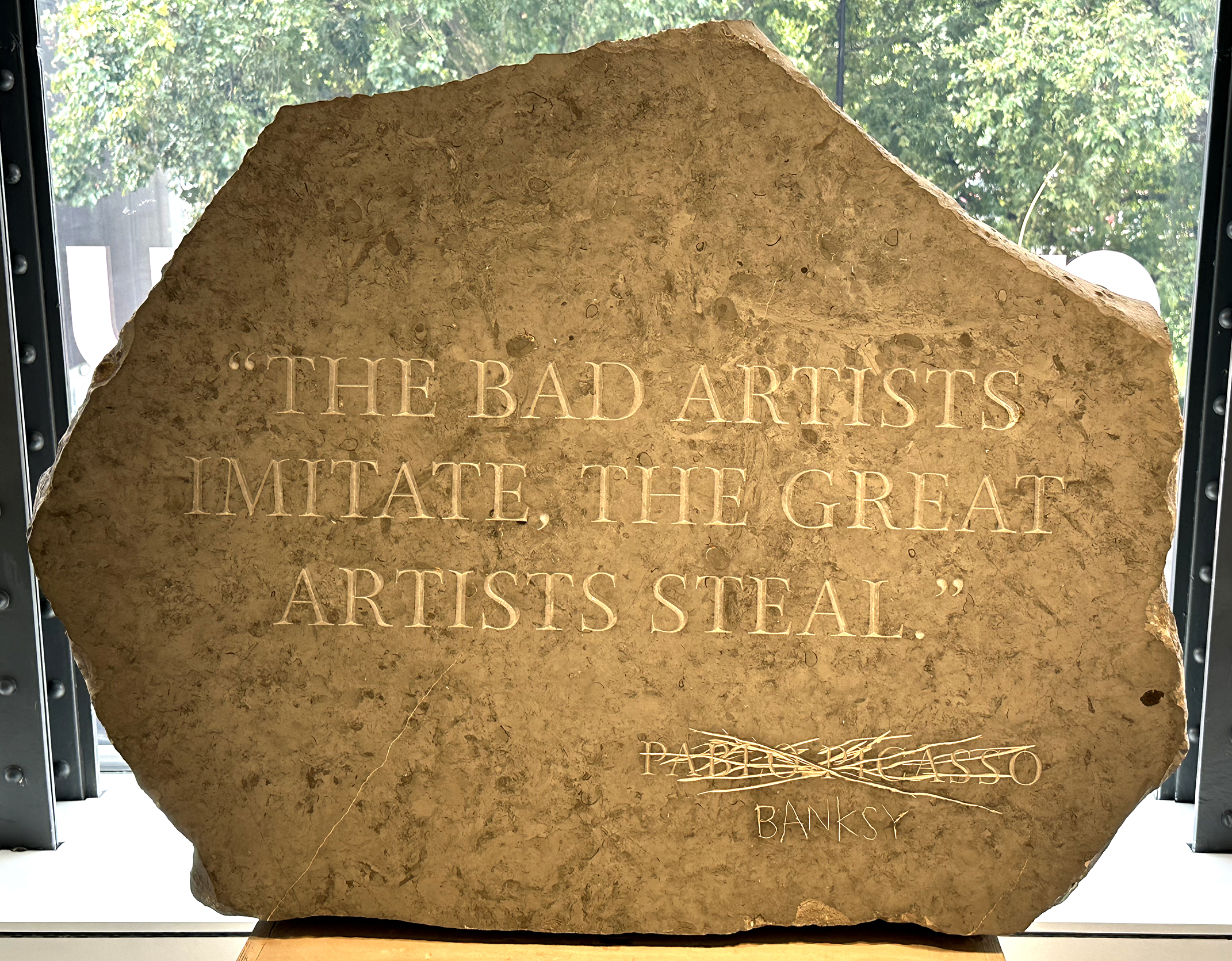
I should, in the spirit of full disclosure, acknowledge my own position in this conversation. I have made hand-painted reconstructions of unissued Warhol cover designs for a proposed Billie Holiday album — designs Warhol created in the 1950s, possibly on commission, possibly simply for his own amusement and a 50th anniversary series of his Giant Size $1.57 Each, as well as his Progressive Piano covers (ten-inch and seven-inch versions) . The immediate inspiration for the Billie Holiday cover creations was seeing one of Warhol’s original collages displayed on the wall of a Swedish museum exhibition, apparently sourced from the internet and included among genuine Warhol cover designs. My reconstructions, complete with period Columbia Records labels and liner notes signed with my Internet moniker “Rockdoc,” are explicitly labelled as such. I am also the author of forthcoming books on Banksy’s and Peter Blake’s record cover art — artists whose own relationships with appropriation, quotation and borrowed imagery are central to their practices. Thus I am not a disinterested observer.
The appropriation debate is genuinely complex and I have no wish to reduce it to simple condemnation. Borrowing, quoting, referencing and transforming are as old as art itself. But the critical establishment’s apparent incuriosity about the specifics — an unnamed Swedish photographer’s uncredited and uncompensated work, a model painted nude without apparent consent, a legal landscape that has shifted considerably since these works were made — is harder to excuse, particularly from critics who know perfectly well where these questions lead.
The suntan lotion bottle and the bathing costume, at least, had been removed. Whether what remains constitutes transformation or merely tidying up — and undressing — is left as an exercise for the reader.

