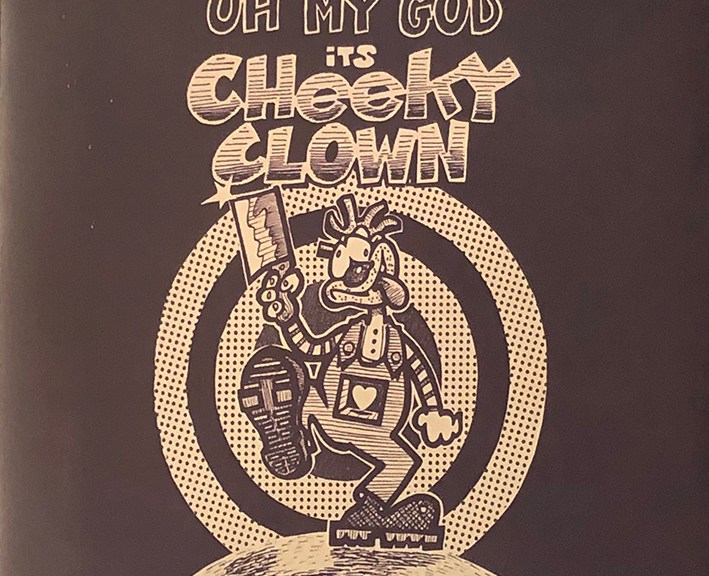
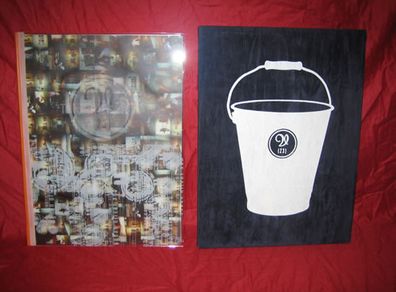
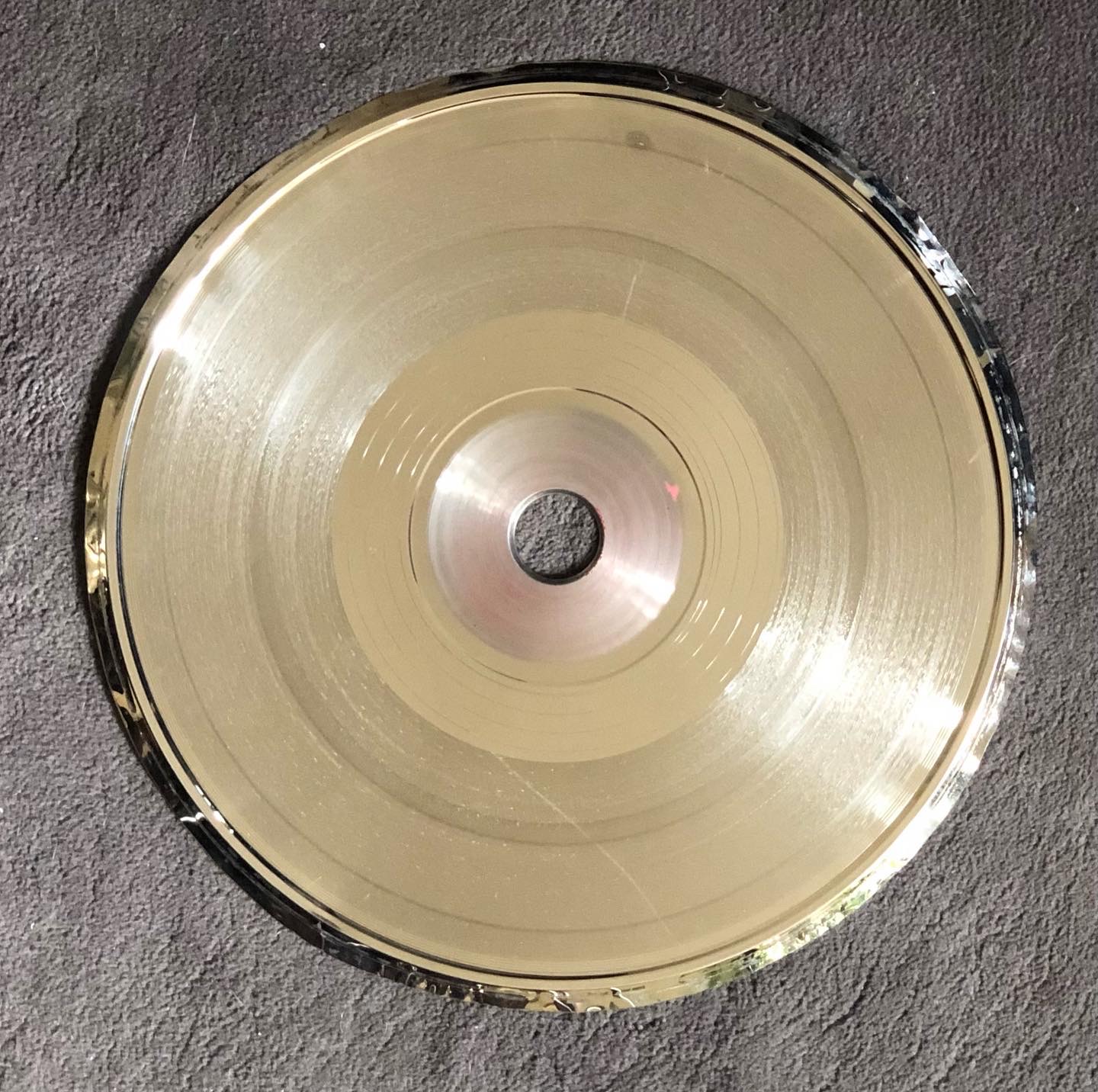
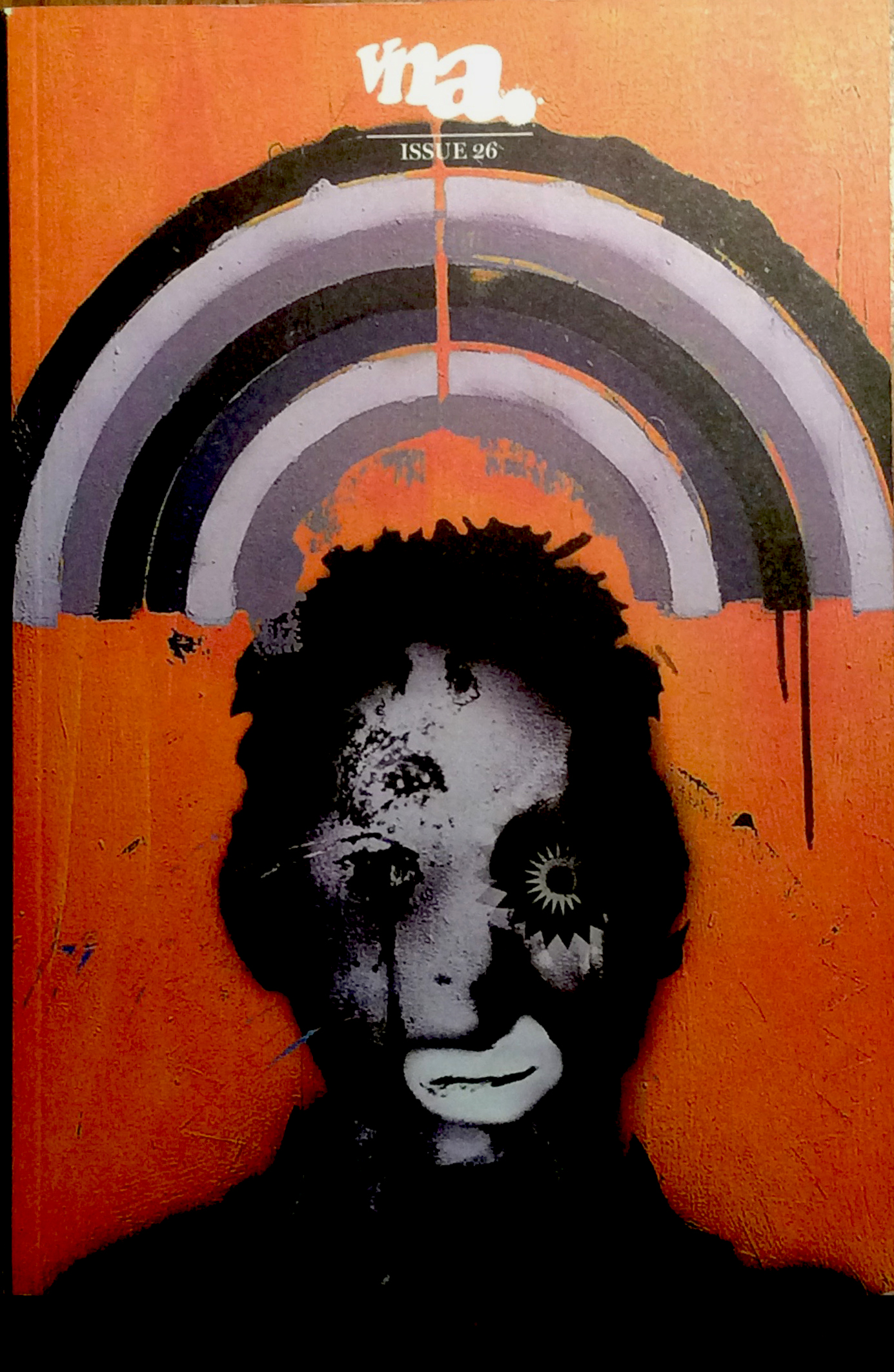
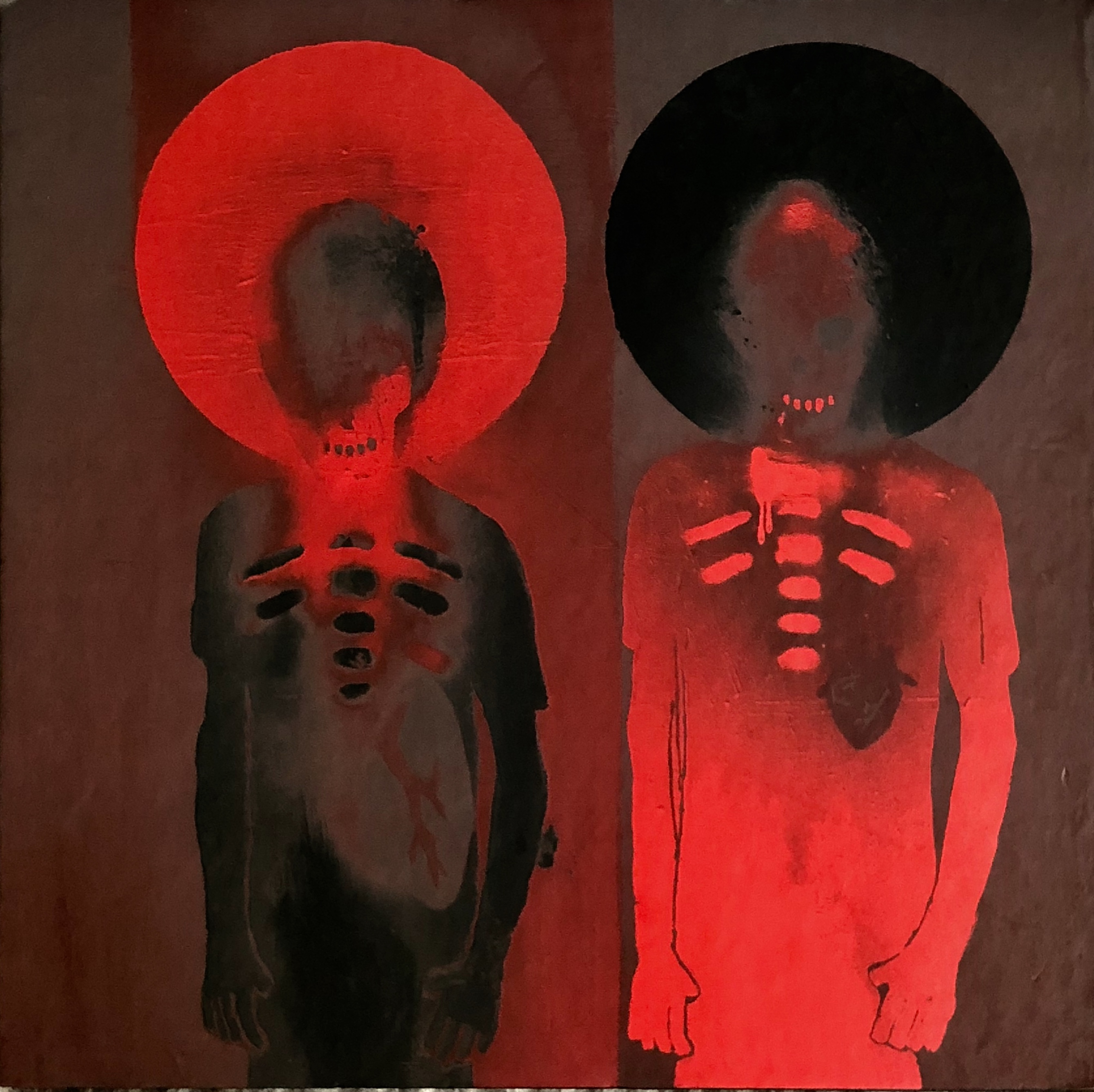
Mother Samosa’s Two Albums on CD. Designed by Robin Gunningham.

Do we really care who the person behind the Banksy moniker really is? Well, in 2015 the Daily Mail “revealed” that one Robin Gunningham, a public school educated person is indeed Banksy. However, this has never been officially confirmed and collectors of the artist’s work don’t seem to mind who is behind the art and art dealers won’t accept that works signed Robin Gunningham should be classified as being by Banksy.

In the past decade, everything that Banksy seems to have had a hand in has escalated in value; even record and CD covers with his art have become sort after collectors items. Now there are literally hundreds of such covers floating around among collectors but only a few are offically authorised as being by Banksy. The vast majority are covers that use the artist’s works, often subtly modified to suit the us

The earliest authorised Banksy covers are for the Bristol hip hop band One Cut (or OneCut) released on Jamie Eastman’s Hombré label between 1998 and 2000. In 1999 John Stapleton asked Bansky to stencil 100 promotional covers for the Capoeira Twins 12″ single 4 x 3 / Truth Will Out.

At about the same time Banksy had been with the Easton Cowboys football team on their tour to Chiapas, Mexico, where he painted some murals. A cassette of revolutionary songs Called Canciones electorales was released using Banksy’s painting of a Zapatista on the inlay. The cassettes were white, yellow and red and produced in limited quantities.

Back to the artist named Robin Gunningham. Sometime in the mid to late 1990s a guy called Robin visited Leicester and designed the logo for the dub organisation the Vibronics, whose owner, Steve ‘Vibronics’ Gibb is sure must have been Banksy.

More certain, are the covers for two cassettes released by the Bristol group Mother Samosa in 1993 and 1994. The cassette inlays are both credited to Robin Gunningham. Assuming Gunningham to be Banksy, then these cover designs are probably the first “Banksy” covers. The first cassette was called Oh My God It’s Cheeky Clown (1993), and reputedly also released as a CDr at the time. The second was Fairground of Fear (1994). The cassettes were produced as limited editions and I have thus far never seen one.

I was lucky to get hold of printers proofs of these two cassette inlays in late 2020. I recently read that a set of these had been up for sale by Art Broker in 2018 with an estimate of GBP 4000! I got mine from a oen-time friend of the band.

In 2006 and 2007 the band reissued the remastered albums as limited edition Digipak CDs. The first was the nine-track Oh My God It’s Cheeky Clown, while the second, the Fairground of Fear album was released on Digipak CD with only 11 of the original twelve tracks (track five on the tape’s side two Wallace P. Bowl was omitted from the CD.) The person who sold me the cassette inlays contacted me again in early December 2022 and offered me the two CDs, which duly arrived before Christmas!

According to my supplier, these Digipak CDs were released in editions of one hundred numbered copies with a handful released unnumbered. Neither of my CDs is numbered.

Now, I suppose I will have to continue my search for the original cassettes.

Some More of My Own Art.

I keep trying to be creative, and not only in the record cover collecting field. Last summer I went on another silkscreen course and though I didn’t manage to get as much done as I had hoped, I still did produce a few nice things.

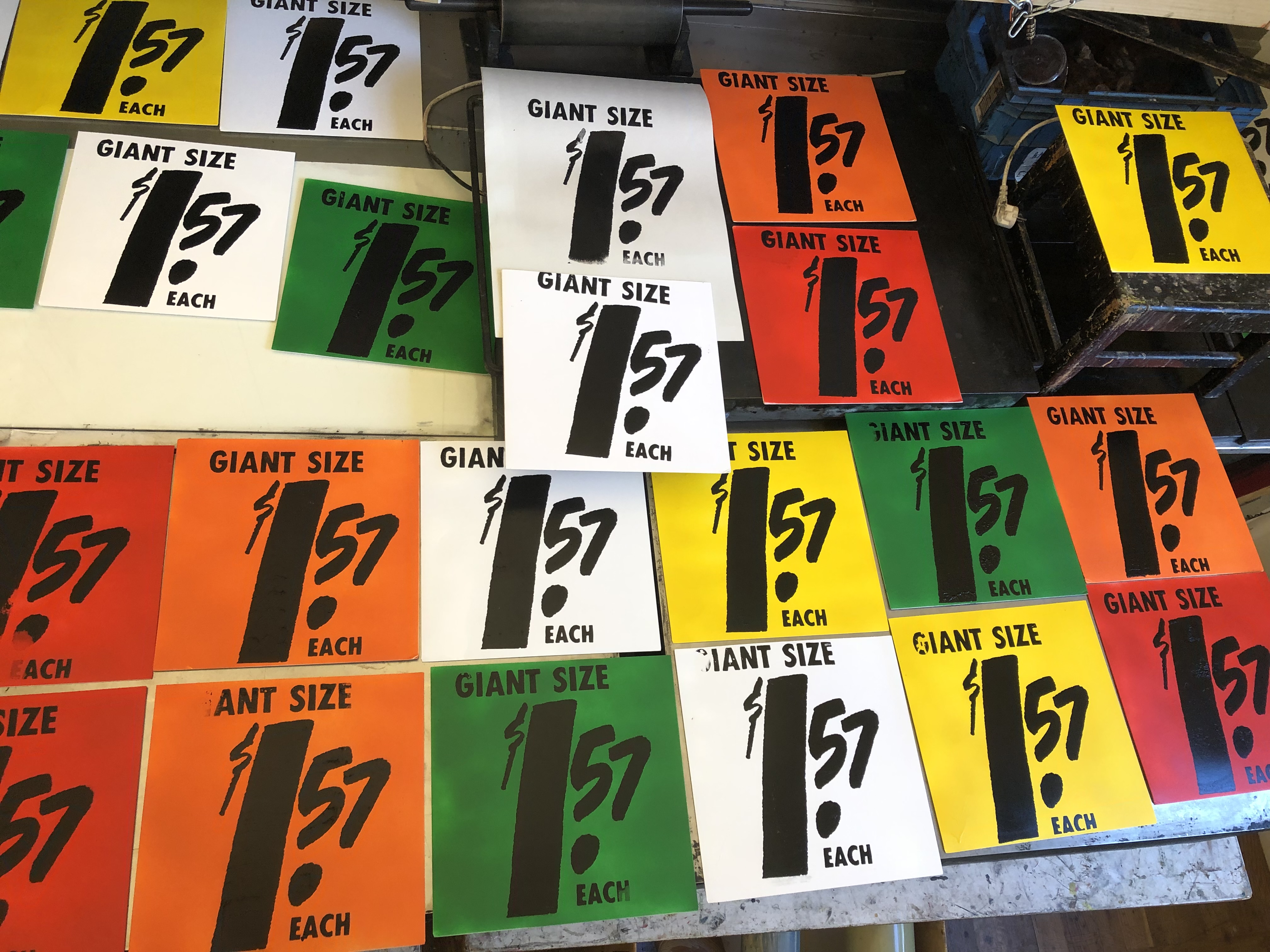
I printed a number of teeshirts and five new sets of Andy Warhol’s and Billy Klüver’s famous Giant Size $1.57 Each record covers. This involved first spray painting the record covers (white, yellow, red, green and orange — the same colours Warhol/Klüver used on the originals) and then screenprinting the Giant Size $1.57 Each text on top. I did 25 covers in all!

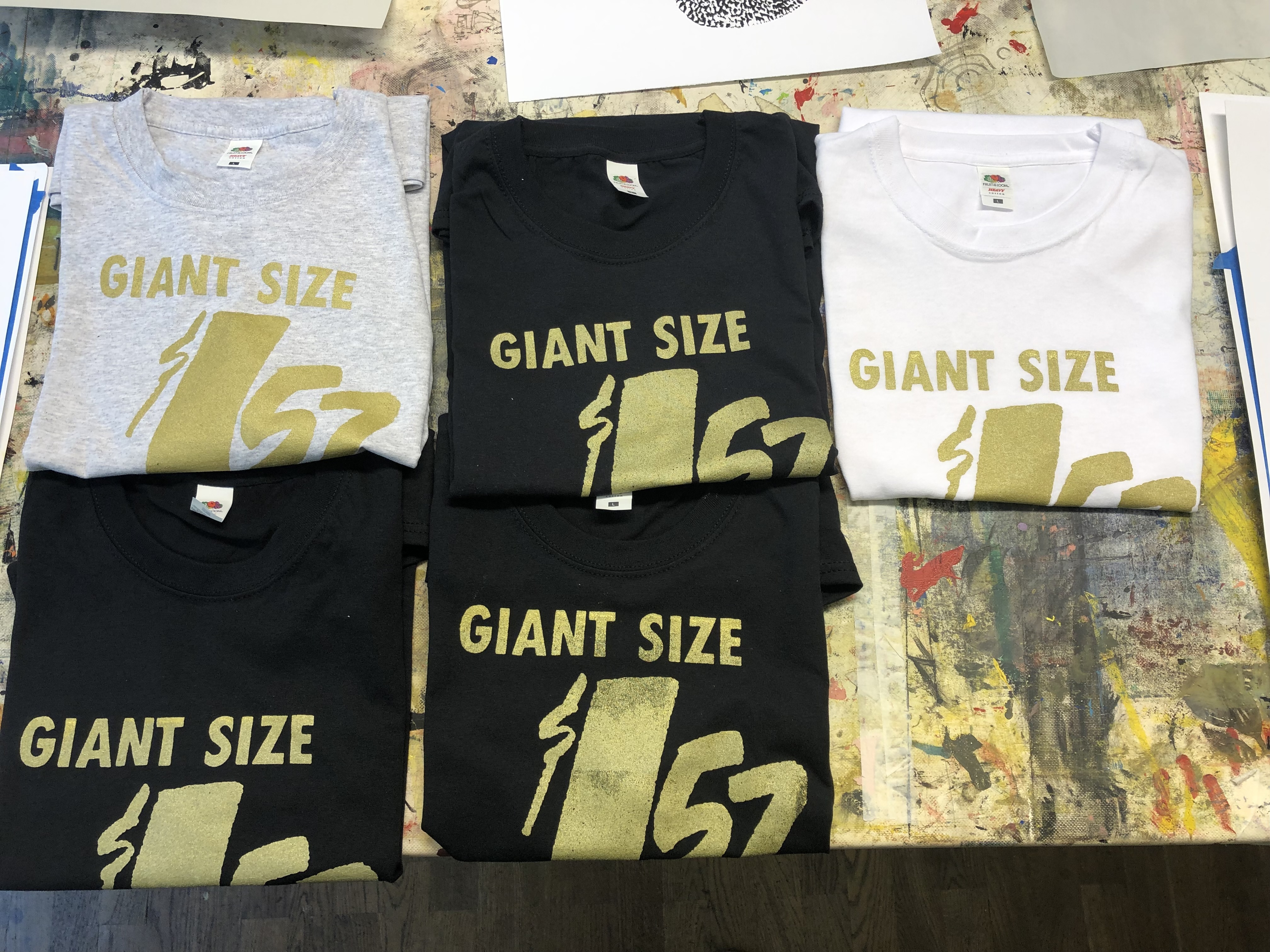
I also printed a number of teeshirts with the same design, but this time in gold.

A bit later, I got Urban, my friendly neighbourhood printer, to print replica record labels that I could stick onto some LPs that I sourced from the record store that I sold my collection to a few years ago. They had loads of records that were unsellable and that they were glad to get rid of!

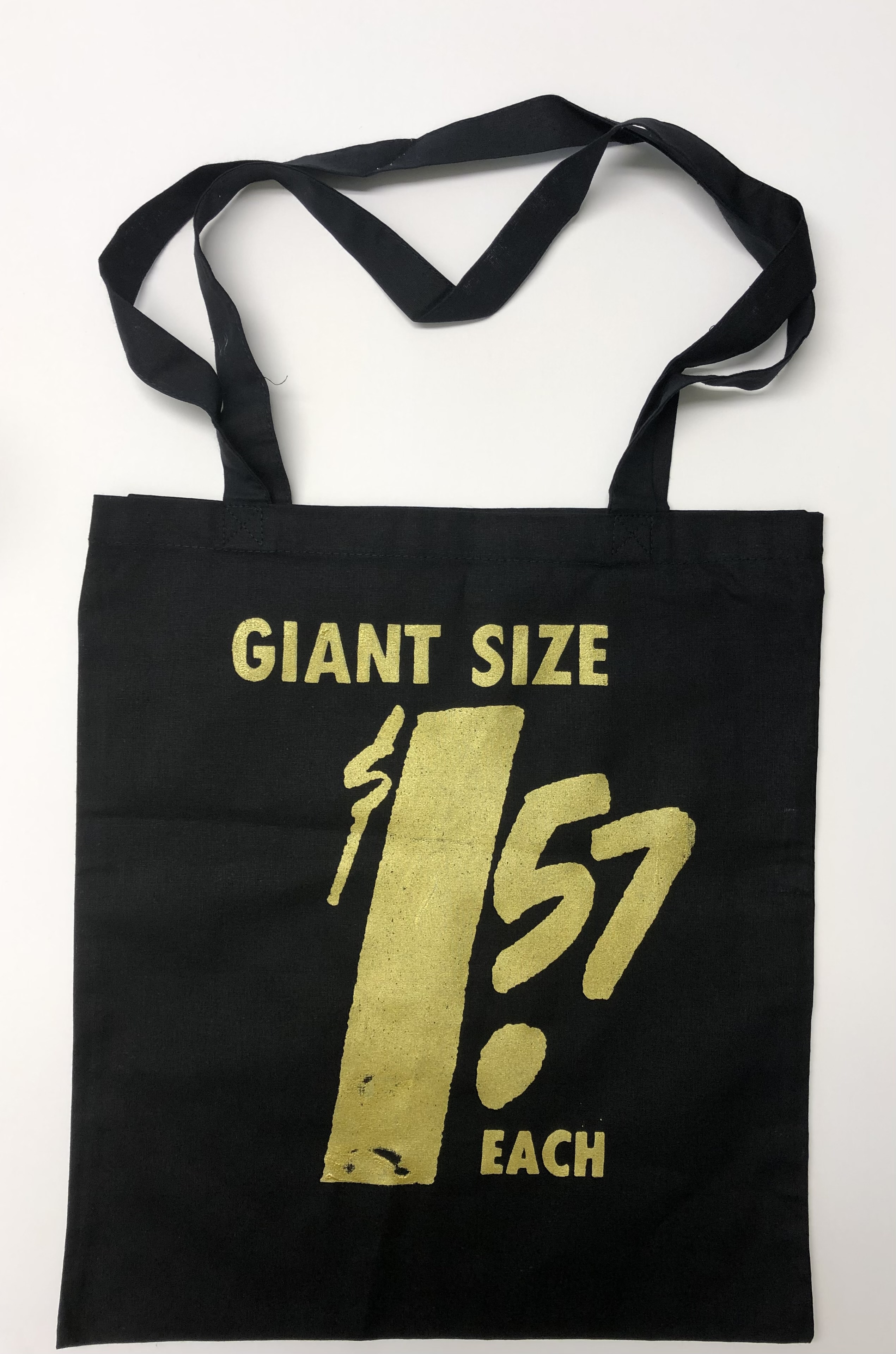
At he same silkscreen course, I printed two pictures using the same Giant Size stencil. These turned out so well that Anette, our course leader, wanted me to print her a tote bag with the design in gold.

But the things I was most pleased with were two large-scale prints 100 x 50 cms that I decided to frame and submit for consideration for inclusion in Liljevalch’s 2023 Spring Salong. Unfortunately they weren’t accepted but I’m pleased I tried.

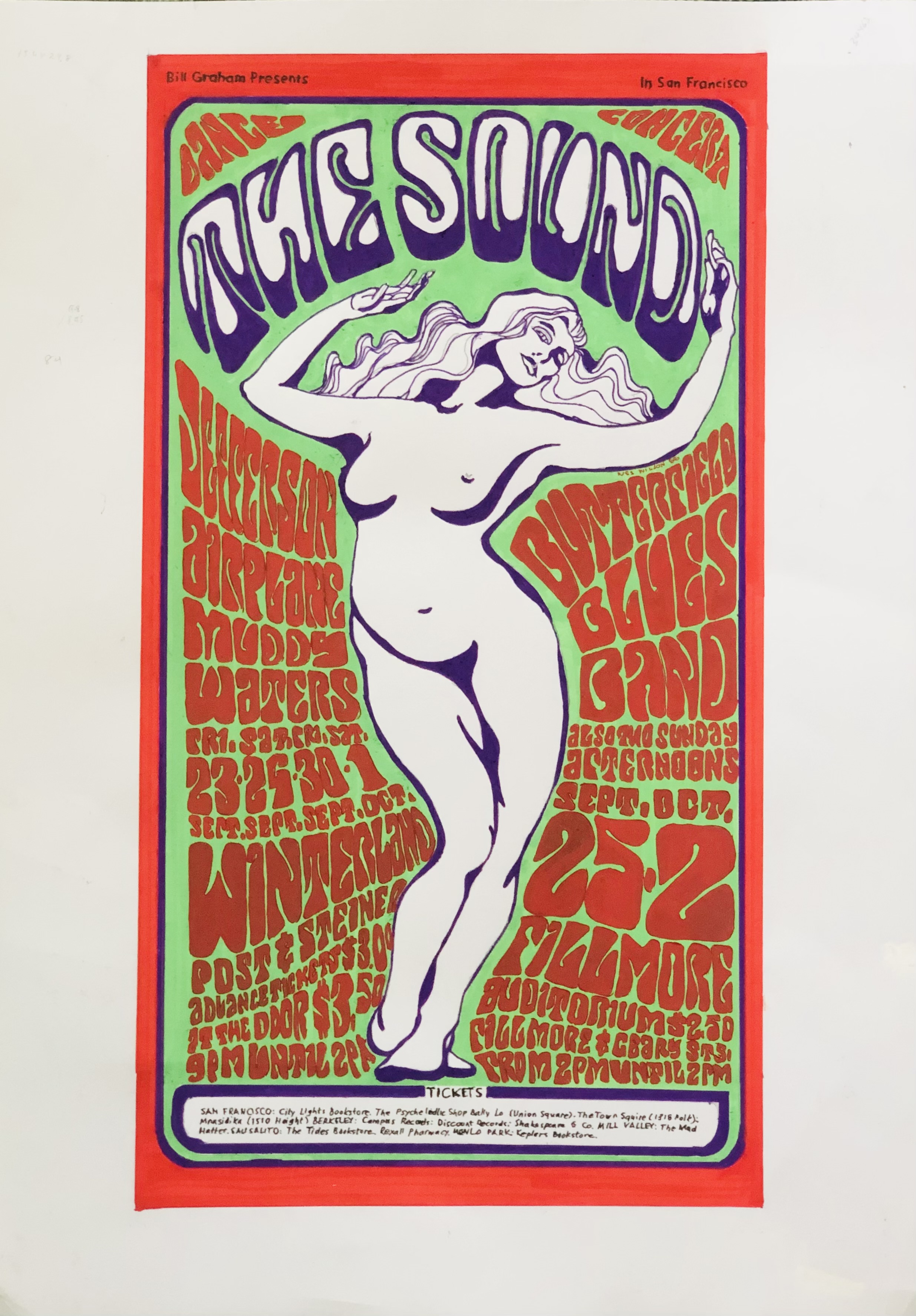
Latterly, I’ve gone back to painting. Anyone who has followed this blog may have read about my collection of sixties Bill Graham Fillmore Autitorium and Avalon Ballroom handbills. The original posters are now fetching large sums at auction and I always wanted Wes Wilson’s The Sound poster from 1966. Knowing I couldn’t afford an original, I reckoned the next best thing woud be to paint a reproduction… Note: not a forgery, a reproduction.

There are many instances of artists appropriating the work of others, ranging from Elaine Sturtevant, who in the sixties reproduced several of Andy Warhol’s paintings to Ulf Linde, who reproduced Marcel Duchamp’s readymades and which are on permanent display at Stockholm’s Moderna Museet (Linde even got Duchamp to sign the reproductions!) He made further copies (I mean reproductions) fifteen years after Duchamp’s death, but then had his widow sign them! Another celebrated case of reproductions is the Brillo Boxes ordered by Pontus Hultén for an exhibition that were made in Malmö, Sweden, and many were later sold as original Warhol Brillo Boxes. The fact that Hultén had commissioned them only came to light six months after his death in 2006.

So now I decided to paint myself a copy/reproduction of Wes Wilson’s magnificent poster as near full size as possible (acrylic on paper) . And here is the result.

I got inspired by how well this turned out and a friend posted a picture of Banksy’s 2004 I Fought the Law and I Won print. I have two record covers that had travestied this design — The Promise’s 2002 album Believer and the test pressing for Embalming Theatre’s and Tersanjung XIII’s split EP called Mommy Died – Mummified / Hellnoise — and I decided to reproduce Banksy’s original. I did a black and white version and then saw that one of the big auction houses was selling a red/orange version. So I decided to paint that one too.

Then I looked for something perhaps more complicated to paint and I saw the cover of the band UFO’s 1979 album Strangers in the Night and decided to give it a go. However, I though the dots might prove tricky.

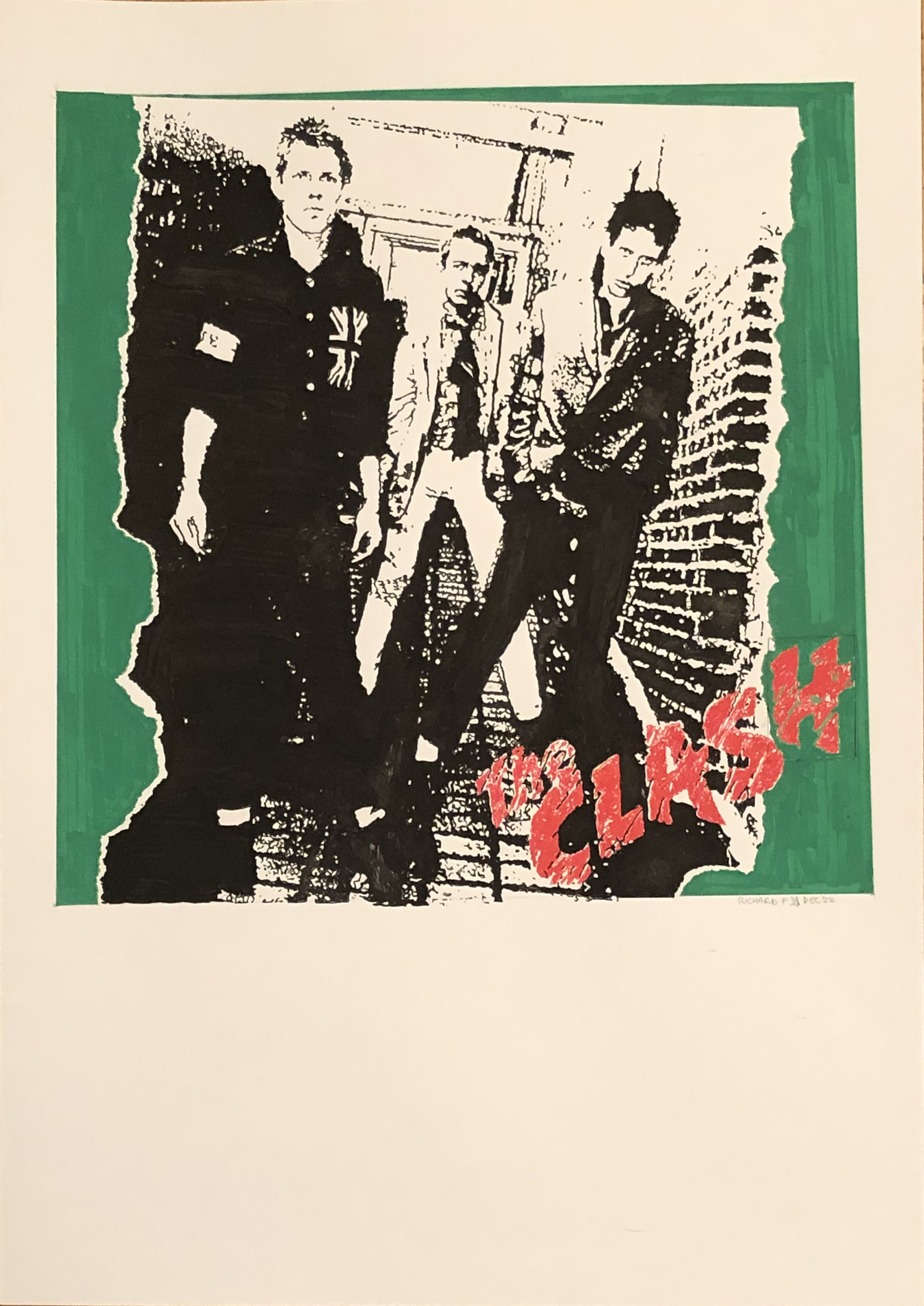
My latest painting, completed only yesterday, is the front cover of The Clash’s eponymous first album with photography by Kate Simon.

Painting these record sleeves makes a great addition to my collection of record cover art. I really feel like painting some more. I thought I might try Kraftwerk’s Die Mensche-Maschine cover. A given for anyone, like me, who likes typography. We’ll see if it materialises.

A New Cindy Sherman Record Cover.

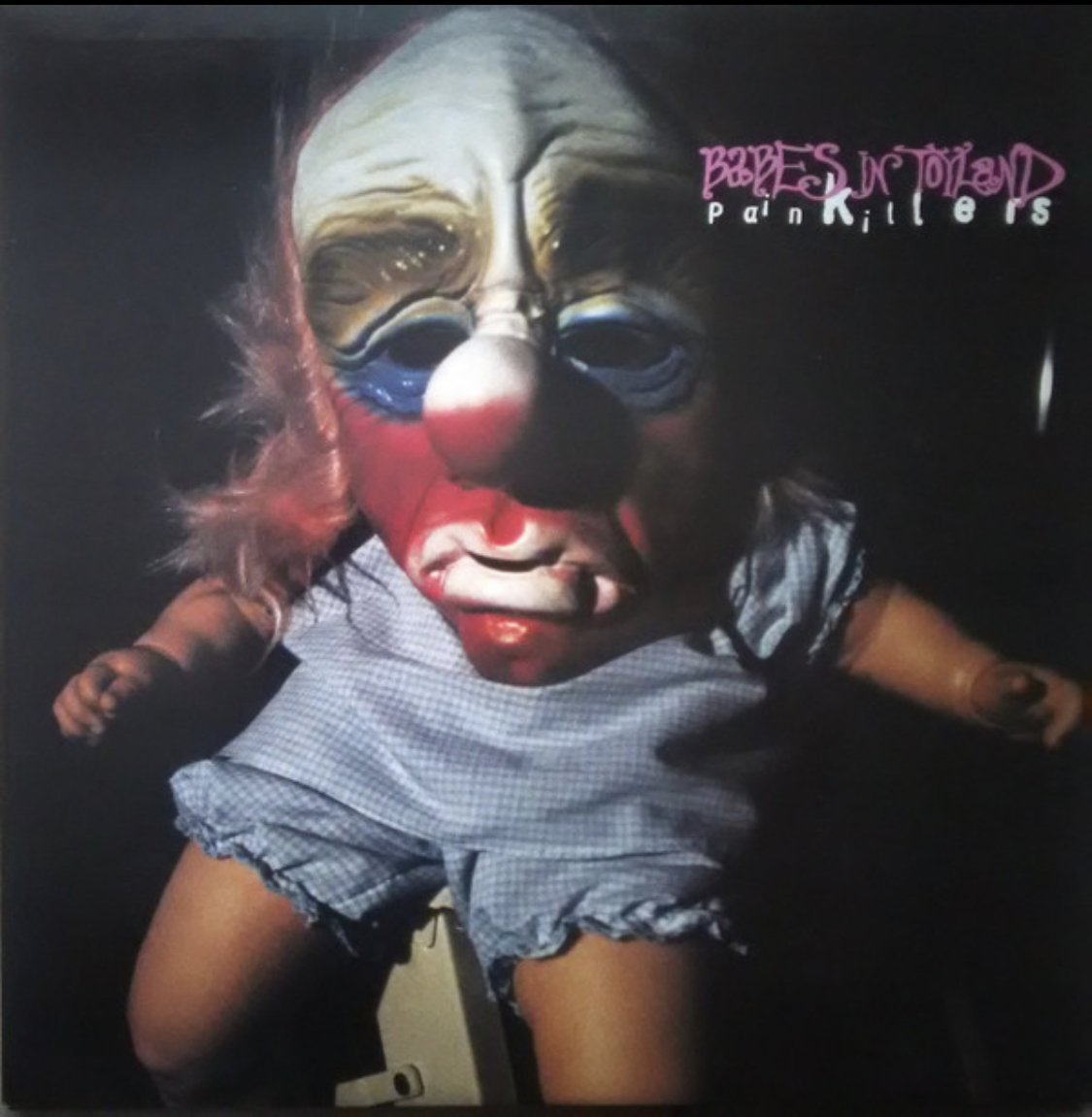
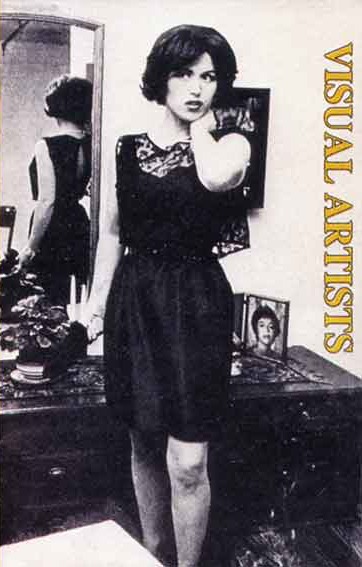
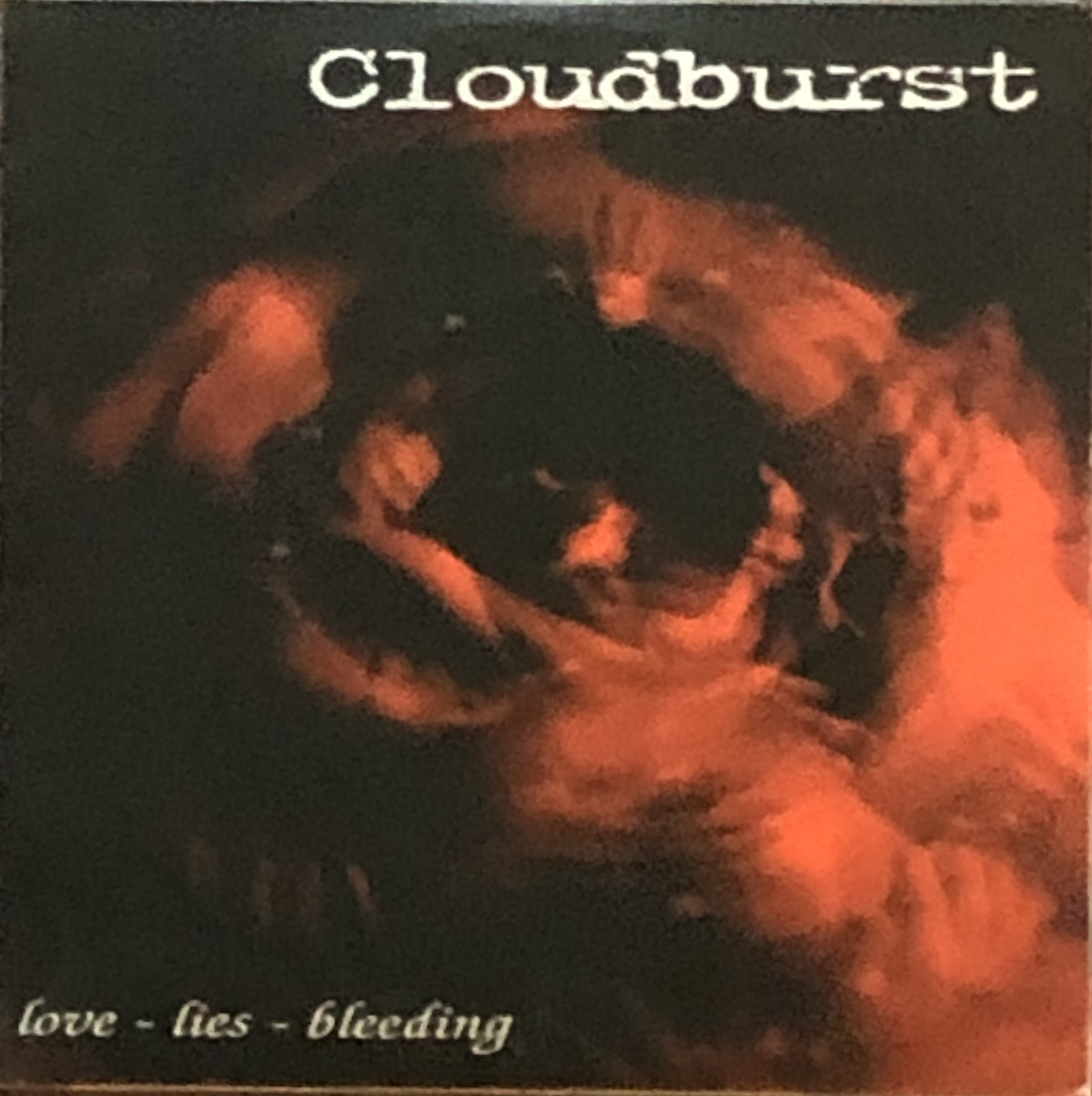
I went to a massive Cindy Sherman exhibition at Stockholm’s Moderna Museet entitled “Untiitled Horrors” in late 2013 and noted that Sherman had contributed to several record covers. I managed to find information and pictures of seven:
1. The Kitchen Presents “Two Moons July” — videodisc
2. Tellus #21 – Audio by Visual Artists — audio cassette.
3. Babes in Toyland’s album Fontanelle
4. Babes in Toyland’s album Painkillers
5. Cloudburst – Love – Lies – Bleeding,12″ EP
6. Athur Doyle – No More Crazy Woman.

… and just recently, I could add a seventh cover; Teddy and Jenni Do George and Tammy, a limited edition, four-track EP by Teddy Thompson (son of Richard and Linda Thompson) and Jenni Muldaur (daughter of Geoff and Maria Muldaur) who duet on two songs each by George Jones and Tammy Wynette. Apparently, Jenni and Cindy Sherman are pals and Cindy agreed to do the cover for this EP.

Teddy & Jenni Do George & Tammy

It transpires that thee cover of the videodisk while being advertised as beoing by Cindy Sherman actually isn’t, so I can cross that one off my list. I haven’t been able to find the Tellus #21 cassette but the other covers are relatively easy to find and make a nice collection by a famous photographer.

My Love Affair with 4*A*D Isn’t Over …

I’ve culled my bookshelves quite mercilessly over the past few years but have jealously guarded many of my “art” books. One of these is Martin Aston’s Facing the Wrong Way — The Story of 4 A D. I’ve been staring at the book’s spine for yonks but only started to read it a couple of weeks ago. It rekindled my interest inall things 4*A*D.

I am a big fan of record cover design and fastened for the work of 23 Envelope, and, later, v23 in the early eighties when I bought a Cocteau Twins album — probably Head Over Heels — in Camden Market. I was struck by the cover and shortly after bought a folder of posters by the design team called 23 Envelope; Vaughan Oliver and his longtime friend photographer Nigel Grierson. I still have it.

The cover of the 23 Envelope poster folder.

Thus started my collection of Vaughan Oliver’s art; primarily record covers from 4*A*D. Over the years up until 2013 I built up a collection that included most of the more desirable record covers and books. I had the original This Rimy River book — a catalogue (of sorts) of an exhibiiton at the Pacific Design Center in Los Angeles in 1994.

The original This Rimy River catalogue.

The limited edition of This Rimy River.

I invested in the deluxe limited edition, too. Mine is No. 65/400.

My collection of 4*A*D rarities included two copies of the Lilliput double CD album, the deluxe LP version of Lonely Is an Eyesore as well as the wooden box version, a limited edition of 100 boxes, intended for the artists on the 4*A*D label. Although fifty were on general sale when it was released in 1987.

I had sent my copy of Rick Pointer’s book Vaughan Oliver: Visceral Pleasures to Vaughan sometime in late summer of 2001 with a letter asking for a signature, but I hadn’t heard anything from him. I was going to London in November 2001 and I therefore planned a visit to v23’s studio in south west London. So I packed the lid from my Lonely Is an Eyesore box, my copy of limited edition of This Rimy River and a copy of the Lilliput CD album in the hope that he would sign them. I popped down to the studio one day but neither Vaughan nor Chris Bigg were there, so I left a business card. I returned mid morning on, I think, the 16th, and Vaughan welcomed me as the weird Swede, having seen my business card. We had a chat and I aasked him about my Visceral Pleasures book, which he immediately produced and signed.

Vaughan Oliver’s dedication in Visceral Pleasures.

I showed him the other stuff I had with me and he graciously signed everything! Then Chris Bigg reminded him they had a lunch meeting at 4*A*D to re-negociate their contract! So Vaughan suggest I pop to the local pub and grab some lunch and then have a look through v23’s poster archive to see if there were any posters I would like. I picked about 20 which Vaughan gave me when he and Chris returned from their meeting.

I sold most of my 4*A*D / Vaughan Oliver collection in 2013. probably the only part of my extensive record and poster collection that I today regret parting with. However, I have catalogued my complete record collection online and can view all the 4*A*D records and CDs I had had. And, of course, I can listen to them on Spotify.

Vaughan Oliver died in December 2019, a year after his magnum opus Vaughan Oliver: Archive – a two-volume resumé of his career was published. I’m ashamed to say, I only found out about it recently. It’s a limited edition and very difficult to find now.

So all I have left of my Vaughan Oliver collection are the 23 Envelope posters, Pieter Nooten’s LP Sleeps With the Fishes (that I consider the most beautiful v23 cover), the limited edition of This Rimy River and the little paperback Vaughan Oliver and v23 Poster Designs, published to celebrate 4*A*D’s 25th anniversary. I shall treasure them all.

Pieter Nooten & Michael Brook – “Sleeps With the Fishes” cover design by V23 with calligraphy by Chris Bigg.

Thank you Martin Aston for rekindling my interest in all things 4*A*D.

A Rare Addition to My Banksy Collection.

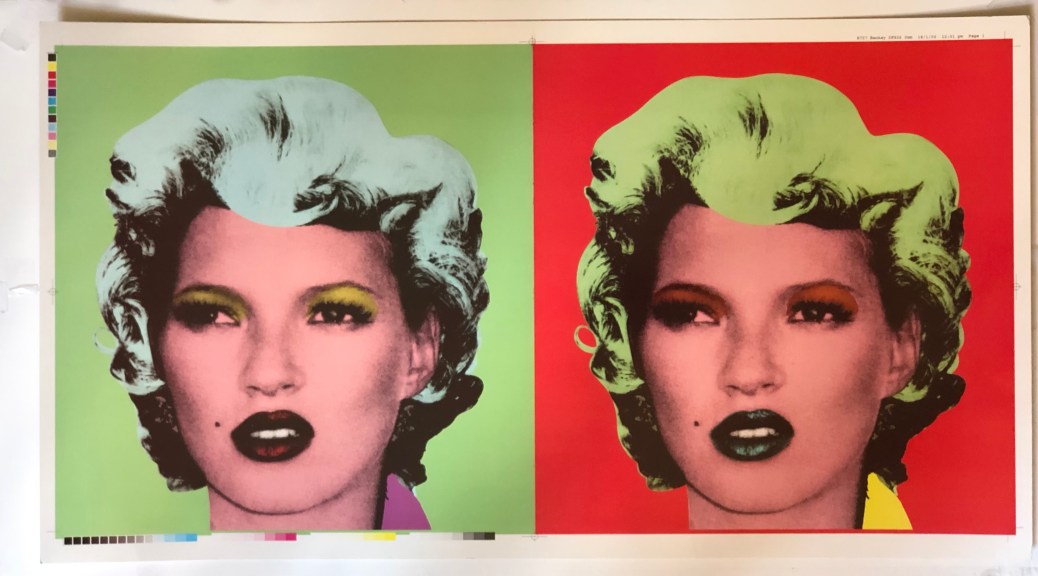
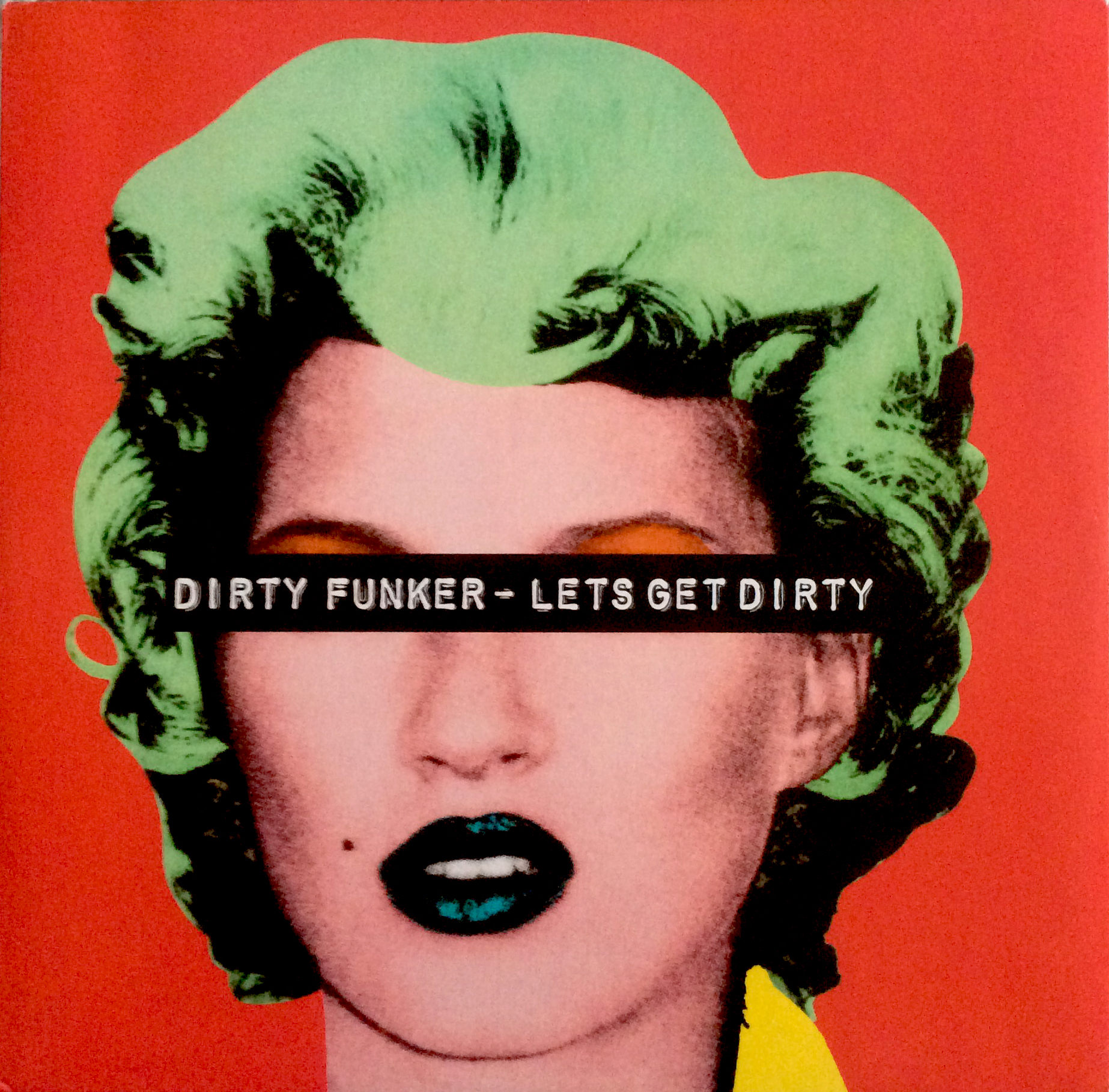
Fairytales usually start “once upon a time …”, so that’s probably how I’ll start this post. Once upon a time I got hold of a printers’ proof of Dirty Funker’s Let’s Get Dirty cover. As you all know, there are two versions of this cover — one with no artist or title on the cover, only the two Kate Moss portraits, the second, more common, cover has a “Dymo” band over Kate’s eyes on the front with the title and over her mouth on the rear cover.

The printers’ proof:

Printers proof of the Let’s Get Dirty cover.

No one know how many printers’ proofs are made. Probably only a handful. I’ve only ever seen one other Let’s Get Dirty proof before.

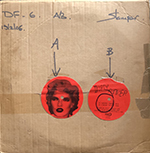
Last month, I saw an Ebay item that I couldn’t resist. A seller in Stockholm, literally just down the road from where I live (well. actually a bus ride or eight underground stops away) had advertised the original stampers for the Let’s Get Dirty single and I made a cheeky offer that (after a wee haggle) was almost instantly accepted! They came with documentation on their provenance, so I guess they’re genuine.

I think this combination of the printers’ proof cover art together with the original stampers and both pressings of the record must be pretty rare. They make a great addition to my collection. So, thanks Dan for selling me the stampers.

Collecting Record Cover Art — All or Nothing?

As Dave Haslam points out in his little book A Life in Thirty-five Boxes (subtitled How I Survived Selling my Record Collection), there are basically two classes of collector; the completist and the dilettante. The former strives to collect everything in his or her field of interest while the dilettante picks and chooses among items. A stamp collector might concentrate on collecting stamps with sports figures or butterflies and be happy with the most famous footballers or the prettiest butterflies. But being a completist in either of these fields would be nigh on impossible. The same, of course, applies to collectors of record cover art. The dilettante can pick and choose which record covers to collect. The completist wants every cover in a particular field of collecting.

My record collection started out as a library of popular music from the late fifties to today and grew to more than 5,000 records and CDs before I started to concentrate more on record cover design. The first designer I discovered and decided to collect was the late Vaughan Oliver and I collected a wonderful collection of his work before selling the majority of my collection almost ten years ago. I have now only one of the covers by his v23 design group — Pieter Nooten’s Sleeps With the Fishes, which is still one of my all-time favourite designs (by Chris Bigg).

When I sold the bulk of my collection, I kept my Andy Warhol, Peter Blake, Klaus Voormann and Damien Hirst covers. These artists have only produced relatively limited numbers of covers; Andy Warhol produced about 65 covers during his lifetime, though many more have used his art since. There are only about thirty covers designed by Peter Blake and around eighty by Klaus Voorman and currently about seventy by Damien Hirst. And the artist I started collecting most recently is David Shrigley. Shrigley has designed a frisbee with the message “I collect records — I am obsessed by them”. Shrigley is a record collector and sometime DJ but his art seems seldom influenced by music. However, he has used his qirky writings on several record, cassette and CD covers. Thus far, he is responsible for about seventy covers, many very limited editions produced to accompany exhibitions of his art.

Then there’s Banksy. I started collecting Banksy’s record cover art around 2005 and collected almost fifty covers quite quickly. This is where I recognised that I am a completist. I wanted to include every cover in my collection.

There were several temporary “highs” when I thought I had completed a collection of one of my artist’s production only to find myself disappointed when someone found a cover that I had missed. I am responsible for reporting three previously unrecognised Andy Warhol covers and I can say I have a “pretty complete” collection of Warhol covers — note: not complete, but “pretty complete”. The same applies to my David Shrigley, Peter Blake and Damien Hirst collections and my Klaus Voormann collection (though I do lack two Voormann covers, but I know what they are.)

However, I am now beginning to realise that my collection of Banksy covers will never be complete as new discoveries are being made almost daily and my initial list of around fifty covers has now grown to almost one hundred and fifty, and still more covers are being recognised. Amazingly, many of these new “discoveries” were produced prior to 2010, when I thought I had found ALL of Banksy’s covers.

Banksy’s art is now so attractive to collectors and his early record covers, particularly his vinyl covers, have become prohibitively expensive. Most of the new “discoveries” are on CDs produced by relatively obscure bands, commonly punk or hiphop, in very limited numbers and are becoming impossible to find at reasonably prices as collectors compete for each available copy. There are a few nice vinyl covers, too and some more unscrupulous people are producing limíted edition vinyl 12-inchers with Banksy art covers simply to lure collectors. There are three recent releases in this category; two by a band called Boys in Blue — one using Banksy’s Rude Copper and one using his Strawberry Donut images, and another by Apes on Control that uses his Choose Your Weapon design. Unfortunately, I was taken in by the first Boys in Blue scam but have resisted the the others.

Street Art on Record Sleeves — A Good Investment.

My collection of record sleeves with art by the artist klnown as Banksy needs no instroduction here.

There are two covers that Banksy handsprayed. The first was for John Stapleton’s Blowpop Records in 1999. Banksy sprayed 100 coovers for a promotional 12″ single by the Capoeira Twins.

And the second was for Röyksopp’s debut album Melody A.M. in 2002.

The Capoeira Twins 12″ costs around GBP 5,000 – 6,000 while the Melody A.M. double LP goes for araound GBP 8,000 – 10,000. Both are limited editions of 100 copies (only the Melody A.M. covers are numbered.)

Robert del Naja (a k a 3D) is closely related to Banksy — and a major early influence. Del Naja started as a streeet artist in Bristol in the early eighties. He stopped after being arrested one time too many and concentrated on music, though he still produces art both as paintings and limited edition prints that command high prices. He also designs record covers for his band Massive Attack and for other groups. His limited editon record covers for Massive Attack have increased in value. I have four covers by Del Naja/3D.

Prices of these covers have sky rocketed recently. The limited edtion 12″ Eps Splitting the Atom and Atlas Air can cost upwards of GBP 300.

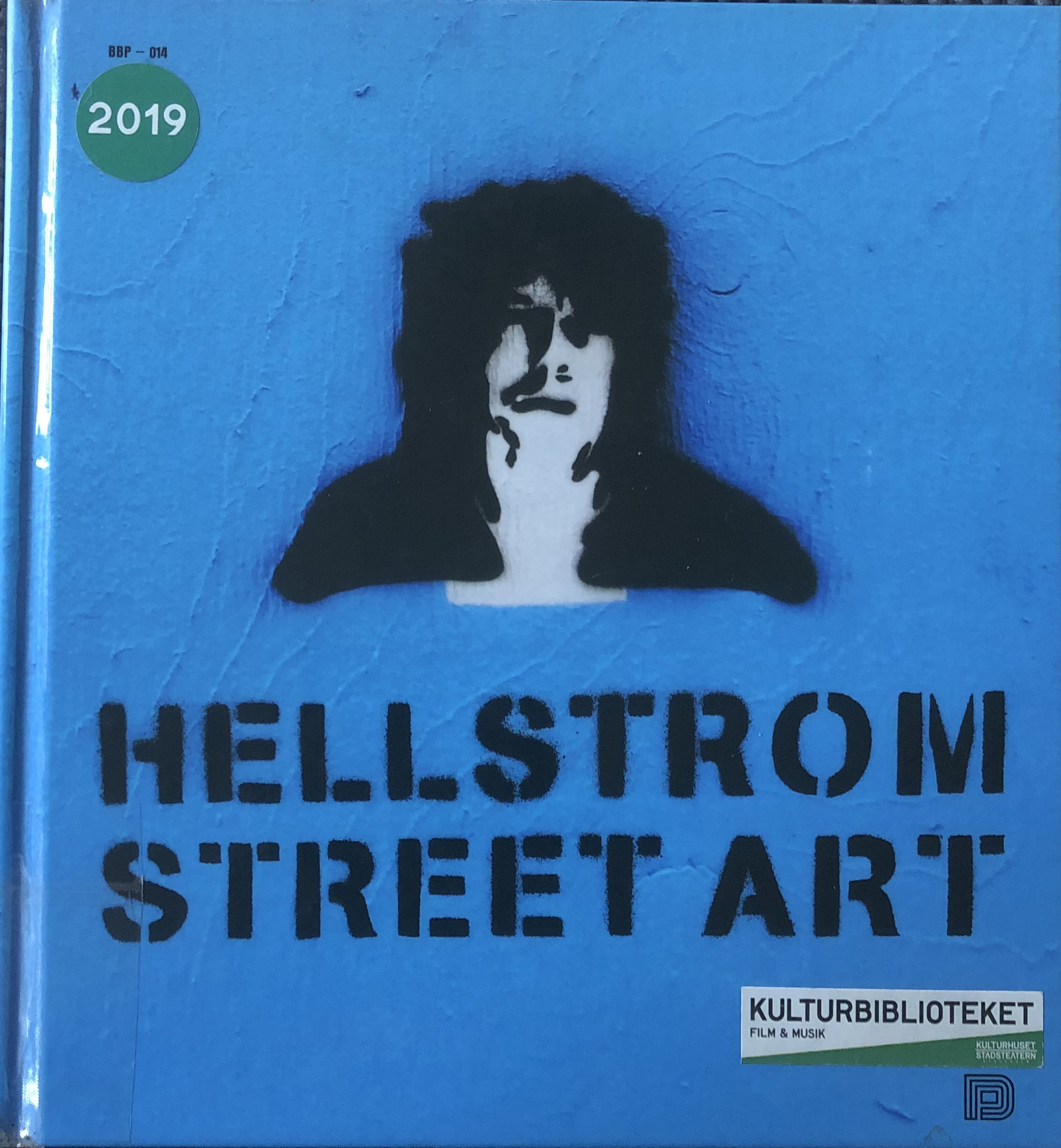
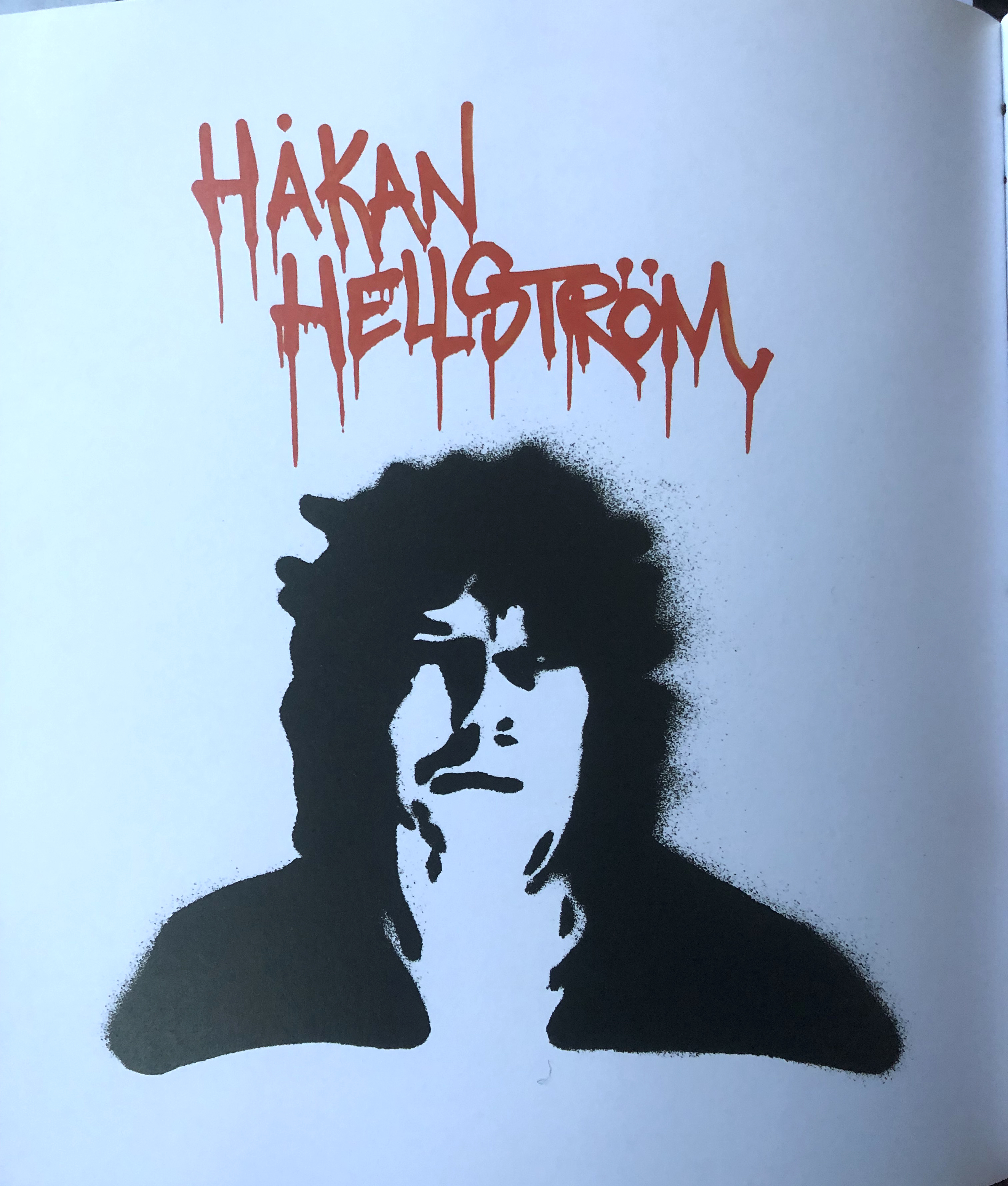
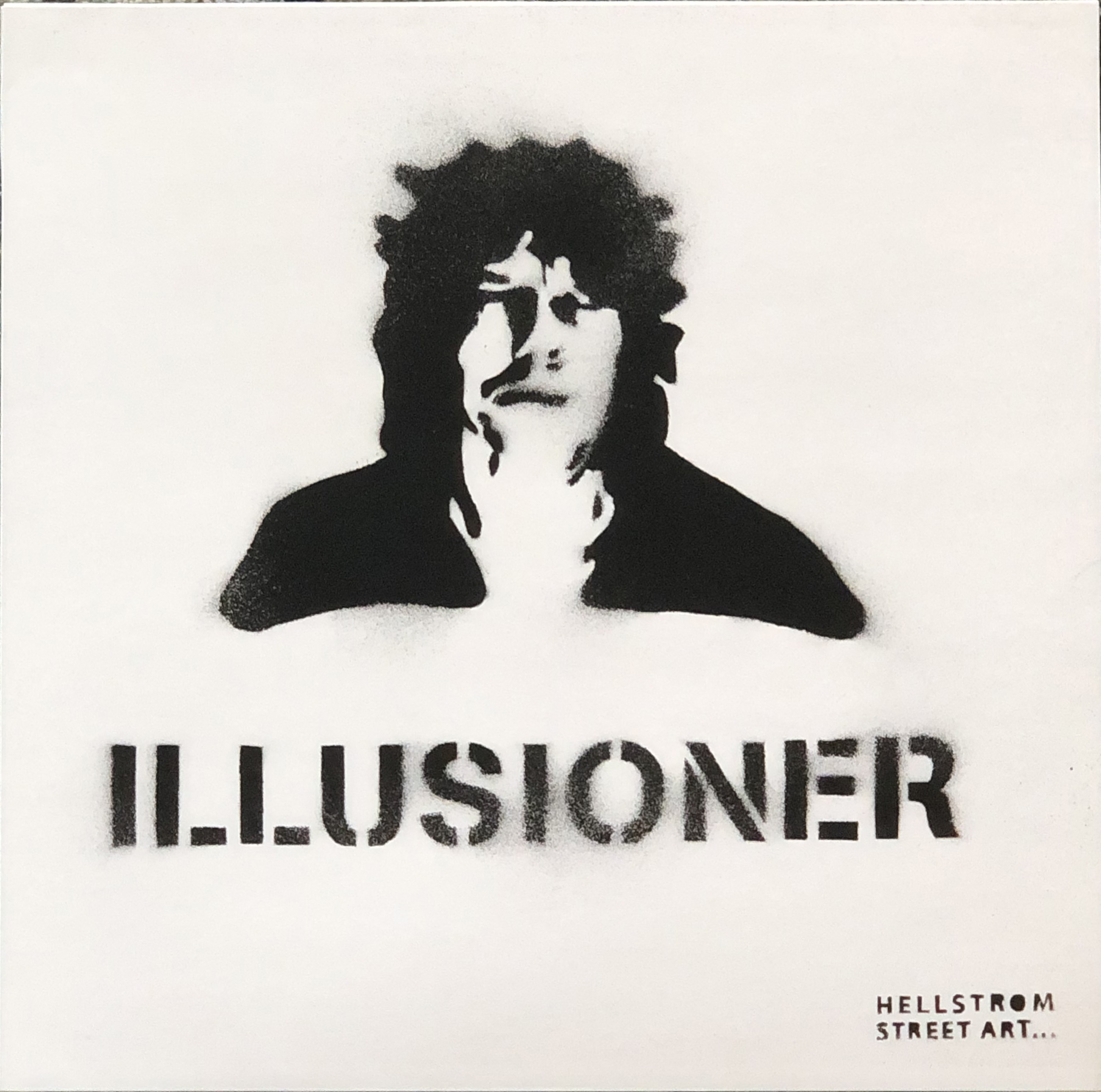
I have tried not to wander off and collect other street artists covers, but somehow some manage to creep into my collection. The latest is by the anonymous Swedish street artist Hellström, who handsprayed a cover for Håkan Hellström’s 2018 Illusioner album.

Hellströms limited edition prints cost around SEK 40,000 – 60,000 (aprox €4,000 – 6,000) and are highly collectible. He made the cover to the Illusioner LP in an edition of 40 (mine is No. 36), considerably fewer than one of his print editions.

One of the most expensive street art record covers is Jean-Michel Basquiat’s cover for Rammelzee vs. K-Rob Beat Bop 12″ single originally released in 1983 (500 copies) and reissued several times. An original copy might sell for around USD 10,000. Even some reissues can be quite expensive. However, even the price of an original is far less than a Basquiat limited edition print.

Mr Brainwash designed the cover for Madonna’s 2009 Celebration four LP compilation and copies now can cost USD 1,000!

Shepard Fairey has designed several record covers, both as art works that do not contain records and as bona fide record sleeves. He knows his history of record cover design and produced a limited edition series of covers that I felt I had to reproduce for my collection.

This cover design harks back to Alex Steinweiss’ first picture cover ffor the Smash Hits by Rodgers and Hart 78 rpm album from 1940. As I have that album, I had yo make a reproduction of the Shepard Fairey cover. Once again, a Shepard Fairey record cover will cost far less that one of his limited edition prints.

These are the street artists I have in my collection. I hope that each will continue to increase in value.
It seems that record covers by estsablished “fine” artists are also considerably cheaper (or perhaps that should be “considerably less expensive”) that the artists’ limited edition prints. A current example is David Shrigley, a vinyl-lover and part-time DJ, who has produced many record sleeves in very limited editions. These are now quite expensive, but nowhere near the cost of his limited edition prints. Early covers by Andy Warhol are expensive — perhaps up to USD 2,000 – 3,000, while his limited edition prints cost one hundred times the cost of his record covers.

Anniversary Reissues — an Expensive Experience.

There’s obviously a new generation of music fans who are buying vinyl records and weren’t around when some historic albums were origianllly released. And a there’s a large group of old fogies like me who were around but have worn out their original copies (or, again, like me, sold much of their original vinyl) and record companies have not beeb slow in realising these markets and producing anniversary reissues of old favourites — and in many cases reissuing albums that weren’t greatly appreciated when originally released but have become cult items. Many of the reissues are released on variously coloured vinyl, so collectors might have to buy several clopies.

I don’t know when the anniversary reissues forst arrrived. I suppose you could say it was when CDs arrived in the early eighties and vinyl albums were tranferred to the digital format. I remember the posters advertising the release of the Sgt. Pepper’s Lonely Hearts Club Band CD in 1987 used the “It was 20 years ago today” byeline. Could that have been one of the first “anniversary” reissues?

But 25th, 40th, 45th, 50th anniversary issues now appear with shocking regularity and are often in the form of expanded editions in box sets. Viz. The Velvet Underground & Nico‘s 45th anniversary 6CD box (one of th efirst I fell for) and the 2017 Sgt. Pepper release on single LP, double LP and four CD box set (I fell for these as well.) Lavish boxed sets of each of the Led Zeppelin albums (which tempted me, but I was strong) and many others.

But there’s a newer phenomenon; 10th and 15th anniversary reissues. I’ve just fallen for the 15th anniversary reissues of Malcolm Middleton’s A Brighter Beat album with its David Shrigley covers. I already have the origianal both on vinyl and CD (two different covers) and signed up for the promised 15th anniversary issues when they were announced in the autumn of 2021. Release was, however delayed until May. The “standard” reissue was a limited edition of 1000 copies on clear vinyl and then there is a “Dinked” edition of 500 copies on silver vinyl with a differend Shrigley cover (the same design as was used on the original CD.)

And now I’ve just “invested” in a 20th anniversary reissue of The Promise’s Believer LP, originally pressed on clear vinyl (100 copies) or red vinyl (900 copies) and now repressed on purple vinyl (200 copies). This 2002 album featured a very early reworking of Banksy’s I Fought the Law artwork on its cover and has become a collector’s item because of its cover.

Many, if not the majority, of these anniversary reissues are limited editions and have become collectible in their own right. I realise that it is great that out of print albums are being rereleased so that a new group of listeners can hear them on pristine vinyl, but I can’t decide if it is just a marketing jippo tat has sucked me in.

Banksy: Building Castles in the Sky. An exhibition in New York.

I have been involved in a series of unauthorised Banksy retrospective exhibitions over the past five years. This started in 2016 when the Italian cultural foundation Associazone Metamorfosi planned a major retrospective exhibition of the work of the artist known as Banksy to be held at the presigious Palazzo Cipolla on Rome’s Via del Corso between 24th May and 4th September 2016. John Brandler, a gallery owner who specialises in street art, knew of my collection of record and CD covers with cover art by Banksy and recommended to the curators Stefano Antonelli, Francesca Mezzano and Acoris Andipa including mey records and CDs in the exhibition. The exhibition, called War, Capitalism & Liberty, was divided into sections illustrating these three themes.

Then in 2019 the Fondazione Metamorfosi contacted me again asking to borrow my Banksy collection for a new exhibition to be called Il Secundo Principio di un artista chiamato Banksy [The Second Principle of the artist known as Banksy]. The exhibition was held between 23 November and 29 March 2020. An exhibition catalogue was produced for this show.

Metamorfosi decided to that the exhibiiton should move to a series of exhibition halls in Italy and Switzerland, first to Ferrara, then to Parma and later to Basel and Lugarno. The title of the exhibition changed to Un artista chiamato Banksy for the Ferrara show.

The following exhibitions in Parma, Basel and Lugano were all titled Banksy: Building Castles in the Sky and used the same catalogue design.

These exhibitions included paintings, prints, books, posters, sculpture and, of course record and CD covers illustrating all aspects of Banksy’s art, with the exception of paintings on walls. The curators have been careful to point out that Banksy has not been involved in these unauthorised exhibitions and that no works from buildings are included as ownership of such works is unclear.

I had the priviledge to attend the openings of the War, Capitalism & Liberty and the Il secundo principio di artissta chiamato Banksy exhibiitons. The Covid pandemic prevented me visiting the Ferrara, Parma, Lugano and Basel exhibitions.

After Lugano, curators Stefano Antonelli and Gianluca Marziani, together with Fondazione MetaMorfosi transferred the exhibtion to New York, in the former International Center of Photography building at 250 Bowery. This was still called Banksy: Building Castles in the Sky and a new catalogue was produced for the show.

The catalogue from the Banksy: Building Castles in the Sky exhibition, 2022.

The New York exhibition opened on 28th May and will run until 31st December 2022. It was a thrill for me to be invited to the opening and to meet the curators, who had published a book of Banksy’s art in Italian in 2021 and could present an English language version at the opening of the New York show.

Twenty-nine of my record covers and 16 CDs are on show at the exhibition.

The exhibition proivides a great overview of Banksy’s art and includes is most famous images including his Rage: Flower Thrower, Girl with Balloon , Turf War and I Fought the Law, among many others.

An Authoritative Book on Banksy’s Art.

There is a cultural organisation in Italy called Azzociatione Metamorfosi that arranges educational art exhibitions ranging from Michaelangelo to Caravaggio and most recently the artist known as Banksy. Metamorfosi have engaged art experts Stefano Antonelli, Gianluca Marziani and the British gallerist Acoris Andipa to curate an unauthorised exhibition of the Banksy’s art currently called Banksy: Building Castles in the Sky. The organisers are careful to point out that the exhibition does not involve Banksy himself nor does it include works removed from buildings or public spaces.

The exhibition was first shown at the Palazzo Cipolla in Rome in 2016 when it was called War, Capitalism and Liberty. The current exhibition opened in Genoa in November 2019 and was called The Second Principle of Banksy. It moved to several Italian cities during 2020 and thereafter to Basel and finally to Lugarno in Switzerland metamorphosing into its present form as Banksy: Building Castles in the Sky. The exhibition opened at the former Institute of Photography, 250 Bowery, New York, on May 28th 2022 and will run until the end of the year.

The catalogue from the Banksy: Building Castles in the Sky exhibition, 2022.

In 2021 Antonelli and Marziani published their book Banksy in Italian and published it in English in May 2022 to coincide with the opening of the New York exhibition. The book, Simply entitled Banksy is published by Rizzoli/Elektra (ISBN 978-0-8478-7276-3).

It is, as far as I know, the first authoratative and critical analysis of Banksy’s art produced by independant art experts. It runs to 240 pages and is profusely illustrated in colour. All the best-loved Banksy images are, of course, included along with many less well-known ones. There’s Girl With Balloon, Rage: Flower Thrower, Monkey Parliament all arranged along a timeline so the reader can follow the artist’s progression. It’s reasonaby priced at £29.95 / $40.

Record sleeve art by artists I collect