New cover art by Sir Peter Blake.

Towards the end of September, I came across a Rolling Stones CD with cover art by Andy Warhol that I had not seen before. A search for a possible source lead me to a seller in Japan from whom I bought a copy and thereby found myself on the seller’s mailing list. A newsletter arrived at the end of November and I scrolled through it to see if there were any another Stones CDs with Warholian art that I had missed–with no success. BUT–there was a CD box with a portrait of Eric Clapton that looked suspiciously like a recent Peter Blake portrait. Enlarging the cover picture showed that it really was by Peter Blake–and even had his signature. This was a 14 CD box of all seven concerts that Clapton played at London’s Royal Albert Hall between 14th and 23rd May 2015 to celebrate Clapton‘s 70th birthday that was on 30th March. The set is released on the Mid Valley label and must be a bootleg.
EC-RAH-2015_fr

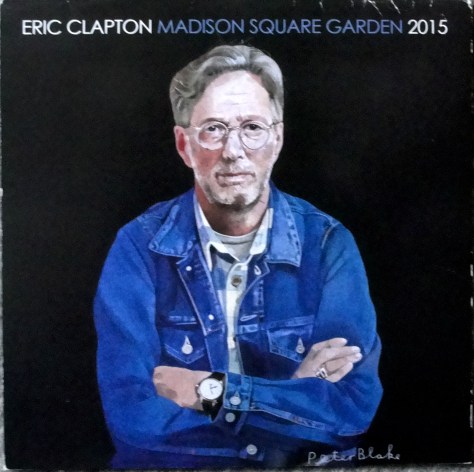
Further Internet searches showed that Clapton had also played two concerts at Madison Square Garden on 1st and 3rd May as part of his birthday celebrations. There had been a common programme for all nine concerts–a LP-sized book with the same picture on one cover and the same portrait of the other but with the Madison Square Garden text.

EC-program-bk

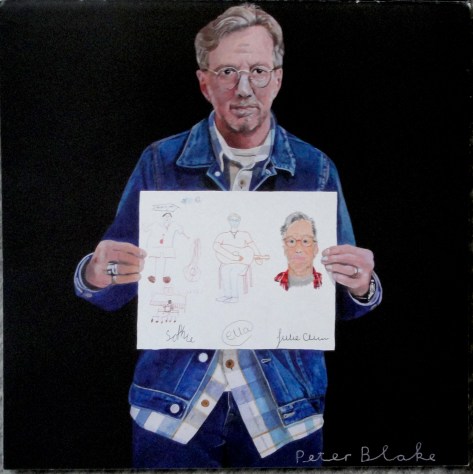
So I bought a copy! Inside was a further portrait of Eric holding a card with other  portraits, drawn by his daughters, Sophie, Ella and Julie:
EC-Program-inner

Well, I had to have the CD box to “complete” my collection of Peter Blake covers but when I returned to the Japanese site it was listed as being out of stock! A feverish Internet search ensued which eventually lead me back to an Ebay seller in Japan who had copies for sale and within four days it had arrived! And then I had another surprise. The same seller advertised a 3 CD set of the Madison Square Gardens concerts! The cover art was again taken from the programme cover:
EC-MadisonCD

So I placed an order for this one, too.

I then noticed that there was an official album of Clapton‘s Royal Albert Hall Concerts released on CD, DVD and vinyl called “Slowhand at 70 – Live at The Royal Albert Hall” but the cover art is not by Peter Blake.
Slowhand_at_70
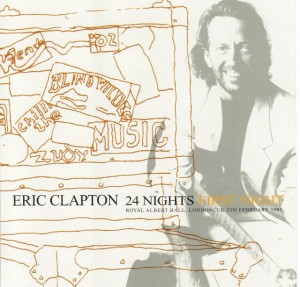
And then I started googling Eric Clapton bootlegs. I was astounded by the number available. It would seem that almost every concert Clapton has played since the early 1990s has been bootlegged. Thus it is completely logical that Reprise Records released a double CD and Double LP of Clapton‘s 1991 “24 Nights” series of concerts at The Royal Albert Hall in order to cash in on the interest in his live performances. I found that there were several bootlegs of individual concerts from the “24 Nights” series available. The majority had covers showing photographs of Clapton in various poses take at the concerts, but two–one with a recording from the first night (5th February 1991) and one from the fourth night (9th February 1991) used some of Peter Blake‘s drawings from the cover of the official release. Here is the “First Night” cover:
ericclap-24nights-first-night-300x287

and here is the “Fourth Night“:
ericclap-24nights-fouth-nights-300x294

The “First Night” is a double CD while the “Fourth Night” is a double CD-r.

These four CD sets are the first bootlegs that I have been able to discover that use Peter Blake’s art. I wonder if he knows about them? Probably not!

I shall continue to search for others.

Lou Reed & John Cale – Songs for ‘Drella’ and The Velvet Underground reunion

In 1968 John Cale and Lou Reed had fallen out during the recording “White Light / White Heat”, The Velvet Underground’s second album. They vowed not to play together again. However, they met at Andy Warhol‘s memorial service at St Patrick’s Cathedral on April 1st 1987 after having not had any contact with each other for many years. Apparently, Julian Schnabel suggested that they write a memorial album for Andy.

Warhol superstar Ondine had nicknamed him “Drella“–a contraction of Dracula and Cinderella and Reed and Cale decided to call their work “Songs for Drella“. They previewed the work at Brooklyn’s St. Anne’s Church in two concerts on January 8th and 9th 1989 before it was  complete.And these concerts were recorded and a bootleg LP appeared.
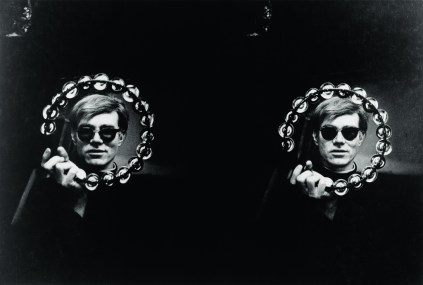
Warhol by Finkelstein

DoubleWarhol

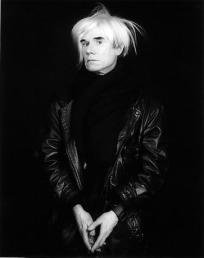
The record cover was a silkscreened copy of Nat Finkelstein‘s 1965 portrait of Andy Warhol holding a tambourine. John Cale recorded a single with two songs from the “Songs for Drella” project live on 27th July, 1989. These were “Style It Takes / Forever Change“. The cover showed two contractions of Robert Mapplethorpe’s portrait of Andy Warhol (C The Robert Mapplethorpe Foundation).

AW by RM

Cale_Drella_fr

The complete work was performed at a series of concerts in November and December 1989 and one performance filmed and released on DVD and Laserdisk. Reed and Cale recorded the work over the following two months for an album, which was released by Sire Records on 24th April 1990 on standard CD, a limited edition Digipak CD and on LP.

SongsForDrella
“Songs for Drella” CD with a Warhol self-portrait visible behind Lou Reed and John Cale.

A single “Nobody But You / Style It Takes” was released from the album.

A tour proved out of the question although Cale and Reed did perform together again in 1990 in Paris. They were joined by Sterling Morrison and Mo Tucker to play “Heroin“. This concert was also recorded and released on a bootleg entitled “Paris 1990“, with fluorescent cover art on a black background. The front cover showed a Warhol lily and the rear a portrait of Warhol in a diamond-shaped lozenge.

VU_PAris1990_fr_600

VU-Paris1990_bk

The arrival of Morrison and Tucker at the Paris concert lead to a further reunion concert in 1993 that was also recorded and released on CD and Laserdisk entilted “The Velvet Underground Redux Live MCMXCIII” and later as a four-LP set with Warhol’s banana as the cover art.

VU_1993_Laser_fr_600


ABSOLUT VODKA’s RECORD COVER ADVERTISMENTS

This post is not so much about record covers as much as about advertising and focuses on a campaign by Absolut Vodka.

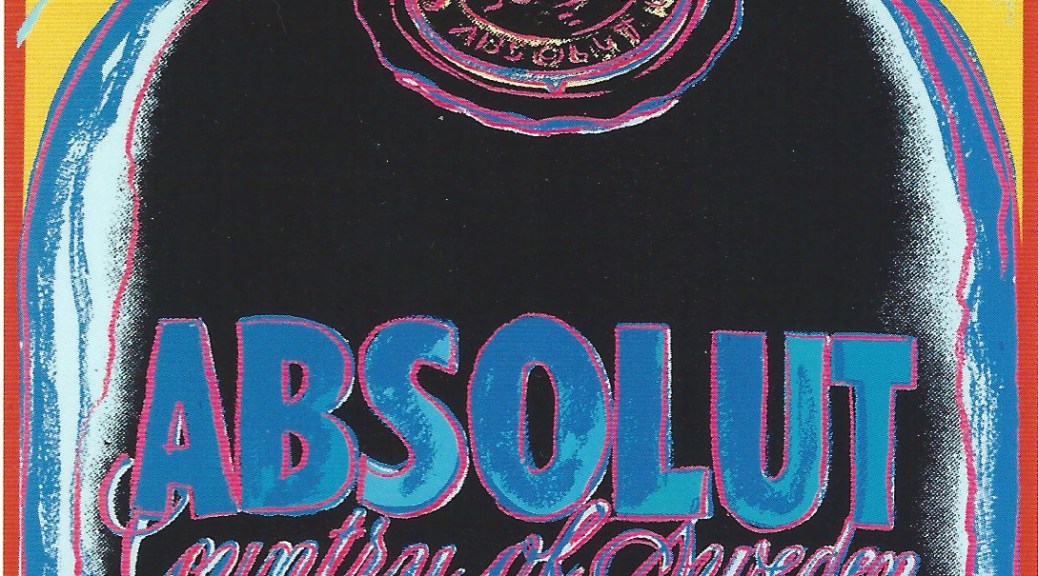
Apparently, Absolut Vodka is the third largest spirit brand in the world. It is distilled near Åhus in Skåne, southern Sweden, and was, until 2008 owned by the Swedish state through its company AB Vin & Sprit when it was sold to the French group Pernod Ricard for €5.63 billion (55 billion Swedish Crowns). Two things – apart from the drink itself – have contributed to Absolut Vodka’s international success; the first is the design of the bottle and the second is the inventive artistic advertising campaigns. And, related to the imaginative advertising was the Absolut Art Collection, started In 1985 when Andy Warhol was approached to paint a picture of the Absolut Vodka bottle.

Exactly how Warhol came to be involved is debated. According to Finbar Krook Rosato, in “Face It! Absolut Art Collection” (2012) One story is that Michel Roux who worked for Carillion importers was a regular fixture in the New York nightlife of the 1980s. Apparently he suggested the idea to Warhol at a dinner and Warhol was enthusiastic saying “I love the bottle. I’d want to do something with it”. Another story is that Titti Wachtmeister, daughter of Sweden’s ambassador to the United States, was a close friend of Warhol’s put the idea to him. Whichever is correct, Warhol painted his portrait of the famous bottle.

Absolut Warhol
Absolut Warhol

Warhol then suggested that Keith Haring make a painting and in 1987 his contribution arrived. Between 1986 and 2004 a total of 850 works were made for the Absolut Art Collection by 550 artists. The collection is now housed at Spritmuseum in Stockholm where regular exhibitions show the varied nature of the art.

A series of one-page ads for Absolut Vodka appeared each week in Time Magazine and many appeared in other magazines including Scandinavian Airways System’s “Scanorama”. A series that was particularly special for me, was run in Scanorama from February until October 2002 and used pastiches of famous record covers to advertise the famous Vodka. You have to really search in some of the adverts to find the Absolut Vodka bottle.

The series started with a reworked version of David Bowie‘s “Aladdin Sane“:

Absolut Bowie.
Absolut Bowie. “Scanorama” February 2002.

The second cover to be manipulated was Miles Davis‘s “Bitches Brew“:

Absolut Miles.
Absolut Miles. “Scanorama” March 2002.

The third cover to be manipulated was Nina Hagan‘s “Om Namah Shivay!“:

Absolut Hagen.
Absolut Hagen.

Next up was INXS‘s album “Kicks

Absolut INXS.
Absolut INXS.

Number five was The Sex Pistol‘s “Never Mind the Bollocks, We’re the Sex Pistols“:

Absolut Pistols.
Absolut Pistols.

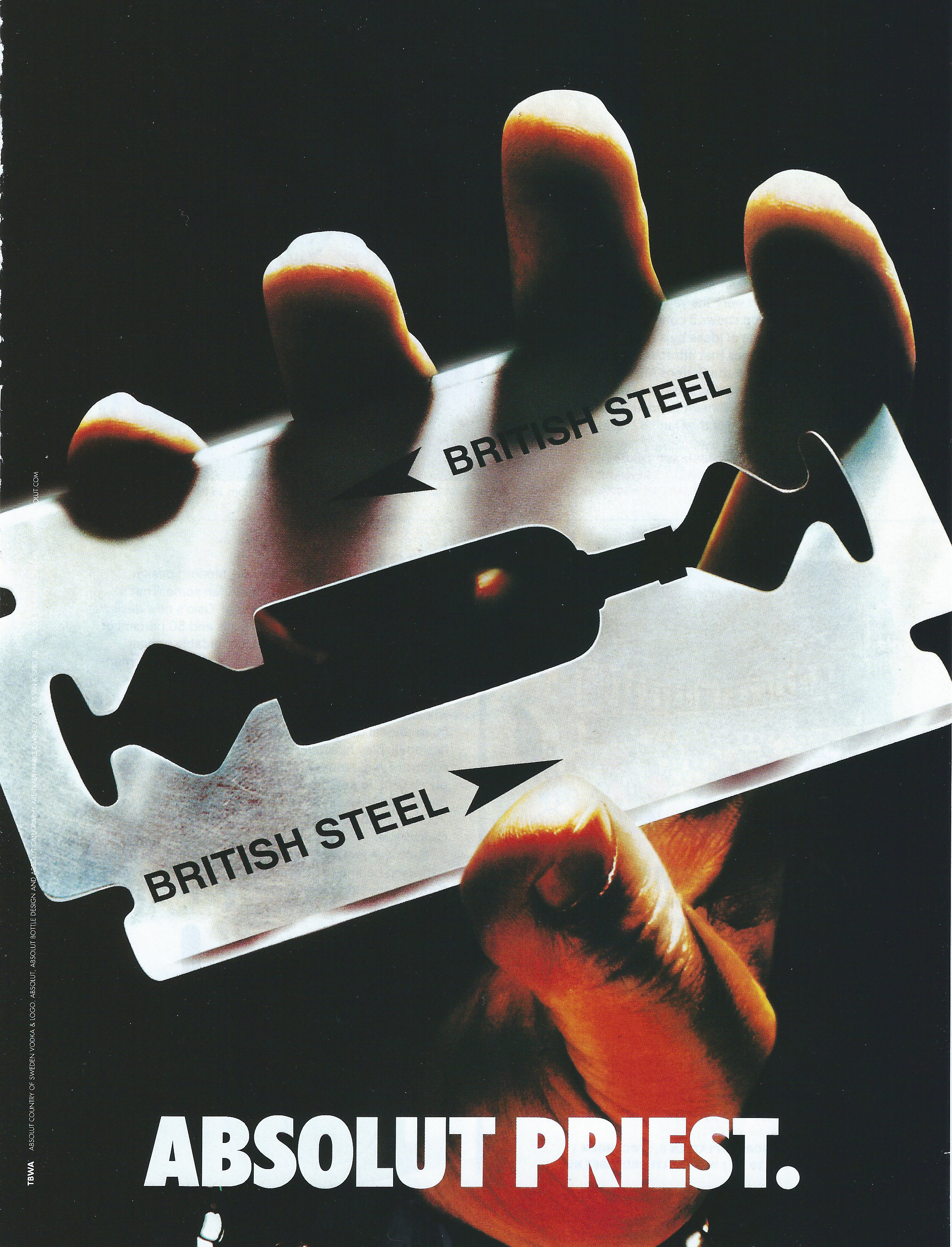
Then came Judas Priest‘s album “British Steel”:

Absolut Priest.
Absolut Priest.

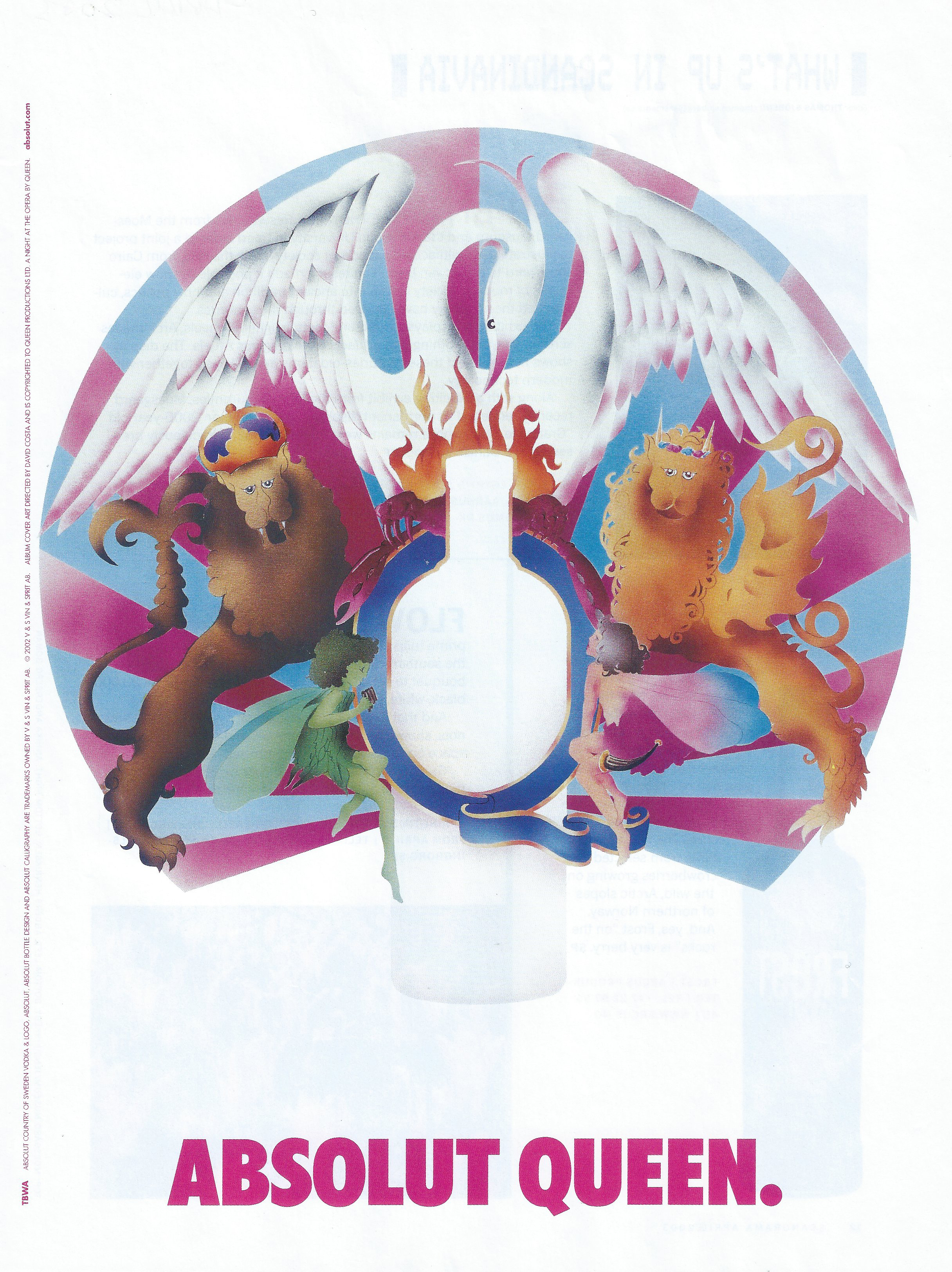
Album number seven was Queen‘s “A Night at the Opera“:

Absolut Queen.
Absolut Queen.

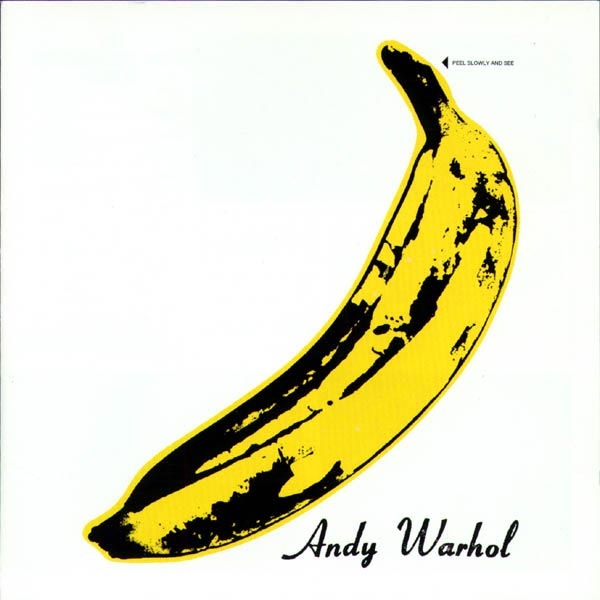
The eighth and final cover to appear in the series was The Velvet Underground & Nico‘s “The Velvet Underground & Nico“:

Absolut Underground.

A great combination of advertising and record cover art. No Beatles, perhaps, but at least there was one Warhol cover. I remember seeing a full-sized poster of the Absolut Pistols advert in Stockholm’s Arlanda Airport just when this campaign was running. I was sort of stunned as I hadn’t seen the any of the other adverts at that time! I wonder what other adverts have used record covers. Ideas, anyone?

A New Klaus Voormann Record Cover – And An Old One I Didn’t Know Existed

The Internet is a fantastic research tool for collectors. One doesn’t have to buy anything but it provides a wealth of databases from which to search. Researching record covers has been made so much easier thanks to record databases such as Discogs, Musicstack and others. Even Ebay and Etsy are great databases to use in searches.

I researched my post on Kate Moss on record covers entirely via the Internet. I owned three covers with Kate Moss’s portrait and bought a fourth as I found it available despite apparently being very rare. I have even researched Roy Lichtenstein‘s art on record sleeves via Ebay and Discogs without buying a single cover.

So, despite a smug feeling that I already had ALL his record covers, I was doing my usual weekly search for Klaus Voormann’s record cover art a couple of weeks ago when a new cover appeared. A record by a group which went by the (not so lyrical) name of Paddy, Klaus & Gibson.

Paddy, Klaus & Gibson's 10
Paddy, Klaus & Gibson’s 10″ EP.

A copy was for sale on http://www.ebay.de and I jumped at the chance. It turned out that the seller was famous German Thorsten Knublauch, collector of Beatles material from their Hamburg days and author of books on the Fab Four. He told me that fellow Beatles expert Dieter Hoffmann had produced this compilation album to document an early phase in Klaus Voormann‘s musical career.

The following information comes from a blog post by Thorsten Knublauch reviewing the album (see: http://wogew.blogspot.de/2015/02/paddy-klaus-gibson.html). Klaus Voormann had bought ex-Beatle Stuart Sutcliffe‘s Höfner bass when he left the band and hopped into a band together with Paddy Chambers (guitar) and John Frankland (vocals, guitar) and Gibson Kemp (drums) called The Eyes. The Eyes released two singles and Klaus Voormann drew a band portrait on their “She / Peanut Butter” single cover. Paddy Chambers had previously been a member of legendary Liverpool band The Big Three, Gibson Kemp (who later married Astrid Kirchherr) has been drummer for The Hurricanes and John Frankland who had been a member of Kingsize Taylor & The Dominoes.

The Eyes
The Eyes “She / Peanut Butter” single cover drawn by Klaus Voormann.

And, yes, it’s the same drawing on the cover of the “Paddy, Klaus & Gibson” album, but with John Frankland (he in the cap peering over Gibson’s head) removed as he had left the band. Klaus Voormann had approved the revised cover design.

The “Paddy, Klaus & Gibson” album was produced by Dieter Hoffmann to collect the six tracks released by the trio in 1965-1966. He produced 300 copies – 100 copies each on black, clear and read vinyl. After contacting Dieter – a fellow medical doctor – I also bought the black and red vinyl versions to complete the collection.

So, once again I started to congratulate myself on “completing” my collection of Klaus Voorman record cover art when Thorsten Knublauch mentioned an early jazz album that Klaus had done a cover drawing for, much in the same style as his series for the “Pioneers of Jazz” series on the Coral Record label. The record, a radio broadcast recording, has the impossible title “Wer noch nie im Bett Radio gemacht hat“, which he translated as “Who never ever did radio in bed“. He even had a picture of the cover – a patient in a hosital bed hooked up to drop bottles.

The cover of Klaus Voormann's early Jazz LP
The cover of Klaus Voormann’s early Jazz LP “Wer noch nie im Bett Radio gemacht hat”.

Well, I really have to do some serious research to find a copy of this, not only because it’s a Klaus Voormann cover, but because I really love the medical subject! So, dear readers, please excuse me if I do not post any further posts for the foreseeable future – I’ll be out looking for this album.

The Velvet Underground & Nico Album Cover

The album “The Velvet Underground & Nico” is remarkable for many reasons–not least the music. a. It is one of only two albums that I know of that names the cover designer rather than the band or the record’s title on the front (the other being Swedish band bob hund‘s 1996 LP “Omslag: Martin Kann“.) b. The cover provoked two lawsuits (more on those later). c. Gatefold covers had generally only been used for double albums. Elvis Presley’s “Elvis Is Back!” from 1956 is said to be the first gatefold cover for a single LP and “Sgt Pepper’s Lonely Hearts Club Band” was not released until two months after the Velvets’ album.

In 1965 Andy Warhol became The Velvet Underground‘s manager and he booked them into New York’s Scepter Studios in April 1966 to record the group’s first album which was de facto produced by studio owner Norman Dolph rather than by Warhol. Warhol insisted that chanteuse Nico (real name Christa Päffgen) sing on the album and she sang on three songs. For unknown reasons some songs were rerecorded and some new songs recorded by producer Tom Wilson in Los Angeles later that year. Wilson was a staff producer for Columbia (and later Verve) Records and had produced three of Bob Dylan‘s early albums (“Another Side of Bob Dylan“, “The Times They Are A’Changin’“, four tracks on “The Freewheelin’ Bob Dylan“, “Bringing It All Back Home“) including the hit single “Like a Rolling Stone“. Warhol offered the album to Columbia Records, who turned it down! Then through the Andy Warhol association Verve Records agreed to release it. Logically enough, as Nico was not a member of the group the album’s title was “The Velvet Underground & Nico. The “&” emphasizing the fact.

Warhol gave his Banana painting to the band for the album cover. The removable banana on the front was difficult to produce and delayed the album’s release until March 1967. Acy R. Lehman, who designed the cover, decided on the gatefold to be able to include photos of the band members taken by Paul Morrissey, and colour photos by Verve photographer Hugo. I have seen the large band photo on the rear cover credited to Andy Warhol, so I am not sure it was by him or, as stated in the album credits, by Hugo.

The rear cover photograph showed actor Eric Emerson the lights projected behind the band with his inverted face superimposed on the picture of Lou Reed‘s head. This is commonly called the “Torso” version”. Emerson was in need of money as he had been charged with drug offenses and sued Verve Records to pay him for the use of his photograph. Verve refused to pay and recalled as many copies as it could and stuck a large black sticker over the offending photograph. On subsequent printings of the album sleeve the photograph was airbrushed to obscure Emerson’s portrait before the album could be reissued in June 1967. This delay badly affected the album’s sales; only about 30,000 copies being sold between 1967 and 1972 – I must be one of the early buyers as I bought my copy in late 1967 on the strength of the review in Rolling Stone. Brian Eno is quoted as saying in 1982 “everyone who bought one of those 30,000 copies started a band.” – obviously, with one exception – me!

There were promo copies distributed with the “Torso” cover which had white or yellow record labels. I think all promos were mono versions with “Torso” rear cover. There are three versions of the cover of the original American release: a first state with the “torso” rear cover, a second state with the sticker over the upper part of the torso picture and the third state with Emerson airbrushed out.

The front cover of the mono version.

The front cover of the stereo version. Note the lower positioning of the banana.

The
The “first state” torso rear cover. Below: the airbrushed “third state” rear cover.
VU-Airbrush_bk

The rear cover with the sticker covering Emerson's face.
The rear cover with the sticker covering Emerson’s face.
This album has never been out of print since it was originally released. There have been several variations on the cover design and recent re-issues have once again reverted to the original “torso” rear cover photo. Some re-issues have appeared with coloured vinyl (yellow or red) and a limited edition by Newbury Comics is on black and yellow vinyl.

The original UK version was released with a single cover and the banana was not peelable. A later German re-issue showed only the peeled banana and other re-issues have added the album’s title to the front cover. There are at least three picture disc versions of the album; two from Russia on the Vinyl Lovers label (one in a die-cut card sleeve and one in a clear plastic sleeve. These have the title at upper left and “Andy Warhol” at lower right while the third picture disc has all the text at upper left, including “Andy Warhol”.

Re-issue with title on front.

German 1975 re-issue with unusual cover.
VU-PictureDisc_fr

Vinyl Lovers picture disc in die-cut card sleeve.
I mentioned at the start of this essay that the album was the cause of two law suits. The first was Eric Emerson’s suit for compensation for the use of his face on the cover. This was resolved by Verve airbrushing out the offending face. However it seems that the hatchet has been buried since as recent re-issues have reinstated the torso picture on the back.

The second law suit was when The Warhol Foundation in 2012 licensed the banana image for use on smart phone and iPad accessories. Lou Reed and John Cale sued the Foundation, claiming that Warhol had given them the image and that The Warhol Foundation did not have the right to license it to third parties. The case was settled out of court the following year. Neither party has revealed the terms of the settlement.

The Velvet Underground & Nico is a great album with a great cover that is one of the ten most recognisable covers, alongside “Sgt Pepper“, “The Dark Side of the Moon“, “Sticky Fingers“, Nirvana’s “Nevermind“, Bruce Springsteen’s “Born to Run“, “Never Mind the Bollocks–Here’s the Sex Pistols“–and you can name the others.

Two “New” Klaus Voormann covers

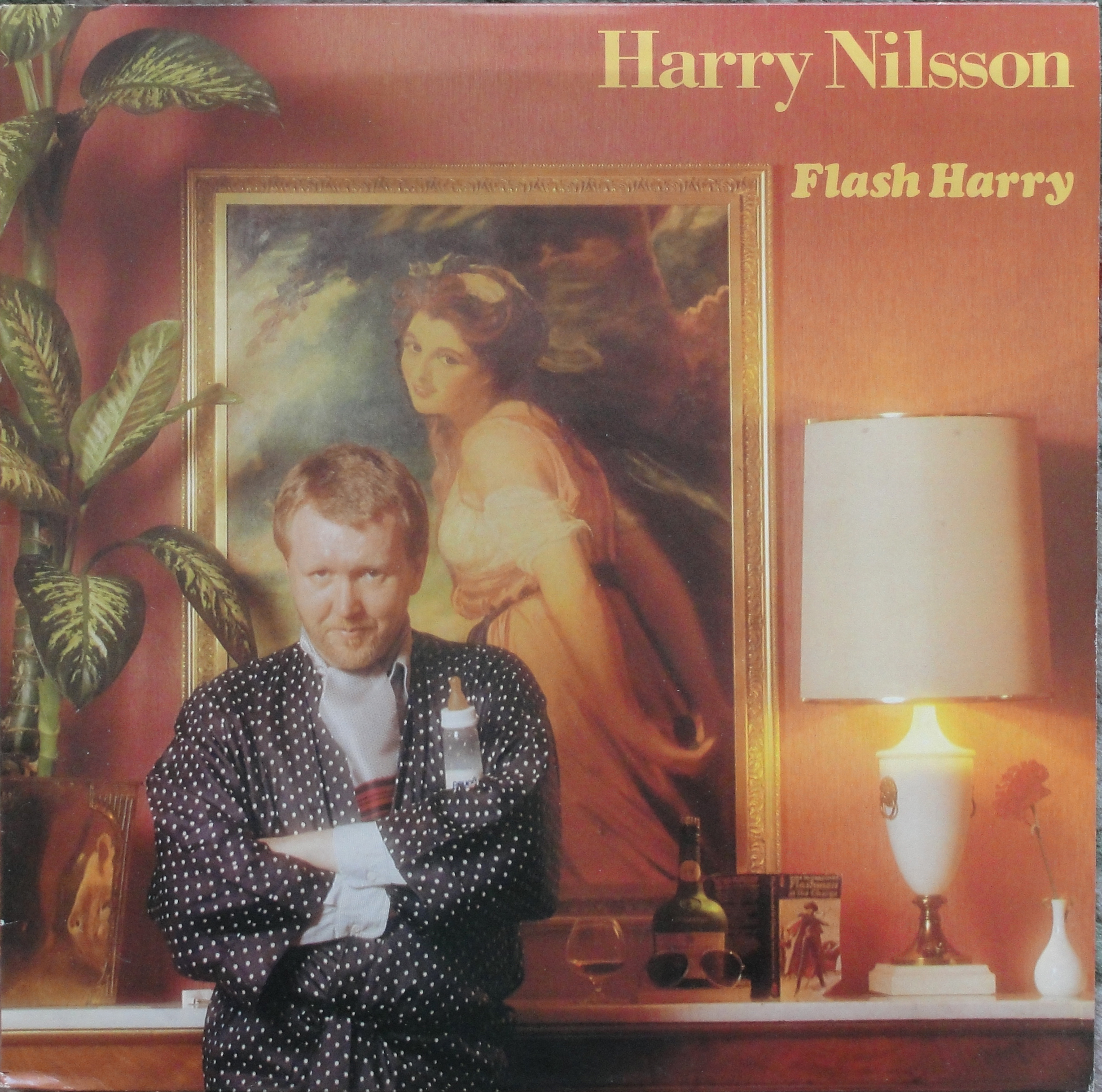
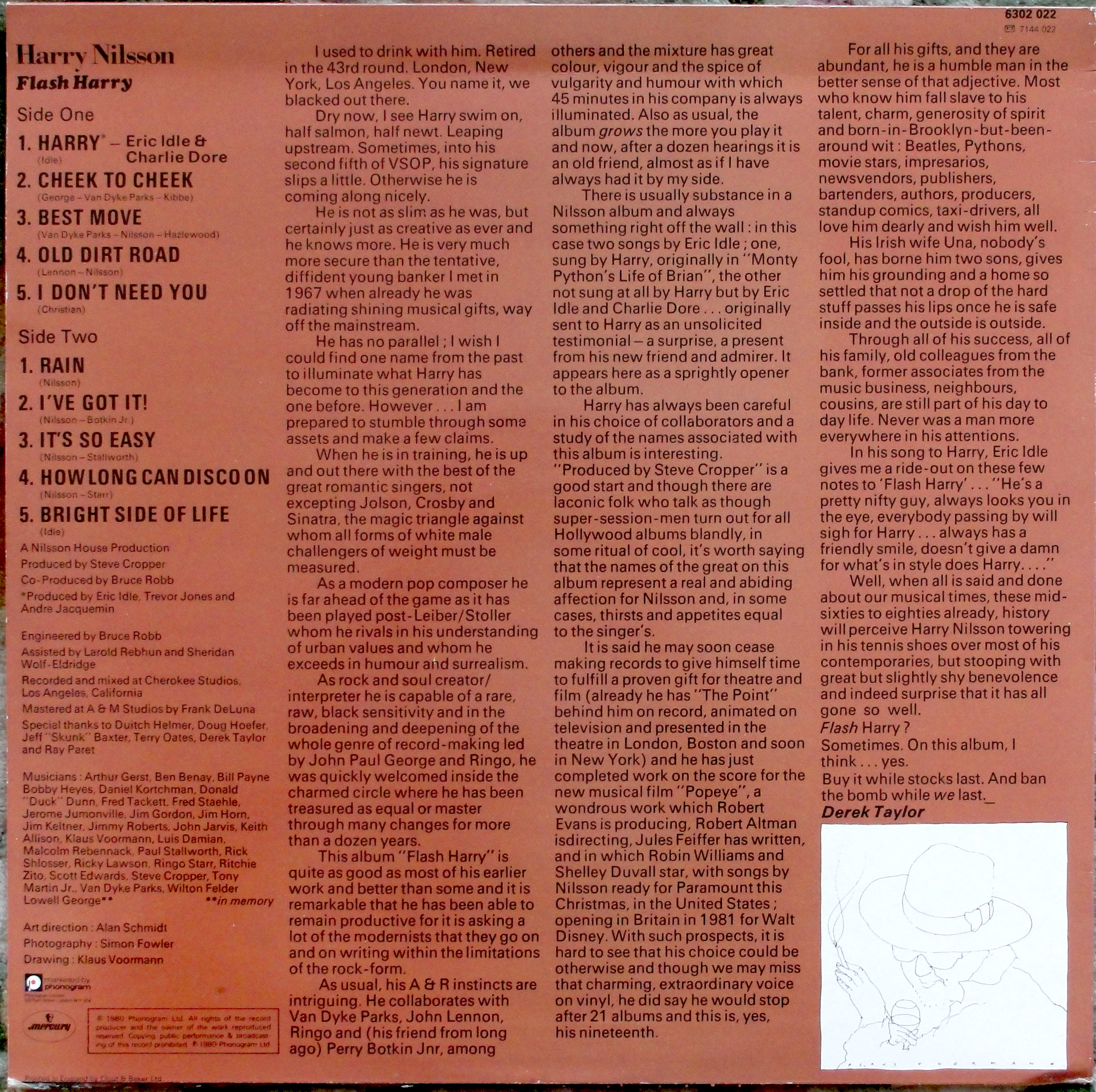
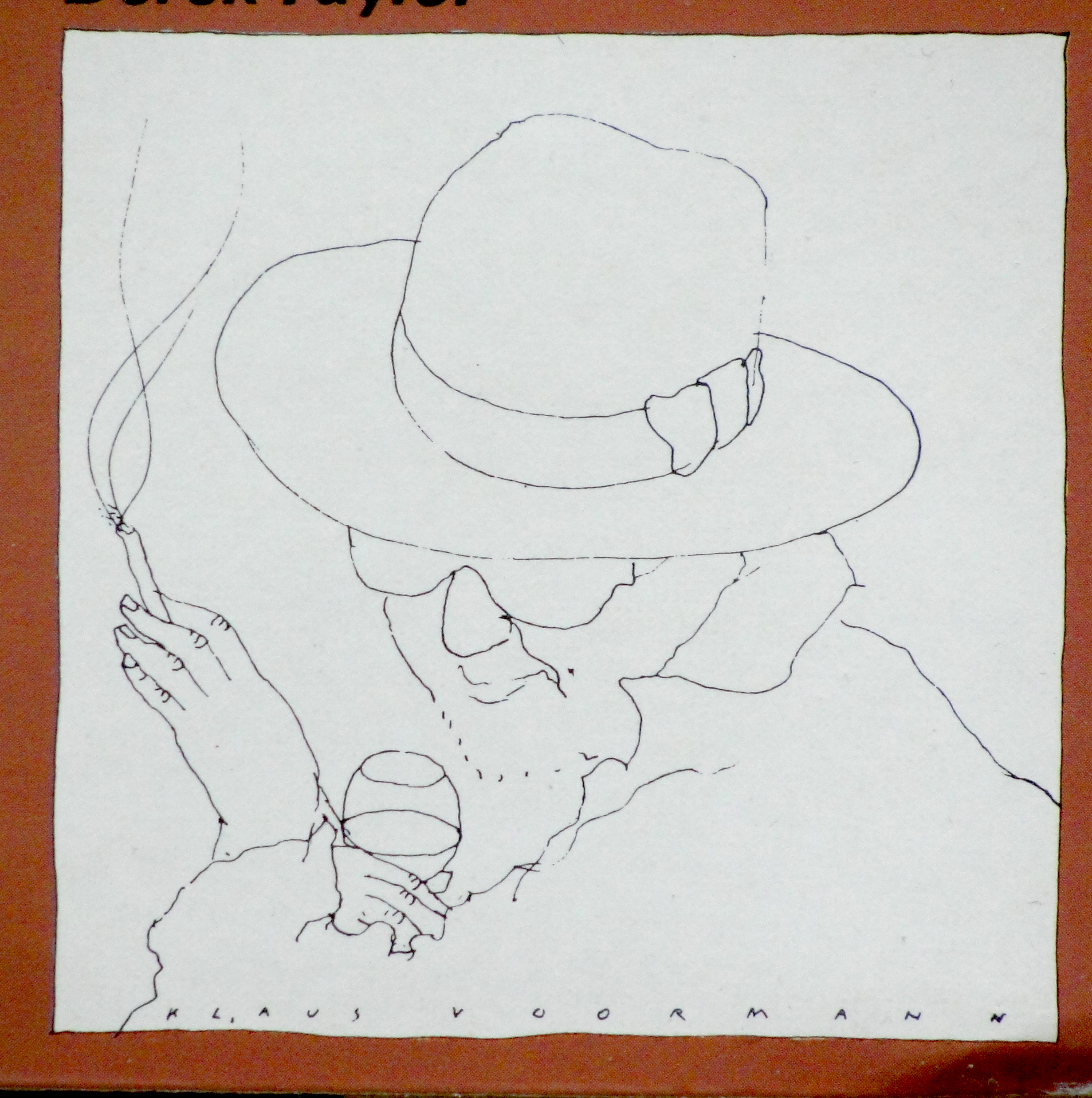
I thought I had already collected all the records and CDs with cover art by Klaus Voormann – but apparently not! Some time ago I saw an advert for a Harry Nilsson album called “Flash Harry” that I had not previously seen. The advert showed the rear cover and at the lower right was an approximately 5 cm square line drawing of Harry Nilsson signed Klaus Voormann. I finally got hold of a copy this week.

FlashHarry-frFlashHarry_bk

Klaus Voormann's portrait of Harry Nilsson.
Klaus Voormann’s portrait of Harry Nilsson.

Last month an Ebay seller advertised a CD by a Japanese band named GLAY. Voormann together with his son Max had designed the cover art at what I considered to be an exorbitant price. Luckily cheaper copies were available at Discogs.

GLAY's
GLAY’s “Music Life” CD cover.

A design that harks back to Voormann’s Revolver art.

Records and CDs with Andy Warhol Cover Art – Where to Draw the Line

I suppose it was the fact that a collection of 105 record covers bearing cover art by Andy Warhol or his associates is currently up for auction at Sotheby’s in London (auction date 29th & 30th September, 2015) with an estimated sale price of £30,000 to £50,000 that made me sit down and think about which covers should and should not be included in a collection of Warhol covers.

I have made a list of record (LPs, EPs and singles) and CD covers that currently includes 218 items. I have included some doubles like various pressings of Rolling Stones’ “Sticky Fingers” album as well as re-issues of the Alexander Nevsky cover and various formats of fifites EPs by Artie Shaw and The Joe Newman Octet. However, I haven’t included the Liberty re-issues of Kenny Burrell’s Blue Note albums with Warhol drawings or the various Blue Note issues with different New York addresses in my list.

The collection on sale at Sotheby’s includes some covers that I have not included in my list – such as Loredana Berte’s “Jazz” album. Also included in the sale are some “replica” covers. As I know whose collection this is, I can guess that these “replicas” are a couple of the covers I made (“Progressive Piano” and “Night Beat“). I wonder how Sotheby’s views the inclusion of these “fakes”. I shall visit the pre-auction viewing and try to find out.

The collection on sale includes some very rare items including a “Giant Size $1.57 Each” cover signed by Billy Klüver (who together with Warhol silkscreened the covers) and copies of “Sticky Fingers” and “The Velvet Underground & Nico” signed by Andy Warhol. But – some rare covers, like the Lew White “Melodic Magic” and “Waltzes by Johann Strauss Jr.” and the rarer blue version of “A Program of Mexican Music” – are missing. It also includes the East Village Other’s “Electric Newspaper” (incidentally, also included in Paul Maréchal’s book), which has no other connection with Warhol than the record contains a track “composed” by him. The cover art is definitely not by Warhol.

My list includes more thirty-five CDs – only one of which (Aretha Franklin’s “Aretha“) was actually released in Warhol’s lifetime. Should these really be considered to be “Warhol Covers”? Just this week two more bootleg CDs arrived that use Warhol’s 1975 folio of prints of Mick Jagger for their cover art. The first is called “Marquee ’71 + Sticky Out” and the second “Raretracks+“.

The Rolling Stones' bootleg CD
The Rolling Stones’ bootleg CD “Raretracks+”.

Stones_RareTracks+_frMany of the records and CDs on my list are bootlegs – by The Velvet Underground or, like these most recent additions, The Rolling Stones. Should a serious collection include bootlegs or be restricted to officially released material?

I would be interested in reading other collector’s opinions as to where to draw the line when collecting Warhol cover art.

The Rolling Stones’ “STICKY FINGERS” Album

Stones founder member Brian Jones had died in 1969 and the band hadn’t released and album since “Let It Bleed” that same year. Mick Taylor joined to fill Brian Jones’s shoes. But the group hadn’t been idle. They had begun recording new material for an album in March 1969 and come up with some of their strongest material. Further the new album, entitled “Sticky Fingers” was to be the first to be released on The Rolling Stones own record label (licensed to Atlantic Records). Mick Jagger had already approached Andy Warhol to suggest that he design the upcoming album’s cover.*

Mick Jagger's 1969 letter to Andy Warhol sending him material and a copy of Sticky Fingers and asking him to design somerthing wild.
Mick Jagger’s 1969 letter to Andy Warhol sending him material and a copy of Sticky Fingers and asking him to design something wild.

Warhol had already discussed the idea of having a zip fastener on a record cover and this was his opportunity. I have already posted a fairly detailed account of the cover’s production in my February 2015  post on “The sources of Andy Warhol’s record cover art – The Rolling Stones“, so I won’t go into it again here.

The album was released on 23rd April 1971. The UK and European editions had the band’s name and the record title like rubber stamps over the model’s right thigh while the US version had both the band name and title placed over the models belt. The Stones gave the record the titillating catalogue number COC 59100 for both editions. A later US and Canadian re-issue had the catalogue number COC 39105. I have thus far not been able to find out when this was released. Both my copies are the 39105 version.

The UK/European cover.
The US/Canadian cover.

However, in Spain, the cover was deemed too lascivious and a “politer” version illustrating sticky fingers covered in treacle was used.

The Spanish cover.
The Spanish cover.

The rear cover photo on both the UK/European and US/Canadian versions was identical with the jeans-clad posterior on both. The Spanish cover used the photo of the Stones that graced the UK and US inner sleeves.

In 2015, a remastered and expanded version of the “Sticky Fingers” album with an extra LP of live tracks. This was reissued with a working zip but with the tongue logo on the zip’s puller. Simultaneously there were several variations including a double CD with the same cover image but without a working zip, a box set with CD and a book – again without the working zipper and a super deluxe box set with a triple CD, seven-inch single and photographs. The CD in this box does have a working zip. This is the second time that a CD with real zip has appeared. Incidentally, this reissue series also includes a double LP with the Spanish cover.

Just recently my friends at London’s A and D Gallery got hold of a copy of the 1971 US release (COC 39105) signed by Andy Warhol along with a signed copy of “Love You Live” which they passed on to me!

My signed
My signed “Sticky Fingers” LP.
My signed
My signed “Love You Live” cover.

As many people know, Andy was not pleased by Mick Jagger adding the title to the front cover of the “Love You Live” album and usually refused to sign the front, preferring, as in this case to sign the inner spread. These two signed albums make a great addition to my collection of Warhol covers.

*Guy Minnebach points out that this letter cannot have anything to do with the decision to ask Warhol to design the “Sticky FIngers” cover as the letter refers to a hits package. Furthermore, Jagger sends a copy of the finished album with the letter, so the album CANNOT be “Sticky FIngers” as that was not recorded yet. The Stones DID ask Warhol to design a cover for their “Through the Past Darkly” hits album released in 1969, but apparently rejected Warhol’s design, which has thus far not been found.

The [Almost] Complete List of 45 RPM singles and EPs with Andy Warhol Cover Art

I started to compile a list of all vinyl singles (seven and twelve inch) and extended play (EP) 7-inch records early in 2013  (see Andy Warhol Art on 45s, Part 1) and published it on 26th June 2013 with the intention of completing the list within a couple of weeks. However, the challenge proved greater than I had anticipated and it has taken me just over two years to get anywhere near a reasonably complete list of all the 45 RPM records that have cover art by Andy Warhol. Experience has taught me never to claim that a list like this is complete but this is as near as I can get just now. I am sure that more records will turn up as soon as this list is published. So, if you can see that I have missed any, do not hesitate to contact me and I will add them to the list.

Just a note about the conditions for inclusion on my list.
1. I have omitted compact disc singles – obviously, they are not on vinyl.
2. I have also excluded singles whose covers simply have a picture of the parent album on the reverse.
3. I have omitted European pressings of RCA singles that simply repeat the American issues.

My apologies for including the records listed in Part 1 of this list. I felt it best to make a new chronological list.

Note: No. 13 on this list, “Progressive Piano” was scheduled for release by RCA as a 10-inch LP and a 2 x 7-inch EP set, but appears never to have been issued. Only lithographs of the cover design exist in The Warhol Museum.

While on the subject of RCA EPs released in the 1950s, I would point out that the company released Byron Janis‘ recording of “Rhapsody in Blue / Grand Canyon Suite” and Erica Morini‘s recording of Tchaikovsky‘s “Violin Concerto” on both on LP and as 3 x 7-inch EP sets. The third RCA Bluebird record with illustration attributed to Andy Warhol is the “Porgy & Bess / Symphonic Dances” album also released on LP and, I suspect, even as a 3 EP set. I have thus far never seen the EP set of this recording so I have not included it in my list.

On 10th June 2015 The Rolling Stones‘ Album “Sticky Fingers” was rereleased on both vinyl and CD with added tracks. A box set including a repressing of the “Brown Sugar / Bitch / Let It Rock” EP was included in the box set with the same cover as the 1971 and 2011 versions, using the rear cover photo from the “Sticky Fingers” album on the rear.

45-List-croppedSo, there is my latest attempt at a complete list. Suggestions for additions are very welcome.

Five more covers featuring Kate Moss and a current list.

Since my previous post collecting all the record covers I could find that featured Kate Moss on their covers, I have come across five more.
1. Primal Scream & Kate Moss – “Some Velvet Morning” – Columbia 12″ – 2003
2. Babyshambles – “Down in Albion” – Rough Trade 2LP – 2005
3. Babyshambles – “Shotter’s Nation” – Parlophone LP – 2007
4. The Unholy Two – “Kutter / Porkys” – Columbia Discount Records – 7″ – 2008
5. Various Artists Compilation – “Kate Moss for Longchamp” – Universal Music – 2010

Pete Doherty of Babyshambles had a much publicised relationship with Kate Moss and she wrote several songs for the group. Babyshambles‘ 2005 double album “Down in Albion” came in a plain beige cover but had colourful inner sleeves with a picture of Kate Moss on one of them.

Their next album “Shotter’s Nation“, released on 1st October 2007 had a possible picture of Kate Moss‘ back on the front cover.

Babyshambles' 2007 album "Shotter's Nation". Is that a scantily clad Kate Moss standing on rthe right?
Babyshambles’ 2007 album “Shotter’s Nation”. Is that a scantily clad Kate Moss standing on rthe right?

First there was Primal Scream‘s 12-inch cover of Lee Hazelwood‘s “Some Velvet Morning” which featured Kate Moss repeating the Roland S. Howard & Lydia Lunch version from 1982. Thanks to Carlos Soares for tipping me off about this cover.

Primal Scream's 2003 12-ich single
Primal Scream’s 2003 12-ich single “Some Velvet Morning” featuring Kate Moss. Front cover (left), record label (centre) and rear cover (right).

Then in 2008 a group called The Unholy Two released a 7-inch single entitled “Kutter” b/w “Porkys” that featured a fold out cover with photocopied pictures of a naked Kate Moss. The photographs are from a 2005 portfolio by painter and photographer Chuck Close.

Composite of the cover of The Unholy Two's
Composite of the cover of The Unholy Two’s “Kutter/Porkys” single.

A promotional CD from 2010 released by fashion house Longchamp featured a selection of tracks chosen by Kate Moss and featured cover photos from a Longchamp catalogue. The CD was simply titled “Kate Moss for Longchamps“.

Kate Moss 2010 CD for Longchamps.
Kate Moss 2010 CD for Longchamp.

So, assuming that the cover of Babyshambles‘ “Shotter’s Nation” does show Kate Moss there are at least sixteen record and CD covers that feature the iconic Kate Moss. So here is the complete list (in chronological order):
1. Primal Scream & Kate Moss – “Some Velvet Morning” – Columbia 12″ – 2003
2. Dirty Funker – Let’s Get Dirty” (1st pressing) – Spirit Music – DF 006 – 2006
3. Dirty Funker – Let’s Get Dirty” (2nd pressing) – Spirit Music – DF 006 – 2006
4. Babyshambles – “Down in Albion” – Rough Trade 2LP – 2005
5. Babyshambles – “Shotter’s Nation” – Parlophone LP – 2007
6. 6majik9 – “Kate Moss” – Music Your Mind Will Love You – mymwly0080 – 2007
7. The Unholy Two – “Kutter / Porkys” – Columbia Discount Records – 7″ – 2008
8. Damien Hirst & Kate Moss – Use Money, Cheat Death” – White Cube – DHKM 99 – 2008
9. Various Artists Compilation – “Kate Moss for Longchamp” – Universal Music – 2010
10. Bryan Ferry – “Olympia” – Vinyl Factory – Ltd edn 2 x LP – VF 021 – 2010
11. Bryan Ferry – “You Can Dance” – Vinyl Factory –  Ltd edn 12″ – VF 019 – 2010
12. Bryan Ferry – “Heartache by Numbers” – Vinyl Factory – Ltd edn 12″ – VF 020 – 2010
13. Bryan Ferry – “Alphaville Remixes” – Vinyl Factory –  Ltd edn 12″ – VF 022 – 2011
14. Bryan Ferry – “BF Base (Ode to Olympia)” – Vinyl Factory –  Ltd edn 12″ – VF 023 – 2011
15. Bryan Ferry – “Shameless” – Vinyl Factory –  Ltd edn 12″ – VF 024 – 2011
16. Bryan Ferry – “Alphaville” – Vinyl Factory –  Ltd edn 12″ – VF 030 – 2011

Record sleeve art by artists I collect