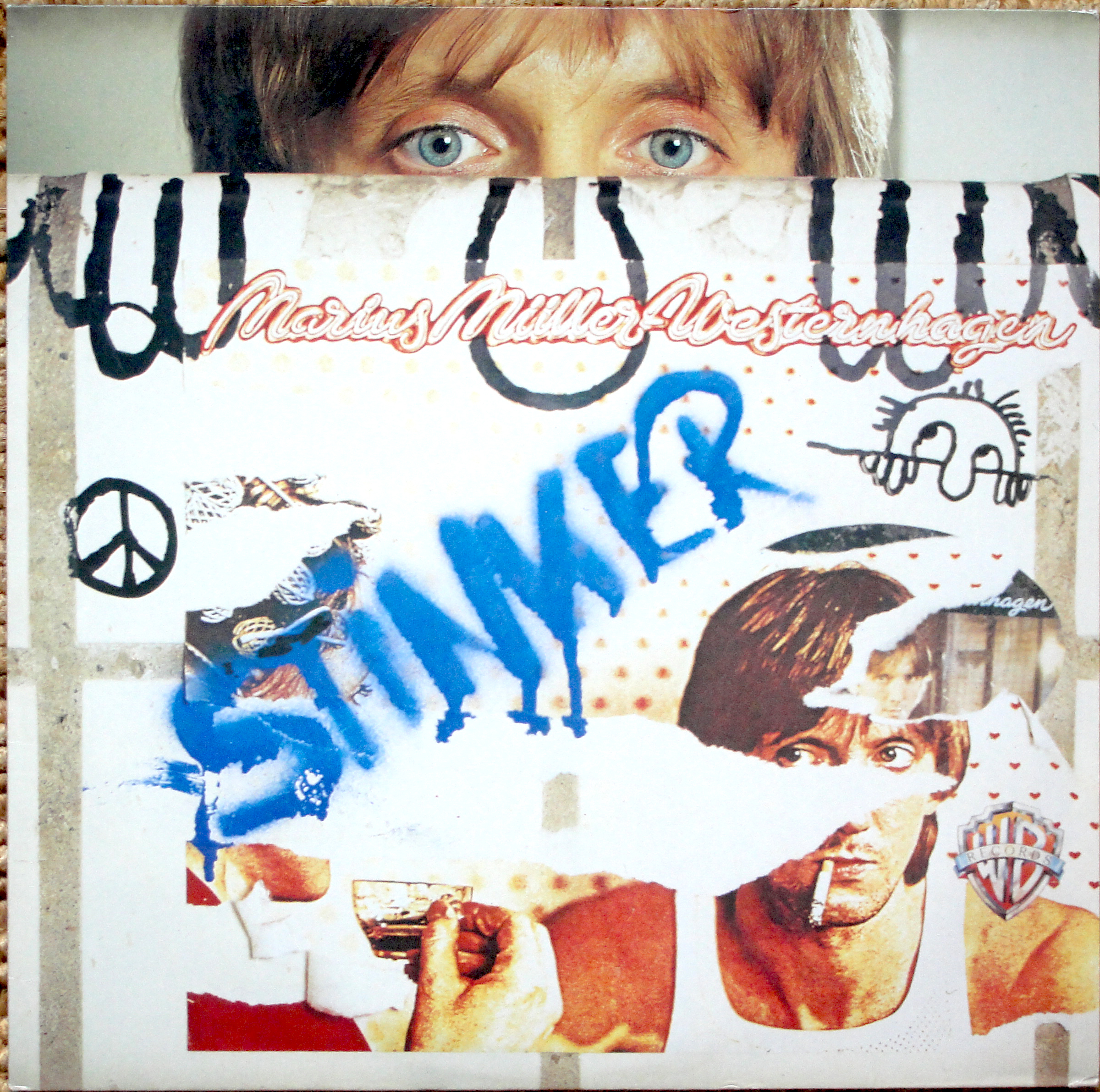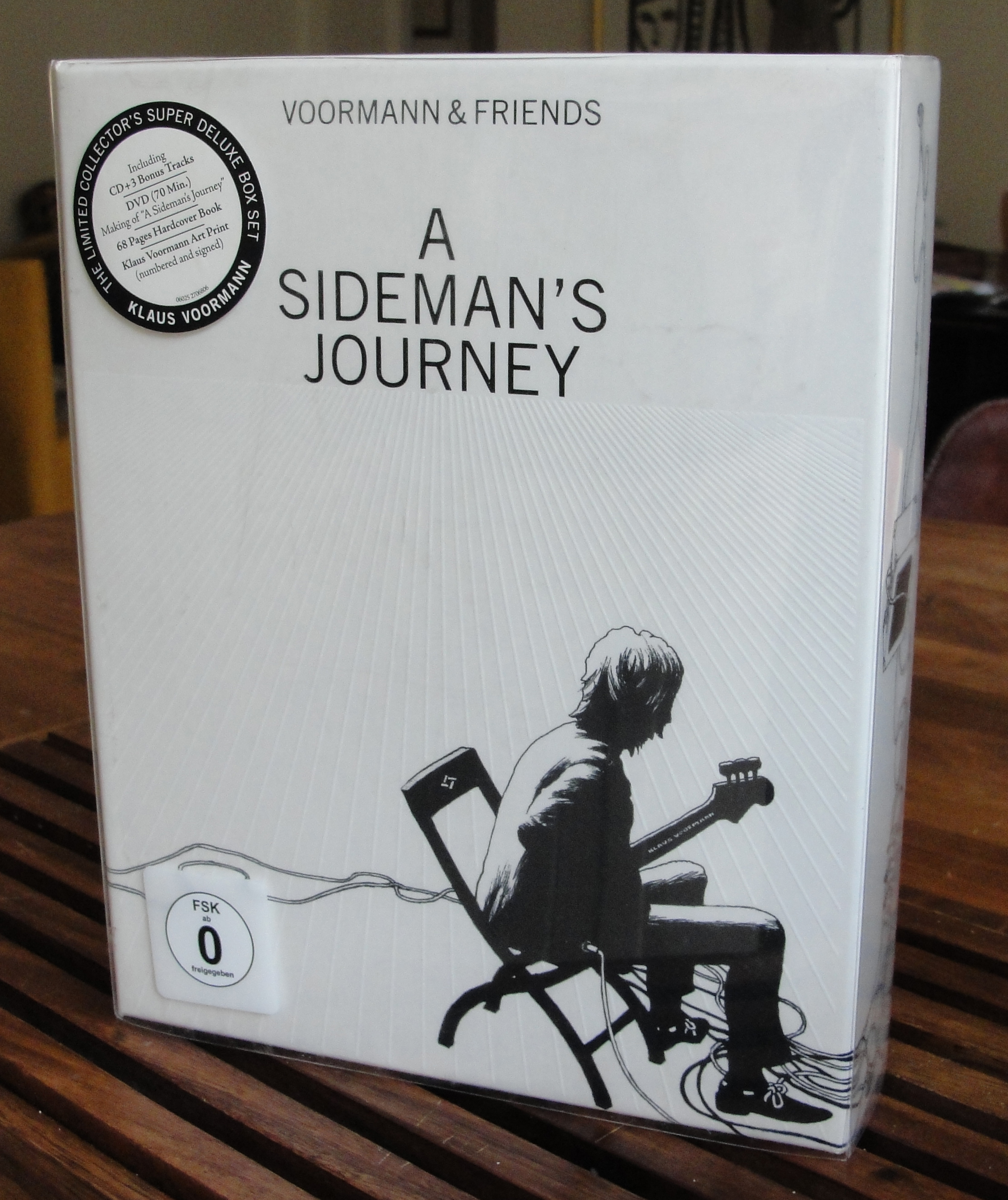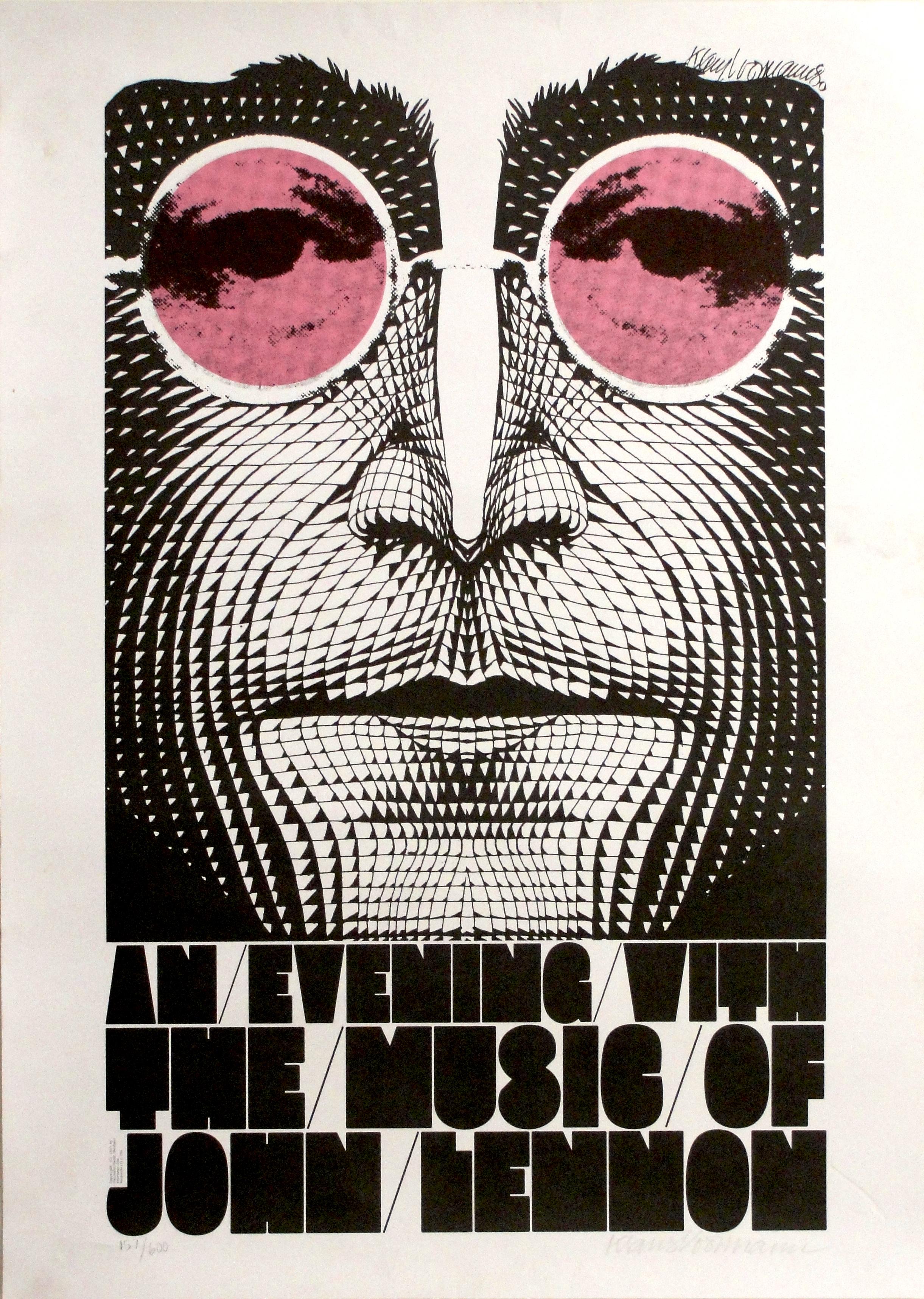
At last I have completed my collections of Klaus Voormann’s and Damien Hirst’s record cover art.

Most of my posts on this blog have been about Andy Warhol’s record cover art. However, I also collect record cover art by other designers. Currently these include Sir Peter Blake, Klaus Voormann and Damien Hirst and Banksy. I have sold my collection of Vaughan Oliver/V23 and most of my Martin Kann collection to be able to concentrate on these five designers, who have one thing in common – their production is fairly limited, which makes collecting all the record covers designed by each of them possible. Thus Andy Warhol is known to have designed almost 100 covers – although many records and CD use Andy Warhol’s art on their covers in addition to the ones he had a hand in. Klaus Voormann has thus far designed or illustrated sixty-two commercially released covers. Banksy has designed twenty covers and a further twenty-nine have used his images without his authorisation. Sir Peter Blake has thus far produced only 23 covers and Damien Hirst has just passed this total with twenty-four covers.

This month I completed both my Klaus Voormann and Damien Hirst collections. I found that when I sold my record collection one year ago I parted with my copy of Harry Nilsson’s “Sandman” LP which has Klaus Voormann’s maritime drawing on its inner spread.

Image

I found a replacement copy for SEK 80 (about USD 11) at a record store a short bus ride from my home. Accross the road was another secondhand record shop where I found a copy of Billy Squire’s “Emotions in Motion” single with cover design that uses a detail of Andy Warhol’s Squier portrait (for SEK 10, or about USD 1.50). So now I have all of Klaus Voormann’s sixty-two commercially released covers. I recommend readers to view his official site (www.voormann.com) to see some covers that he designed for his own amusement.)

I know I should have bought it when it first came out in 2011, but I didn’t; so I have been looking for a copy of Red Hot Chili Pepper’s album “I’m With You” and various record shops in Stockholm have told me that it no longer available. But Stefan at Pet Sounds said he could order me a copy and promptly did so. It cost me SEK 450 (USD 62) but I had to have it to complete my Damien Hirst collection. It is one of Hirst’s best covers, combining his love of pharmaceuticals with his early fixation with death and decay. The front of this gatefold cover pictures a house fly (Musca domestica) resting on a coloured medicine capsule.


The record labels have the fly feeding on a blue tablet (on two labels), and the fly on a white tablet (on one) and (on the fourth label) the fly lies on its back, apparently dead. The inner spread shows only a very faint splodge on the right hand side, that suggests where the fly had been swatted. I like this cover!

This week I returned to Stockholm’s Spritmuseum to revisit the ArtPop exhibition and took my camera with me. There is a wall of Damien Hirst’s record covers including Babyshambles’ “Sequel to the Prequel” LP, a couple of singles by The Hours and Joe Strummer & The Mescaleros’ “Art Pop & the X-ray Style” album together with Dave Stewart’s “Heart of Stone” 12″ single cover.


Damien Hirst’s record cover art 1994 – 2013

Damien Hirst in August 2008. Photo by David Bailey.

On October 25th 2013 Damien Hirst’s 22nd record cover for Babyshambles’ “Fall From Grace”, the band’s second single from their “Sequel to the Prequel” album was released on September 2nd 2013. The album cover as well as both singles had cover design by Hirst, who with this latest cover passed the number of covers designed by Sir Peter Blake. Depending a little on how one defines a Peter Blake cover, Blake has produced 21 covers in the 47 years since Sgt. Pepper’s Lonely Hearts Club Band was released in 1967. This cover was, of course, designed by Blake and his then wife Jann Haworth – and so should be regarded as a joint effort. The cover for Madness’ limited edition CD version of “Oui, Oui, Si, Si, Ja, Ja, Da, Da” has him pictured on the cover, but the design is by Paul Agar with photography by Perou.

I do not suppose many would argue with me if I suggest that much of Damien Hirst’s art is ugly. Dissected animals or fish in formalin tanks, skulls (even when encrusted with diamonds) do not appear beautiful to these eyes. And Damien Hirst’s record covers fit the mould. His first record cover art was for Dave Stewart’s “Greetings From the Gutter” released in 1994. Hirst’s first covers are really unremarkable – the six variously coloured gas tubes with tubing attached on the Dave Stewart album and the dissection of an egg by two rubber-gloved hands on the “Heart of Stone” single from Stewart’s album are hardly design masterpieces. These are followed by Hirst’s ugliest covers; the CD for Fat Les’ “Vindaloo” with foldout poster and “Yalla Yalla” the single from Joe Strummer & The Mescaleros’ album “Rock Art & The X-ray Style” from 1999. For the album, Hirst drew a series of matchstick men reminiscent of stone-age cave paintings or aboriginal art and these figures appeared on the “Bankrobber 99” promotional single as well.

Joe Strummer & The Meascaleros' "Rock Art & the X-ray Style" LP cover.
Joe Strummer & The Meascaleros’ “Rock Art & the X-ray Style” LP cover.

In 2006, Hirst became manager for the band The Hours and designed the covers for their first album “Narcissus Road” and the singles taken from it; “Ali in the Jungle” and “Back When You Were Good”. These were released on the A & M label.
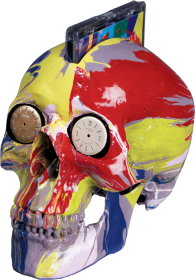
Hirst made a limited edition of 210 spin-painted skulls as holders for the CD retailing at a cool £4,500 each!
the-hours0035

Damien Hirst's spin-painted skull holder for The Hours' "Narcissus Road" CD.
Damien Hirst’s spin-painted skull holder for The Hours’ “Narcissus Road” CD.

Hirst then started his own record label “Is Good” and The Hours’ second album “See the Light” was released on the label, again with cover art by him. The album was released on gatefold vinyl and a double 12″ single “See the Light” was also released. And, as had been for the singles from “Narcissus Road”, each was decorated with more of Hirst’s skull designs.

In February 2008 the cover of TAR Magazine used Damien Hirst’s portrait of Kate Moss where the right side of her face was dissected down to the muscles. The following year, Hirst released a white vinyl, one-sided 12″ single with the same image on the cover. Hirst’s given name was misspelt on the record label: “Damian”. The single was released in a numbered edition of 666 copies and is currently very sought after.

Damien Hirst's portrait of Kate Moss from TAR Magazine to his "Use Money, Cheat Death" 12" single cover.
Damien Hirst’s portrait of Kate Moss from TAR Magazine to his “Use Money, Cheat Death” 12″ single cover.

Hirst’s next cover “I’m With You” for The Red Hot Chili Peppers (2011) revisited two of his earlier subjects, drugs represented by a coloured capsule and decay, represented by a single fly on the capsule.
Red Hot Chili Peppers' album "I'm With You".
Red Hot Chili Peppers’ album “I’m With You”.

Hirst designed the cover for the band 30 Seconds to Mars’ fourth album “Love Lust Faith & Dreams” in May 2013 and used his polka dot pattern. The album was released on CD and vinyl and in a limited edition boxed set with the LP, a double CD, a book and four prints.
30 Seconds to Mars' super de luxe promo box set of Love, Lust & Faith
30 Seconds to Mars’ super de luxe promo box set of Love, Lust & Faith

Later the same year Hirst designed the covers for Babyshambles’ “Sequel to the Prequel” album and the two singles released from it that autumn; “Nothing Comes From Nothing” and “Fall From Grace”. According to Babyshambles’ bassist Drew McConnell reported in NME: “It happened kind of naturally and in the spirit you’d hope for. We asked Damien to suggest someone to put something together, then to our amazement he offered to do it himself. The fact that he used a pic taken by Pennie Smith, who shot all those iconic photos of The Clash (Damien’s old pal Joe Strummer’s band), just makes it make even more sense.
So those are Damien Hirst’s first 22 covers from his first twenty years of record cover design 1994 – 2013.

And, as is my wont, I’ll list one cover ascribed to Damien Hirst that is not by him. According to Wikipedia Hirst did prepare a design for the cover for the Band Aid 20 single “Do They Know It’a Christmas?”. His design showing the grim reaper and a starving child was considered too scary and was dropped. Mat Maitland at Big Active, a designer in his own right who has designed covers for Michael Jackson and others was commissioned to design the replacement. Rumour has it that Hirst released a limited edition print of his design for the cover. But I have, thus far, not been able to find one.

New covers and things by Klaus Voormann, Damien Hirst and Jeff Koons

Most of my posts have been about record covers bearing Andy Warhol’s art. But, just as a reminder, I also collect record cover art by four other artists. I have an almost complete collection of Damien Hirst’s record covers, including the highly collectible “Use Money, Cheat Death” one-sided single released on his own label.

Image

This image first appeared on the cover of the February 2008 number of TAR Magazine. The record was released on white vinyl in a numbered edition of 666 copies. Damien Hirst’s most recent covers are for the British band Babyshambles’ 2013 releases “Sequel to the Prequel” (LP) and (so far) the two vinyl singles from the album “Nothing Comes from Nothing” and “Fall From Grace”:

Image

ImageImage

These covers all show examples of Damien Hirst’s spin paintings.

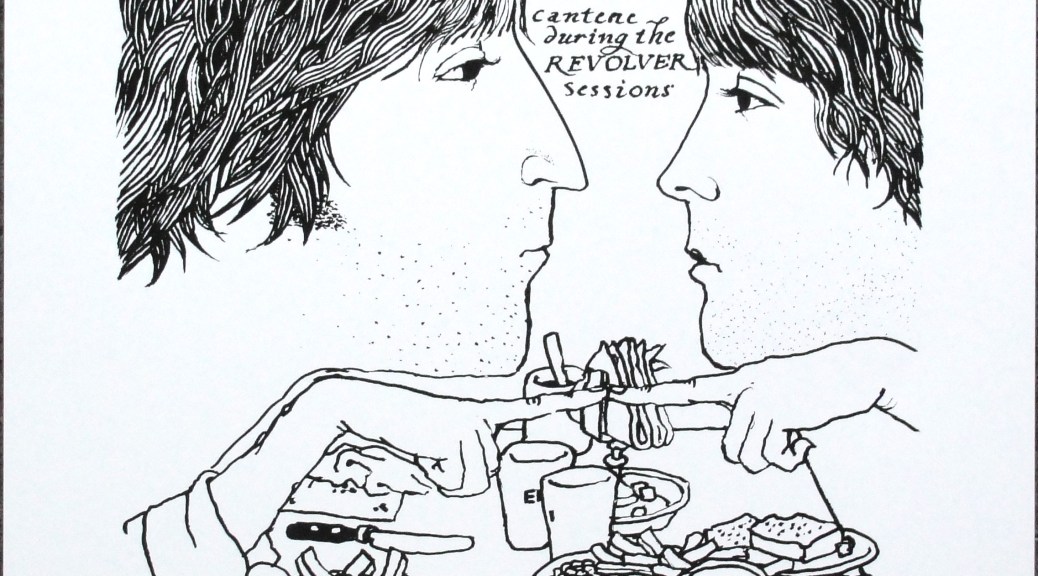
My friend Daniel Brant at the A and D Gallery in London, knows I collect Klaus Voormann’s record cover art and he recently induced me to buy a poster by Klaus Voormann that I had never seen before. It is a print of a drawing of Paul McCartney and John Lennon in the canteen at Abbey Road during the recording of “Revolver”:

Image

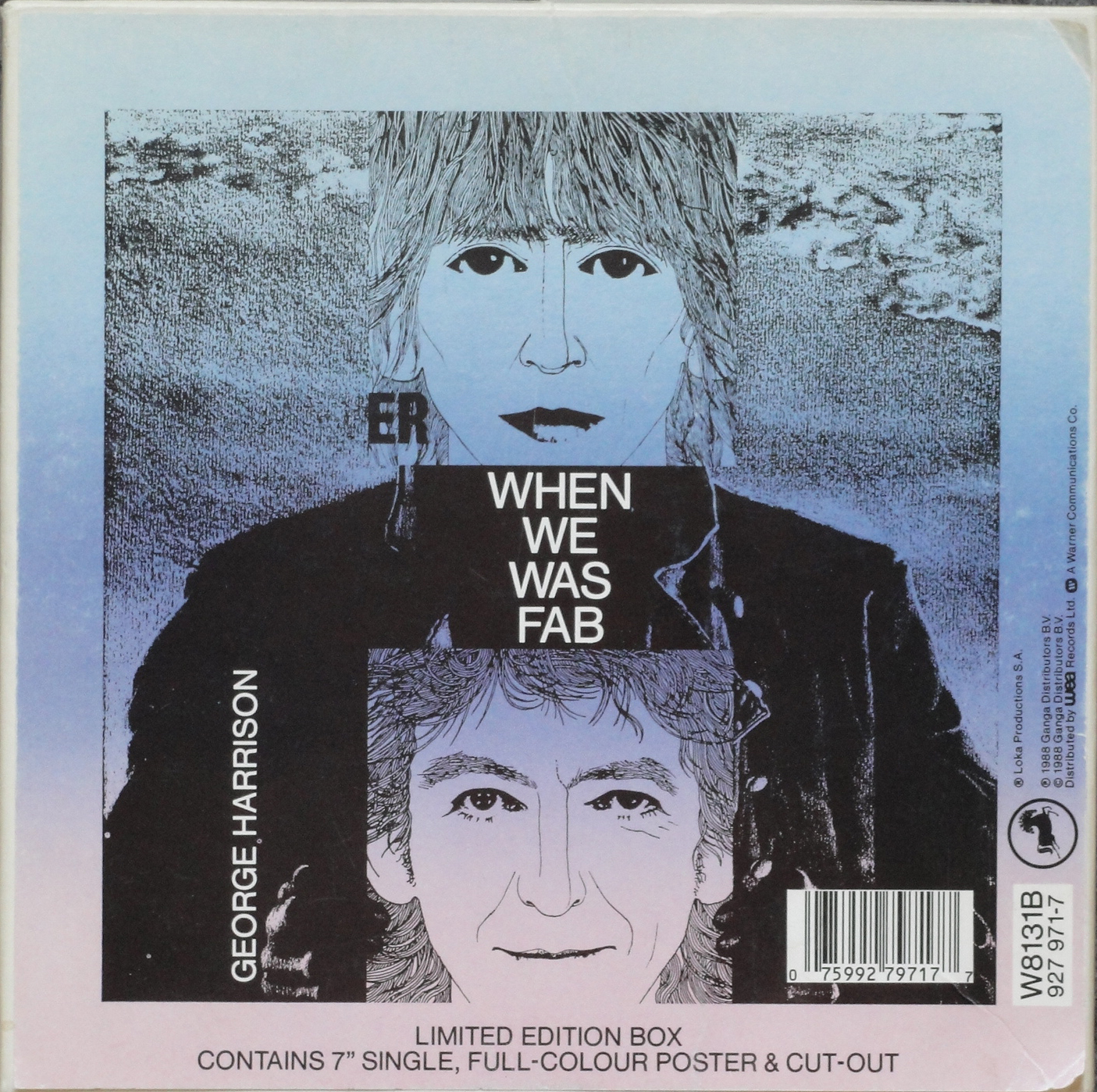
While on the subject of Klaus Voormann – I have a 12″ single of George Harrison’s single “When We Was Fab” from 1988. And just a few days ago I stumbled on the promotional issue of this release which comes in a limited edition box with a poster and a card, which I had not seen before, so I snapped it up! The illustration of the front of the box, and on the single itself, is another fine Voormann drawing – somewhat in the “Revolver” style.

Image

Fellow Warhol Cover Collectors Club member Kevin Kinney suggested I get hold of Lady Gaga’s 2013 album “ArtPop”, whose cover was designed and photgraphed by Jeff Koons. Now I do not collect Koons’ covers but – because of the ArtPop exhibition currently on show in Stockholm – I decided I would buy this album.

Image

This is the cover’s inner spread with photographer Koons photographing Lady Gaga.

The Rolling Stones’ “Brown Sugar” singles and EPs

In a previous post, I promised a continuation of my list of 45 rpm discs with Andy Warhol cover art. Well, I’m still working on the list, which continues to grow as I do more research.

The Rolling Stones released their “Sticky Fingers” LP with cover photography by Andy Warhol and package design by Craig Braun on 23rd April 1971. The cover art and packaging received a Grammy nomination in 1972 – but did not win. However, the album cover was later voted No 1 in VH1’s list of the best record sleeves of all time.

The design concept was by Andy Warhol and many credit him with the photography, which according to others, was by Factory associate Billy Name.  Sticky Fingers was the first LP released on the Rolling Stones own record label.

Here I will only discuss the various versions of The Rolling Stones’ “Brown Sugar” single and EP with Warhol cover art. There are many issues from all over the world with either generic company covers or alternative cover art.

The original single was released in the UK on 16th April 1971, one week prior to the Sticky Fingers LP, as a three-track single with “Brown Sugar” coupled with “Bitch” and “Let It Rock”. The covers for the UK and US singles used a photograph by American photographer David Montgomery (thank you Guy Minnebach for this information.) The rear cover used the same photo as the “Sticky Fingers” LP with a jeans-clad posterior. Interestingly, the German version of the single had the Montgomery photograph reversed on the front – that is with Jagger apparently standing at far left instead of at far right as on the UK and US versions.

Image

Image

Image

In addition to the standard single, there was a shaped picture disc (SUGAR1).

Image

“Brown Sugar” was released in Mexico both as a single (coupled with “Perdida” (Bitch)) and as an EP (coupled with “Caballos salvajes” (“Wild Horses”) and “Ecos de mi onda” (“Can’t You Hear Me Knocking”)) both had a fold-over covers that bore the “Sticky Fingers” artwork on the front.

Image

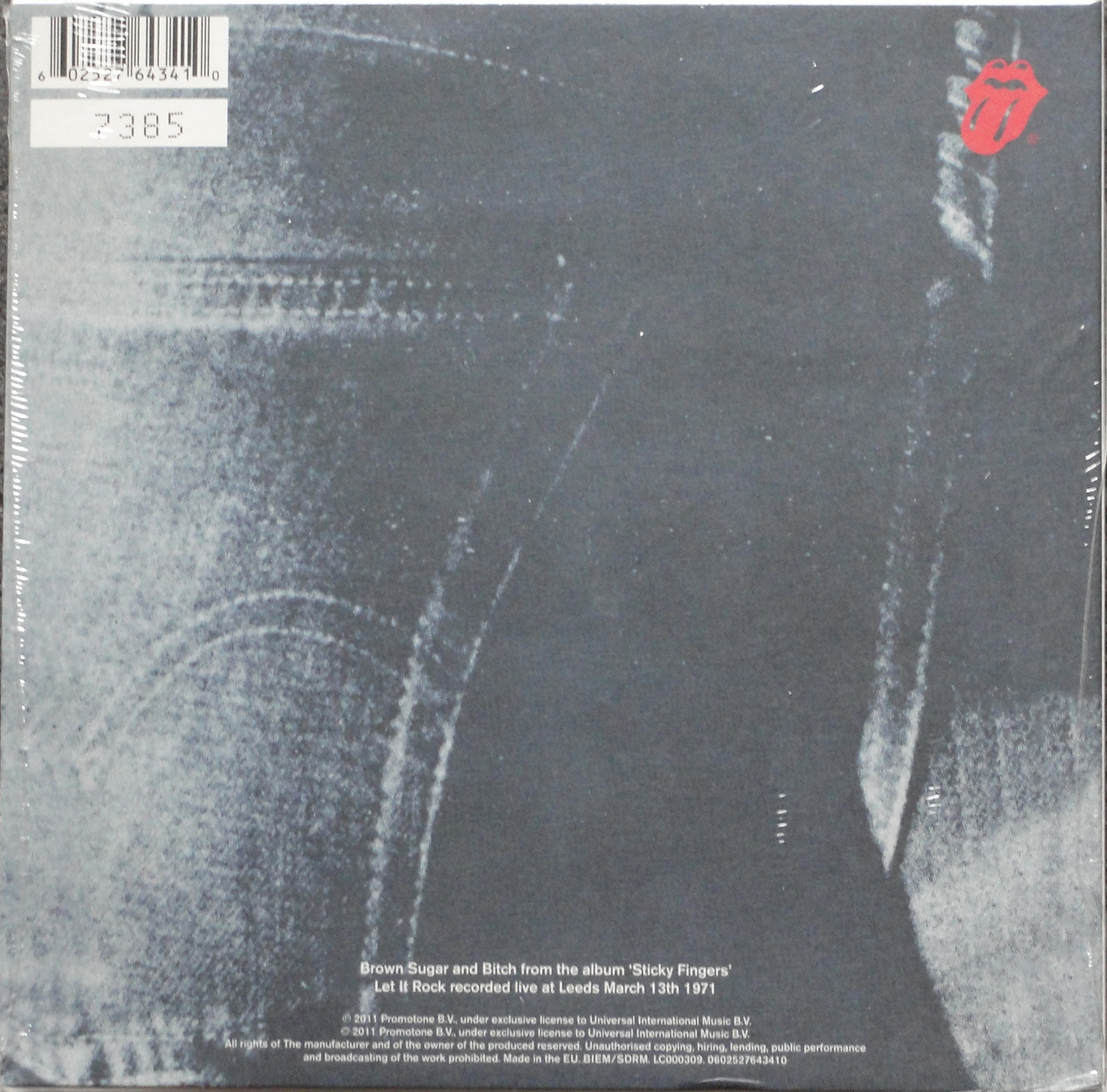
The “Brown Sugar” single was re-issued in it’s original cover for Record Store Day in 2011 as a numbered edition of 10,000 copies. My copy has number 7385.

Some new covers by my favourite artists – and some that are said to be, but aren’t

Auction sites such as Ebay are popular sites where collectors can find missing items for their collections. Advertisers have often an undue optimism about items they wish to sell. Popular areas for collectors of record cover art include many of today’s more famous artists. Perhaps the one single record cover artist commanding the highest prices is Andy Warhol 1928-1987) who, in his lifetime designed or illustrated about seventy individual covers. Many bootlegs have used his art and records and CDs are still appearing with his art – the latest being The Rolling Stones bootleg box “El Mocambo 1977 +” which appeared in late 2013.

Quite a few covers have been put up for sale which the advertiser purports to be designed or illustrated by Warhol. Most commonly these are early LPs on the Columbia Masterworks label with the standard Alex Steinweiss twin (sometimes three) blocks of colour and an illustration covering approximately one-quarter of the cover’s area. Alex Steinweiss was art director at Columbia Records from 1938 until he went freelance in 1949. He commissioned other illustrators to finish LP art including Warhol, Daryll Connelly and others. The cover most commonly attributed to Warhol is the 10″ Salomé

Image

and Sir Malcolm Sargent’s recording of Mendelssohn-Bartholdy’s “Elijah” on three separate LPs, all probably illustrated by Connelly. Other early Columbia LPs with cover illustrations claimed to be by Warhol – but which are not include Jeannie Tourell’s “French Song Recital” and Eugene Ormandy’s recording of Prokofiev’s “Scythian Suite, Op 20” coupled with Respighi’s “Feste Romane”


Ormandy_Prokofiev-Respighi

Another cover that has recently started to appear on Ebay claiming Andy Warhol design is the RCA Victor Bluebird Classics label release of Rachmaninoff’s “Rhapsody on a Theme of Paganini”.

Rachmaninov_fr_600

At least three covers for the Bluebird Classics record label are ascribed to Warhol, but this does not appear to be by his hand.
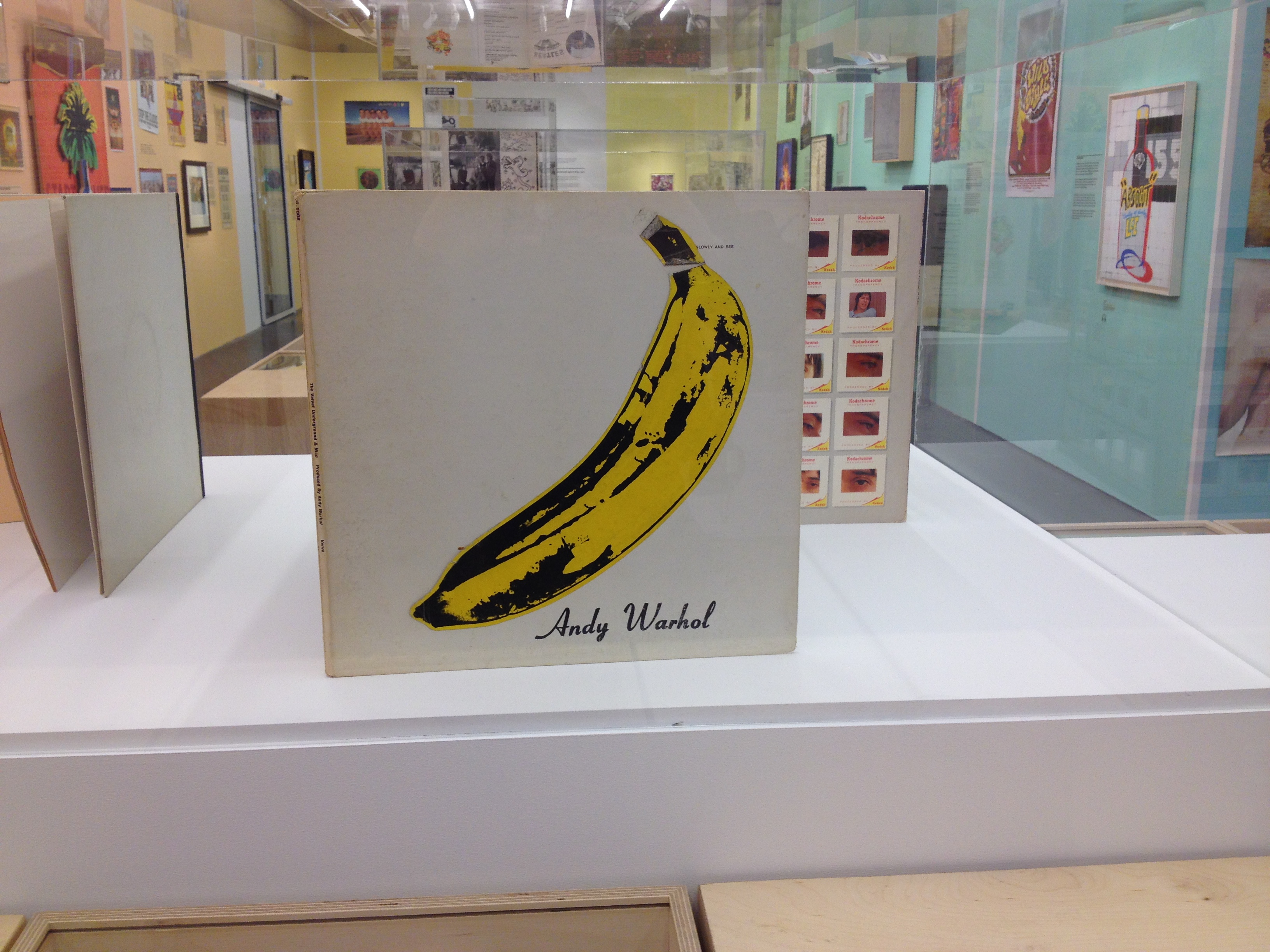
So what new covers have I come across that are by my favourite artists? First, I have been collecting record covers designed by Klaus Voormann and have managed to collect almost all of them save two (vols 12 & 18) of the 20 volumes of the “Pioneers of Jazz” EPs released in Germany in 1960 on the Coral label. These covers were the second commercial record cover commission Voormann received almost as soon as he left art school in Hamburg. I recently found Vols 12 and 18 on Ebay for €10 and €17 respectively. So now my collection is complete.

Second, there is the numbered version of The Rolling Stones’ “Brown Sugar” 7″ released for Record Store Day 2011. There were several on Ebay, the most expensive being advertised by seller (the seller I love to hate) Majestic Music & Art for $50+ shipping.
Stones_BrownSugar
I bought a sealed copy (No. 7389) for £12.99! This single’s front cover image of all five Stones standing with slicks of the Sticky Fingers LP covering various parts of each’s anatomy. The identity of the photographer, however, seems impossible to identify. The rear cover shows the same jeans rear as seen on the Sticky FIngers LP cover. Warhol expert Guy Minnebach points out that the front cover photo on the UK and US singles shows Mick Jagger standing to the right, while the German release has the photo reversed, with Jagger on the left. Guy also informed me that Brown Sugar was released in Mexico as a single and EP with the Sticky Fingers cover both on front and rear.

ArtPop – an exhibition of record cover art at Stockholm’s Spritmuseum

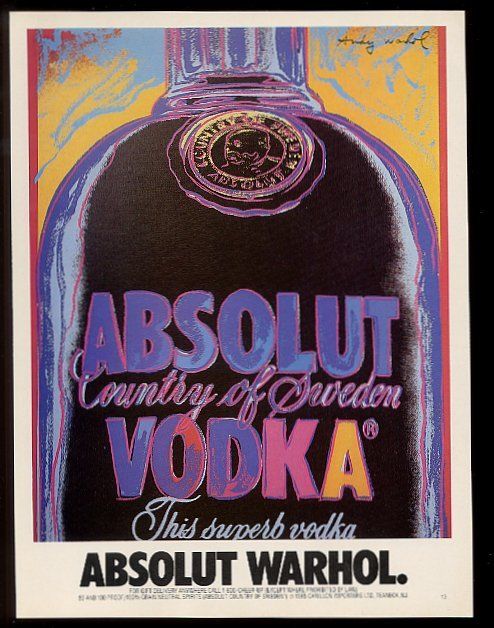
Stockholm has many museums and most are worthy of a visit. Remarkably, there is even a Spritmuseum – a museum devoted to alcholic beverages. Spritmuseum is home to the Absolut Art Collection a collection of over 800 works by renowned artists celebrating (or advertising, depending on how you view the works) Sweden’s Absolut Vodka. The collection started in 1986 when Andy Warhol painted his protrait of the Absolut Vodka bottle.

Image

Warhol recommended Keith Haring to produce his version of the Absolut Vodka bottle and from those initial works the collection started and has grown steadily.

The ArtPop exhibition combines works by some of these artists with record cover designs that each made. The exhibition took its title from Lady Gaga’s latest LP “ArtPop” with cover art by Jeff Koons.

Image

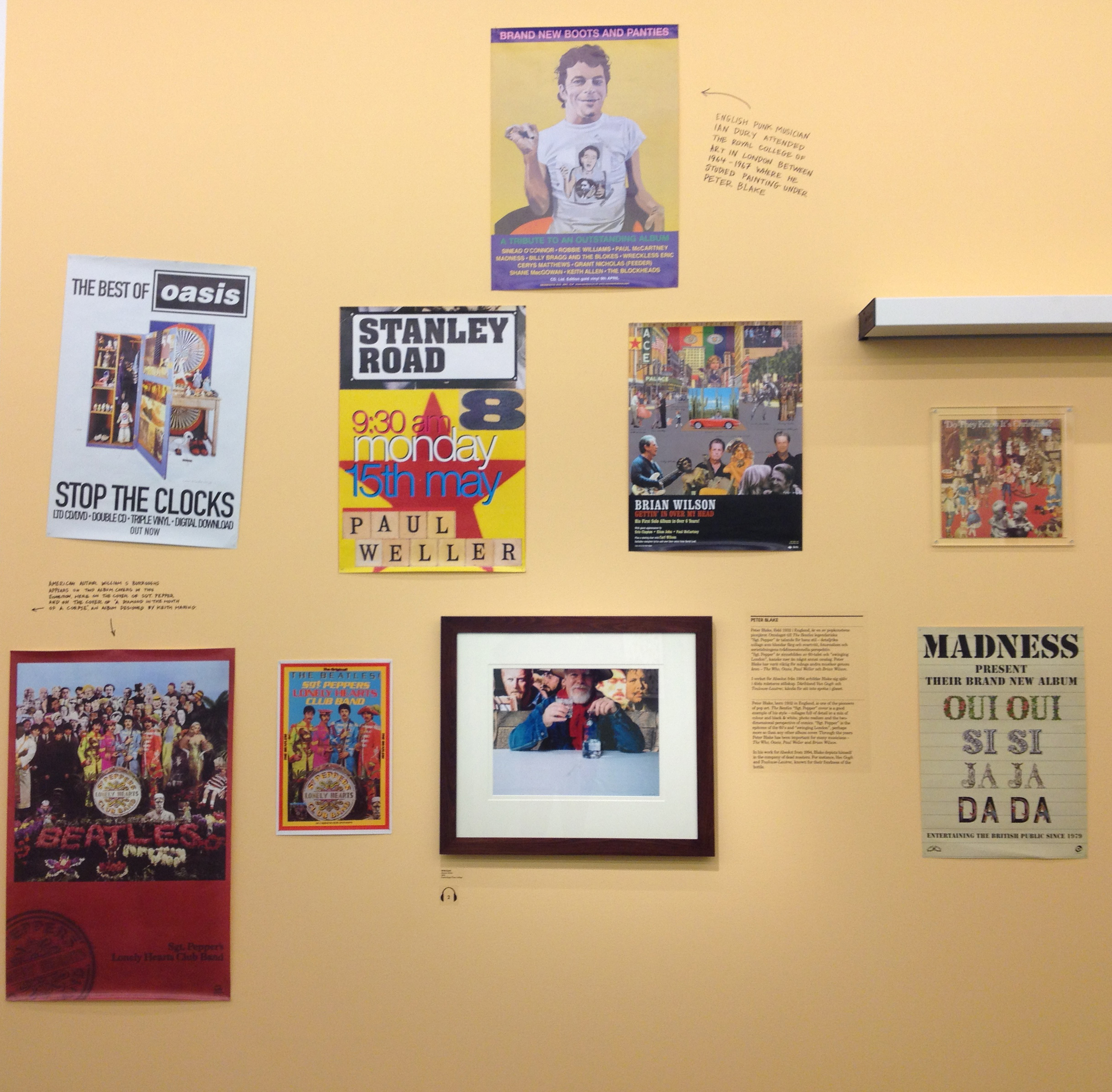
But the exhibition proper starts with some of Sir Peter Blake’s covers – well, actually, with the exception of the Band Aid’s “Do They Know It’s Christmas” 12″, just posters for the covers: there is (obvioulsy) “Sgt. Pepper’s Lonely Heart Club Band”, Oasis’s “Stop The Clocks”, Brian Wilson’s “Gettin’ In Over My Head”, Paul Weller’s “Stanley Road”, Madness “Oui, Oui, Si, Si, Ja, Ja, Da, Da”and Ian Dury’s “Brand New Boots & Panties” all surrounding Blake’s photo selfportrait with Absolut Vodka bottle, surrounded by dead great artists. Once again, and to my annoyance, the Sgt Pepper cover is only credited to Peter Blake. Jann Haworth, Blake’s ex-wife and the co-designer, is “conveniently” forgotten. But they both received Grammys for the design.

Image

The following artist is Jan van Hammersfeldt with his huge wooden Absolut Vodka work surrounded by covers of The Jefferson Airplane’s Crown of Creation” (probably my favourite Airplane album) and posters for a Jimi Hendrix and a Velvet Underground concerts. van Hammersfeldt’s cover for The Stones “Exile On Main Street” is in a separate monter in the centre of the exhibiiton.

There are covers by Ed Caraeff, including “Trout Mask Replica”, Captain Beefheart’s magnum opus. Others by Damien Hirst, Stephen Sprouse,  Then there is a wall with “influential” cover art, ranging from Elvis’s debut LP via Joy Division to Kraftwerk – perhaps fifty covers in all.

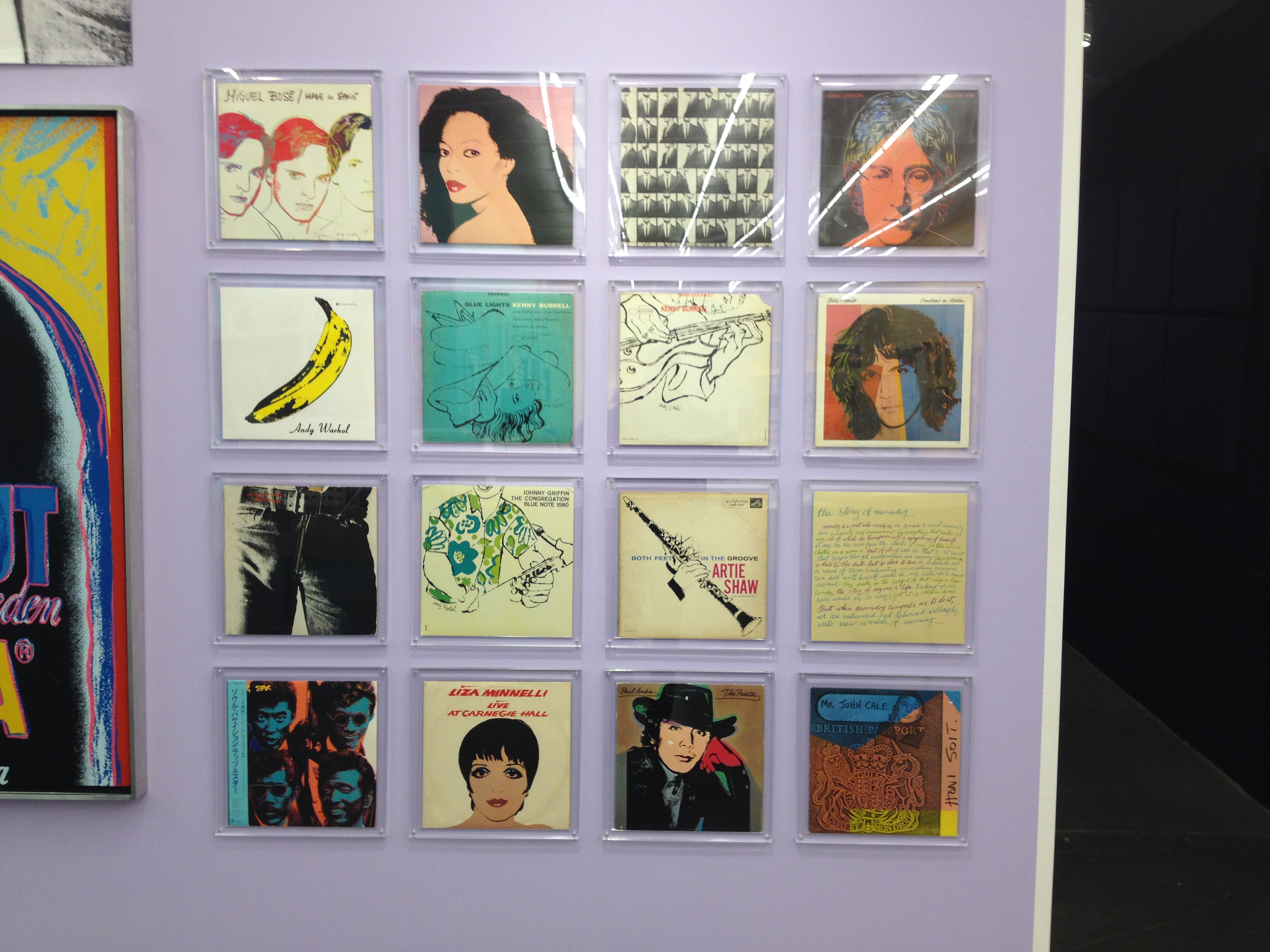
At the far end of the exhibition hall is a wall almost completely devoted to Andy Warhol. Sixteen record covers ranging from Artie Shaw’s Both Feet in the Groove” to Paul Anka’s “The Painter” via John Wallowich and The Velvet Underground & Nico.I would, perhaps, have placed these covers in a different order – probably chronological to make Warhol’s artisic development more obvious.

Image

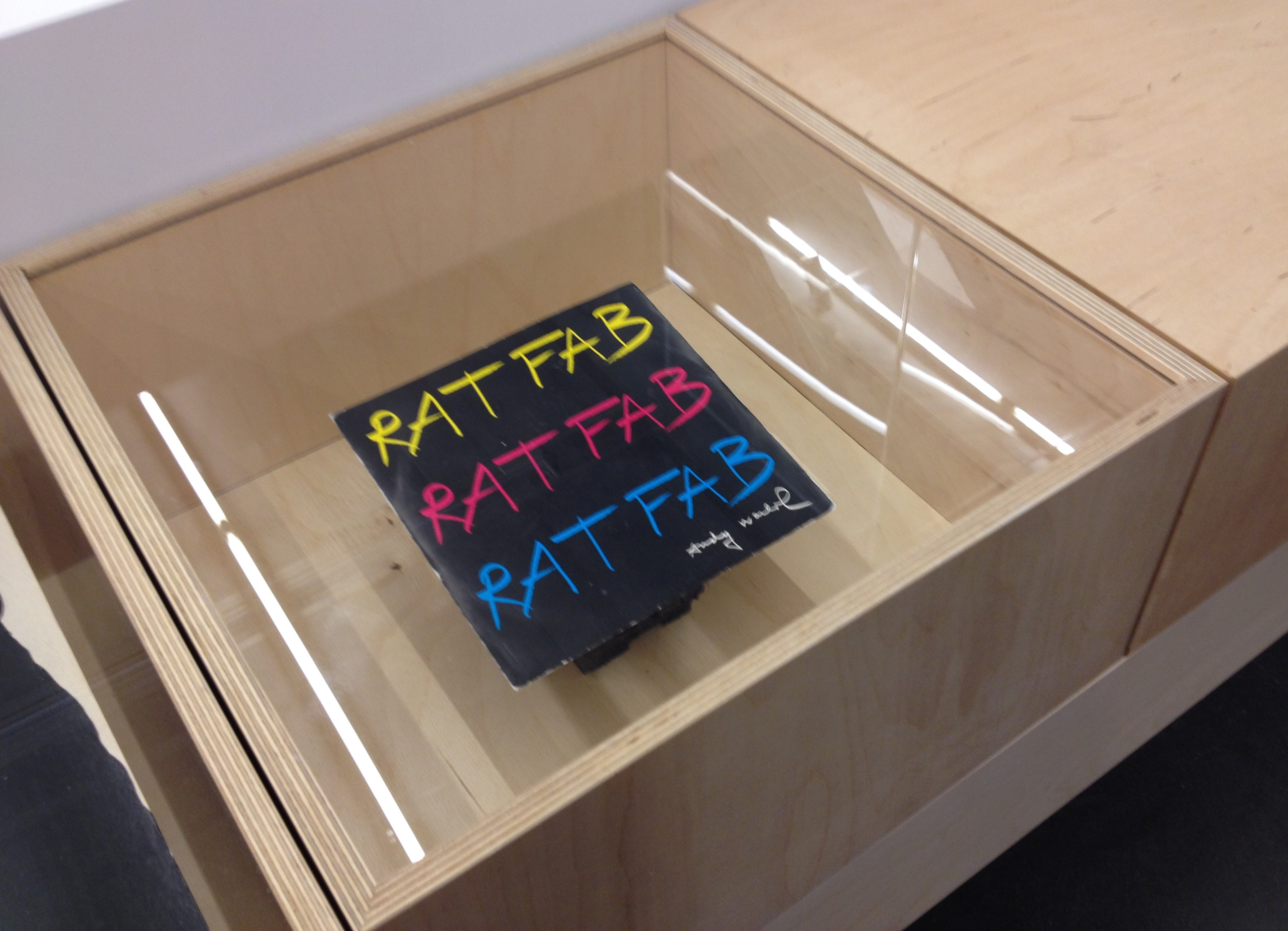
Most interestingly, is the photo of Warhol’s original drawings used for the RATFAB cover. According to the explanation Calle Häggkvist, the band’s basist, played the single for Warhol when his grandfather took hm to meet the artist at The Factory. Though Warhol was apparently indifferent to the songs, he agreed to do the cover art.

Image

The RATFAB cover is in a separate monter.

Image

As are further copies of “Sticky FIngers”, “Love You Live”, John Cale’s “Academy in Peril”, Ravel’s Daphnis & Chlöe” and The Velvet Underground & Nico” (However, in my excitement, I forgot to check whether or not it was a “Torso” cover.)

Image

There was also a turntable and many of the records from the covers on display thjat could be played by exhibition visitors. I played Joe Strummer and the Mescalino’s “Rock Art and the Xray Style” (cover by Damien Hirst) – the title seemed to fit the exhibition.


In summary, I found the exhibition well worth a visit. The idea of coupling works from the Absolut Art Collection with record covers by the same artists is inspired. I hope the exhibition will become popular. I will definitely visit it again.

The most important popband of the 20th Century

Well, It’s January 2014 and Kraftwerk are in town for a series of five sold-out concerts. They are praised In the media for their artistic vision and Stefan Thungren, in one of Sweden’s national daily newspapers, called Kraftwerk “the most important pop band of the 20th Century”. Well, well!

I love Kraftwerk’s music and saw them 2 days ago at Cirkus in Stockholm. One of the best music venues I know. They gave a great show and played a cavalcade of their greatest hits ranging from “Autobahn” to “Musick Non Stop”, via “Radio-Activity” and “Computerworld” all played against a backdrop of 3-D videos. A great two-and-a-half hour show with a couple of encores, to round it off.

But – does Kraftwerk deserve the title of the most important band of the 20th Century? The competition is murderous. Is Kraftwerk more important than The Beatles? More important than The Velvet Underground? More important than The Rolling Stones? More important than Oasis, Nirvana, Talking Heads or The Ramones or a host of other great bands? I haven’t even named Buddy Holly and The Crickets, Bruce Springsteen & The East Street Band or Bill Haley’s Comets.

I think journalists should temper their praise. Their personal favourites may not be everyone else’s.

Some fascinating information on some Warhol record sleeves.

Well, this week I’m in London looking after my elderly mother (who will be 94 next month) and I visited Daniel Brant at the A and D Gallery in Chiltern Street, just off Baker Street.)

The gallery is currently running an exhibition of pop art – several Rauschenbergs, Warhols and two Wesselmans, A couple of Roy Lichentsteins, a Claes Oldenberg lithograph, a Jasper Johns lithograph and – though not really classical pop art – three or four Julian Opies (of whom I am a fan.)

Daniel’s partner, Helen, plied us with tea as we sat and chinwagged about various aspects of Warhol’s art and Daniel mentioned that the Gallery had put on a show of Billy Name’s work for which they decorated one room with silver foil which they tacked to the walls. Daniel said Billy was a super person, one of the nicest people he hed met. Then we went on to discuss some record covers. Daniel told me that the cover for The Velvet Underground’s “White Light/White Heat” album was not done by Warhol but was one of Billy Name’s photographs. Billy also was responsible for the cover for Nico’s “Chelsea Girl” album – which is listed in the mega format book “Andy Warhol – GIANT Size” as being Andy’s work. Incidentally, I removed my copy of the “Chelsea Girl” LP from my list of Warhol covers a couple of years ago when I saw that the cover was credited to Billy Name. Daniel also told me that the “Index” book was the work of Billy Name – with no Warhol input. I suppose one should have guessed Name’s involvement from the silver cover! However, the “Aspen” box is Warhol’s work.

I showed Daniel my series of “Giant Size $1.57 Each” in order to ask his opinion as to what I could expect as a reasonable sale price. He was quite excited about them, but was sorry to see the “Fiftieth Annoversary” stamp on the back of each cover. Daniel had very recently put on a show of “fake” Warhol works and invited representatives from The Warhol Foundation, who happened to be in London at the time, to attend – which they did. I think Daniel was hoping that they would shut the exhibition down or sue the Gallery but apparently they only applauded. Daniel told several stories about how Warhol had sanctioned reprints of some of his prints and then signed them “put your name here” and “I did not do this” and then signing underneath: “Andy Warhol”! He thought that it would have been better for me NOT to have stamped the covers. He suggested also that it would be cool to repress the LP and include it with my replica covers.

From a discussion about selling the “Giant Size $1.57 Each” covers the coversation quite naturally turned to talk of Warhol associate Billy Klüver. Daniel knew loads about him and had bought a batch of Andy Warhol’s “ones” banknotes from Klüver’s estate after his death. Billy Klüver and Fred Waldhauer together with artists Robert Rauschenberg and Robert Whitman founded the Experiments in Art & Technology (EAT) organisation in 1966. By the early 1980s EAT was in financial difficulty and Billy and Rauschenberg organised a party at which art works would be sold in aid of EAT and there was a casino. Guests at the party were not permitted to bet with real mone but had to buy special banknotes produced in various denominations by the artists. Billy asked Warhol to produce the “one” (one dollar bills) which he did, silkscreening hundreds of bills that were  green on one side and black on the reverse. The only text was the word “ones” and Warhol’s standard rubber stamp with his name (like the one he used on the record covers he designed such as “Sticky Fingers” and “Academy in Peril”)  in white on the green side. Then, Daniel showed me one of the “ones”. Super!

Warhol's $1 bill for the EAT casino.
Warhol’s $1 bill for the EAT casino.

So, you may see a set of my “Giant Size $1.57 Each” covers on Ebay sometime soon but being sold by the A and D Gallery. Look out for them.


Record sleeve art by artists I collect