Tag Archives: Peter Blake

The Resurrection of Pauline Boty.

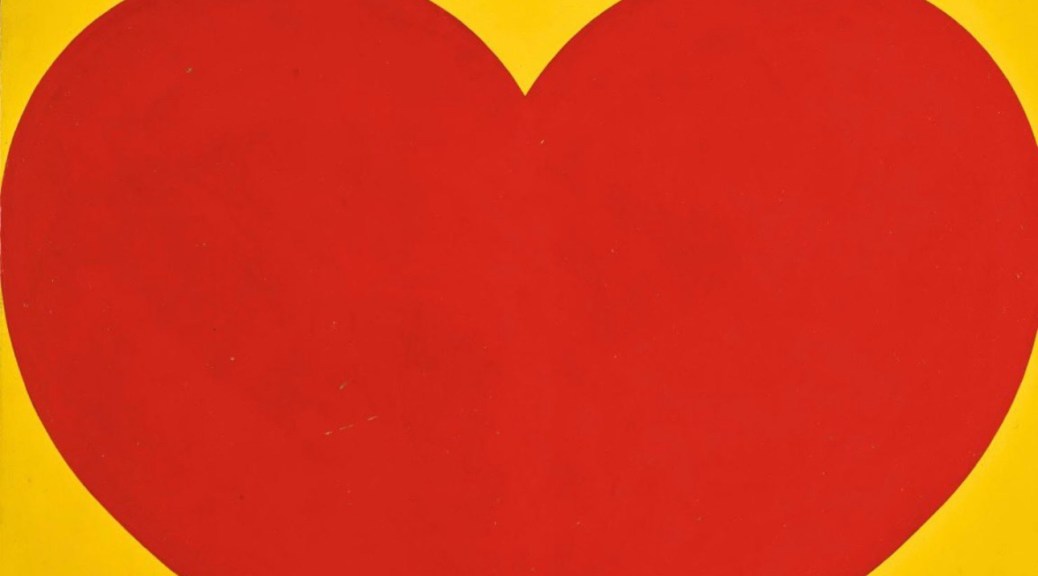
Pauline Boty (1938 – 1966) was a founder member of the British school of Pop Art. She was a painter, collagist, poet, model, dancer and actress. I came across her name when researching Peter Blake’s record cover art and found that Blake had recycled his 1959-60 painting “Valentine (for Pauline Boty)” for the cover of Band Aid’s 40th anniversary release of “Do They Know It’s Christmas?” with just a few changes in the collaged upper panel.
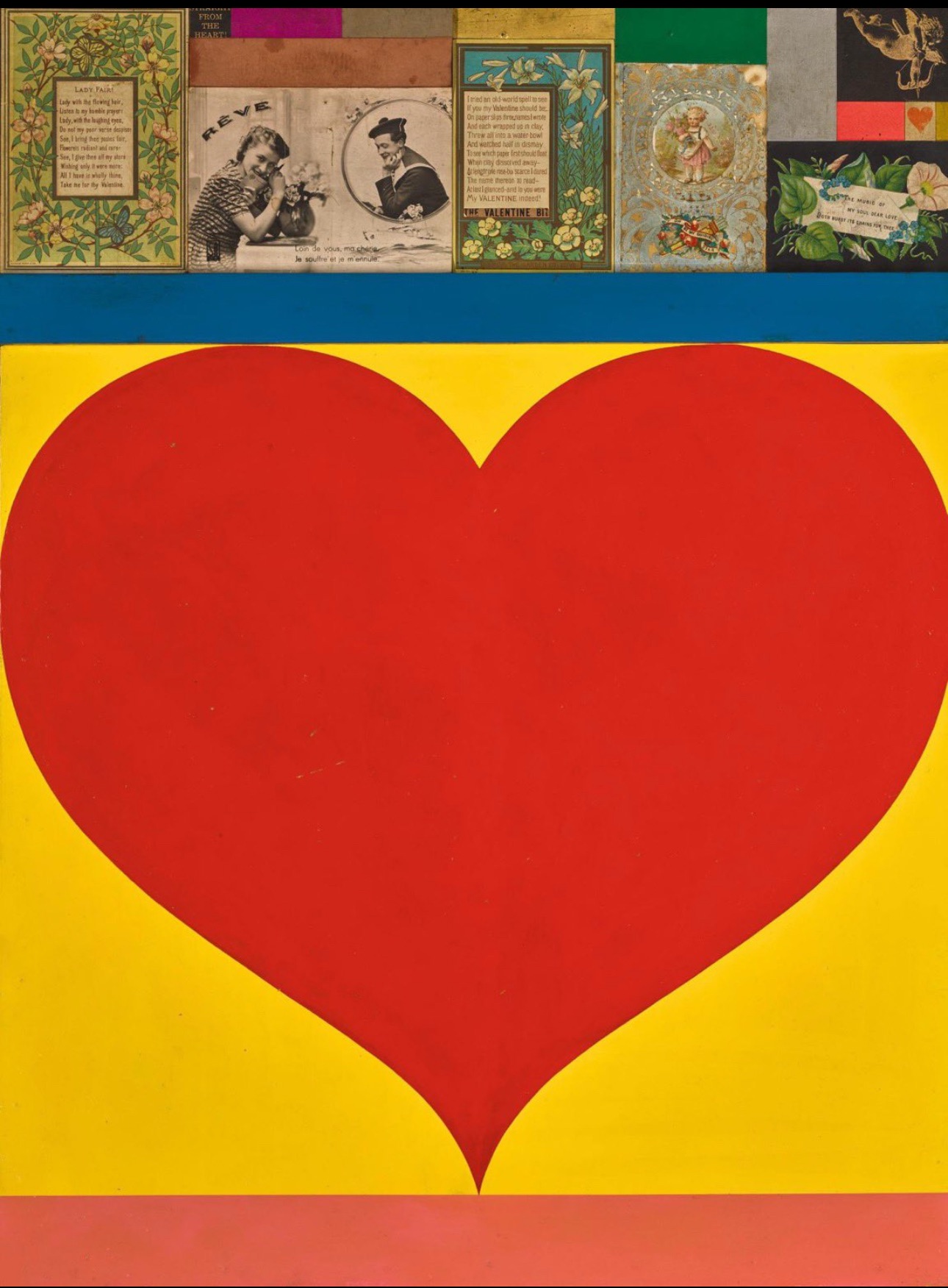
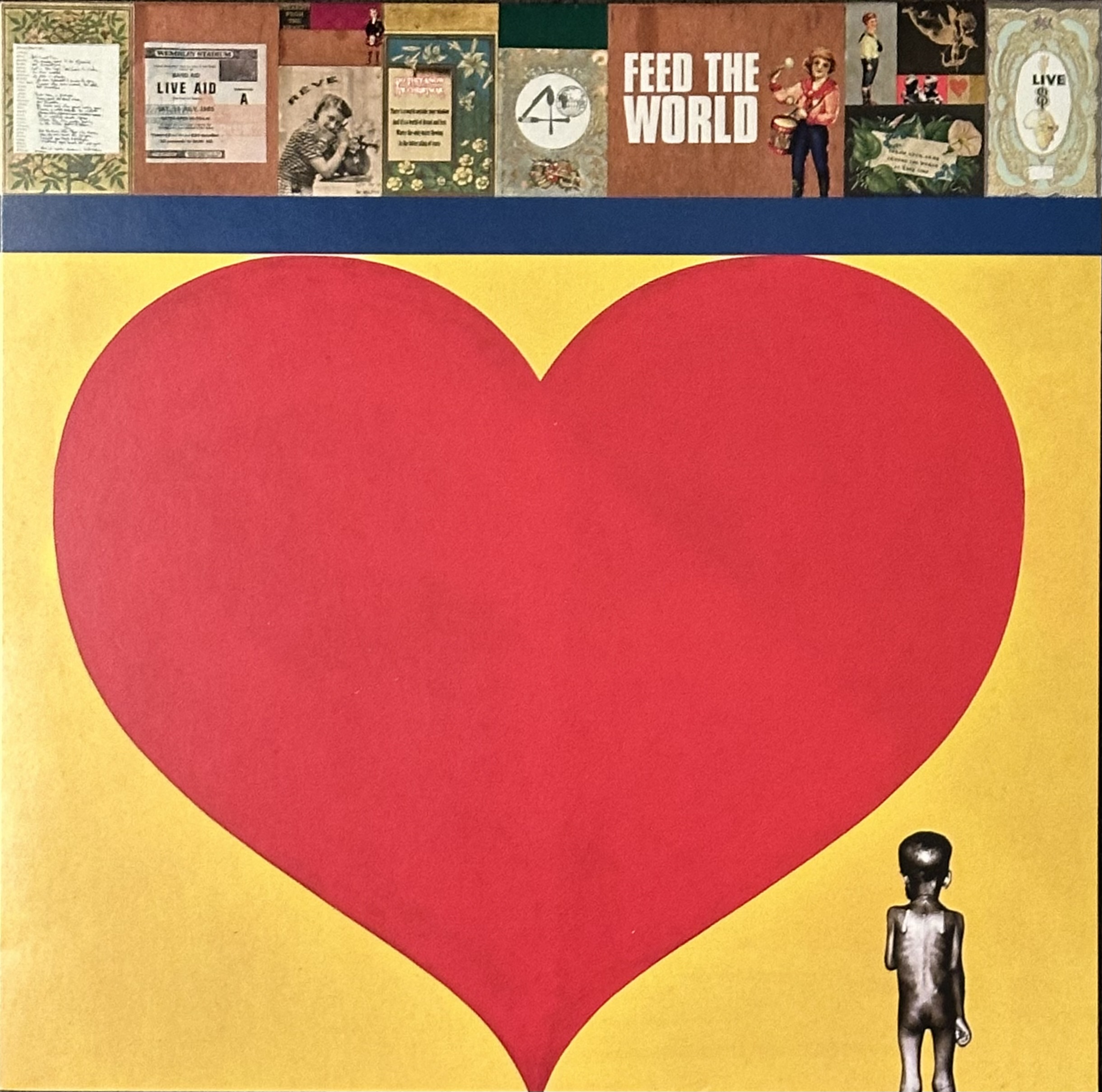
Peter Blake’s “Valentine (for Pauline Boty)” and  the cover of Band Aid’s 40th anniversary release 

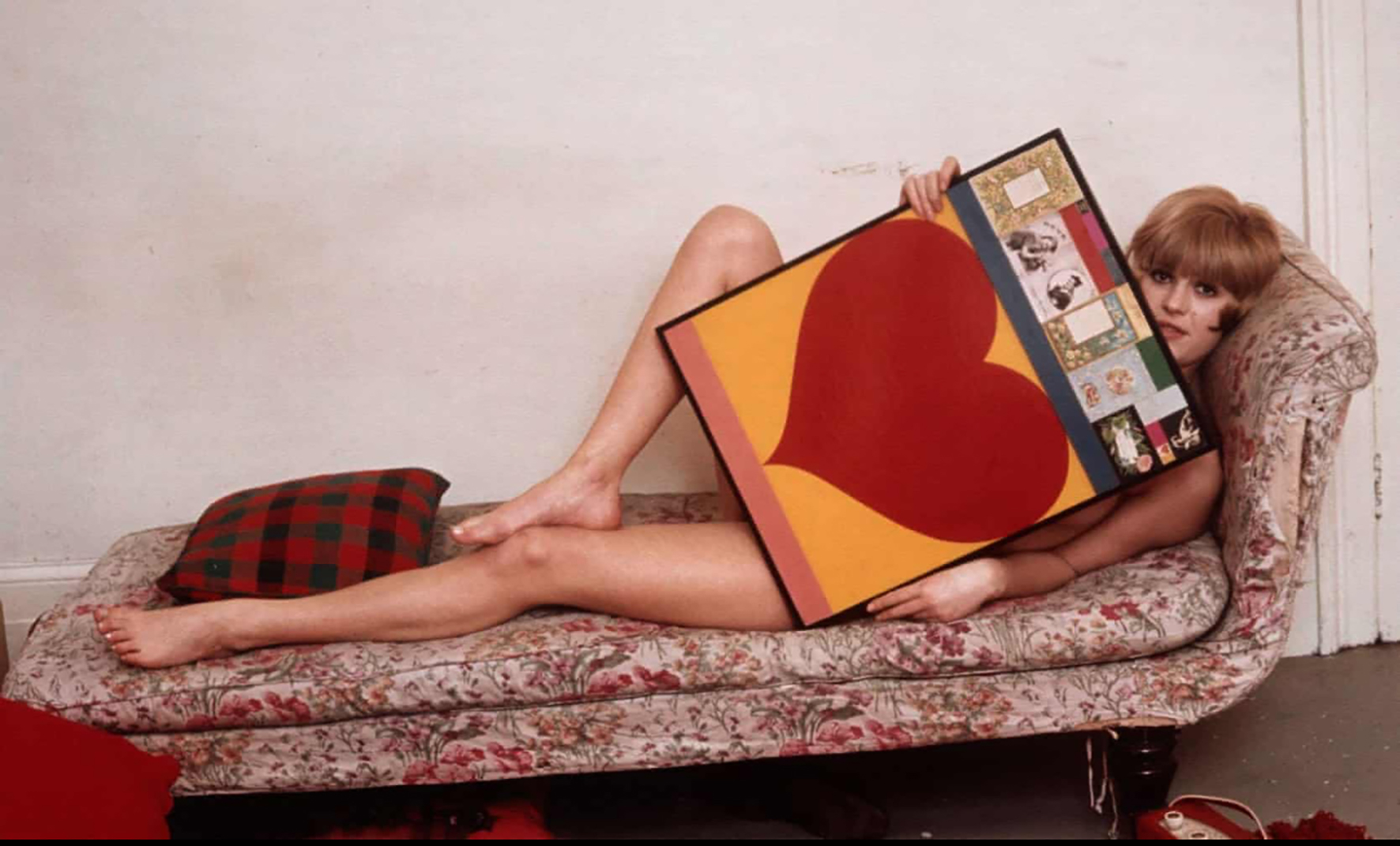
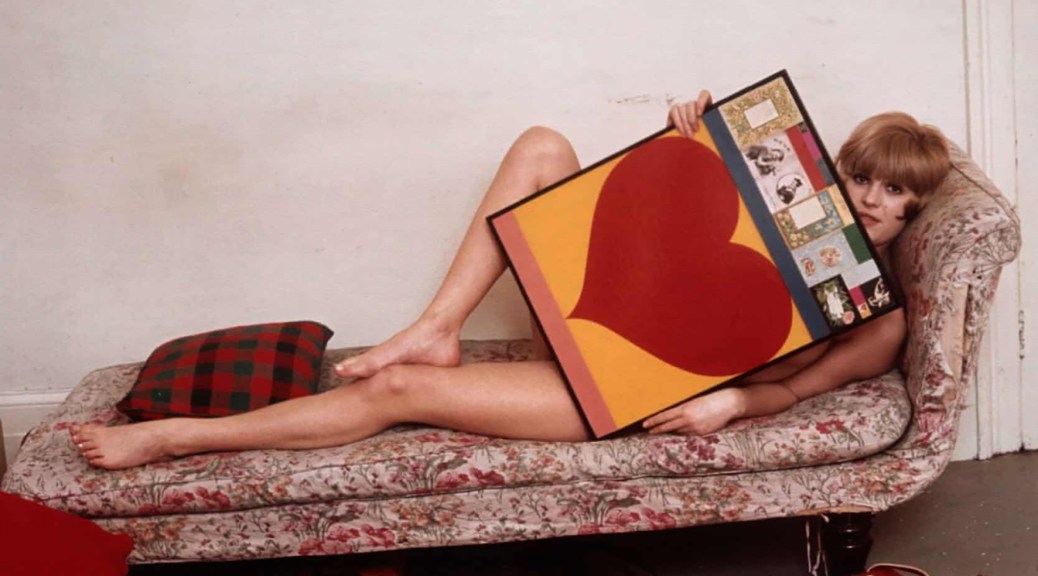
I then found Lewis Morley’s portrait of Pauline holding the painting.
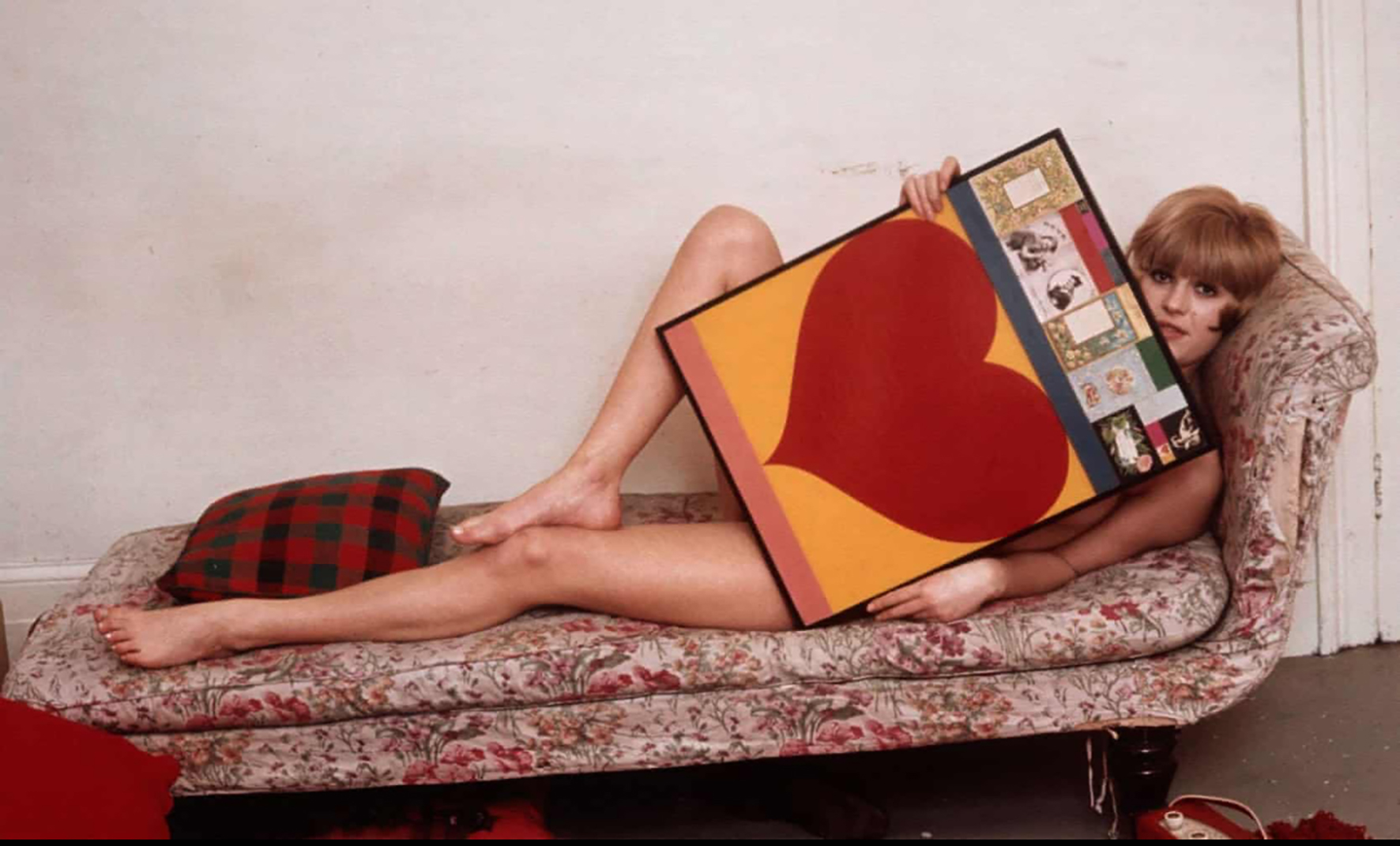
Lewis Morley’s photograph of Pauline Boty holding Peter Blake’s “Valentine” painting.

This photograph of Boty is striking for several reasons. First because she was free-spirited enough to allow herself to be photographed nude and also because in most other portraits she is shown with her own paintings. In this picture she holds Blake’s “Valentine”.

Boty’s art was all but forgotten until a retrospective in 1993 when David Mellor discovered a collection of her paintings on Pauline’s brother’s farm and showed them in a major show at The Barbican called “The Sixties Art Scene in London”. Art historian Sue Tate started researching Boty’s life and work and helped curate the 1998 joint exhibition at London’s Whitford Fine Art and Mayor Galleries called “The Only Blonde in the World” and the Tate Gallery bought the eponymous painting .
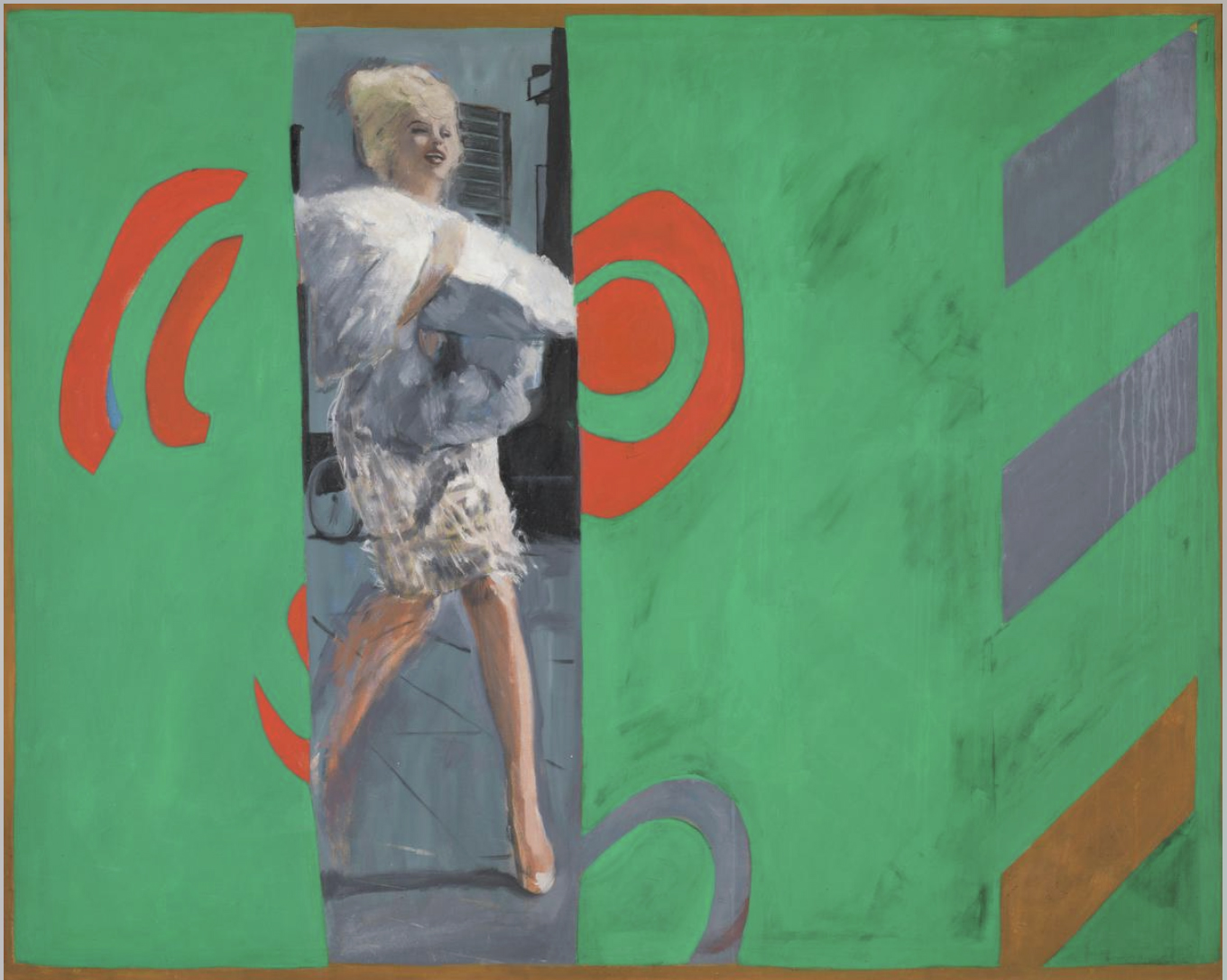
Pauline Boty “The Only Blonde in the World” 1963. Tate London.

The Wolverhampton Art Gallery bought Boty’s painting “Color Her Gone”[1] in 2012 and in 2013 invited Tate to curate a major retrospective of her work “Pauline Boty: Pop Artist and Woman”. Tate wrote an illustrated biography of Boty to accompany the exhibition which travelled to the Pallant House Gallery and to a museum in Poland.
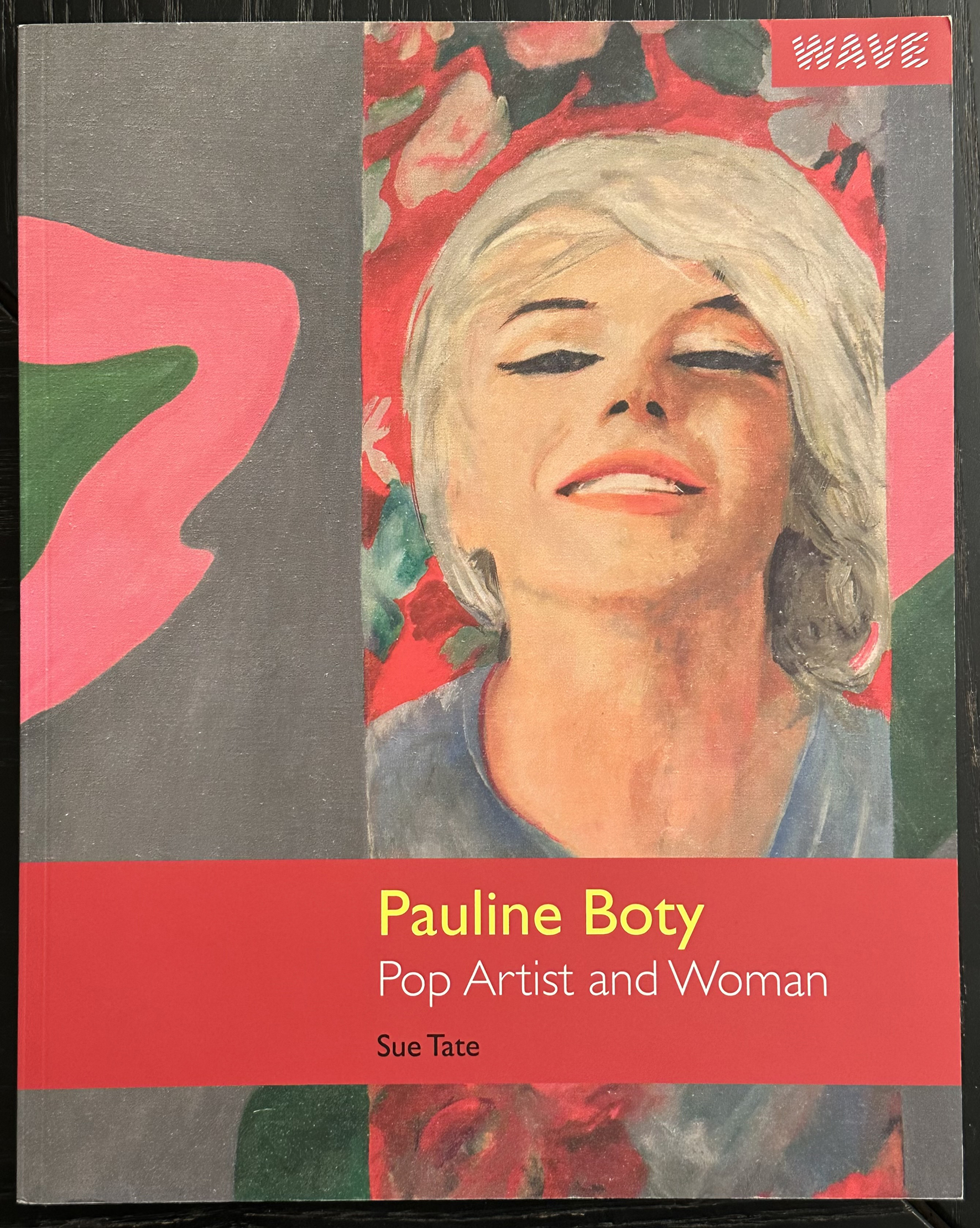
Sue Tate’s book cover

Peter Blake’s “Valentine” painting was sold at Sotheby’s in 2019, and the auction catalogue described how the painting came about. Boty met Peter Blake while she was a student at the Royal College of Art and became his girlfriend while having relationships with other men. She had a long-term relationship with the television producer Philip Saville, who would have an important role in her life and career, providing acting opportunities and introducing her to her future husband Clive Goodwin, who she helped start his literary agency. Blake was besotted with Boty, who, unfortunately for him, wasn’t so romantically engaged. However, he gave her the “Valentine” as a demonstration of his affection and it was obviously important for her as she allowed herself to be photographed holding it. The only photograph of Pauline with a painting that wasn’t one of her own.

The Gazelli Art House organised a further Boty retrospective in 2023 called “Pauline Boty: A Portrait” that coincided with the publication of Marc Kristal’s major Boty biography “Pauline Boty: British Pop Art’s Sole Sister”. Both Tate’s 2013 and Kristal’s more recent volume tell of Boty’s whirlwind ten-day romance with Clive Goodwin leading up to their wedding. The ten-day romance must, however, have been something of a myth despite being proposed by Pauline herself in her interview with her friend Nell Dunn.[2]

Boty told Nell Dunn how she met her future husband. She was walking together with Philip Saville when they bumped into Goodwin and Kenneth Tynan and Saville introduced Goodwin to Boty. The following day Goodwin phoned Saville to ask if he would mind if he asked to meet Boty again. Boty and Goodwin married at the Chelsea Register Office on 24th June 1963. However, the law required a couple to give twenty-one days’ notice to marry. So, the couple must have known each other for at least three weeks prior to their marriage. The romance was probably not much longer than a month or six weeks, though, as Goodwin, having spent a year in Paris, only returned to London in the spring of 1963, say in April or May.

Why wasn’t Boty’s art saleable during her lifetime? While Boty’s close friends Peter Blake and Derek Boshier were represented by Robert Fraser’s famous Duke Street Gallery, Boty didn’t have a gallery representation. Her work was shown together with that of Peter Blake, Geoffrey Reeve and Christine Porter at the AIA Gallery in 1961 and at a “one man [sic] show” at the Grabowski gallery in 1963. She was also one of the four pop artists featured in the BBC Monitor programme “Pop Goes the Easel” in March 1962, which should have given her work visibilty to people interested in the burgeoning field of pop art.

Pauline was constantly hard up and was initially forced to work as a waitress and then to teach art before turning to modelling and acting to make ends meet. Marrying Goodwin could well have been a survival tactic.

Author Marc Kristal had seen one of Boty’s paintings at a pre-auction show at Christies and was entranced and, having never heard of  her before, started to research her life, leading up to the publication of his extensive biography “Pauline Boty: Pop Art’s Sole Sister”. He repeats the story of Boty’s and Goodwin’s ten-day romance seemingly without considering the reality.

Interest in Boty and her work increased in 2023. Kristal’s book was published in October and Gazelli Art House in London organised the “Pauline Boty: A Portrait” retrospective that opened on December 1st, 2023, and ran till 24th February 2024. Sue Tate contributed to the catalogue.
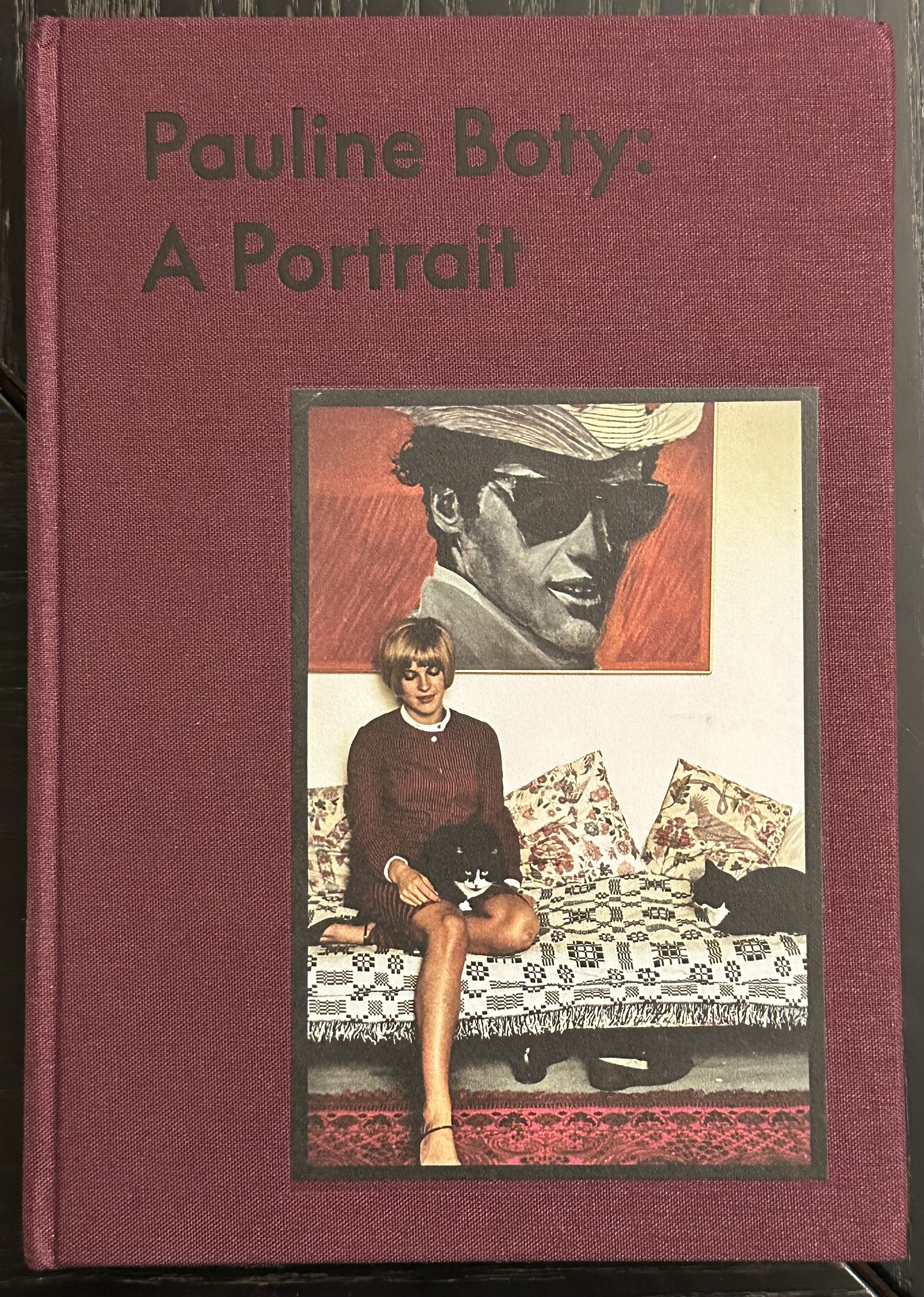
Gazelli Art House Catalogue “Pauline Boty: A Portrait” 2023-4.

Boty continued to see Philip Saville after her marriage and according to Kristal allowed Lewis Morley to photograph her nude in September 1963, barely three months after her wedding. I think these photos were probably taken earlier; Morley had known Pauline since her time at the RCA and they are rumoured to have had an affair. We can calculate an approximate date for the photos from the two paintings featured in the series of stills.
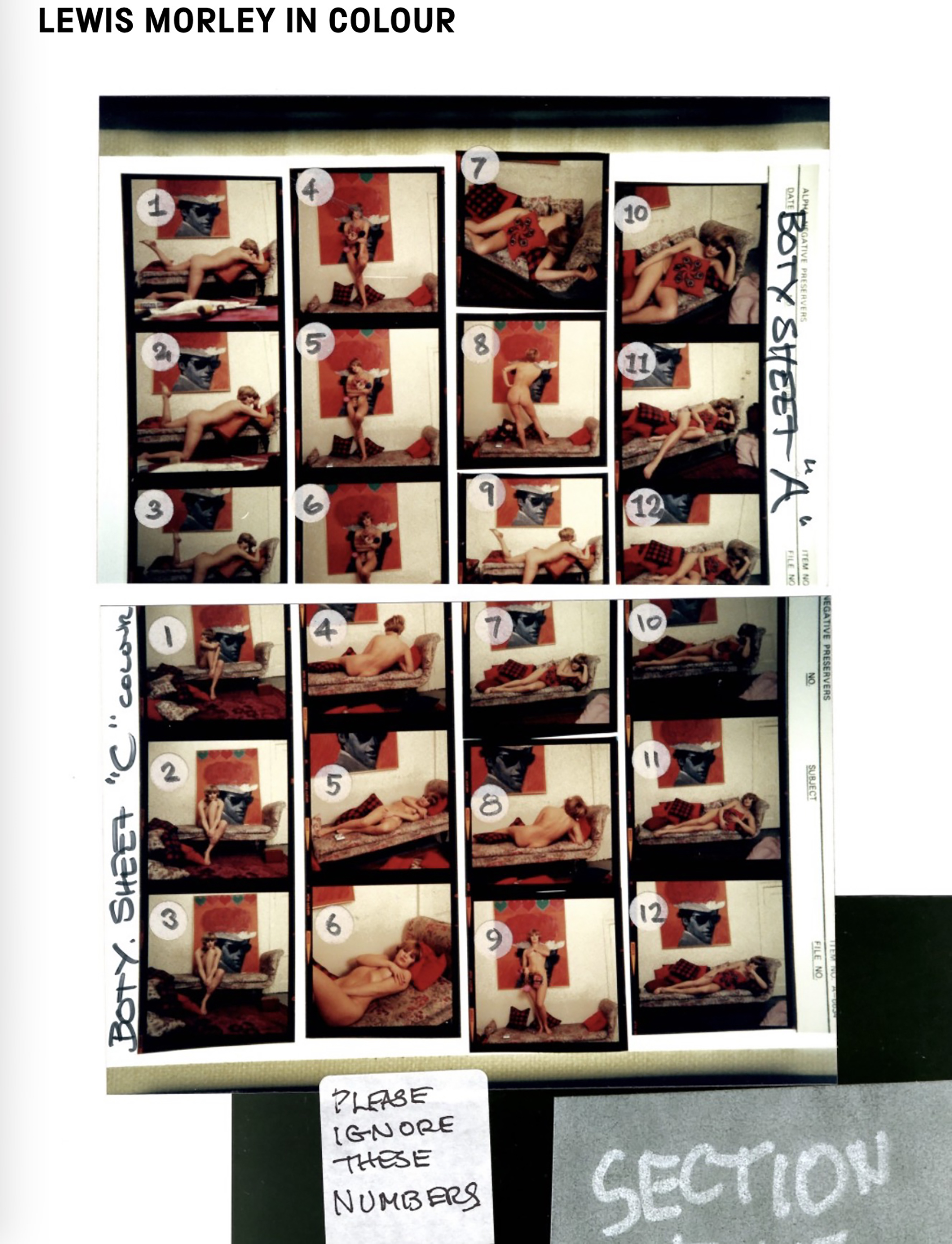
Lewis Morley’s colour photos

The first painting is Boty’s own “With Love to Jean-Paul Belmondo”, from 1962, and the second is Blake’s “Valentine”, which Boty was probably given in 1961 . So, we can safely date these photos to 1962 (or later). But, if we compare Boty’s relatively unsophisticated, and relatively short hair style in these photos with the fashionable, slightly longer style in Morley’s more formal 1963 portrait, the colour photos were probably taken earlier than the 1963 date. Even taking Pauline’s extra marital adventures into consideration, I would hesitate to suggest that she posed nude for Morley barely three months after her wedding. It is difficult to see that these photos were taken at the same session despite the presence of the “Belmondo” painting in both.
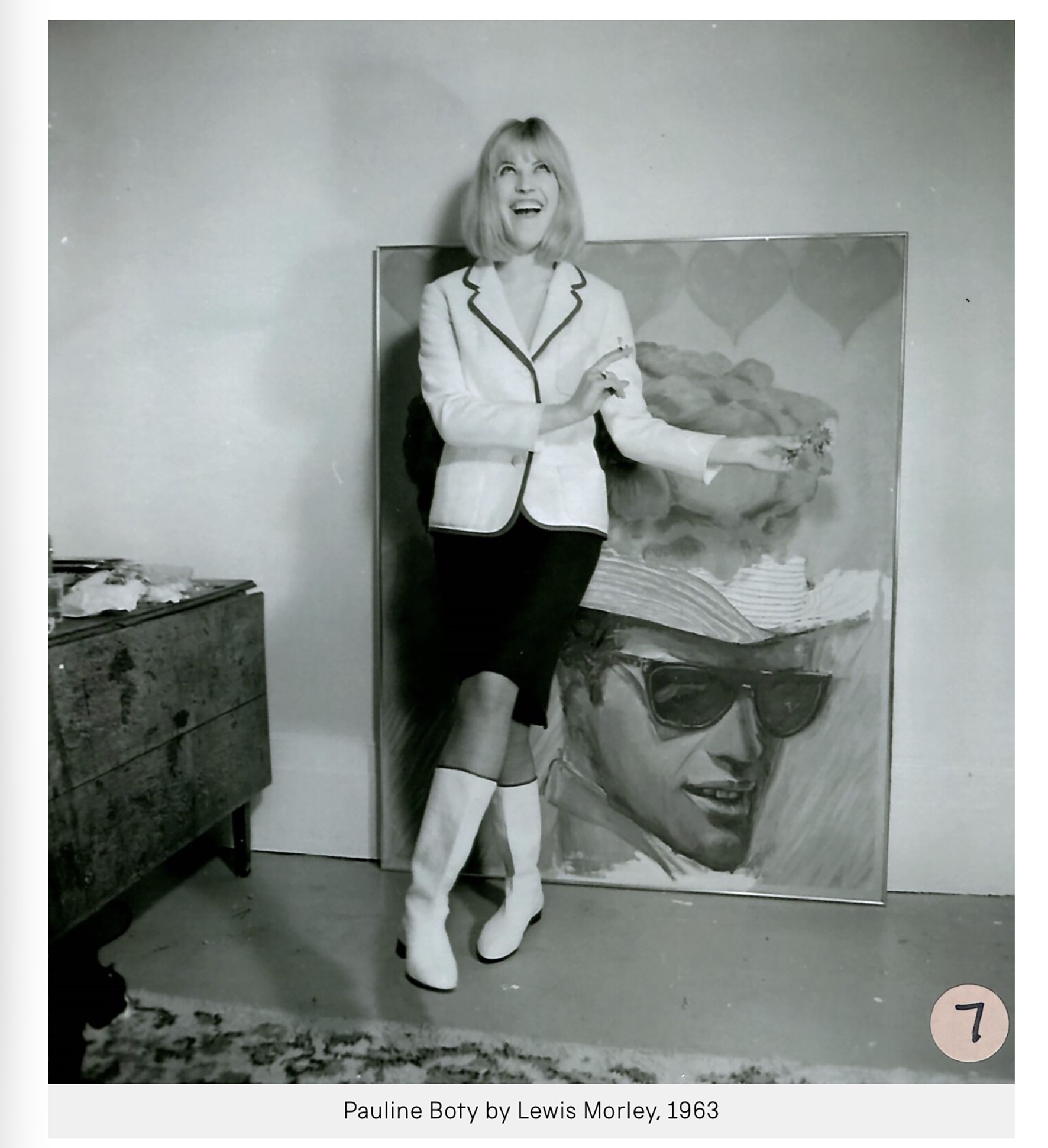
Lewis Morley’s 1963 photos

Peter Blake was understandably upset when he found Pauline had married. Though he married Jann Haworth less than one month later. However, his wedding plans must have been made prior to him hearing of Boty’s and Goodwin’s marriage as he, too, would have needed to give 21 days’ notice of an intended marriage. Some of Boty’s friends thought her marriage was too hasty and that Boty suffered from depression. However, Pauline’s sister-in-law Briget said she had never seemed happier.

The Gazelli Art House exhibition catalogue showed Morley’s photograph of a nude Pauline lying on a chaise longue holding Peter Blake’s “Valentine (for Pauline Boty)” painting but strangely labelled it “Lewis Morley: Untitled. Pauline Boty holding Peter Blake’s ‘Heart’. 1996”. Neither the picture’s title nor the date are correct.

My interest in Pauline Boty and her art arose from the discovery that Peter Blake had recycled his 1959-60 painting “Valentine (for Pauline Boty) for the cover of Band Aid’s 2024 Christmas single “Do They Know It’s Christmas?” I discovered that Pauline Boty was an important member of the early British pop art movement and how her work has become widely recognised after having been lost for almost thirty years after her untimely death in 1966. I found how her relationship with Peter Blake influenced her work and how she acted as a sort of muse for him. I suspect the Lewis Morley photographs of a naked Pauline Boty were probably taken earlier than has generally been accepted. The corrections to the accepted timeline paint a picture of a more purposeful, less impulsive woman than the myth suggests. And the fact that Blake chose this particular painting — a private love token from sixty-five years earlier — as the cover image for the 2024 Band Aid 40 cover gives it an emotional resonance that probably would have gone unrecognised.


[1] Note: Boty was heavily into Americana, using cuttings from American magazines such as Life as sources for her collages. She used the quote from the American song ”My Coloring Book” for the painting’s title. Both Tate and Kristal anglicise the title to ”Colour Her Gone” instead of Boty’s ”Color Her Gone” – or was their mistake simply the result of autocorrection in their manuscripts?

[2] Dunn, Nell: Talking to Women. MacGibbon & Kee, London, 1965.
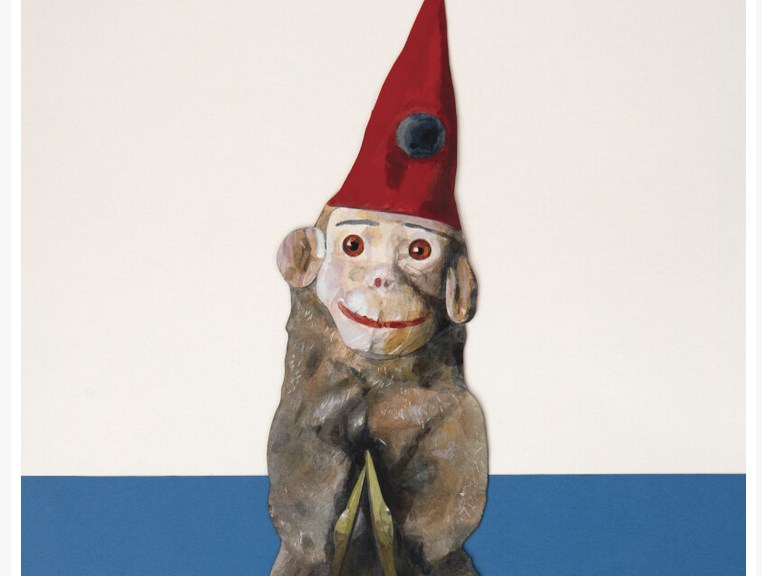
Hot Chip’s “Joy in Repetition” and the Blake Family Connection.

Regular readers of this blog will know that I have been researching and writing a book on Peter Blake’s record cover art. In the course of that research I have been following the story of Blake’s most recent cover design — the watercolour of a toy monkey with miniature cymbals that adorns Hot Chip’s 2025 album “Joy in Repetition.”

Joy in Repetition with Peter Blake’s watercolour painting.

The album’s title comes from “Over and Over,” a song by Prince, and so does the imagery. In a recent podcast interview with Bill Pearis of Brooklyn Vegan, Hot Chip’s Alexis Taylor explained how the commission came about: “He was immediately up for it and happened to own a toy monkey with miniature cymbals that he had had for years. We just thought, why not try a watercolor of that little monkey? It worked out well. It was fortuitous, but one of those things where it’s worth asking.”

Pearis noted that Taylor, who is friends with Blake’s daughter, “just decided he’d ask.” But which daughter? Blake has three: Liberty (born 1968) and Daisy (born around 1970), both daughters of his first marriage to the artist Jann Haworth; and Rose (born 1987), his daughter with his second wife, the artist Chrissy Wilson.

A little detective work reveals the answer. Rose Blake is herself an established illustrator and artist, based in London, who studied at Kingston University and the Royal College of Art. She has exhibited at the Rebecca Hossack Gallery and has completed commissions for publications including The New Yorker and The New York Times. Her work, she says, reflects growing up in the art world — which means, of course, growing up in Peter Blake’s world.

The connection between Rose and Alexis Taylor is documented in a transcript of a sold-out event at Spiritland in London in October 2024, where Rose hosted Taylor and Jarvis Cocker in conversation. In her introduction, Rose described meeting Alexis for the first time in the Arctic Circle, at the northernmost point of Norway, adding that she had known his music long before they met: Hot Chip’s “In Our Heads” was one of the albums she and her studio mates listened to every day for years.

So the story of how “Joy in Repetition” came to carry a Peter Blake watercolour is, at its heart, a story about two creative Londoners — the daughter of Britain’s greatest pop artist and one of Britain’s finest pop musicians — who became friends, and one of whom thought it worth asking a question. It is a reminder that in Blake’s world, as throughout his career, the connection between art and popular music has always been personal.

As a footnote, it is worth noting that “Joy in Repetition” is, by my count, Sir Peter Blake’s 38th record cover design — a remarkable testament to a career in music that has now spanned almost 58 years, from Sgt. Pepper’s in 1967 to this charming watercolour monkey in 2025. He is now in his 93rd year. Long may he continue.

Collage – The Medium Linking Two Souls: Peter Blake and Pauline Boty.

I’ve been fascinated by Peter Blake’s art since I bought his “Babe Rainbow” print in, I think, 1968. My fascination for his art continued with my collection of Blake’s record cover art and one recent (2024) release has unravelled unexpected aspects of Peter Blake’s life that impinge on his art. The cover I refer to is his design for Band Aid’s 40th anniversary recording of “Do They Know It’s Christmas?”  released as an EP on viny and CD in November 2024.

This design struck me as familiar and I found a picture of a Blake painting from 1959-60 that was strikingly similar. The painting in question is Blake’s “Valentine (for Pauline Boty)”.

Peter Blake’s “Valentine (for Pauline Boty)”, 1959-60.

I immediately wanted to know who Pauline Boty was and why Peter Blake painted her this valentine.

A quick Internet search revealed that the painting had been sold at Sotheby’s in 2019 for £270,000. But the description told the story of Blake’s unrequited love for Pauline Boty.

Peter Blake’s art education began in 1946 when he was only 14 at Gravesend School to learn commercial art. It was there that his interest in typography started. After National Service in the R.A.F., in 1953, he was admitted to the Royal College of Art’s painting school based on a single painting that he submitted. He graduated with first class honours in 1956 and, after a year travelling in Europe, took various teaching jobs while still remaining connected to the RCA. He was a contemporary of David Hockney, R.B. Kitaj, Derek Boshier and Allen Jones. In 1958 a 20-year-old Pauline Boty arrived at the RCA to study stained glass. A subject she had begun to study at Wimbledon College. Boty was a collagist and painter and while at the RCA produced stained glass works, paintings and collages.

There’s considerable similarity between making stained glass pictures and collages. Both consist of cutting out bits of either glass or paper to make a design and Boty became an accomplished collagist alongside her stained glass work.

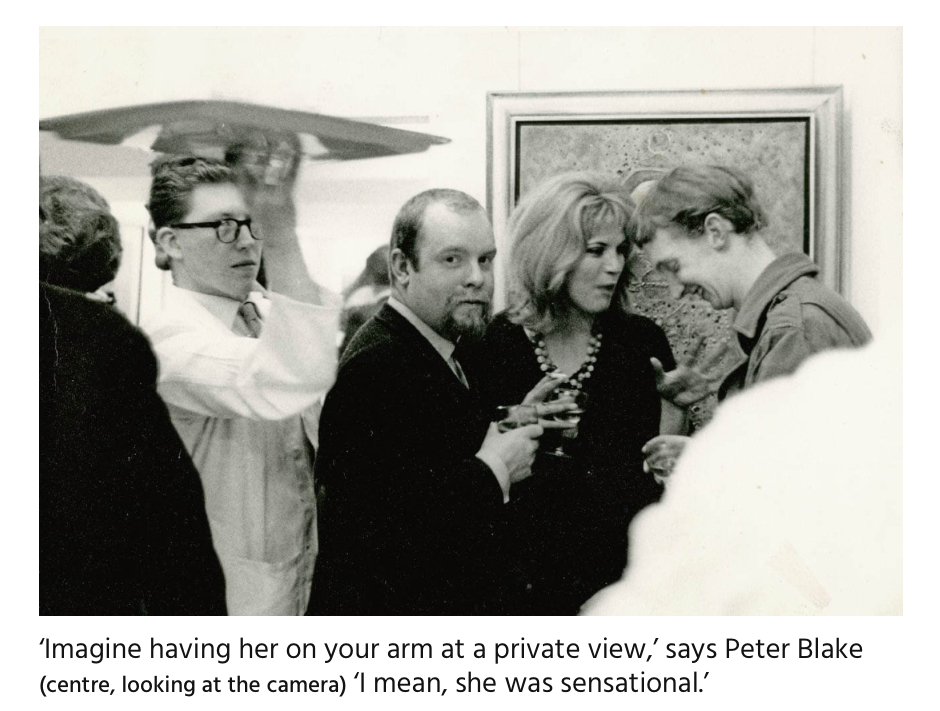
Blake had been making collages since at least 1955. Boty met Blake, six years her senior,  at the RCA and they began a romantic involvement. Blake soon became besotted with the beautiful, vivacious and very talented Pauline. Unfortunately for him her feelings were considerably cooler, but they made a beautiful couple. Blake has said “Imagine having her on your arm at a private view. I mean she was sensational!

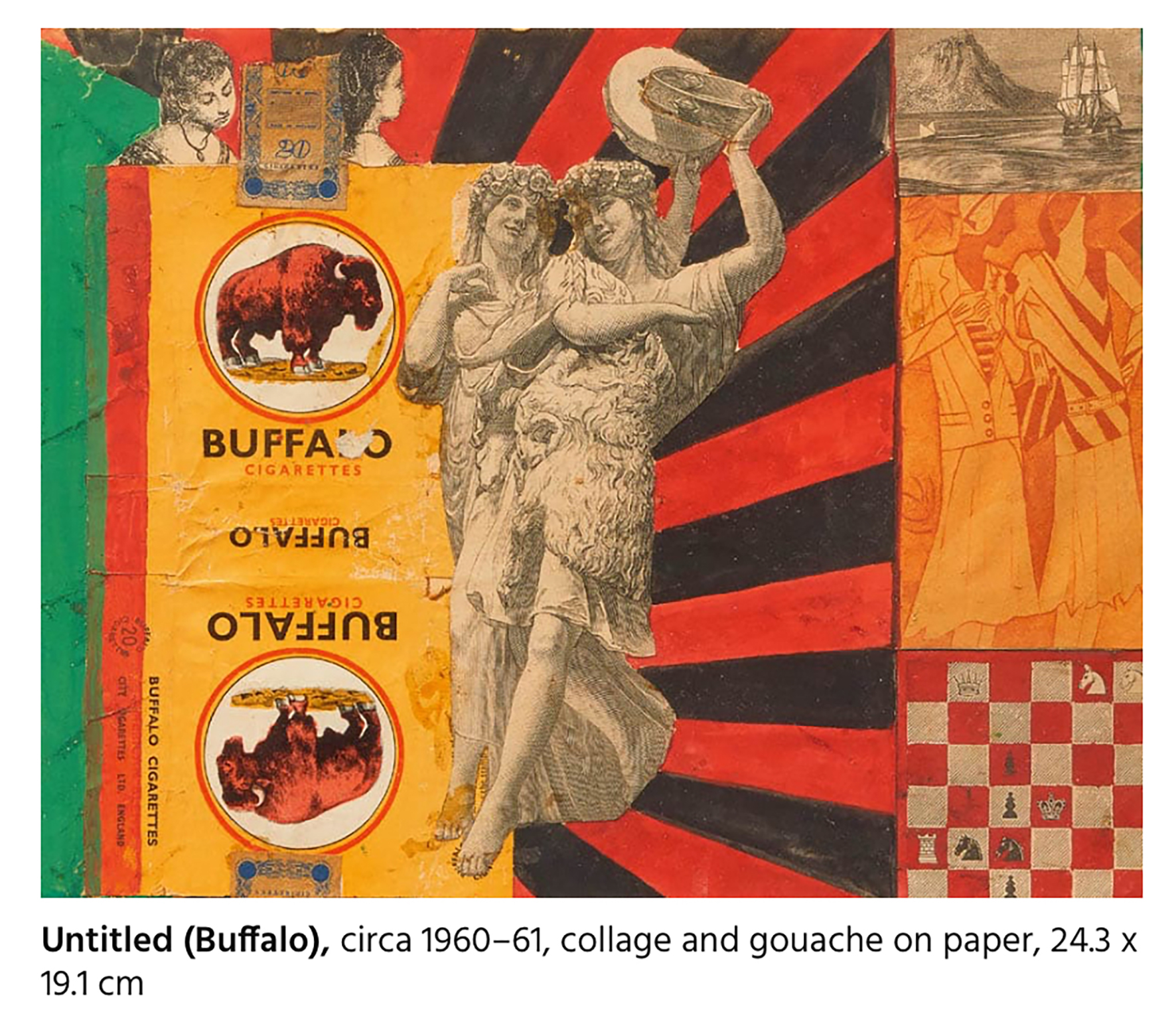
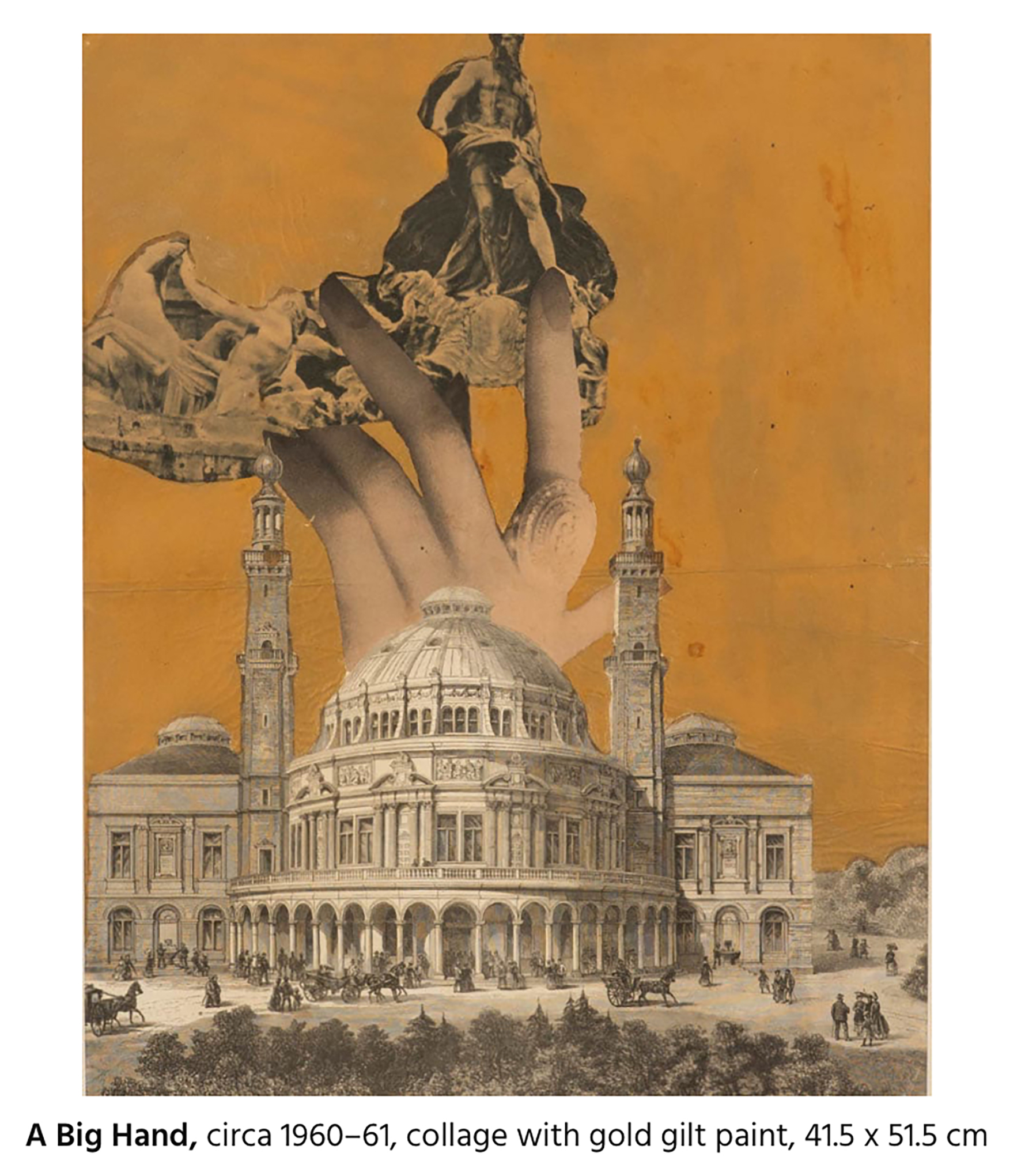
So, Blake painted his “Valentine (for Pauline Boty)” early on their relationship. Boty must have been inspired by Blake’s collages, and she must have been a muse for him. Her early collages seem to presage many of Blake’s more recent ones.

This reuse of Victoriana by Boty is reminiscent of Blake’s later large collages from the “Joseph Cornell’s Holiday” series and other.

Boty was the archetypal “dolly bird”, before the term really became fashionable. She wore Mary Quant clothes and was aware of her sexuality, having several affairs while still dating Blake. The photographer Lewis Morley was one lover, who photographed her nude in September 1961 in a series of photos, the most famous being the portrait holding Blake’s “Valentine (for Pauline Boty)”!

Lewis Morley’s 1961 portrait of Boty holding Blake’s 2Valentine” painting.

Exactly when Blake’s and Boty’s relationship ended is difficult to date. Boty was in a long-term relationship with the married television director Philip Saville and had other assignations. In June 1963 she married literary agent Clive Goodwin after a whirlwind 10-day romance. Both Blake and Saville were reported to have been shocked by her marriage. And Peter Blake married Jann Haworth the following month.

Their artistic partnership was public enough that when the BBC’s Monitor produced ‘Pop Goes the Easel’ in March 1962, Blake ensured Boty was among the four featured artists. (Blake himself, Boty, Derek Boshier and Peter Phillips). The programme opened with presenter Huw Wheldon seated before a recreation of Boty’s ‘collage wall’ – an installation in her London flat that demonstrated how central collage was to her practice, integrated into her daily environment. If this wall dated from 1958-59 when she arrived at the RCA, Blake would have seen it early in their relationship, experiencing collage not just as artworks but as a way of life.

There were three brilliant women artists around in the late fifties and early sixties. These were Brigit Riley (born 1931), Jann Haworth (born 1942) and Pauline Boty (born 1938). Riley, Peter Blake and Jann Haworth were represented by Groovy Bob Fraser’s Duke Street gallery from 1962. Boty graduated from the RCA in 1961 and was forced to become a waitress to make ends meet. Why didn’t Blake introduce his great love to Robert Fraser and kickstart her artistic career? Instead, she jumped into marriage so she could continue her art.

Haworth left Blake in 1979 for the author Richard Severy and Blake met Chrissy Wilson in 1980. They married in 1987.

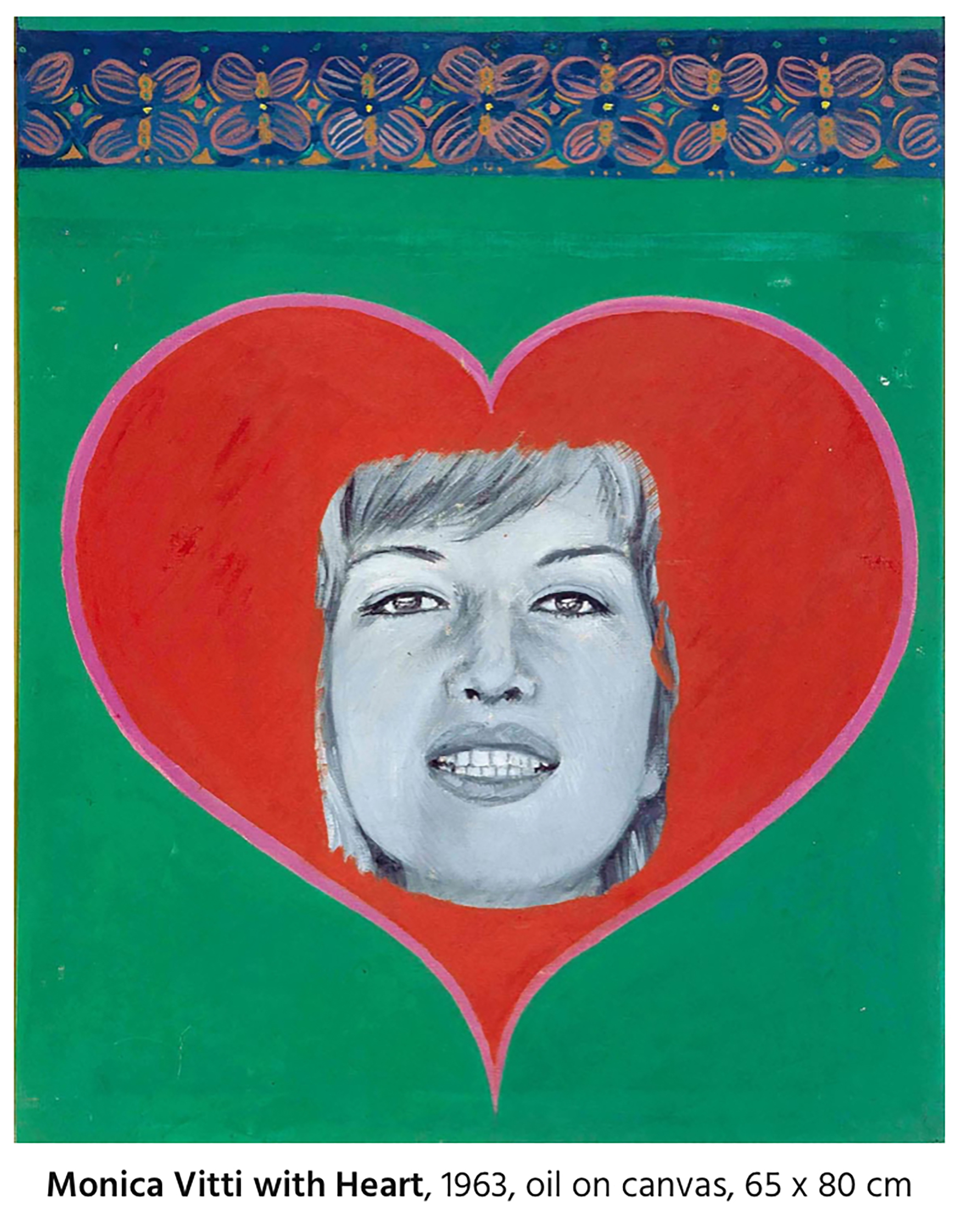
There is no doubt that Peter Blake influenced Pauline Boty’s art. Just compare her “Monica Vitti with Heart” painting from 1963 with Blake’s ”Valentine”.

And there’s no doubt Blake never forgot Boty as he reused the “Valentine” design sixty-four years later as the basis for the cover design for the Band Aid 40 EP. But he hasn’t credited Boty anywhere in his books. His 2021 book “Collage” is dedicated to Chrissy, his three daughters and Joseph Cornell.

Retrospective exhibitions of Boty’s work in 2013 and 2023-4 have brought her pop art paintings and collages back into general view and emphasised her central role as one of the important members of British Pop Art first flowering.

Credits: Photographs taken from Marc Kristal’s 2023 book “Pauline Boty: British Pop Art’s Sole Sister”.

The Cover of the Who’s “Face Dances” Album.

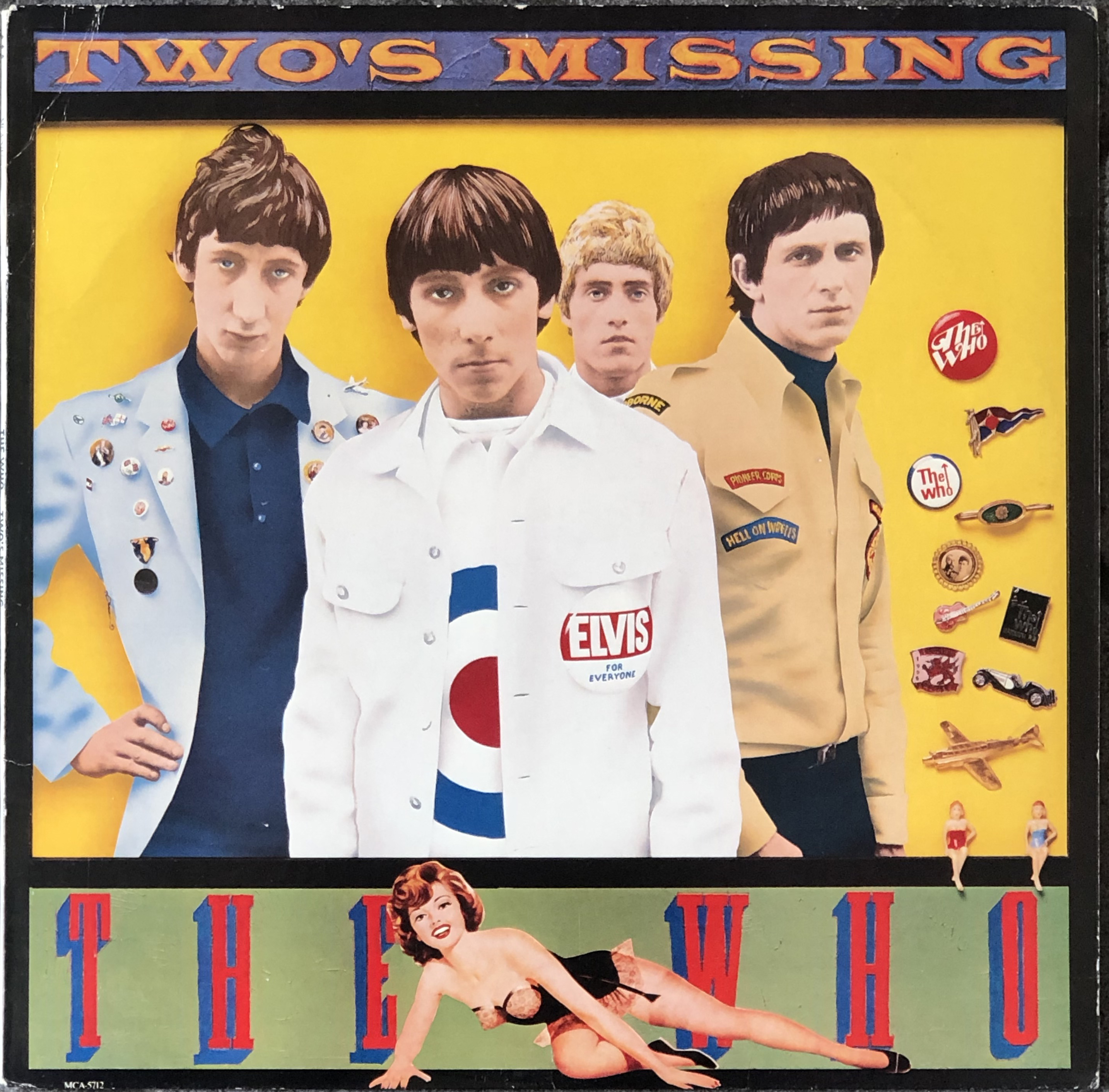
.Richard Evans (born 1945) is a designer who began his career with the legendary design group Hipgnosis before starting his own company. He has designed record covers for many bands including Robert Plant, Van Morrison and World Party. But he is best known for his covers for the Who and Pete Townshend, including “Who’s Missing”–with it’s nod to Peter Blake’s “Got a Girl” painting and its companion “Two’s Missing”

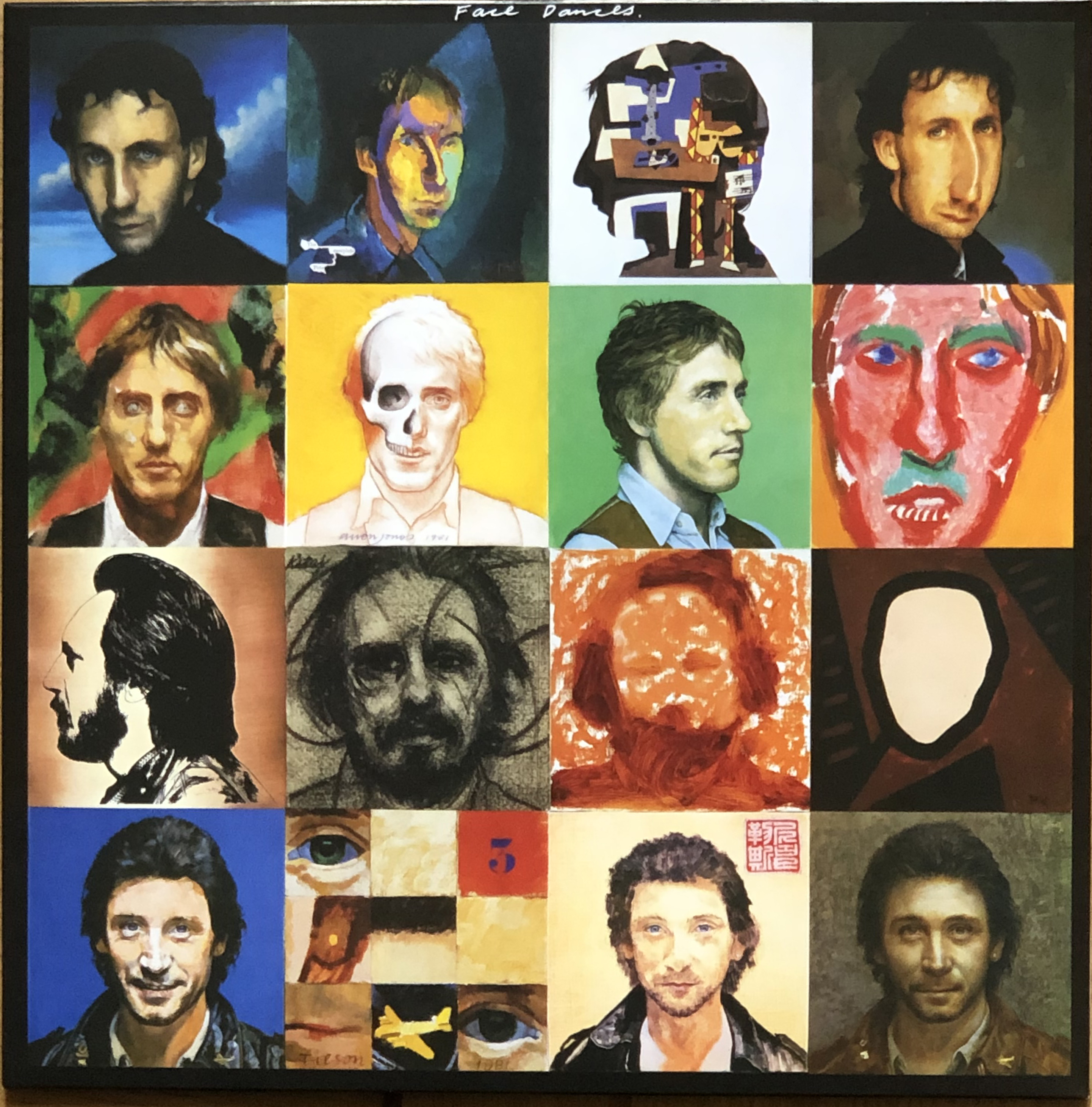
The first Who cover he worked on was their 1981 “Faces Dances” LP. This was the first Who album after Keith Moon’s death and the band had recruited former Small Faces drummer Kenney Jones to replace him. Pete Townshend met Peter Blake on the set of the television show “Ready, Steady, Go!” in 1965 and they became friends, which is how Townshend came to ask Blake to design the cover for what would be the Band’s nineth album. Evans also designed the cover for “Filling in the Gaps” the promotional album for “Fasce Dances”, a recording of Pete Townshend discussing the album.

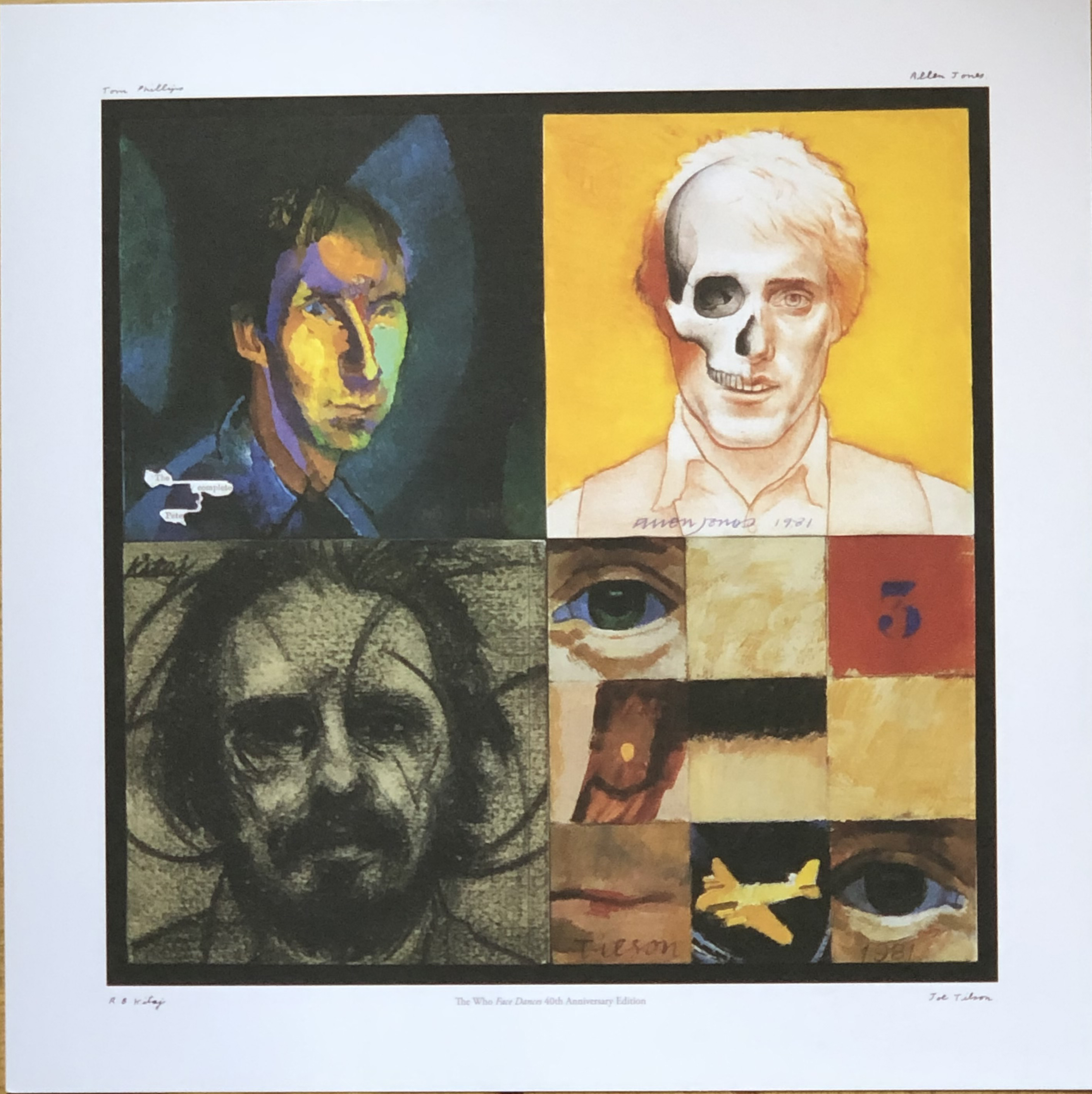
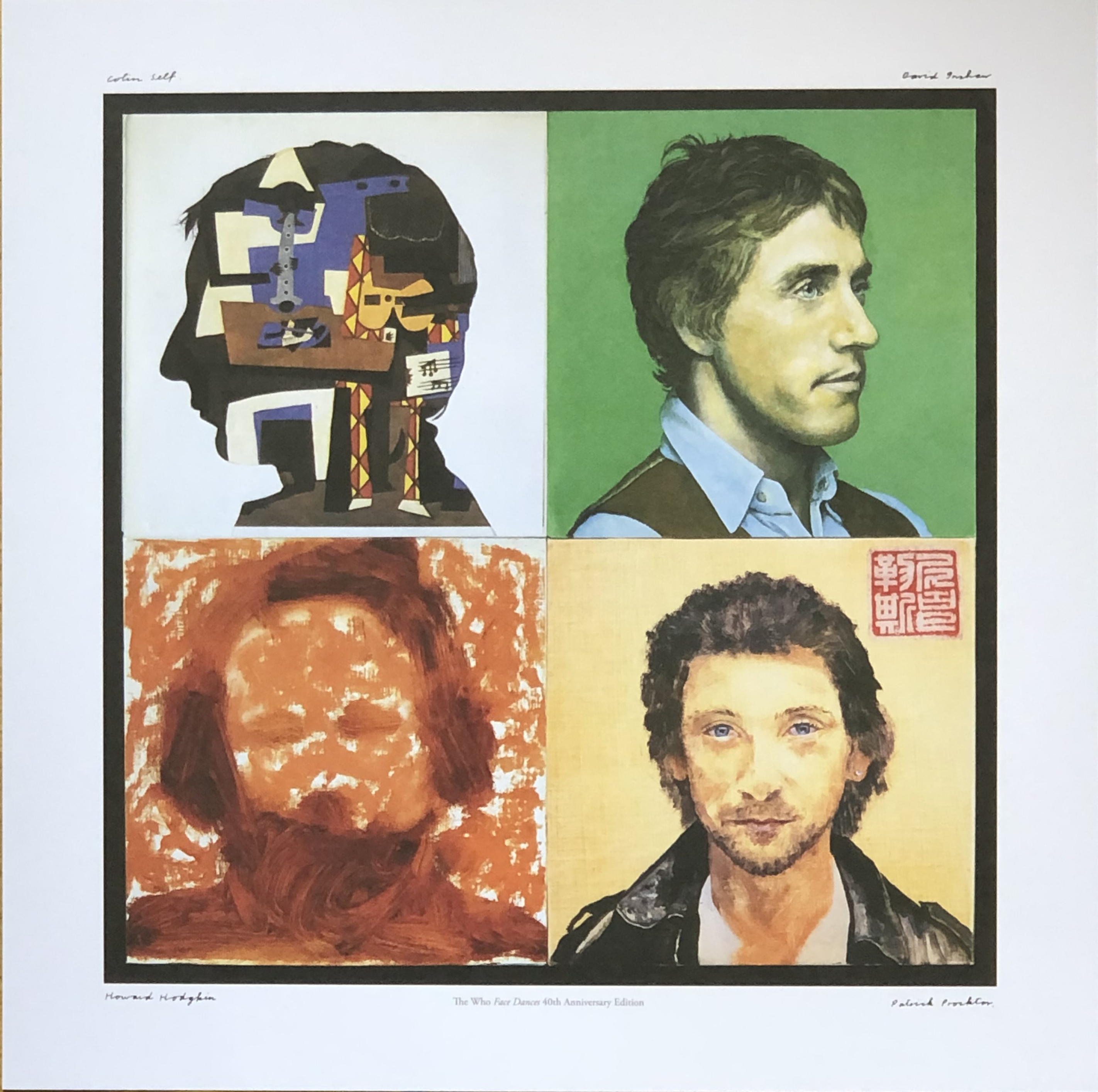
Blake’s four-by-four square layout with four individual portraits of the band members has become a classic cover. Blake got fifteen of his artist friends to each paint one band member.

 Gavin Cochrane took a photo of each member of the band, which the 16 artists used to paint on 6 in × 6 in (150 mm × 150 mm) canvases the portraits of each member of the band for the front cover , although it seems that Jo Tilson based his painting of Kenney on Blake’s portrait  rather than the photograph.

Gavin Cochrane’s photos of the Who members that the artists used to paiint the cover portraits.

Pete Townshend on the top row, painted by Bill Jacklin, Tom Phillips, Colin Self and Richard Hamilton.
Second row: Roger Daltrey by Michael Andrews, Allen Jones, David Inshaw and David Hockney.
Third row: John Entwistle painted by Clive Barker, R. B. Kitaj, Howard Hodgkin and Patrick Caulfield.
Bottom row: New member Kenney Jones painted by Peter Blake, Joe Tilson, Patrick Procktor, and David Tindle.

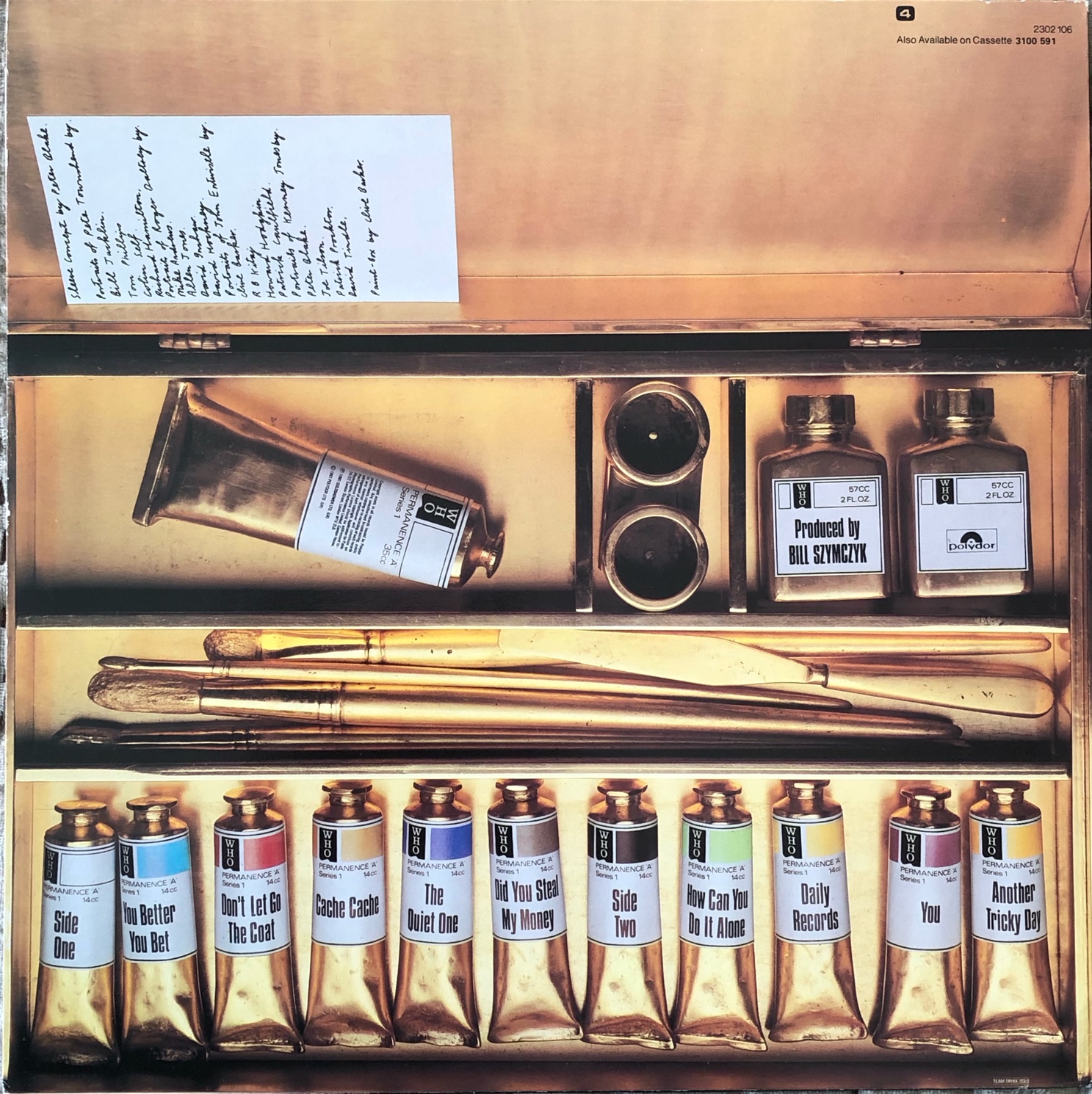
Richard Evans provided the graphic design of the back cover that featured Clive Barker’s 1967 sculpture of a gold-plated, bronze paintbox. Barker had been one of four pop artists shown in a joint exhibition at Robert “Groovy Bob” Fraser’s Duke Street gallery in 1967 together with Peter Blake, Jann Haworth and Colin Self. I suppose the paintbox was on show there and Blake acquired it. Evans had Blake write the portrait credits on a card and he designed the paint tubes creating a typeface reminiscent of the one Windsor & Newton used on their paint tubes. Once again, Gavin Cochrane photographed the paintbox at his studio with Blake and Evans in attendance.

The ”Face Dances” album has become a classic Who album and has been reissued several  times. The 2021 reissue included four prints of the cover portraits.


One of the limited edition prints.

The prints included in the 2021 re-issue of Face Dances.

A Valentine Lost: Peter Blake’s Pattern of Heartbreak.

When Sotheby’s offered Peter Blake’s painting “Valentine (for Pauline Boty)” for auction in 2019, they described the two artists as “inseparable.” The work sold for £287,500—a significant sum for what appeared to be a simple valentine. But this wasn’t just any love token. It was evidence of a relationship that would shape Blake’s emotional life and set a pattern of loss that would haunt him for decades.

Robert Fraser opened his famous art gallery at 69 Duke Street in London in 1962 and attracted the cream of pop art artists to the gallery’s roster: Richard Hamilton, Derek Boshier, Peter Blake, Colin Self and Jann Haworth. Fraser’s gallery attracted visitors from the world of film, music and art. He was the first to show American pop artists such as Andy Warhol and Jim Dine in London. The Beatles and the Rolling Stones were gallery regulars—Robert Fraser helped Paul McCartney build his art collection.

There was one English pop artist who wasn’t represented by Groovy Bob Fraser. She was Pauline Boty (1938-1966), a polymath: pop artist, poet, radio programme host, actress and dancer. You could have seen her bopping to the music on TV’s “Ready, Steady, Go”. She studied at the Royal College of Art from 1958-61 alongside Peter Blake, David Hockney and Derek Boshier.

Wikipedia describes her as “the heartbreaker of the sixties art scene. Talented and outspoken, she was loved by countless men…” Boty and Blake became inseparable. Between 1959-60, Blake painted a valentine for her, simply titled “Valentine (for Pauline Boty)”.

Peter Blake: Valentine (for Pauline Boty), 1959-60.

There’s Lewis Morley’s famous photograph of Pauline holding the Valentine painting.

Boty and Jann Haworth were the only two women among the pop artists at the time. Haworth, like Blake, was represented by Robert Fraser and had solo shows at his gallery as well as a joint exhibition with Peter Blake, Derek Boshier and Colin Self.But Boty’s romantic life was complicated. She was having an affair with TV director Philip Saville (who was already married) while involved with Blake. Then in June 1963, after a whirlwind ten-day romance, she married literary agent Clive Goodwin. Blake—and Saville—must have been devastated.

Blake’s response was swift. Just one month later, in July 1963, he married the other female pop artist, Jann Haworth, whom he had met at a party while she was a student at the Slade School of Art. Another whirlwind romance. The newlyweds immediately left for an extended honeymoon in California, where Jann’s father, Academy Award-winning art director Ted Haworth, lent them his Stingray sports car. They drove to Malibu listening to the Beach Boys, and Ted got Blake access to a film studio storeroom filled with props from the Elizabeth Taylor film Cleopatra. They were still in California in November when President Kennedy was assassinated.

Pauline Boty’s remarkable artistic and acting career ended abruptly when, in 1965 while pregnant, she developed a malignant tumour. Boty refused abortion and treatment as it would harm the foetus. Her daughter Katy was born on 12th February 1966, and Pauline died on 1st July, aged only 28. The “Valentine” painting passed to her husband Clive Goodwin until his death in 1977. It was later acquired by art collector Muriel Wilson (1933-2018), who donated it to the Pallant House Gallery in Chichester along with many other works from her collection.

Blake and Haworth remained together for sixteen years, founding the Brotherhood of Ruralists in 1975. But in 1979, history repeated itself. Haworth met author Richard Severy and left Blake. Devastated, Blake left Somerset and the Ruralists and returned to London. He was reported to have been unable to work for almost a year after this separation—a testament to how deeply the loss affected him.

When the Valentine painting came up for sale at Sotheby’s in 2019, it was featured in an article titled “Unrequited Love and Peter Blake’s Pop Art Valentine.” But the image had clearly stayed with Blake. Sixty-five years after its creation, it reappeared on the cover of Band Aid 40’s 2024 single “Do They Know It’s Christmas?”—suggesting that his feelings for Boty, and that moment in time, had never entirely left him.

There’s another possible legacy of Blake’s relationship with Boty that art historians may have overlooked. Boty was herself an accomplished collage artist. While the textbooks credit Joseph Cornell and Kurt Schwitters as Blake’s influences in collage, perhaps the woman who was ‘inseparable’ from him during those formative years played a more significant role than history has acknowledged. It wouldn’t be the first time a male artist’s female partner influenced his work without receiving credit.

Blake met artist Chrissy Wilson in 1980, soon after returning to London, and they married in 1987 after his divorce from Haworth was finalized in 1981. They are still together after more than 40 years—perhaps Blake had finally found lasting love.

Haworth and Severy remained together until Severy’s death..

The Fall — I’m Frank. A Peter Blake Cover I Missed.


Once again a record cover turns up to prove that my previously “complete” collection of an artist’s record cover art isn’t complete.

I’m trying to write a discography of Sir Peter Blake’s record cover art and had produced a first draft when it occurred to me to do a search of Discogs’s database. Discogs logs credits to many (most?) of the records, CDs and cassettes catalogued there and users can easily choose to search for individual musicians, record producers or, indeed, graphic artists. My rather belated search turned up a surprise:

The Fall’s I’m Frank promotional 12″.

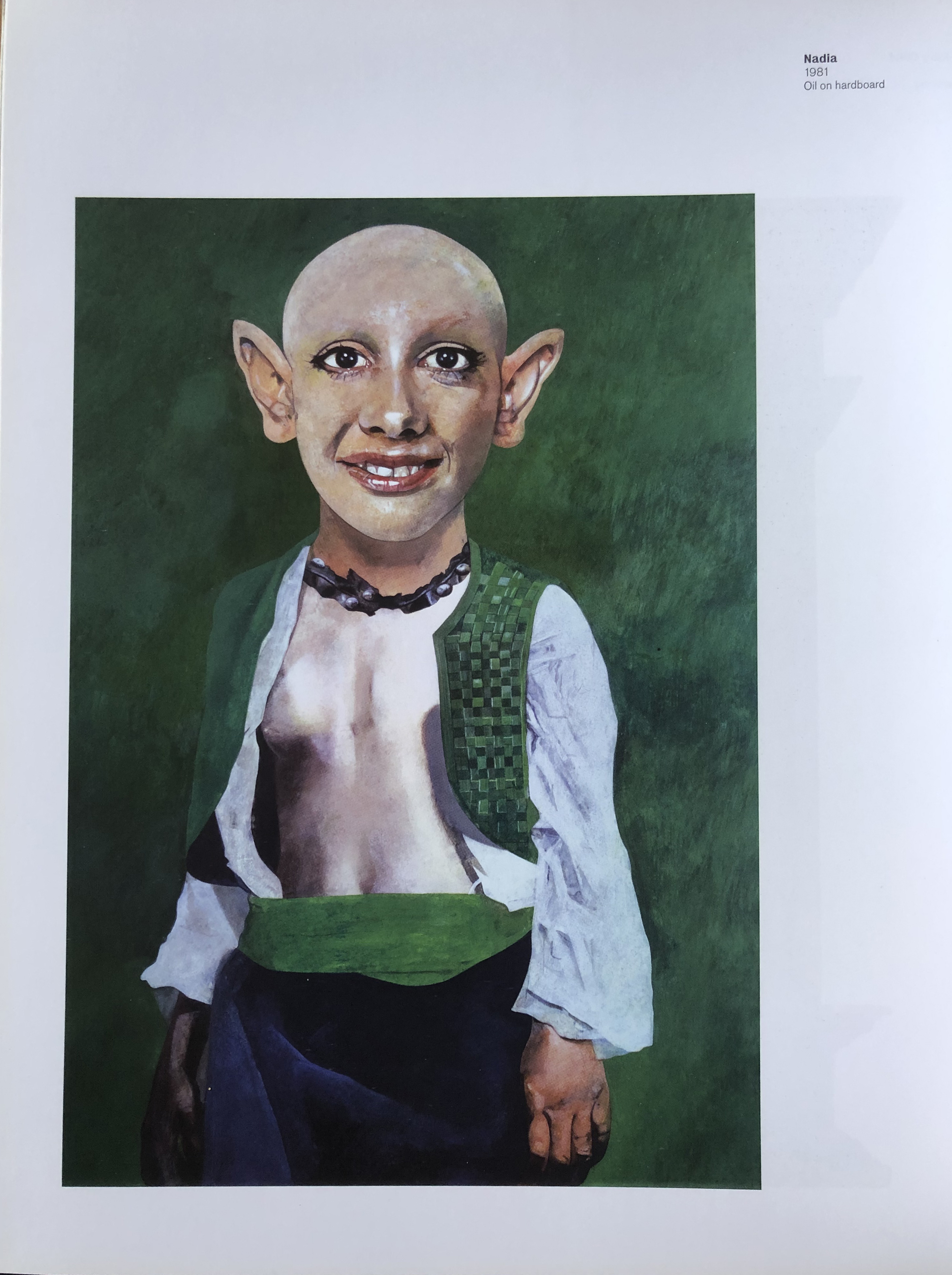
I had never seen this cover before but it certainly looks like a Peter Blake painting and the rear cover gives Peter Blake the credit. So I sent an email to Sir Peter’s gallery, the Waddington Custot Gallery in London, to enquire about the source of the painting. Unfortunately they had not handled a painting like this but assured me they would ask Sir Peter if and when an opportunity arose. I’m still waiting for a possible reply to that. It turns out that this is painting by Blake called Nadia, oil on hardboard (29.2 x 21.6 cm / 11.5 x 8.5 inches), painted in 1981. It was exhibited in the Peter Blake retrospective at the Tate Liverpool in 2007 and there’s a full page picture of Nadia on page 120 of the exhibition catalogue Peter Blake : a Retrospective, published by the Tate.

Peter Blake’s Nadia. From the Peter Blake: a Retrospective catalogue.

The Nadia painting is in the collection of the Rhode Island School of Design (RISD) Museum in Providence, Rhode Island, U.S.A., one of three paintings by Peter Blake in the museum’s collection. It was previously in the Richard Brown Baker collection of Postwar Art and was donated to the RISD in 1995 — thus after it was used on this record sleeve.

I just wonder how The Fall came to choose this as their record cover art. They do not credit the RISD Museum.

This U.S., 1990, four-track, promotional EP seems quite rare. I can’t quite understand how it managed to slip under my radar for so long, but I managed to find one on Discogs and it arrived this week (23 rd September) to “complete” my Peter Blake collection. I now eagerly await the next Peter Blake cover I have never seen. It’s bound to turn up soon.

“Sgt. Pepper’s Lonely Hearts Club Band” Revisited.

I described the 50th anniversary box set of “Sgt. Peppers Lonely Hearts Club Band” in a post in July 2017. Way back in 2008–2009, when I was preparing an exhibition of Sir Peter Blake’s record cover art, I felt that Jann Haworth, his former wife and co-designer of Blake’s most famous cover, had almost been forgotten. Whenever one reads about Peter Blake, in articles or exhibition catalogues, he is invariably introduced as “the designer of the Sgt. Pepper cover”. Indeed, he has said that this is “an albatross sitting on his shoulder”. So I contacted Jann and she was most helpful providing details of the construction of the Pepper set up and even sent pictures. She also agreed to sign my copy  original “Sgt. Pepper’s Lonely Hearts Club Band” LP that Peter Blake had previously signed.

We discussed the gender and racial imbalances of the figures represented on the cover and Jann told me this was something she had been thinking about and tried to redress in a “Pepper” mural in her home town of Salt Lake City, Utah, U.S.A.

SLC Pepper
Jann Haworth’s 2004 mural “SLC Pepper” in Salt Lake City (SLC).

In late 2018 I bought a copy of the 50th anniversary “Sgt. Pepper” LP signed by Sir Peter Blake at a gallery in Liverpool. I thought it would be cool to have this anniversary album signed by both Blake and Haworth, so I contacted her again. She was more than happy to help out and I didn’t waste a moment before posting the record and a couple of other “Pepper” covers to the address I had been given ten years before. I should have checked Jann’s address before posting as it transpired she had moved from the old address. Despite her efforts to trace the parcel it was never delivered to her but found its way back to me in January 2019. So, I repackaged the covers and, after confirming Jann’s address, sent them again.

Jann was busy painting two new murals and had a deadline to keep, so the covers sat with her until the end of March. They arrived in mid April. Jann had signed nine items:
1. The 2017 Pepper anniversary LP signed previously by Peter Blake,
2. The Album cover from the 2017 box set containing four CDs, a DVD & a Blu-Ray disc
3. All four of the CD covers from the above,
4. The stage set from the Japanese 50th anniversary box set, and
5. The cover of an old 1967 copy of “Sgt. Pepper”.
6. The insert from the above.

Pepper-HaworthBlake-50th cropped
the 2017 LP cover signed by both Jann Haworth and Sir Peter Blake.

In the package was a handwritten letter describing the soft figures she made for the Pepper cover. She had made the Shirley Temple doll in 1965 or 1966 and, on the cover, it was sitting in the lap of an old lady. I had never really noticed the old lady–and I suspect few other people had either. The old lady, Jann told me,was modelled on a photo of her great grandmother, a seamstress who had been widowed early and had to raise two children on her own.

Since the arrival of the signed records Jann has kept me informed of some of her current projects, including a joint “Work in Progress” mural with her daughter Liberty Blake. This mural is in seven panels and has been shown in several museums.

banner-4ftx8ft-v
Jann Haworth’s and Liberty Blake’s “Work in Progress” mural.

I recently asked her if she had been involve in any other designs for record covers and it transpires that she has produced one other–a limited edition artwork.

Haworth Ephgrave cover
Jann Haworth’s & Joe Ephgrave’s 2017 cover for a cardboard record.

Jann told me of her work with Joe Ephgrave, the fairground painter who painted the drum om the “Sgt. Pepper” cover. He painted different versions of the Pepper title on each side of the drum. The one we are all familiar with, and another version that he considered “more modern”, that I had not seen until now.

fullsizeoutput_5c4f
Joe Ephgrave’s alternate version of the “Sgt. Pepper” drum.

Joe was paid £25 for the drum painting and disappeared soon afterwards. Internet searches have failed to find any information about him–and there are suggestions that he never existed! However, Jann has scotched that rumour. She has taken Joe’s painting of a tiger and produced a record cover of sorts. In July 2008 the “Pepper” drum was sold at Christie’s for £541,250 ($1.07 million).

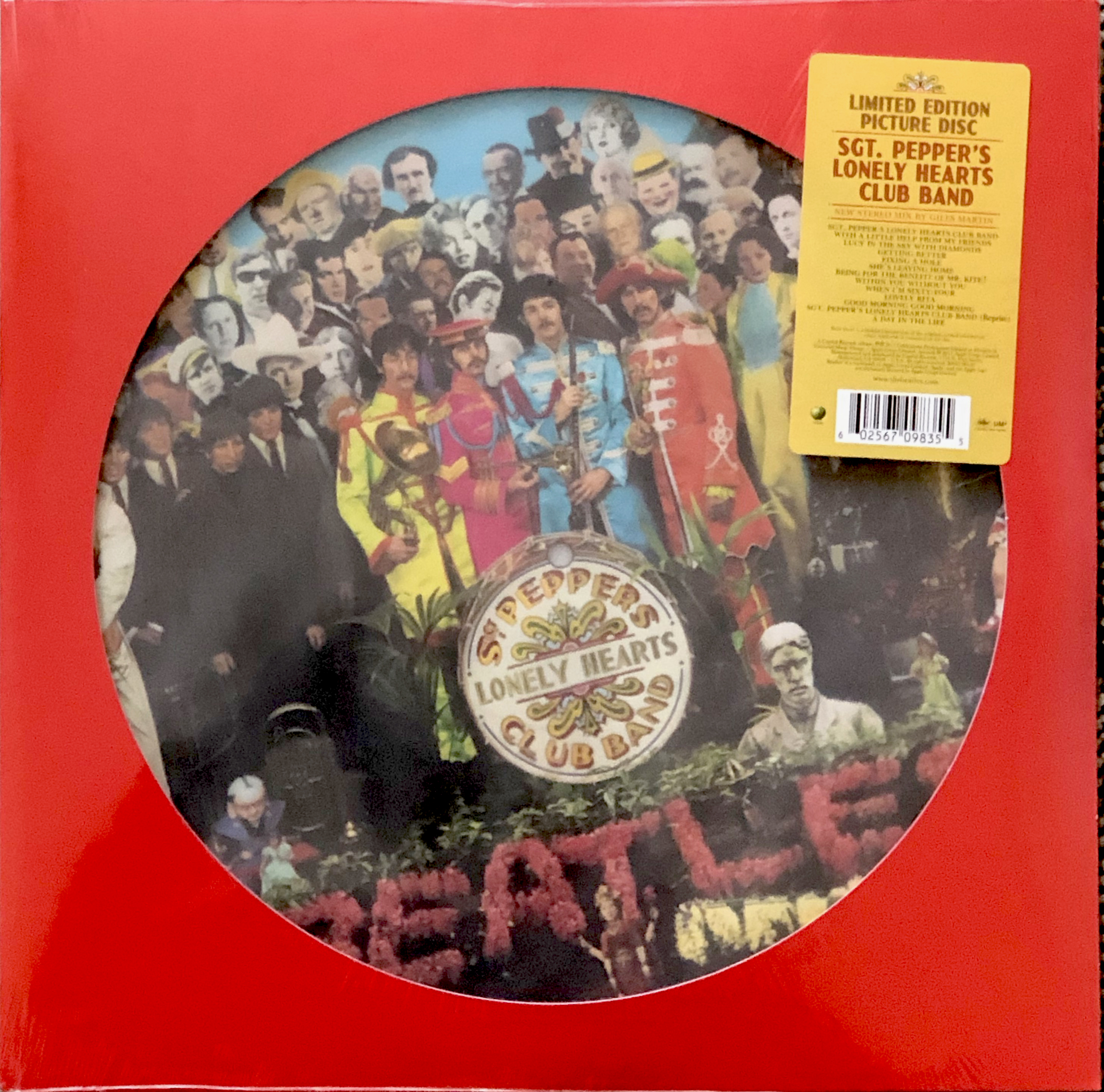
To almost round off my collection of the 50th anniversary issues of “Sgt. Pepper’s Lonely Hearts Club Band” releases I added the limited edition picture disc to my collection.

SgtPLHCB-Pic-fr
The US limited edition picture disc.

The only version of the 50th anniversary issues of “Sgt. Pepper’s Lonely Hearts Club Band” releases I don’t yet have is the double LP version. Perhaps I’ll try to get that some day.


Eric Clapton’s “24 Nights” Revisited

I can’t help it but I’ve sort of become obsessed with this recording and its many versions. I must apologise to Eric Clapton‘s myriad of fans, but my interest is not in the music but in Peter Blake‘s cover art. I have described this in a previous post.

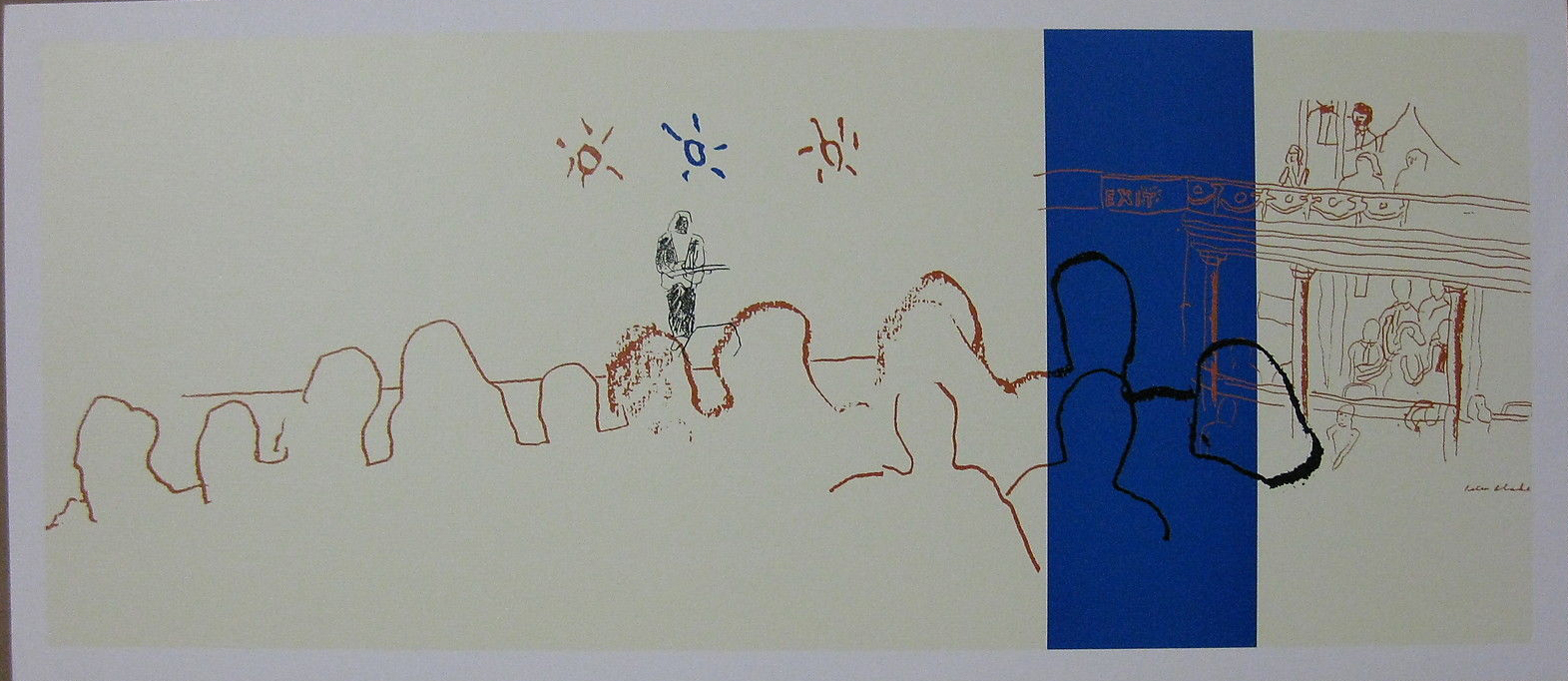
Eric Clapton performed a total of 42 shows at London’s Royal Albert Hall in 1990 and 1991. All were recorded but Clapton was not satisfied with the 1990 concerts and “24 Nights” included recordings from various nights between 5th February and 9th March (the 24 nights in the record’s title). Its primary release form was a double CD, released on 8th October 1991, just seven months after Eric Clapton concluded the 24 shows. The album was simultaneously released on double LP and double cassette–both these being pressed in Germany.Warner Brothers Records also produced a 73 x 31 cm promotional lithograph with Peter Blake’s drawings from the “24 Nights” sessions.
24Nights-promo poster

Perhaps it is important to add that while Peter Blake did the drawings used on the cover of the album, the design group Wherefore Art (David Costa) were responsible for the final design/layout of the cover art.

I also posted a description of Genesis Publication’s boxed set “24 Nights – The Limited Edition: The Music of Eric Clapton-The Drawings of Peter Blake” published in 1991 and mentioned how this project led to a long-term friendship between musician and artist that has resulted in several more record covers. I have also just found out that David Costa‘s Wherefore Art design bureau assisted Genesis Publications in the design of the limited edition box set of “24 Nights“.
24_nights_main

My collection includes the double LP and a couple of singles from the album as well as the Genesis Publications’ Limited Edition. In 2009 I curated an exhibition of Peter Blake‘s record cover art at Piteå Museum, produced in association with Jan Wimander and Piteå Dansar och Ler festival. Sometime in the months preceding the opening of the exhibition I came across thirteen prints of drawings by Peter Blake that were obviously related to the “24 Nights” release, but I had no idea how, or where they came from.

Having only bought the Genesis Publications’ version in February 2016, I could check the prints against the pages in the Scrapbook of Peter Blake‘s drawings and photographs (by Peter Blake, Graham Salter and Brian Roylance) in the set. My thirteen prints were single-sided and were copies of pages in the “Scrapbook“. Even the paper quality resembled that in the book. However, all the Scrapbook‘s pages were printed on both sides, so my prints could not have been cut out of one of the books.

I have not been able to find out any more about the prints, or where they came from, but they make an interesting addition to my Peter Blake collection.

The Genesis Publications limited edition box also contained another book “Commentary” by Derek Taylor, a pack of memorabilia (plectra, guitar strings , badge, backstage pass etc.) and a folder with two CDs of the “24 Nights” recordings including three extra tracks– ‘No Alibis‘, ‘I Shot the Sheriff‘, ‘Layla’ – orchestra introduction’— purported not to be available elsewhere.

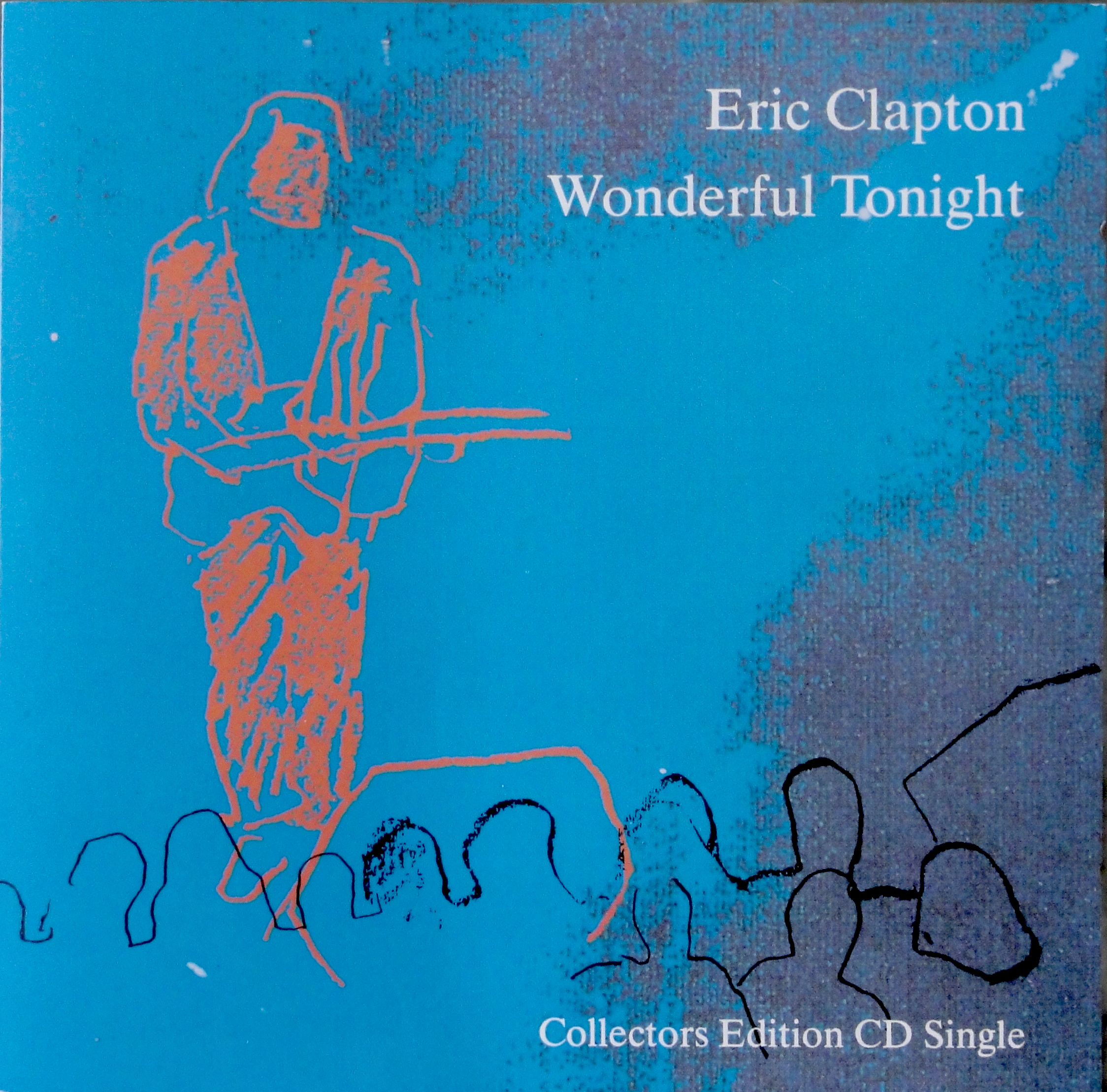
In my search for more record covers with Peter Blake‘s art I discovered that Reprise Records, to whom Clapton was under contract, had released a two-track 7″single from the “24 Nights” album (“Wonderful Tonight/Edge of Darkness“) with cover art by Peter Blake. A few months ago I stumbled across a six-track, “collectors edition” CD EP  “Wonderful Tonight” that I had not heard of previously that had the same cover art as the 7″ single. The remaining tracks on the CD were: “No Alibis”, “I Shot the Sheriff”, “‘Layla’ – orchestra introduction” and “Cocaine” and a second version of “Wonderful Tonight”— all from the “24 Nights” sessions! Thus it was possible for collectors to obtain the three, so called “exclusive” tracks from the Box set for a considerably more modest price.

Wonderful Tonight Collectors CD-fr
The cover of the Collectors Edition CD EP of “Wonderful Tonight”.

Just as another piece of information, Clapton had released a version of “No Alibis” recorded on his “Journeyman” tour on a single in March 1990–before his first series of Albert Hall concerts.

And, then there were two bootleg CDs of recordings from the “24 Nights” sessions. Beano records released a CD of the 5th February 1991 concert entitled “24 Nights-First Night, 5th February 1991” and another CD was issued of the fourth night’s concert at which George Harrison had been guest artist. This was a CD-ROM with no record company identified.

I think this just about exhausts what I have been able to find out about the recordings of the “24 Nights” album. I think I can now move on.

Rare Oasis “Stop the Clocks” Memorabilia.

When Noel Gallagher was planning Oasis‘s retrospective album “Stop the Clocks” in 2006 he wanted Peter Blake to design the cover. The story that I have heard is that Peter Blake allowed Noel to select items from Peter‘s collection to fill Blake‘s Blue Cupboard–an artwork that Blake had created in 1959. Blake then placed other objects, including an antique dartboard, beside the open cupboard.

StopTheClocks-LP
The front cover of Oasis’s “Stop the Clocks” album with two dartboards behind the table on the right.

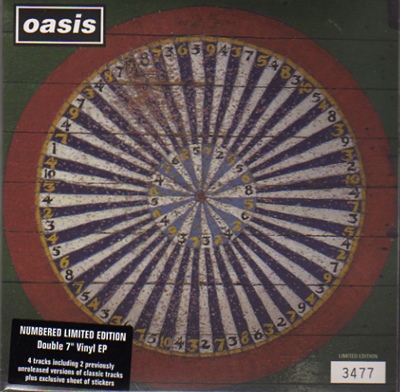
Blake designed the cover slipcase and the inner sleeves of the tripple LP set as well as using the dartboard as the cover image of the double EP also entitled “Stop the Clocks“.

OASIS-7inch
The cover of the double 7″ EP “Stop the Clocks”. This was a numbered, limited edition of 5000.

What I didn’t know until very recently (June 2016) that Oasis‘s record company (Sony Music) had produced a promotional item of the dartboard with three darts with tailfeathers bearing the Oasis logo. This would be a great addition to my Peter Blake collection.
Promo Dartboard.jpg

The dartboard is obviously a facsimile of Peter Blake‘s originals. This would look great displayed beside the record covers!

Jack O’Reilly – A Rare LP cover and its relevance to Peter Blake’s Record Cover Art

Well, well, well! This is a surprise! A record on ventriloquism! What on earth is it doing in my record collection?

Jack O'Reilly-fr

As anyone can see the cover picture is a pastiche of Peter Blake‘s and Jann Haworth‘s “Sgt Pepper’s Lonely Hearts Club Band” cover, but that’s not why I bought it. I really love the “drum” with the title “Constable O’Rourke’s Wooden Hearts Club Band“! That adds something extra that is not often found on other pastiches. And there, just right of centre is Jack himself; in front of just over forty ventriloquists’ dummies.

The story begins with Chris Jagger‘s 1974 album “The Adventures if Valentine Vox the Ventriloquist“.

Adventures
Chris Jagger’s “The Adventures of Valentine Vox the Ventriloquist”. Asylum 7E-1009, 1974.

I started doing some research on Peter Blake‘s record covers and mailed Chris Jagger for details about how this LP cover came about. He told me that he had come across the book “The Life and Adventures of Valentine Vox”,  by Henry Cockton (1807-1853). The book was originally published in 1840 in installments and in 1842 in a single volume with sixty illustrations by Onwhyn) and Jagger liked the title and decided to use it for his second album. Peter Blake apparently supplied the ventriloquist’s dummy. So, I got hold of a late 19th Century copy of the book, unfortunately though not the illustrated version.

ValentineVox_cover

Then curiosity took hold. I found out that there is (or was) a ventriloquist by the name of Valentine Vox and started to search for information about him, but turned up little. But my searches did find a museum of ventriloquism at Vent Haven, Kentucky, and I contacted the curator Lisa Sweasy for information. She told be that at least six ventriloquists have used the stage name Valentine Vox, or variations on it, such as Valentine Fox or Valentine Faux and wondered which I was interested in. Of course I had no idea! So I suggested the most recent. She informed me of a Jack Riley that used the used the Valentine Vox alias and told me that he had written a book on ventriloquism called “I Can See Your Lips Moving–the History and Art of Ventriloquism“, published in 1993 under that name. However, Riley had also appeared using the stage name Jack O’Reilly and had recorded  the LP entitled “You Can Be a Ventriloquist“, in 1969. It has since been re-issued as a CD.

Now to find out more about the mysterious Jack Riley. Apparently, he was born in England in 1939. He moved to America and–at some point–to Toronto, Canada, where the “You Can Be a Ventriloquist” was released. In 2003 he married fellow ventriloquist Eyvonne Carter. That’s what I have been able to find out so far.

And, before anyone starts to ask–No, I’m not going to learn to be a ventriloquist. But researching a record cover can turn up some weird and wonderful stuff.