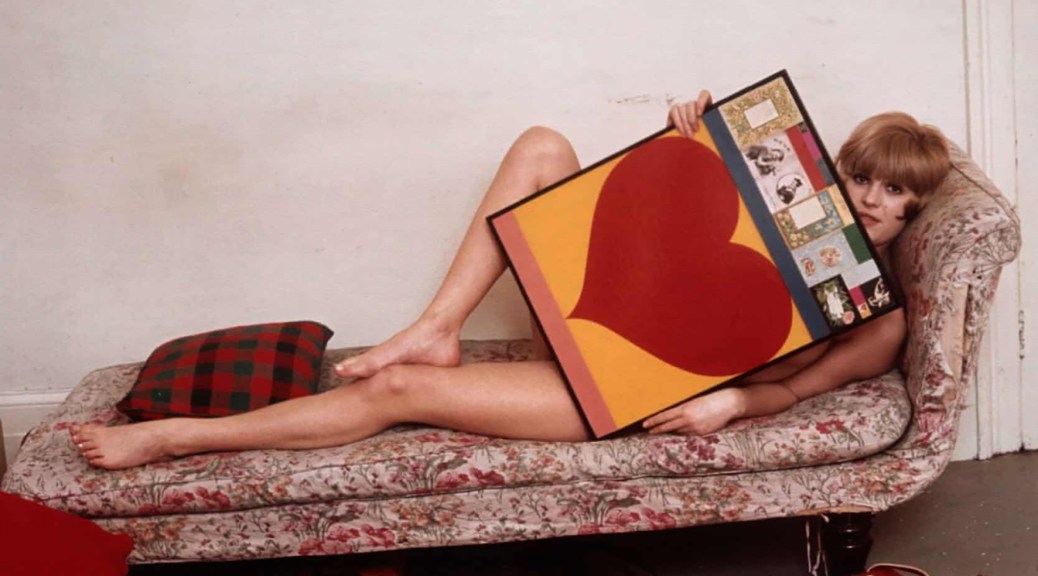
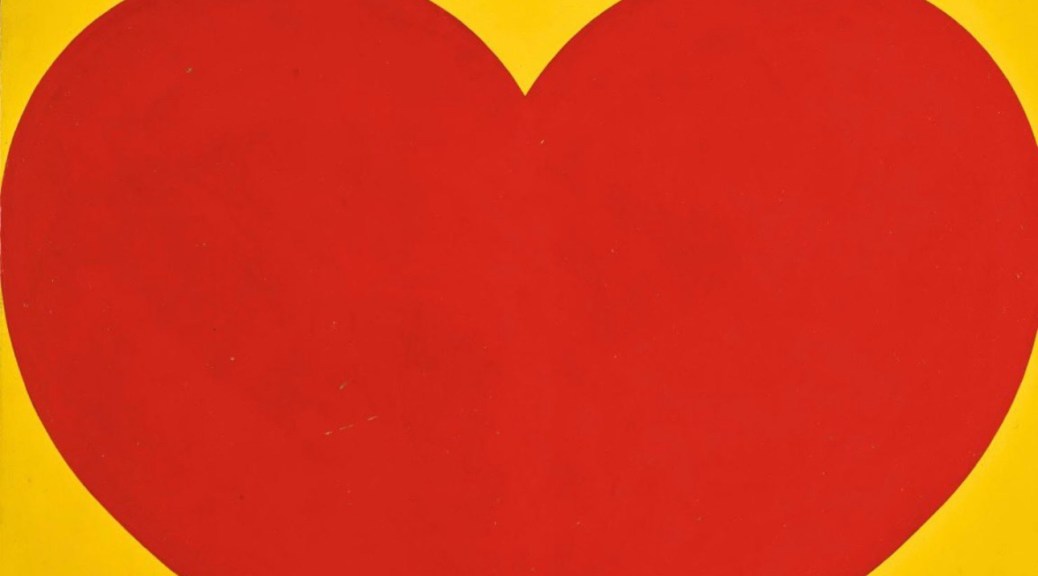
Pauline Boty (1938 – 1966) was a founder member of the British school of Pop Art. She was a painter, collagist, poet, model, dancer and actress. I came across her name when researching Peter Blake’s record cover art and found that Blake had recycled his 1959-60 painting “Valentine (for Pauline Boty)” for the cover of Band Aid’s 40th anniversary release of “Do They Know It’s Christmas?” with just a few changes in the collaged upper panel.
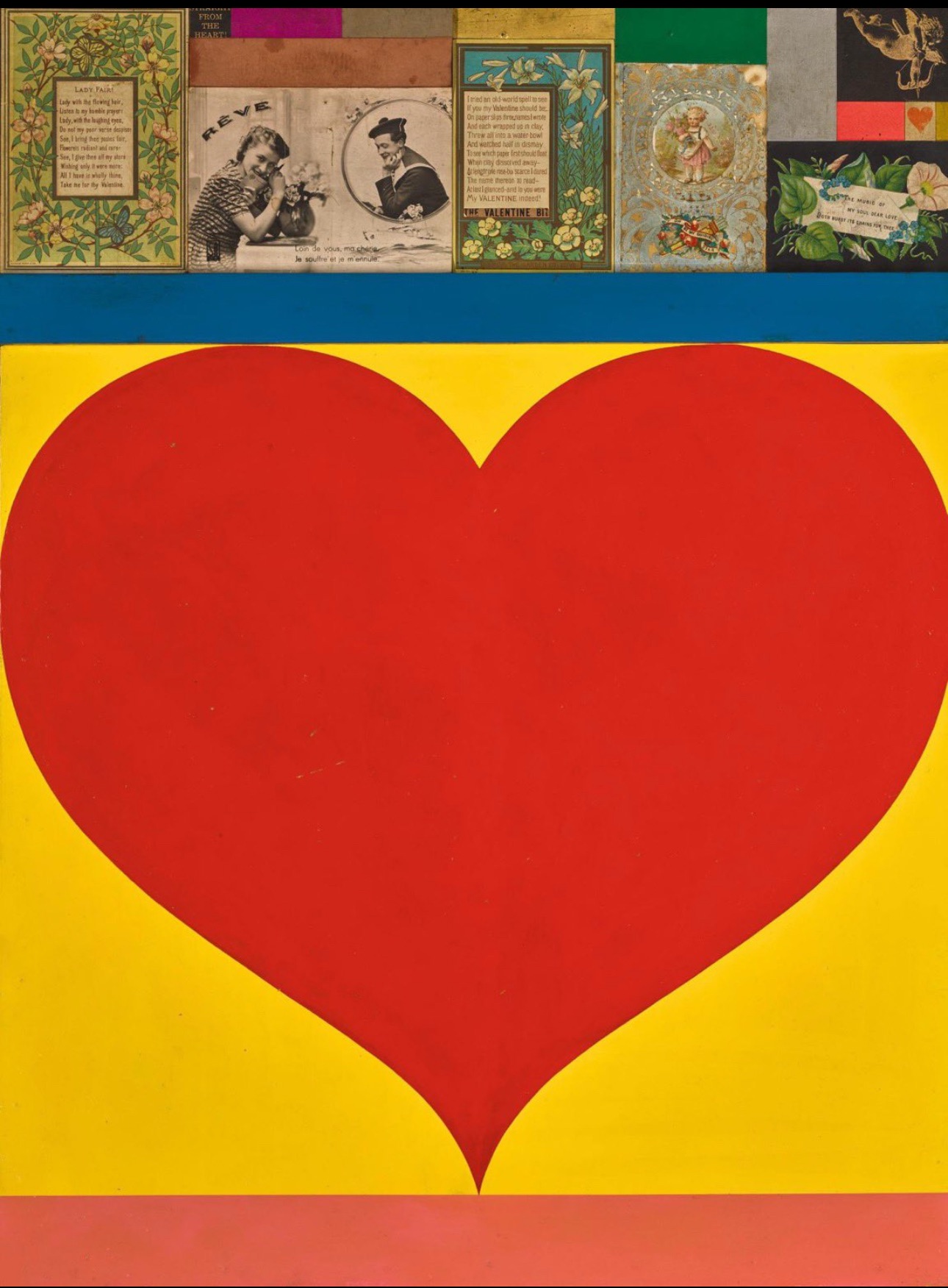
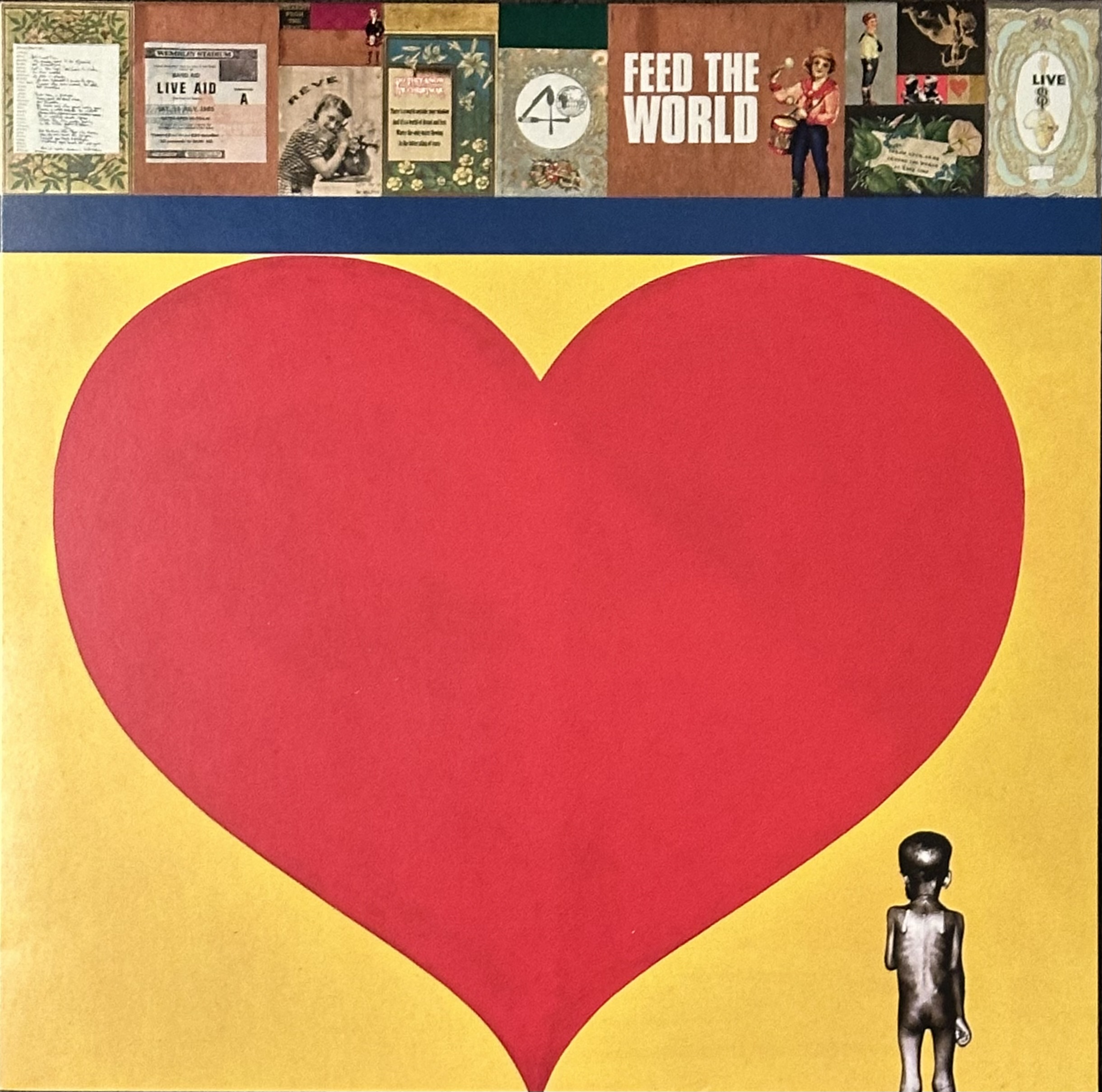
Peter Blake’s “Valentine (for Pauline Boty)” and the cover of Band Aid’s 40th anniversary release
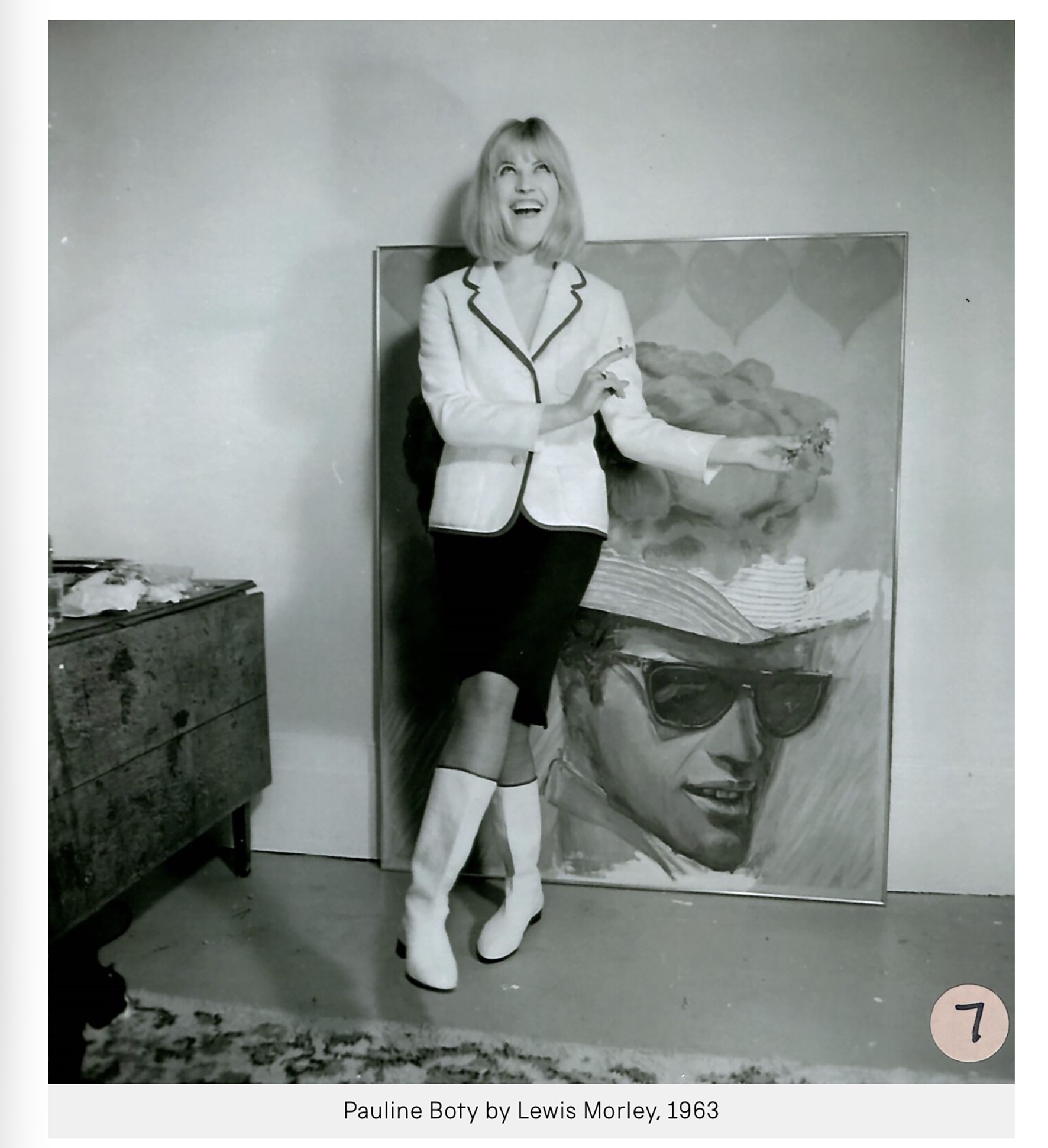
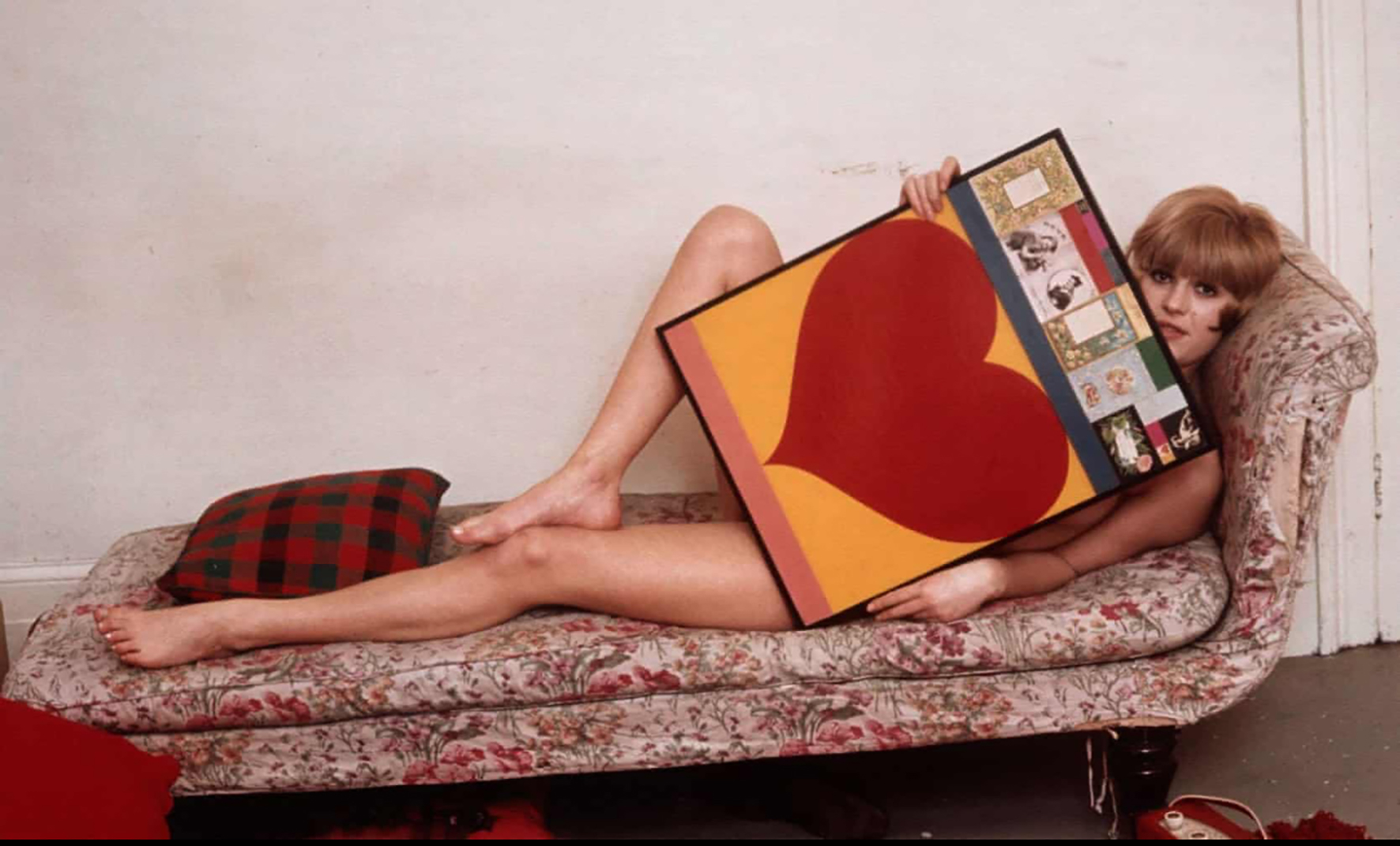
I then found Lewis Morley’s portrait of Pauline holding the painting.
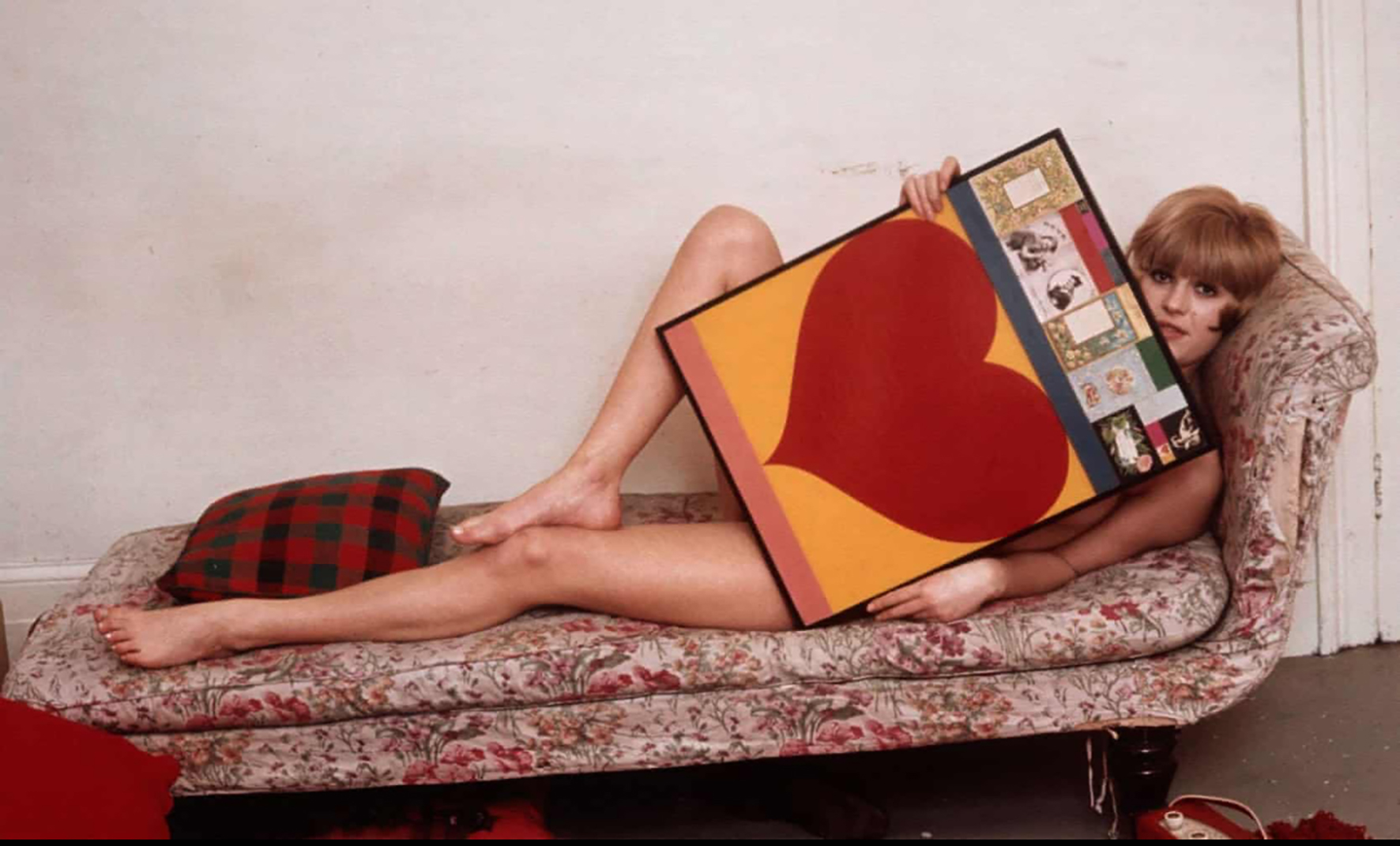
This photograph of Boty is striking for several reasons. First because she was free-spirited enough to allow herself to be photographed nude and also because in most other portraits she is shown with her own paintings. In this picture she holds Blake’s “Valentine”.
Boty’s art was all but forgotten until a retrospective in 1993 when David Mellor discovered a collection of her paintings on Pauline’s brother’s farm and showed them in a major show at The Barbican called “The Sixties Art Scene in London”. Art historian Sue Tate started researching Boty’s life and work and helped curate the 1998 joint exhibition at London’s Whitford Fine Art and Mayor Galleries called “The Only Blonde in the World” and the Tate Gallery bought the eponymous painting .
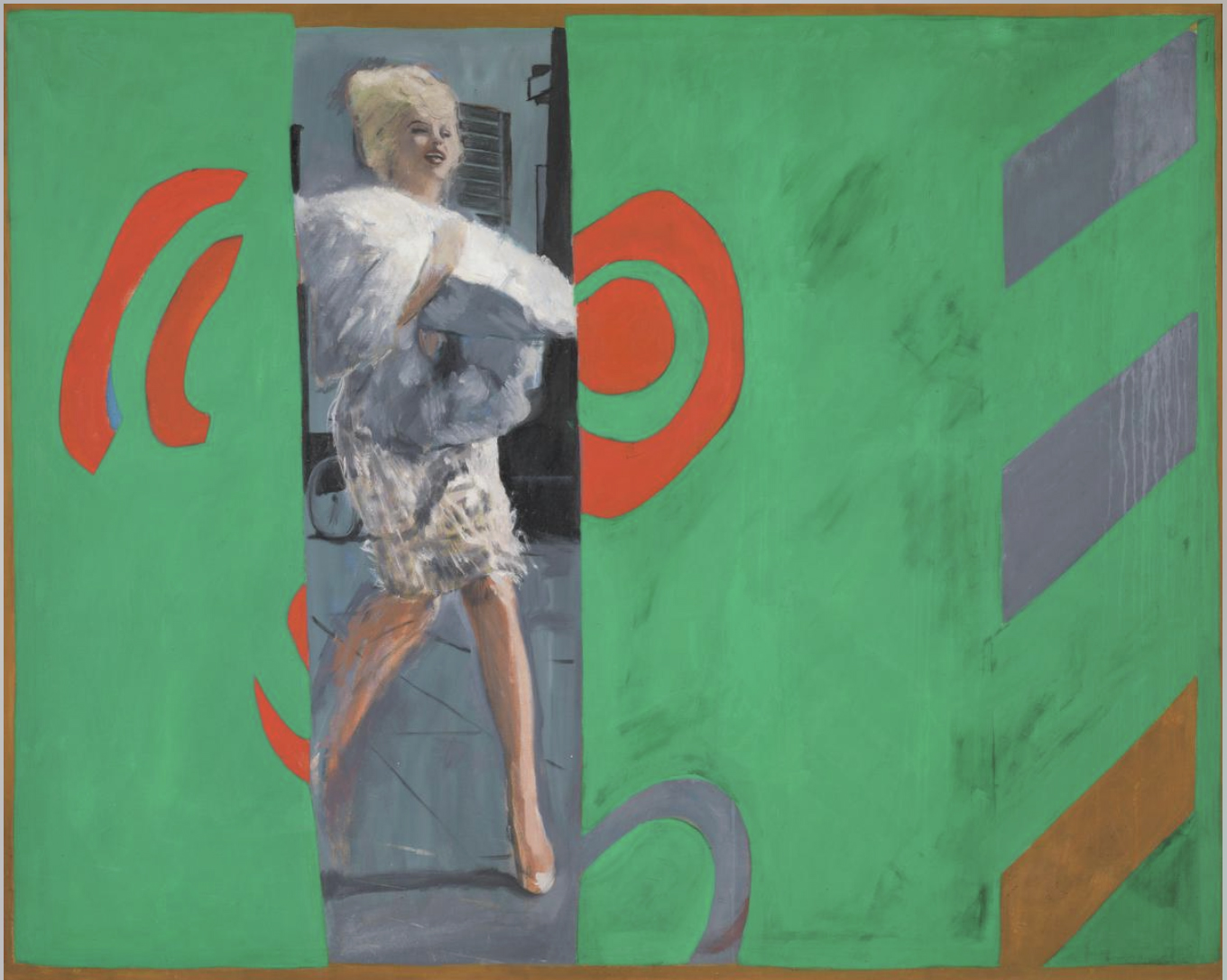
The Wolverhampton Art Gallery bought Boty’s painting “Color Her Gone”[1] in 2012 and in 2013 invited Tate to curate a major retrospective of her work “Pauline Boty: Pop Artist and Woman”. Tate wrote an illustrated biography of Boty to accompany the exhibition which travelled to the Pallant House Gallery and to a museum in Poland.
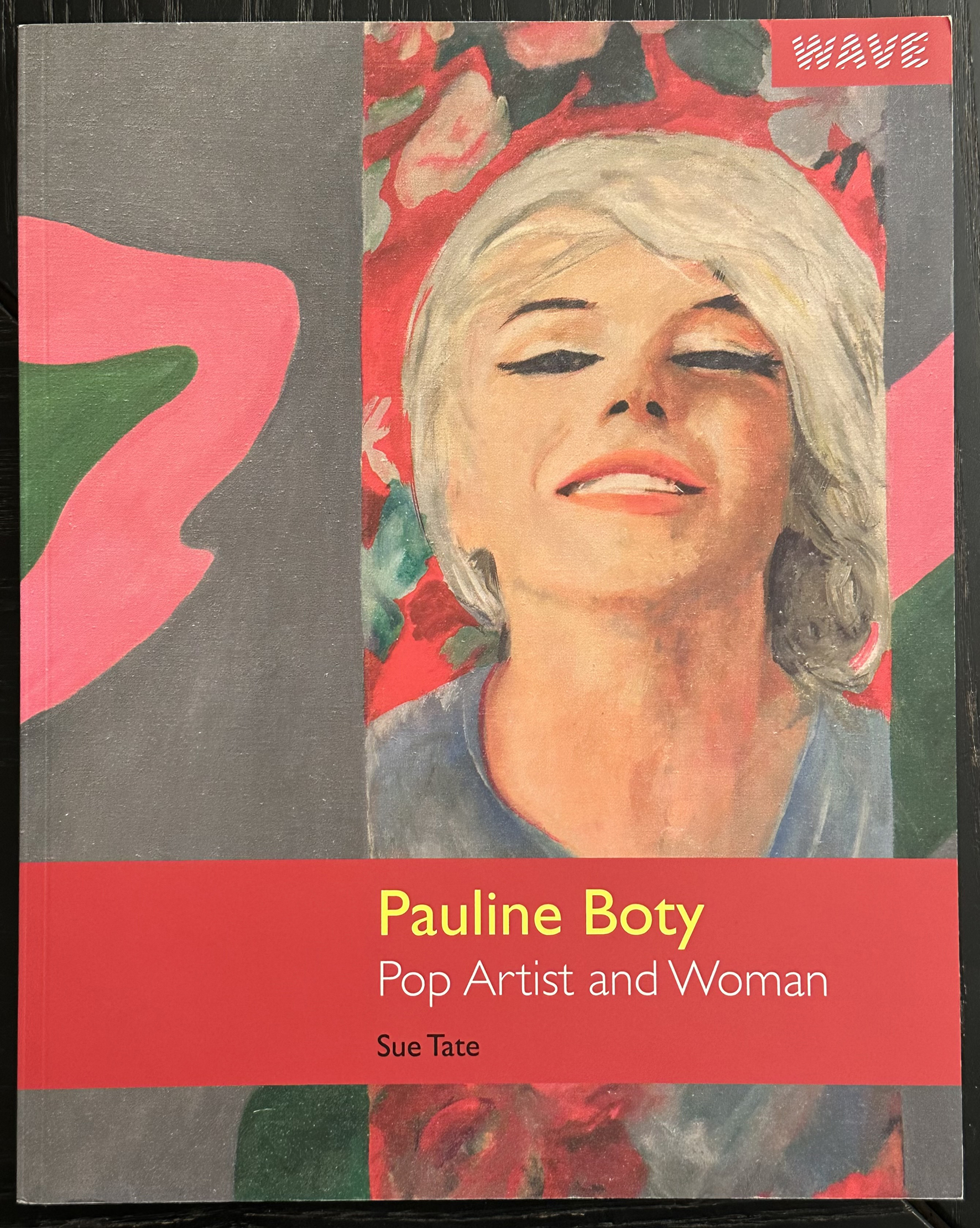
Sue Tate’s book cover
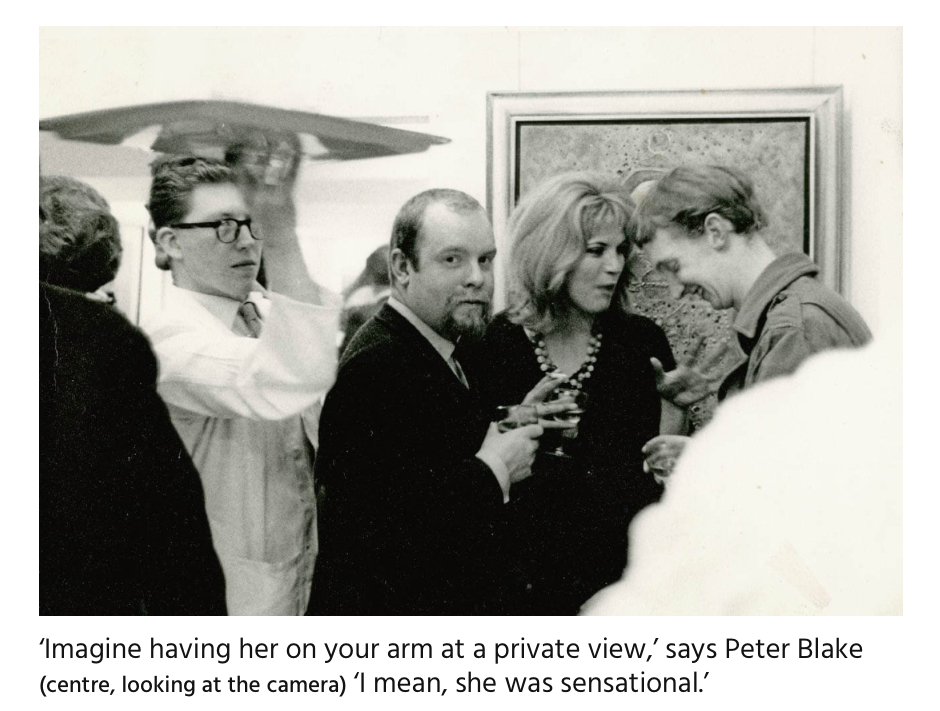
Peter Blake’s “Valentine” painting was sold at Sotheby’s in 2019, and the auction catalogue described how the painting came about. Boty met Peter Blake while she was a student at the Royal College of Art and became his girlfriend while having relationships with other men. She had a long-term relationship with the television producer Philip Saville, who would have an important role in her life and career, providing acting opportunities and introducing her to her future husband Clive Goodwin, who she helped start his literary agency. Blake was besotted with Boty, who, unfortunately for him, wasn’t so romantically engaged. However, he gave her the “Valentine” as a demonstration of his affection and it was obviously important for her as she allowed herself to be photographed holding it. The only photograph of Pauline with a painting that wasn’t one of her own.
The Gazelli Art House organised a further Boty retrospective in 2023 called “Pauline Boty: A Portrait” that coincided with the publication of Marc Kristal’s major Boty biography “Pauline Boty: British Pop Art’s Sole Sister”. Both Tate’s 2013 and Kristal’s more recent volume tell of Boty’s whirlwind ten-day romance with Clive Goodwin leading up to their wedding. The ten-day romance must, however, have been something of a myth despite being proposed by Pauline herself in her interview with her friend Nell Dunn.[2]
Boty told Nell Dunn how she met her future husband. She was walking together with Philip Saville when they bumped into Goodwin and Kenneth Tynan and Saville introduced Goodwin to Boty. The following day Goodwin phoned Saville to ask if he would mind if he asked to meet Boty again. Boty and Goodwin married at the Chelsea Register Office on 24th June 1963. However, the law required a couple to give twenty-one days’ notice to marry. So, the couple must have known each other for at least three weeks prior to their marriage. The romance was probably not much longer than a month or six weeks, though, as Goodwin, having spent a year in Paris, only returned to London in the spring of 1963, say in April or May.
Why wasn’t Boty’s art saleable during her lifetime? While Boty’s close friends Peter Blake and Derek Boshier were represented by Robert Fraser’s famous Duke Street Gallery, Boty didn’t have a gallery representation. Her work was shown together with that of Peter Blake, Geoffrey Reeve and Christine Porter at the AIA Gallery in 1961 and at a “one man [sic] show” at the Grabowski gallery in 1963. She was also one of the four pop artists featured in the BBC Monitor programme “Pop Goes the Easel” in March 1962, which should have given her work visibilty to people interested in the burgeoning field of pop art.
Pauline was constantly hard up and was initially forced to work as a waitress and then to teach art before turning to modelling and acting to make ends meet. Marrying Goodwin could well have been a survival tactic.
Author Marc Kristal had seen one of Boty’s paintings at a pre-auction show at Christies and was entranced and, having never heard of her before, started to research her life, leading up to the publication of his extensive biography “Pauline Boty: Pop Art’s Sole Sister”. He repeats the story of Boty’s and Goodwin’s ten-day romance seemingly without considering the reality.
Interest in Boty and her work increased in 2023. Kristal’s book was published in October and Gazelli Art House in London organised the “Pauline Boty: A Portrait” retrospective that opened on December 1st, 2023, and ran till 24th February 2024. Sue Tate contributed to the catalogue.
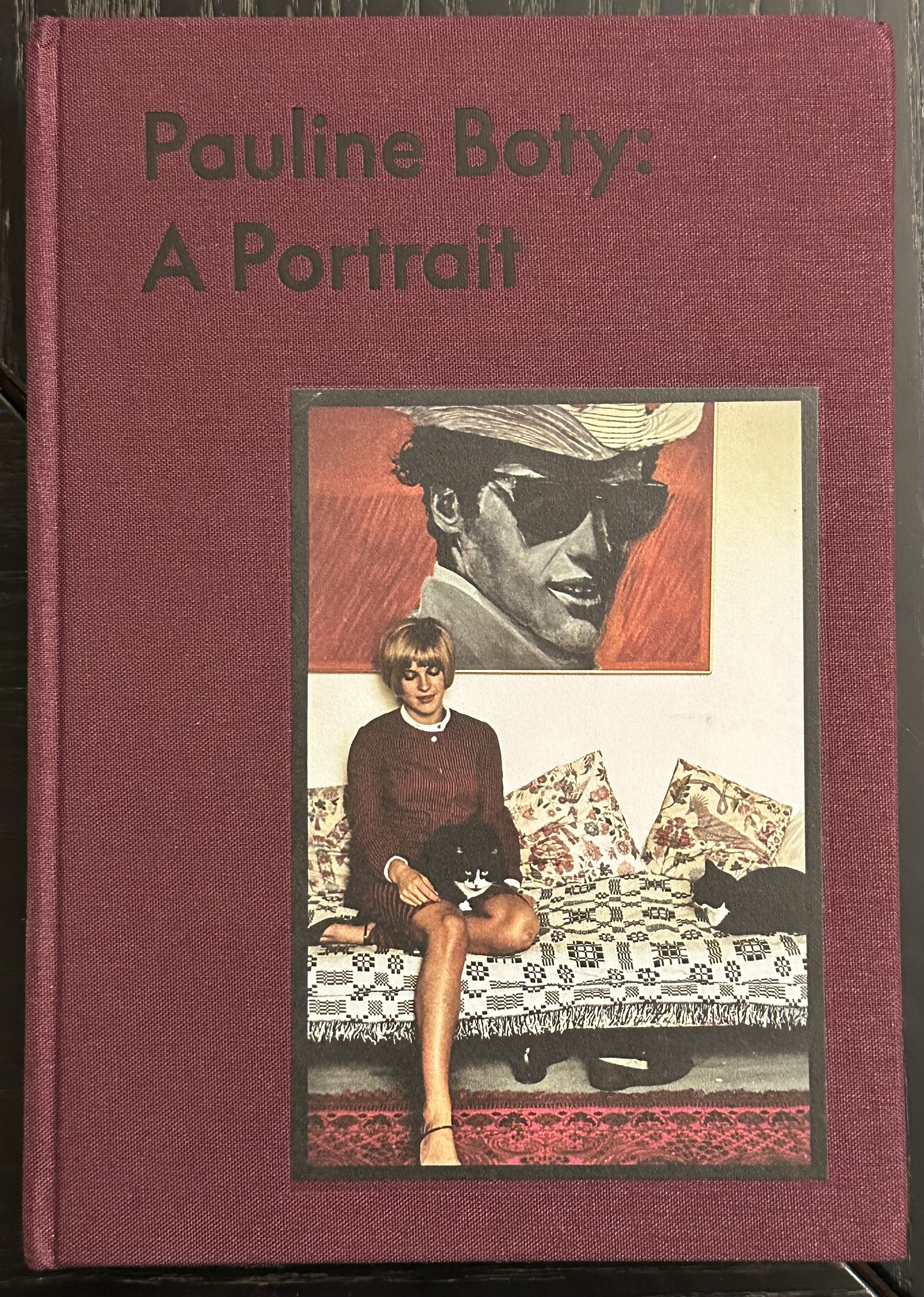
Gazelli Art House Catalogue “Pauline Boty: A Portrait” 2023-4.
Boty continued to see Philip Saville after her marriage and according to Kristal allowed Lewis Morley to photograph her nude in September 1963, barely three months after her wedding. I think these photos were probably taken earlier; Morley had known Pauline since her time at the RCA and they are rumoured to have had an affair. We can calculate an approximate date for the photos from the two paintings featured in the series of stills.
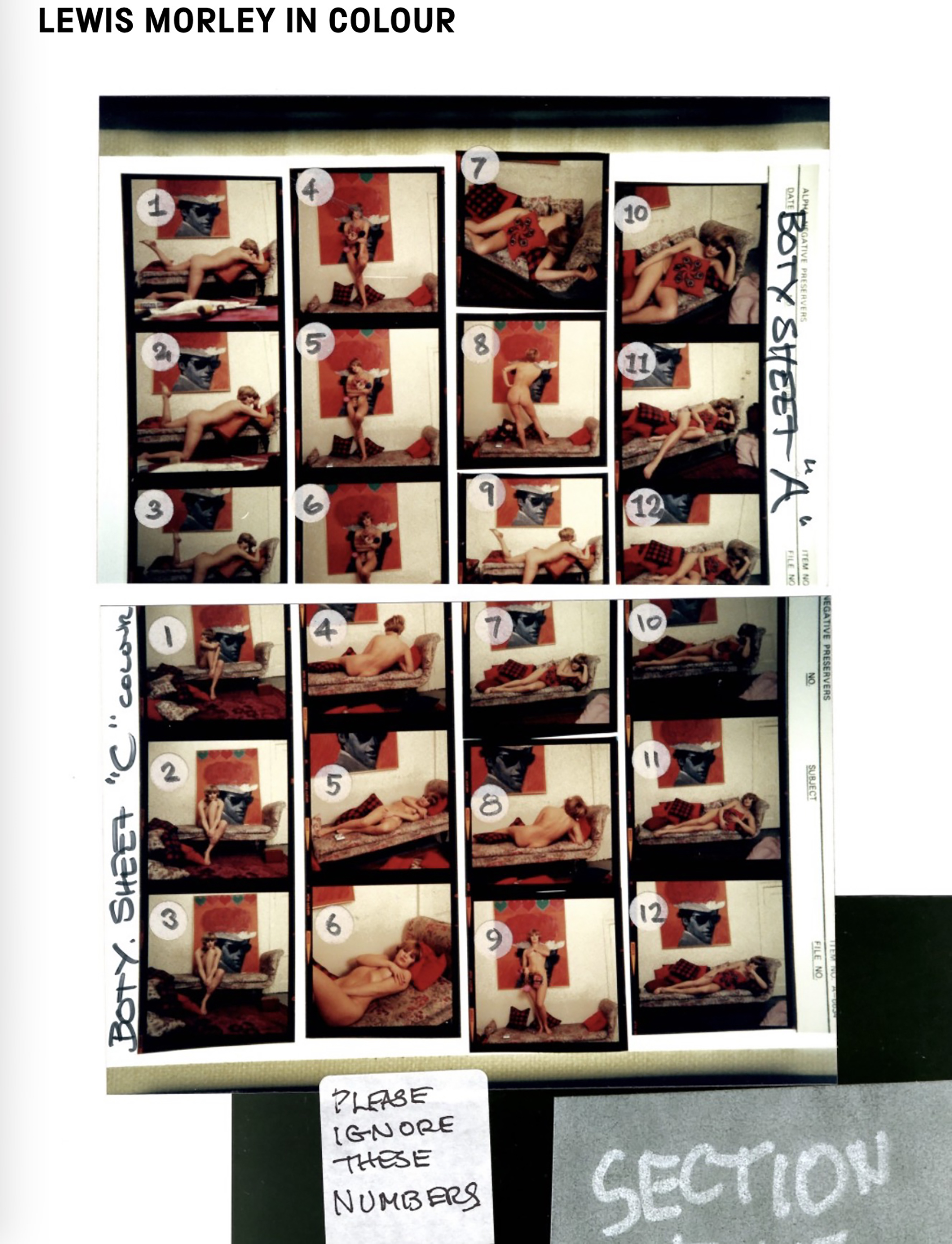
Lewis Morley’s colour photos
The first painting is Boty’s own “With Love to Jean-Paul Belmondo”, from 1962, and the second is Blake’s “Valentine”, which Boty was probably given in 1961 . So, we can safely date these photos to 1962 (or later). But, if we compare Boty’s relatively unsophisticated, and relatively short hair style in these photos with the fashionable, slightly longer style in Morley’s more formal 1963 portrait, the colour photos were probably taken earlier than the 1963 date. Even taking Pauline’s extra marital adventures into consideration, I would hesitate to suggest that she posed nude for Morley barely three months after her wedding. It is difficult to see that these photos were taken at the same session despite the presence of the “Belmondo” painting in both.
Lewis Morley’s 1963 photos
Peter Blake was understandably upset when he found Pauline had married. Though he married Jann Haworth less than one month later. However, his wedding plans must have been made prior to him hearing of Boty’s and Goodwin’s marriage as he, too, would have needed to give 21 days’ notice of an intended marriage. Some of Boty’s friends thought her marriage was too hasty and that Boty suffered from depression. However, Pauline’s sister-in-law Briget said she had never seemed happier.
The Gazelli Art House exhibition catalogue showed Morley’s photograph of a nude Pauline lying on a chaise longue holding Peter Blake’s “Valentine (for Pauline Boty)” painting but strangely labelled it “Lewis Morley: Untitled. Pauline Boty holding Peter Blake’s ‘Heart’. 1996”. Neither the picture’s title nor the date are correct.
My interest in Pauline Boty and her art arose from the discovery that Peter Blake had recycled his 1959-60 painting “Valentine (for Pauline Boty) for the cover of Band Aid’s 2024 Christmas single “Do They Know It’s Christmas?” I discovered that Pauline Boty was an important member of the early British pop art movement and how her work has become widely recognised after having been lost for almost thirty years after her untimely death in 1966. I found how her relationship with Peter Blake influenced her work and how she acted as a sort of muse for him. I suspect the Lewis Morley photographs of a naked Pauline Boty were probably taken earlier than has generally been accepted. The corrections to the accepted timeline paint a picture of a more purposeful, less impulsive woman than the myth suggests. And the fact that Blake chose this particular painting — a private love token from sixty-five years earlier — as the cover image for the 2024 Band Aid 40 cover gives it an emotional resonance that probably would have gone unrecognised.
[1] Note: Boty was heavily into Americana, using cuttings from American magazines such as Life as sources for her collages. She used the quote from the American song ”My Coloring Book” for the painting’s title. Both Tate and Kristal anglicise the title to ”Colour Her Gone” instead of Boty’s ”Color Her Gone” – or was their mistake simply the result of autocorrection in their manuscripts?
[2] Dunn, Nell: Talking to Women. MacGibbon & Kee, London, 1965.


 recordart