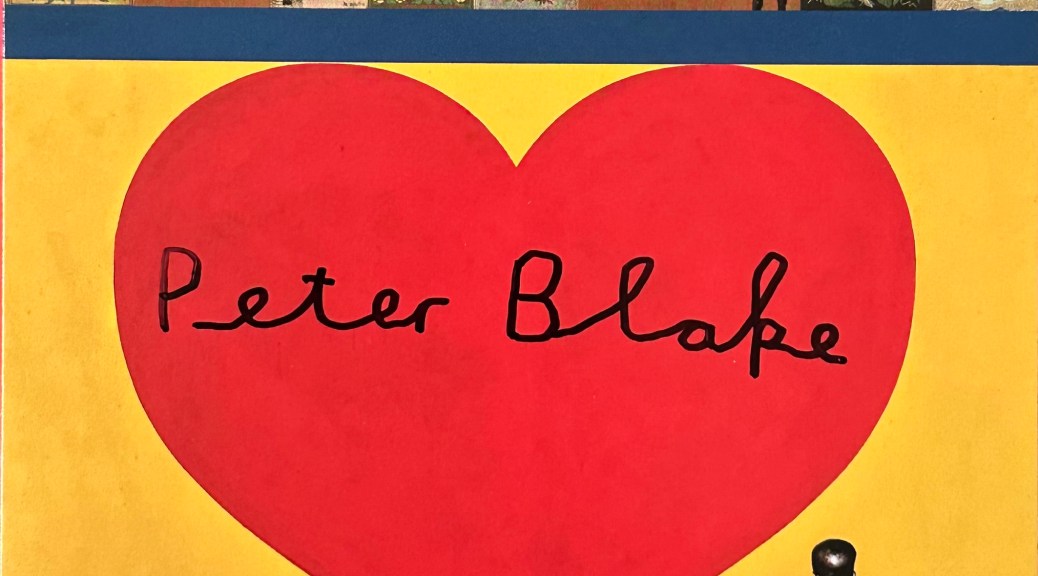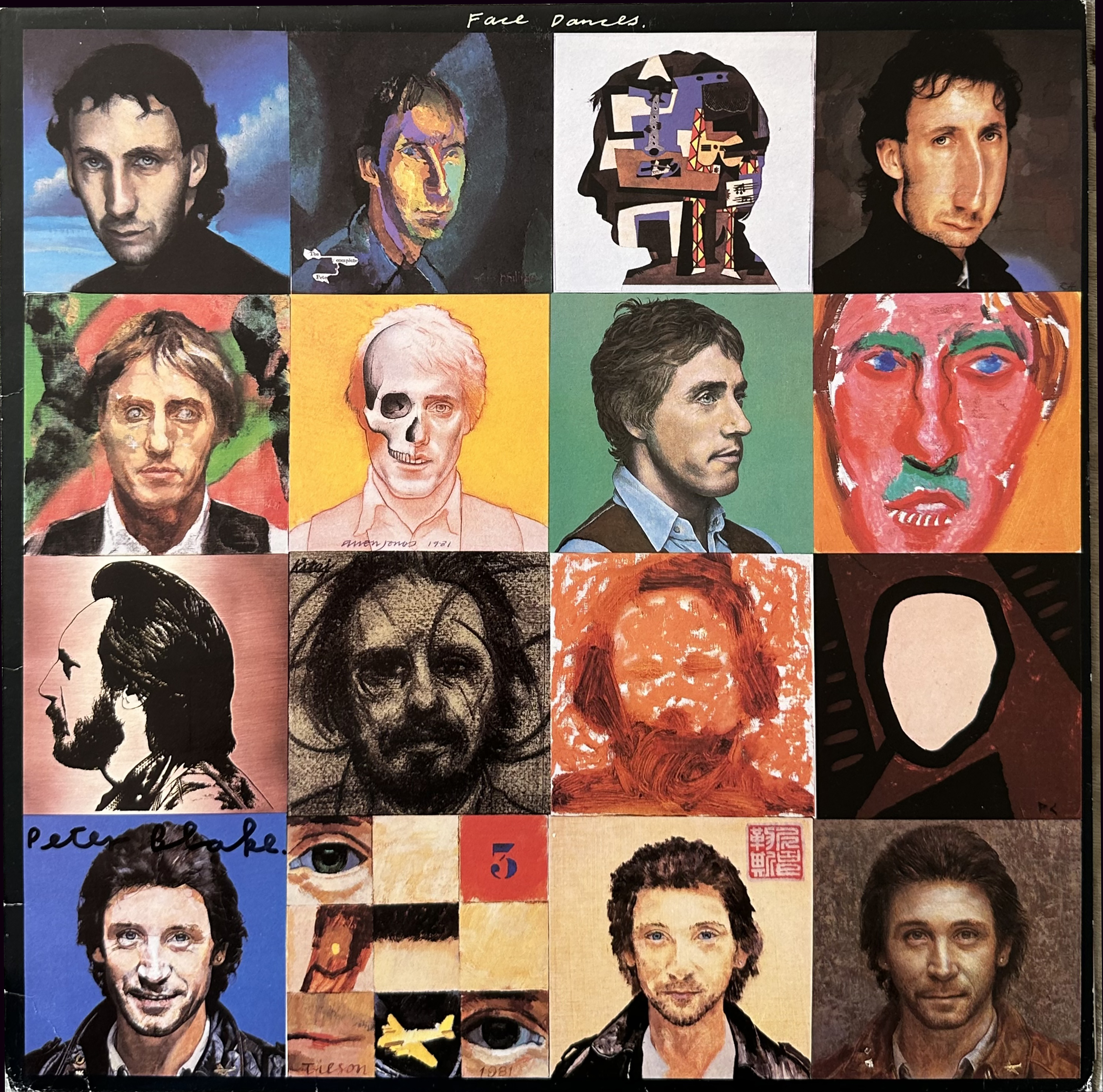
The story that I was told was that Peter Blake met the Who at a Ready Steady, Go! television show in 1965 and that Pete Townshend and Blake became friends then. I’ve always believed it. But now, while researching my book about Peter Blake’s record cover art, I decided I’d better read Townshend’s 2012 autbiography “Who I Am”.
He delves deeply into his early years and his time at Ealing Art College and the formation of the Who. He mentions that the College was quite near to “his hero” Peter Blake’s studio but then goes on to describe his difficulty in deciding whether to continue at art school or devote himself to music and the Who. We all know which won.
Fast forward to the late summer of 1978 (probably in late August) and Pete states that he met his hero, the pop artist Peter Blake for the first time together with Ian Dury and was pleased to note that they, like him, liked a drink or two. Only days after his meeting with Peter Blake, Keith Moon dies on September 7th of an overdose of sleeping tablets.
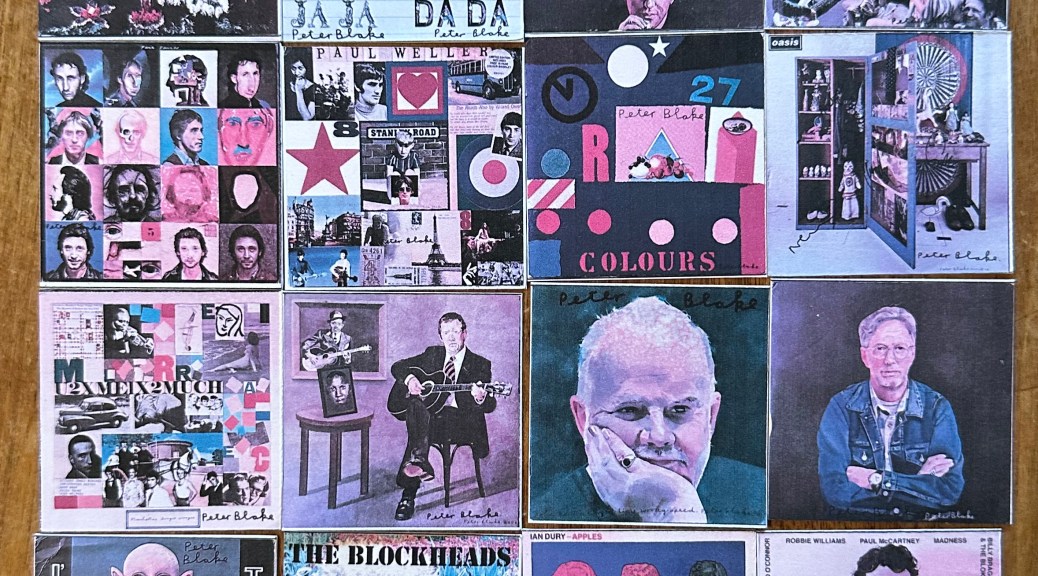
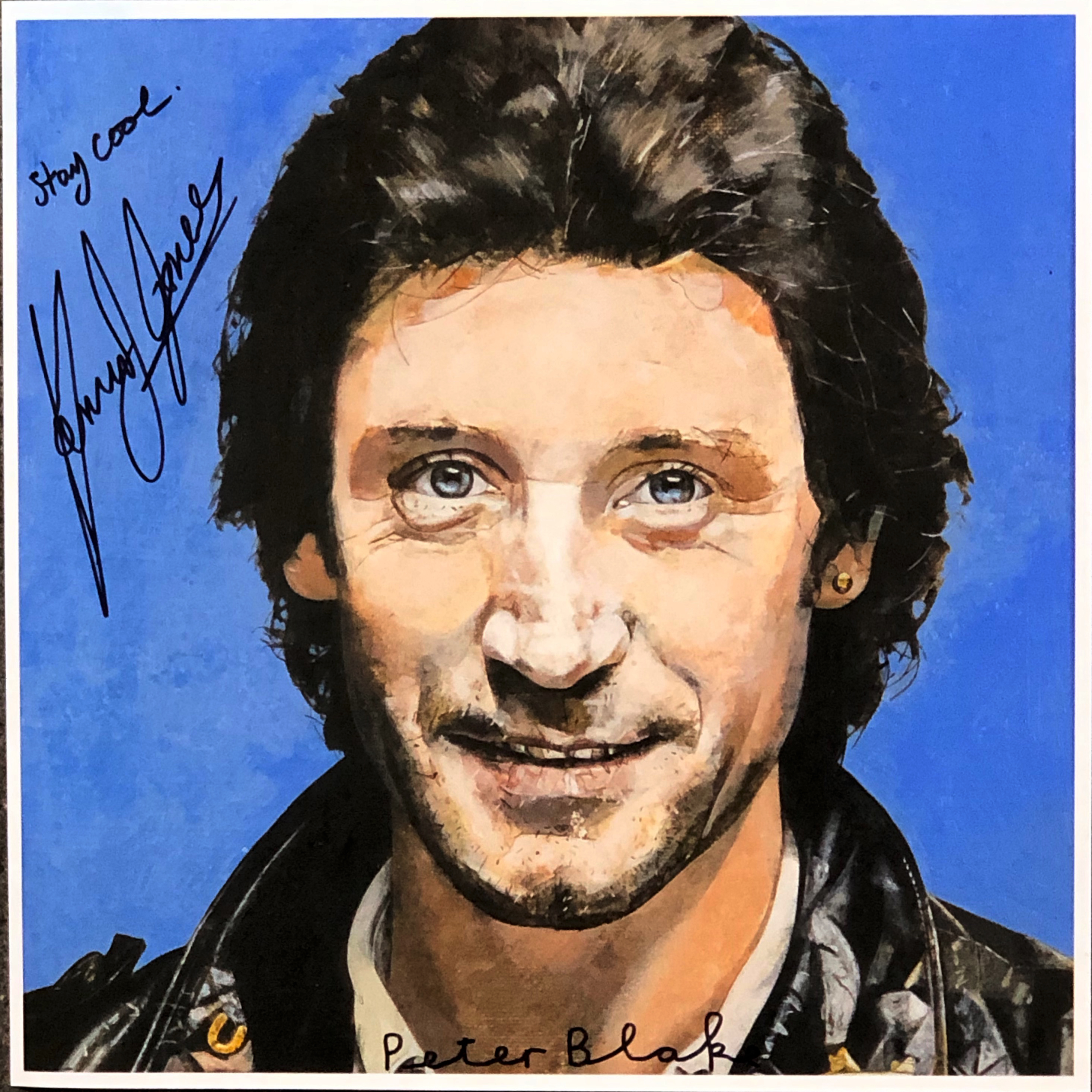
In 1980 the Who started recording “Face Dances”, their eleventh album, having recruited Kenney Jones, ex the Faces, as their new drummer. Townshend had worked with Jones previously so he knew he was up to the job. Townshend says “I persuaded my friend Peter Blake to do the artwork for Face Dances, due for release in March 1981. It would be the first record cover he had designed since The Beatles’ “Sgt. Pepper”. He decided to ask twelve British artists each to produce a portrait of one member of the band. Ron Kitaj and Richard Hamilton—heroes of mine along with Peter himself—were among those who contributed. The album was released to limp reviews, though sales were good.” Pete had obviously not been following Blake’s career in album cover art!
So, rather than just casually asking “his friend” Peter Blake to design the album cover, Townshend had “to persuade” his hero to do the job. Luckily, he was extremely pleased with the result with portraits by Ron Kitaj, Richard Hamilton and Blake’s own contribution.
Well, I had to rewrite my introduction to the chapter on the design of the “Face Dances” album cover. I was surprised to note that Townshend doesn’t mention Richard Evans’ contribution in view of the fact that he would let Evans design cover for the promotional double LP for “Face Dances” called “Filling in the Gaps”. An interview with Pete Townsshend.
Otherwise, I didn’t find “Who I Am” particularly interesting. Lists of Townshend’s drug-taking and infidelities and his attempts to leave the Who became boring. But I’m grateful for the fact about his first meeting with Blake and how the “Face Dances” cover came about.
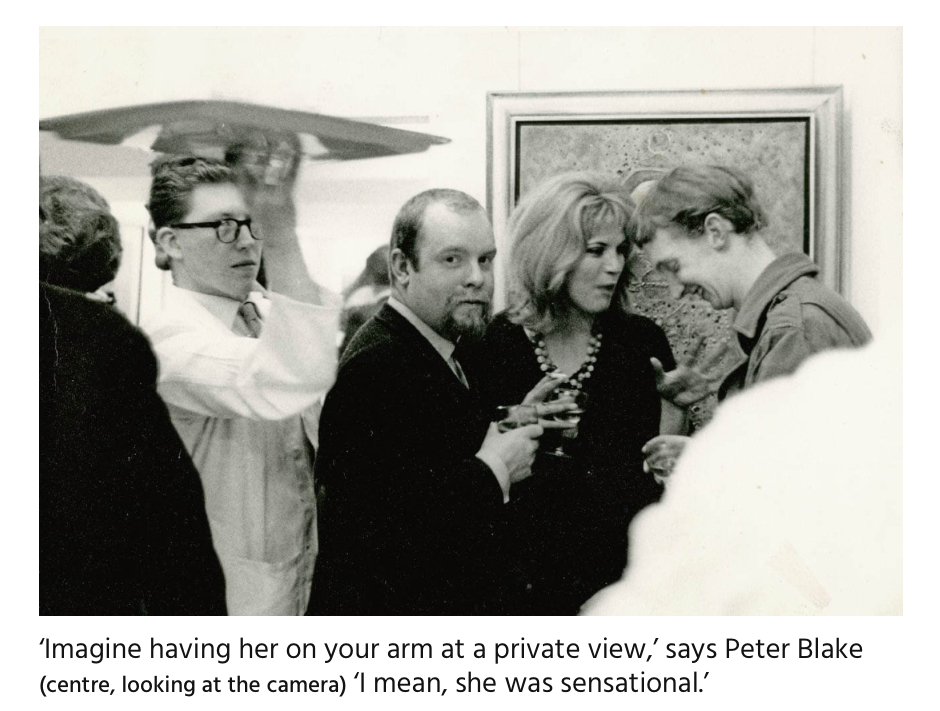
Does anyone remember art gallery owner Robert Fraser any more? Well, I do. I have been researching Peter Blake’s record cover art and discovered that Robert Fraser was more than just an advisor suggesting to Brian Epstein that a fine art cover would last longer than a Fool(ish) psychedelic cover. It transpires that “Groovy Bob” as he was known to his friends was a central figure in what Richard Hamilton called “Swingeing London”. Fraser’s Duke Street Gallery was more than just an art gallery. From 1962 to 1969, Fraser put on ground-breaking exhibitions, introducing Pop Art before anyone else. The gallery was a meeting place for artists, musicians, film makers and trendsetters. Paul McCartney, John Lennon, Yoko Ono, Mick Jagger, Keith Richards, Marianne Faithfull, John Dunbar were regular visitors. Fraser helped start McCartney’s art collection, taking him to Paris in 1965 to buy a Magritte painting!
The Duke Street Gallery closed in 1969 but Fraser opened a new gallery in nearby Cork Street in 1983 and ran it until 1985. Fraser died in January 1986—one of the first celebrities in England to die of Aids.
In 1999, Harriet Vyner, who had become friends with Groovy Bob in the eighties, published her book “Groovy Bob: The Life and Times of Robert Fraser”—a book of interviews and impressions from artists and gallery regulars about Robert, his business and his feelings and what the gallery meant.
The sheer number of artists who exhibited at Fraser’s galleries is impressive; ranging from the cream of American Pop Art, like Andy Warhol, Jim Dine, Ed Ruscha, Keith Haring and Jean-Michel Basquiat, as well as emerging British Pop Artists, including Richard Hamilton, Derek Boshier, Colin Self, Peter Blake, Clive Barker and Bridget Riley.
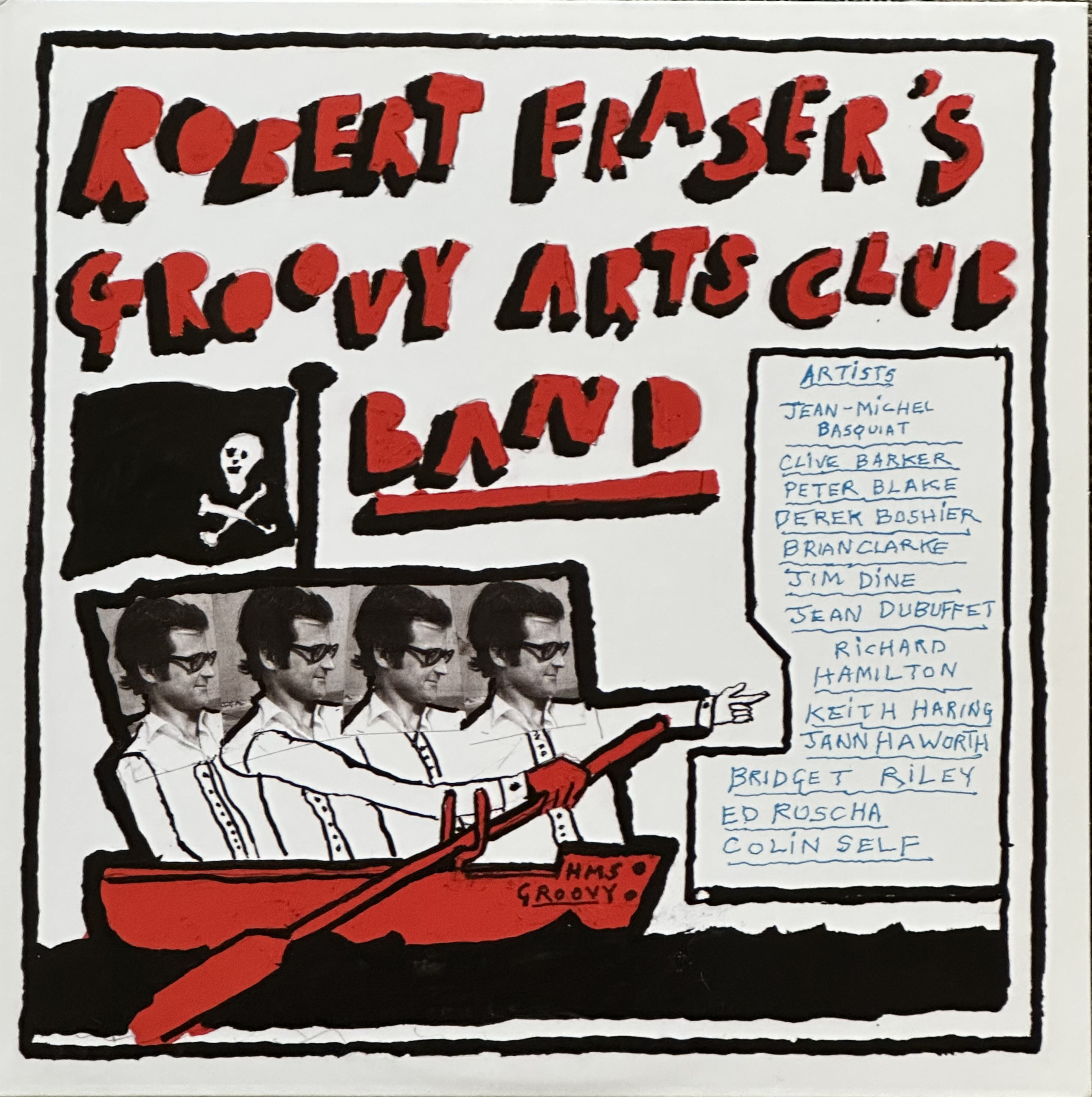
So, tuned in as I was to Groovy Bob’s influences on both art and music I was intrigued when I discovered that there was an album called “Robert Fraser’s Groovy Art Club Band”—a limited edition double LP released on the occasion of a group exhibition at London’s Gazelli Art House from 11th January to 23rd February 2019 called just “Robert Fraser’s Groovy Art Club Band” with contributions from Clive Barker, Peter Blake, Derek Boshier, Brian Clarke, Jim Dine, Jean Dubuffet, Richard Hamilton, Keith Haring, Jann Haworth, Bridget Riley, Ed Ruscha and Colin Self. The gallery even produced the album recorded by David G. A. Stephenson and Josh Stapleton and a hard cover book.
I found a copy for sale on Discogs and immediately ordered it. Cover art by Derek Boshier, it was released at the pre-opening on January 10th, 2019.
Each of the fourteen tracks is dedicated to one artist with the first track called “Groovy Bob”, so you know who that’s about. The second track, “From Sir With Love” is Peter Blake’s. “Jim Dine’s Toolbox” is next, and then “Dubuffet or Not Dubuffet”, followed by “Slip It to Me” which is a reggae paean to Richard Hamilton. “Optical Tactical” celebrates Bridget Riley. No prizes for guessing who “I Want to Hang Out with Ed Ruscha” is about. Then it’s “Clive Barker and His Midas Touch” that celebrates Barker’s burnished bronze sculptures of everyday articles (like the paintbox on the back cover of the Who’s “Face Dances” LP that he made). “Leopard Skin Nuclear Bomber” is a Clash-like rocker that references Colin Self’s 1963 “Leopardskin Nuclear Bomber” sculpture. This is followed by “ Keith Haring’s Pop Shop” and thereafter “Samo”, which was Jean-Michel Basquiat’s street art tag in the early days. After “Samo” there’s “Dangerous Visions of Brian Clarke”, followed by “An Englishman in L.A.” , a reference to Derek Boshier, who lived in the City of Angels until his death in 2024. The final track is a song about Jann Haworth and her mural S.L.C. Pepper (Salt Lake City Pepper), Haworth’s hometown, where her new version of the Pepper cover addresses the lack of representation of women and people of colour in the original Sgt. Pepper line-up.
The album is on Spotify, so you can give it a listen. Don’t hold your breath, but there’s much more to come from my research into Peter Blake’s record cover art that this post is a tangential part of.
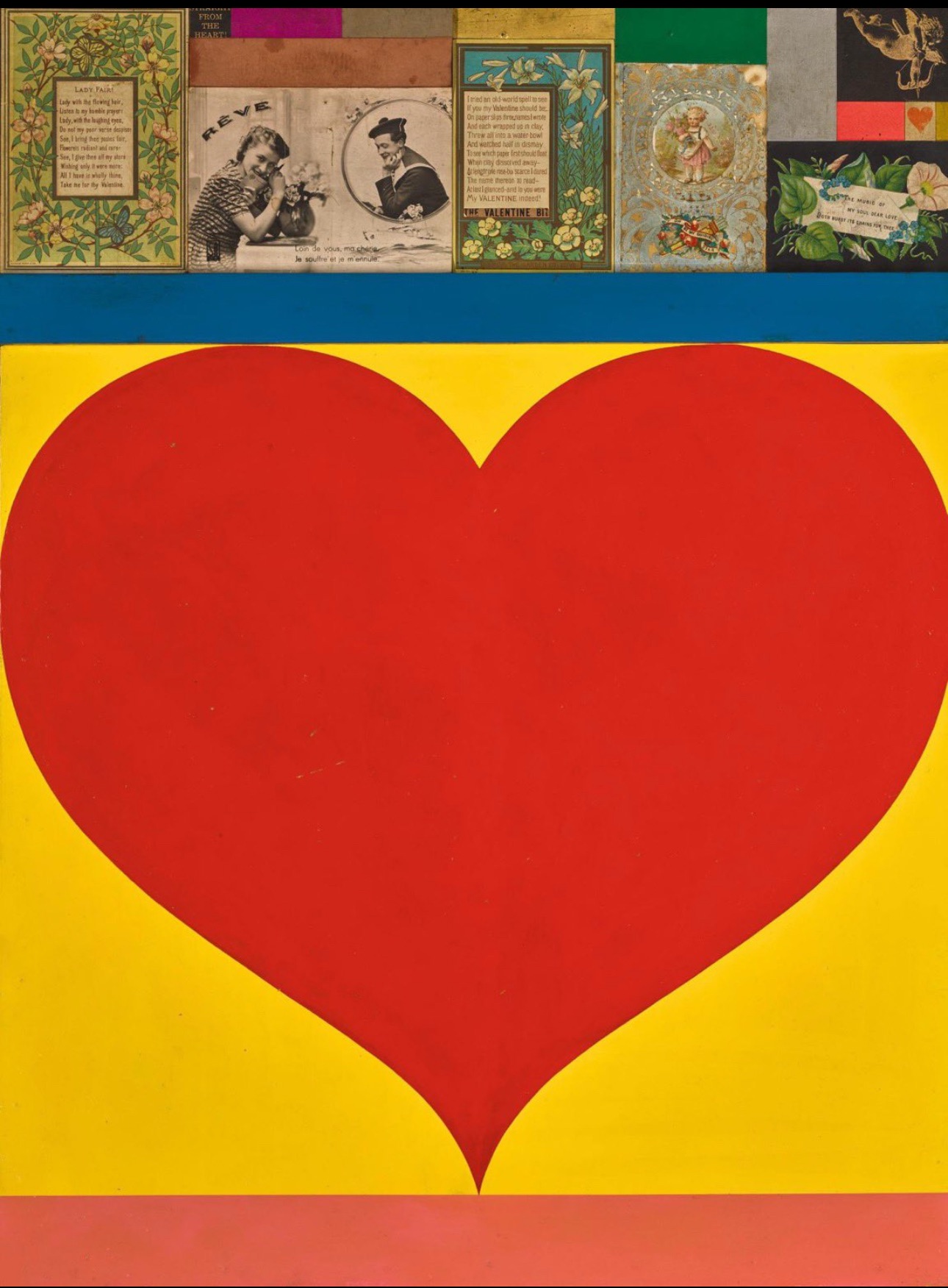
When Sotheby’s offered Peter Blake’s painting “Valentine (for Pauline Boty)” for auction in 2019, they described the two artists as “inseparable.” The work sold for £287,500—a significant sum for what appeared to be a simple valentine. But this wasn’t just any love token. It was evidence of a relationship that would shape Blake’s emotional life and set a pattern of loss that would haunt him for decades.
Robert Fraser opened his famous art gallery at 69 Duke Street in London in 1962 and attracted the cream of pop art artists to the gallery’s roster: Richard Hamilton, Derek Boshier, Peter Blake, Colin Self and Jann Haworth. Fraser’s gallery attracted visitors from the world of film, music and art. He was the first to show American pop artists such as Andy Warhol and Jim Dine in London. The Beatles and the Rolling Stones were gallery regulars—Robert Fraser helped Paul McCartney build his art collection.
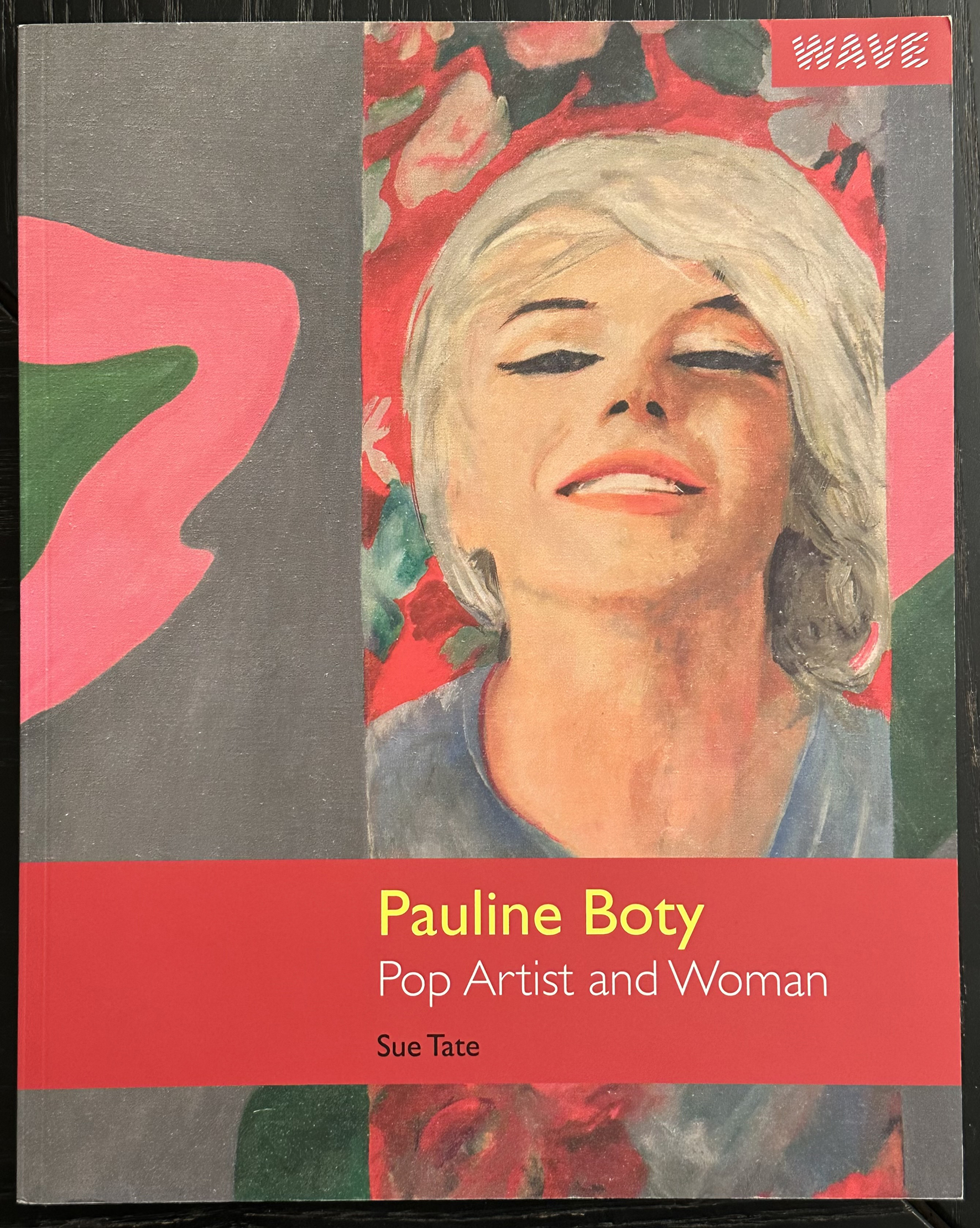
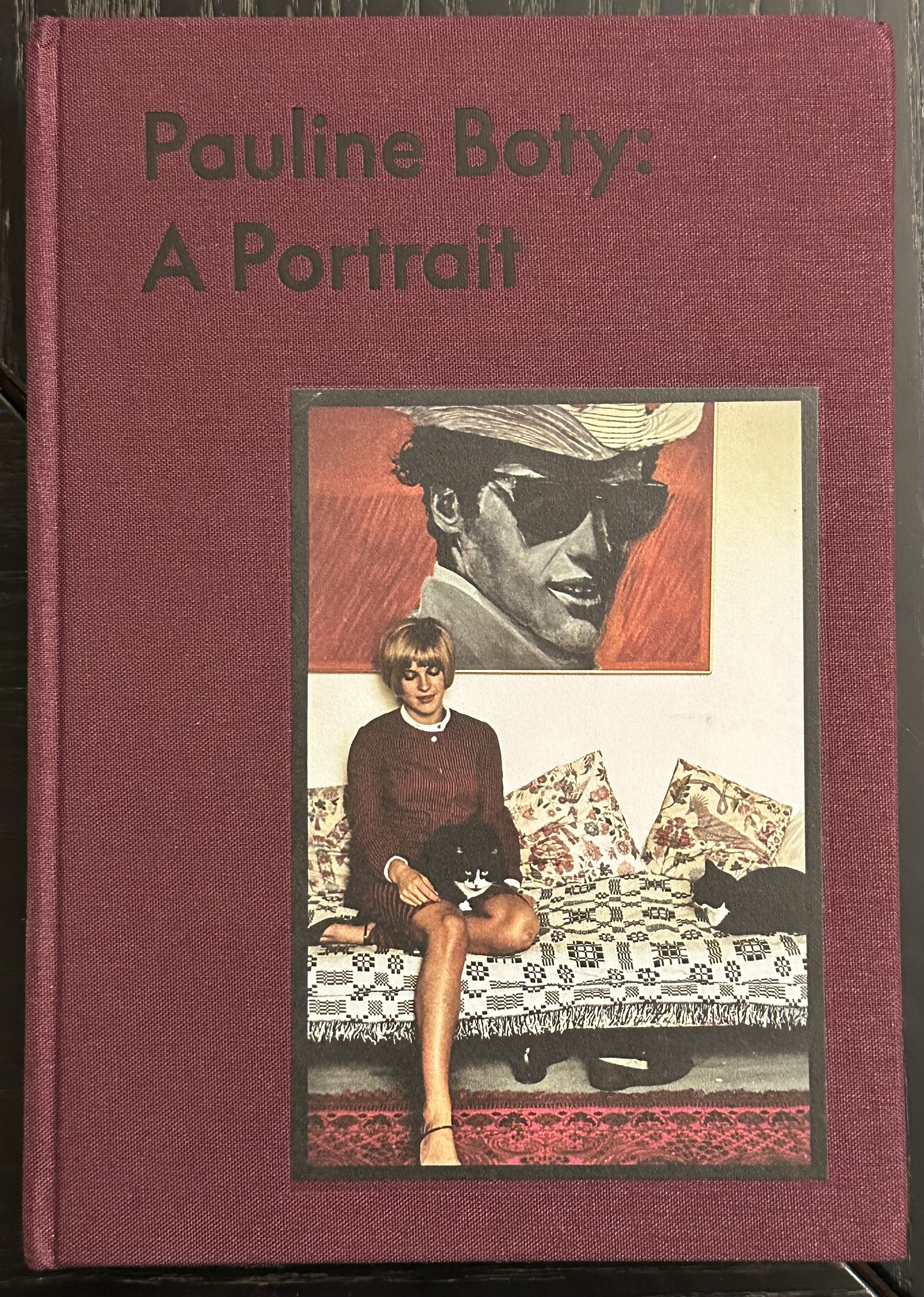
There was one English pop artist who wasn’t represented by Groovy Bob Fraser. She was Pauline Boty (1938-1966), a polymath: pop artist, poet, radio programme host, actress and dancer. You could have seen her bopping to the music on TV’s “Ready, Steady, Go”. She studied at the Royal College of Art from 1958-61 alongside Peter Blake, David Hockney and Derek Boshier.
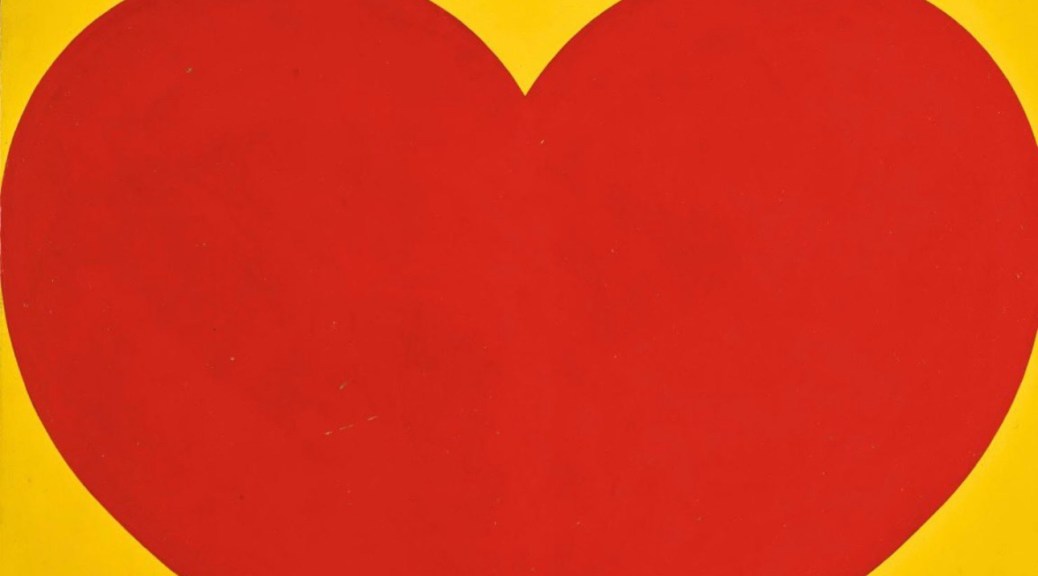
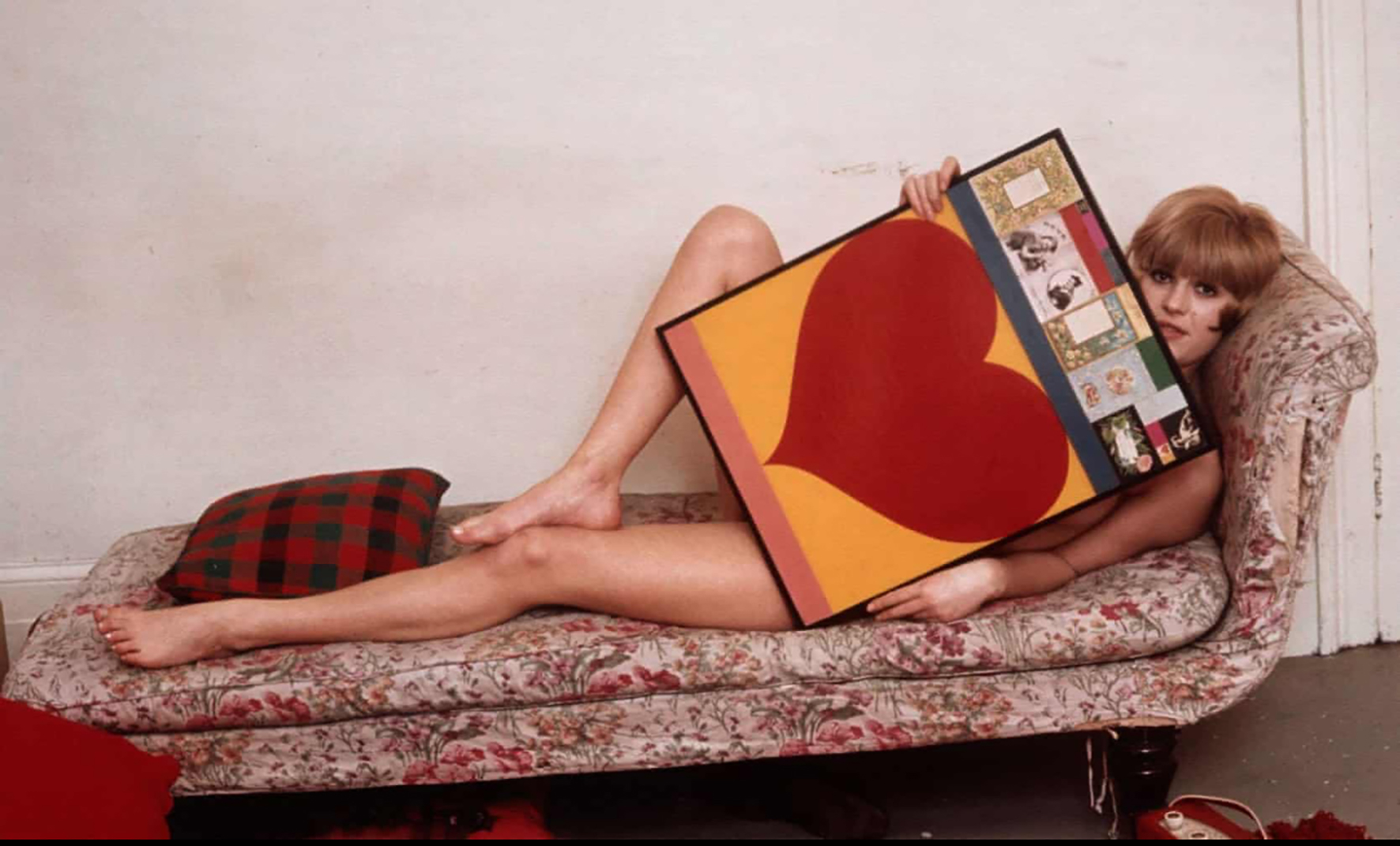
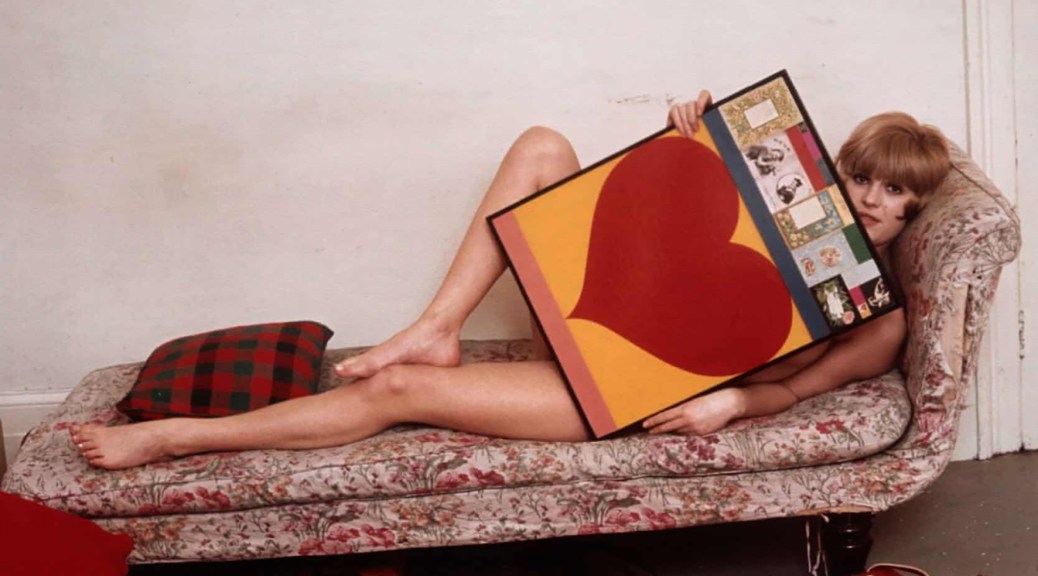
Wikipedia describes her as “the heartbreaker of the sixties art scene. Talented and outspoken, she was loved by countless men…” Boty and Blake became inseparable. Between 1959-60, Blake painted a valentine for her, simply titled “Valentine (for Pauline Boty)”.
Peter Blake: Valentine (for Pauline Boty), 1959-60.
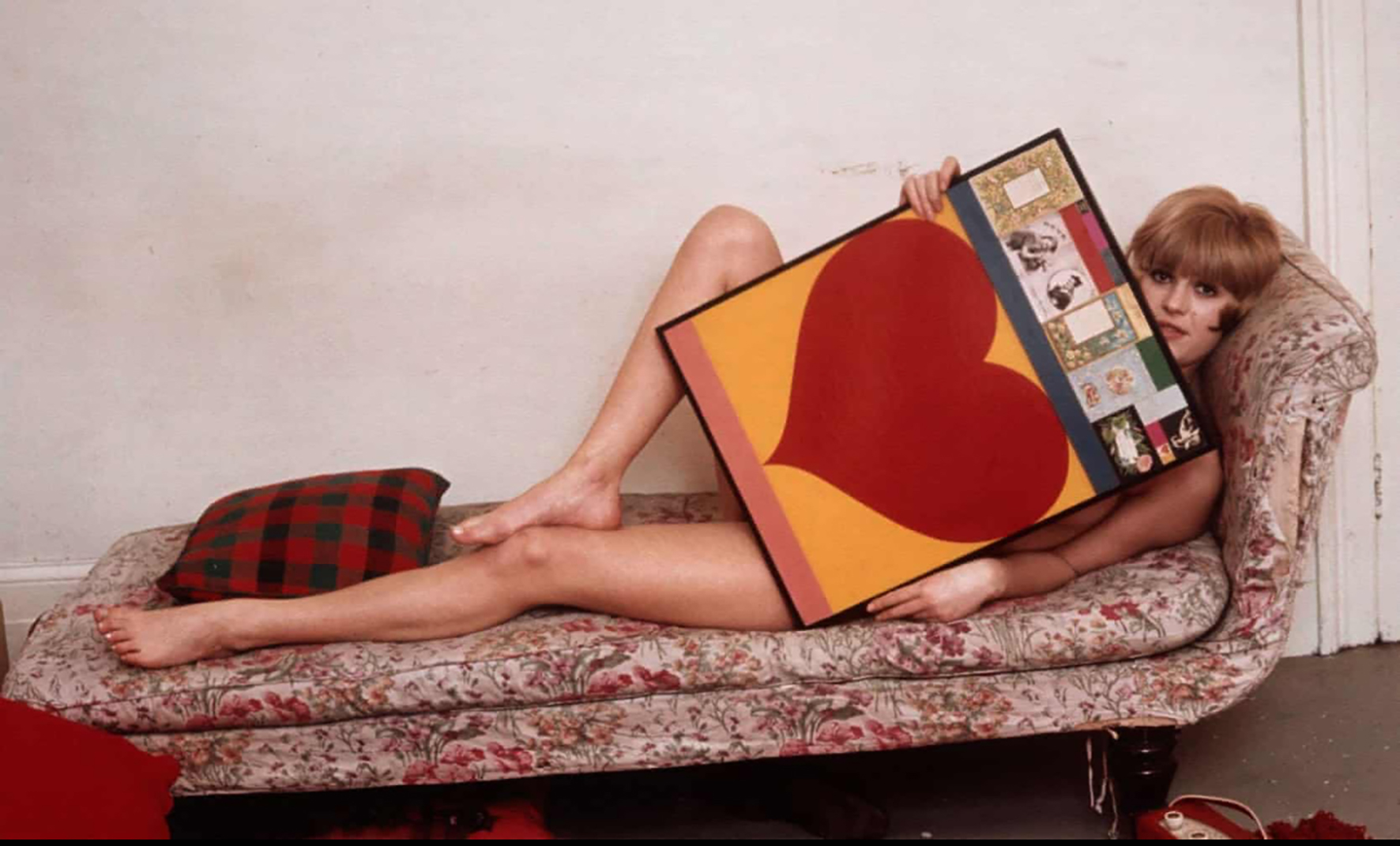
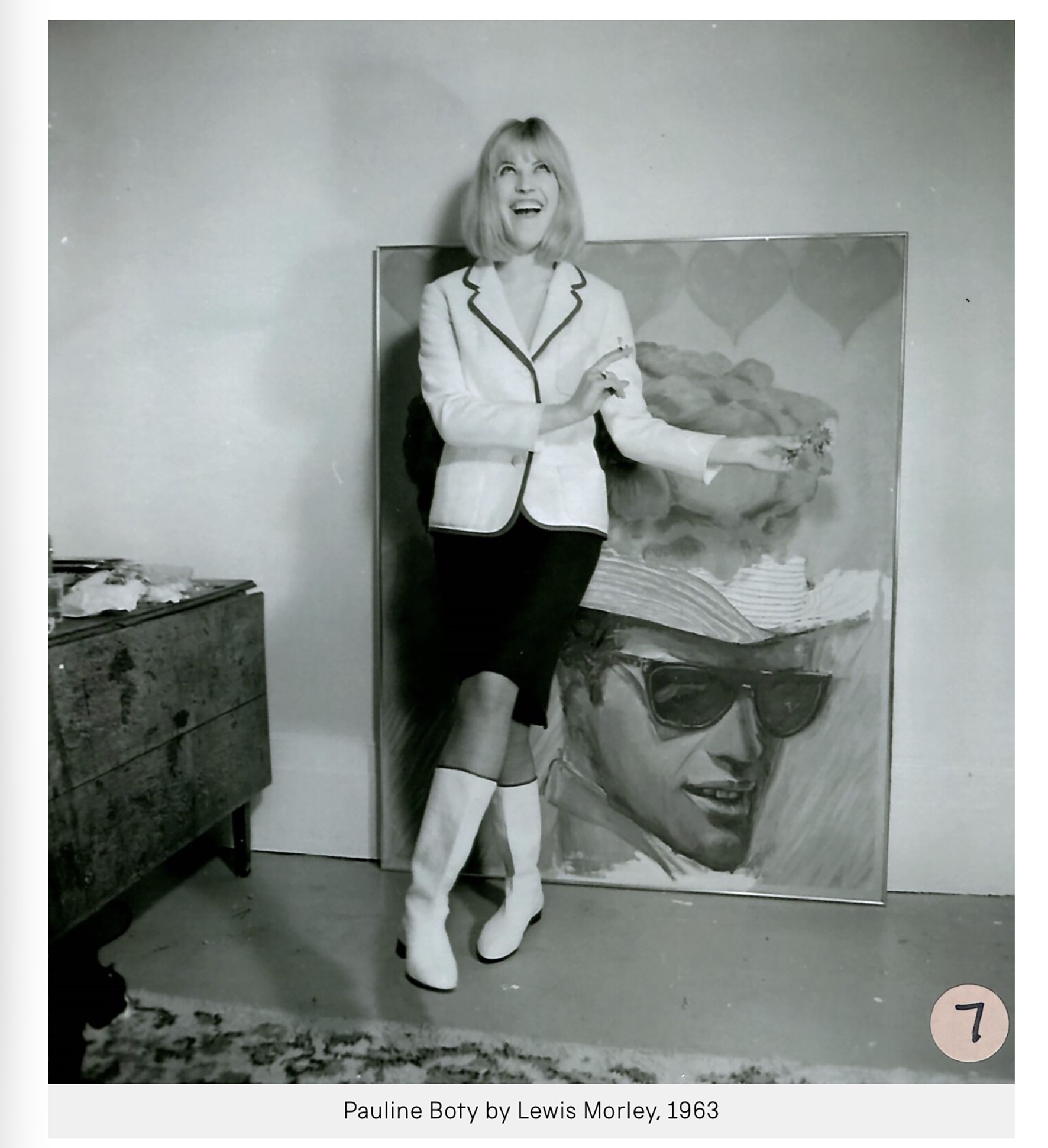
There’s Lewis Morley’s famous photograph of Pauline holding the Valentine painting.
Boty and Jann Haworth were the only two women among the pop artists at the time. Haworth, like Blake, was represented by Robert Fraser and had solo shows at his gallery as well as a joint exhibition with Peter Blake, Derek Boshier and Colin Self.But Boty’s romantic life was complicated. She was having an affair with TV director Philip Saville (who was already married) while involved with Blake. Then in June 1963, after a whirlwind ten-day romance, she married literary agent Clive Goodwin. Blake—and Saville—must have been devastated.
Blake’s response was swift. Just one month later, in July 1963, he married the other female pop artist, Jann Haworth, whom he had met at a party while she was a student at the Slade School of Art. Another whirlwind romance. The newlyweds immediately left for an extended honeymoon in California, where Jann’s father, Academy Award-winning art director Ted Haworth, lent them his Stingray sports car. They drove to Malibu listening to the Beach Boys, and Ted got Blake access to a film studio storeroom filled with props from the Elizabeth Taylor film Cleopatra. They were still in California in November when President Kennedy was assassinated.
Pauline Boty’s remarkable artistic and acting career ended abruptly when, in 1965 while pregnant, she developed a malignant tumour. Boty refused abortion and treatment as it would harm the foetus. Her daughter Katy was born on 12th February 1966, and Pauline died on 1st July, aged only 28. The “Valentine” painting passed to her husband Clive Goodwin until his death in 1977. It was later acquired by art collector Muriel Wilson (1933-2018), who donated it to the Pallant House Gallery in Chichester along with many other works from her collection.
Blake and Haworth remained together for sixteen years, founding the Brotherhood of Ruralists in 1975. But in 1979, history repeated itself. Haworth met author Richard Severy and left Blake. Devastated, Blake left Somerset and the Ruralists and returned to London. He was reported to have been unable to work for almost a year after this separation—a testament to how deeply the loss affected him.
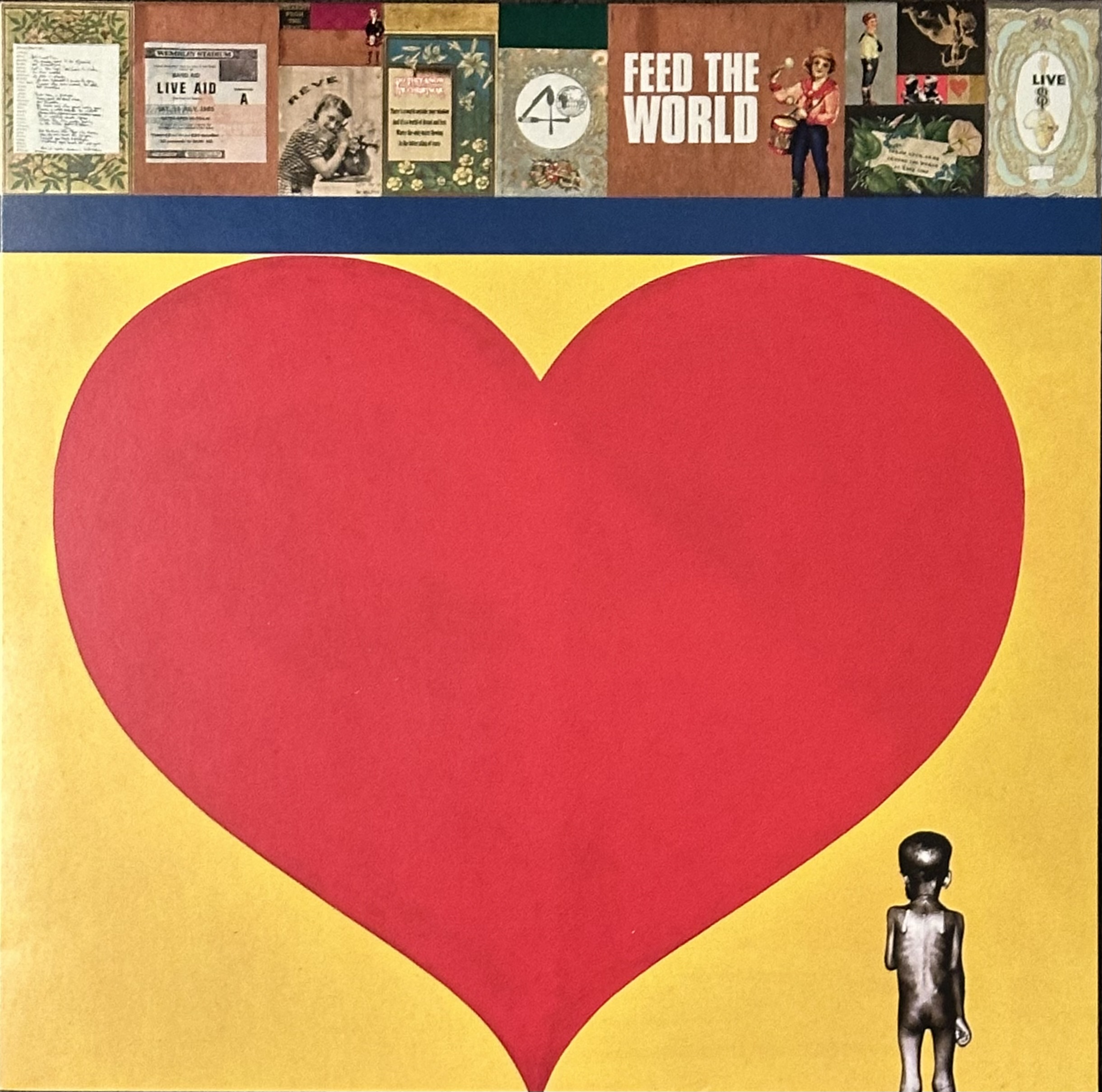
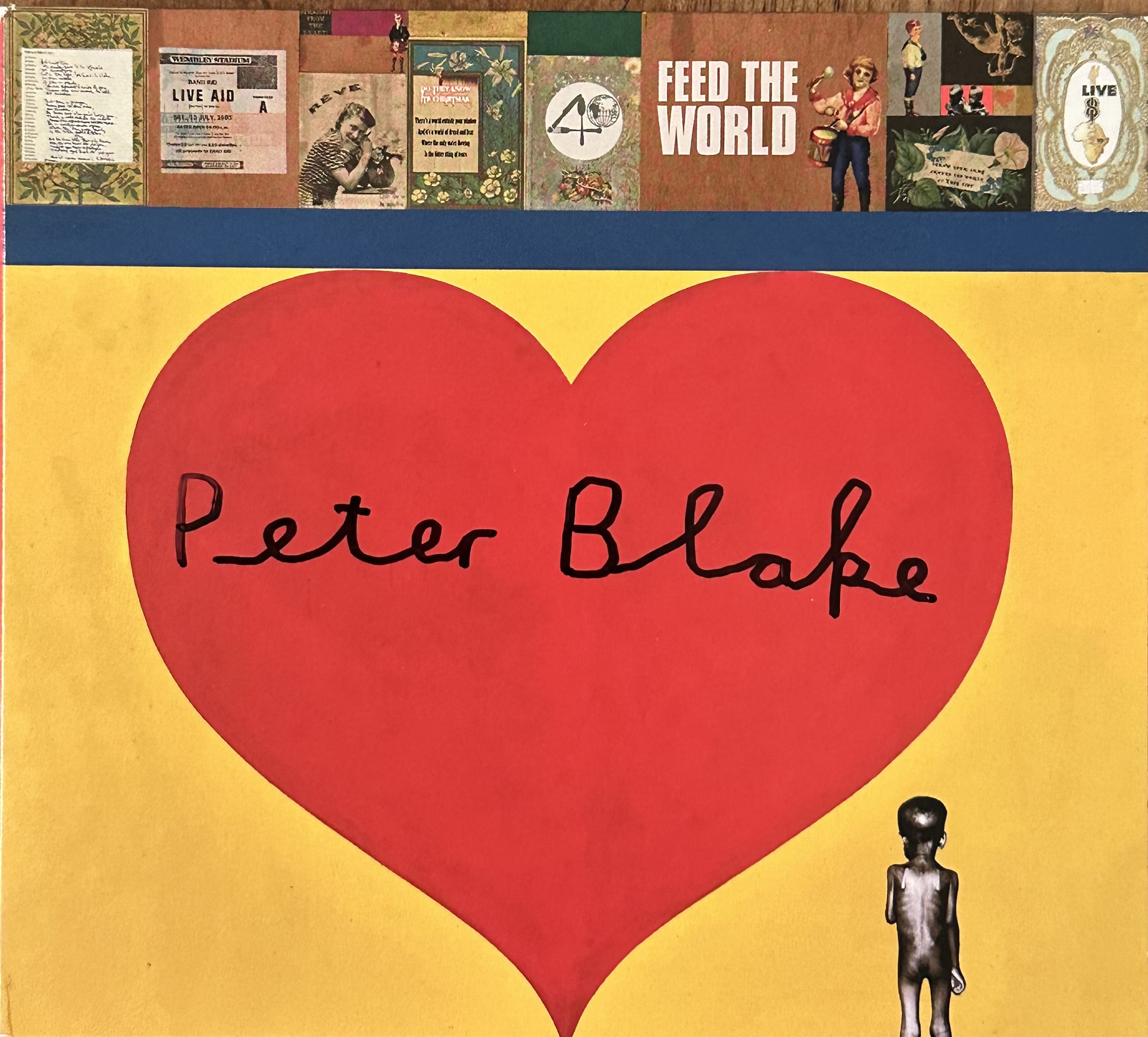
When the Valentine painting came up for sale at Sotheby’s in 2019, it was featured in an article titled “Unrequited Love and Peter Blake’s Pop Art Valentine.” But the image had clearly stayed with Blake. Sixty-five years after its creation, it reappeared on the cover of Band Aid 40’s 2024 single “Do They Know It’s Christmas?”—suggesting that his feelings for Boty, and that moment in time, had never entirely left him.
There’s another possible legacy of Blake’s relationship with Boty that art historians may have overlooked. Boty was herself an accomplished collage artist. While the textbooks credit Joseph Cornell and Kurt Schwitters as Blake’s influences in collage, perhaps the woman who was ‘inseparable’ from him during those formative years played a more significant role than history has acknowledged. It wouldn’t be the first time a male artist’s female partner influenced his work without receiving credit.
Blake met artist Chrissy Wilson in 1980, soon after returning to London, and they married in 1987 after his divorce from Haworth was finalized in 1981. They are still together after more than 40 years—perhaps Blake had finally found lasting love.
Haworth and Severy remained together until Severy’s death..
A few days ago I sumbled across a Facebook post asking after the title of a record sleeve that I sort of recognised but it looked strange.
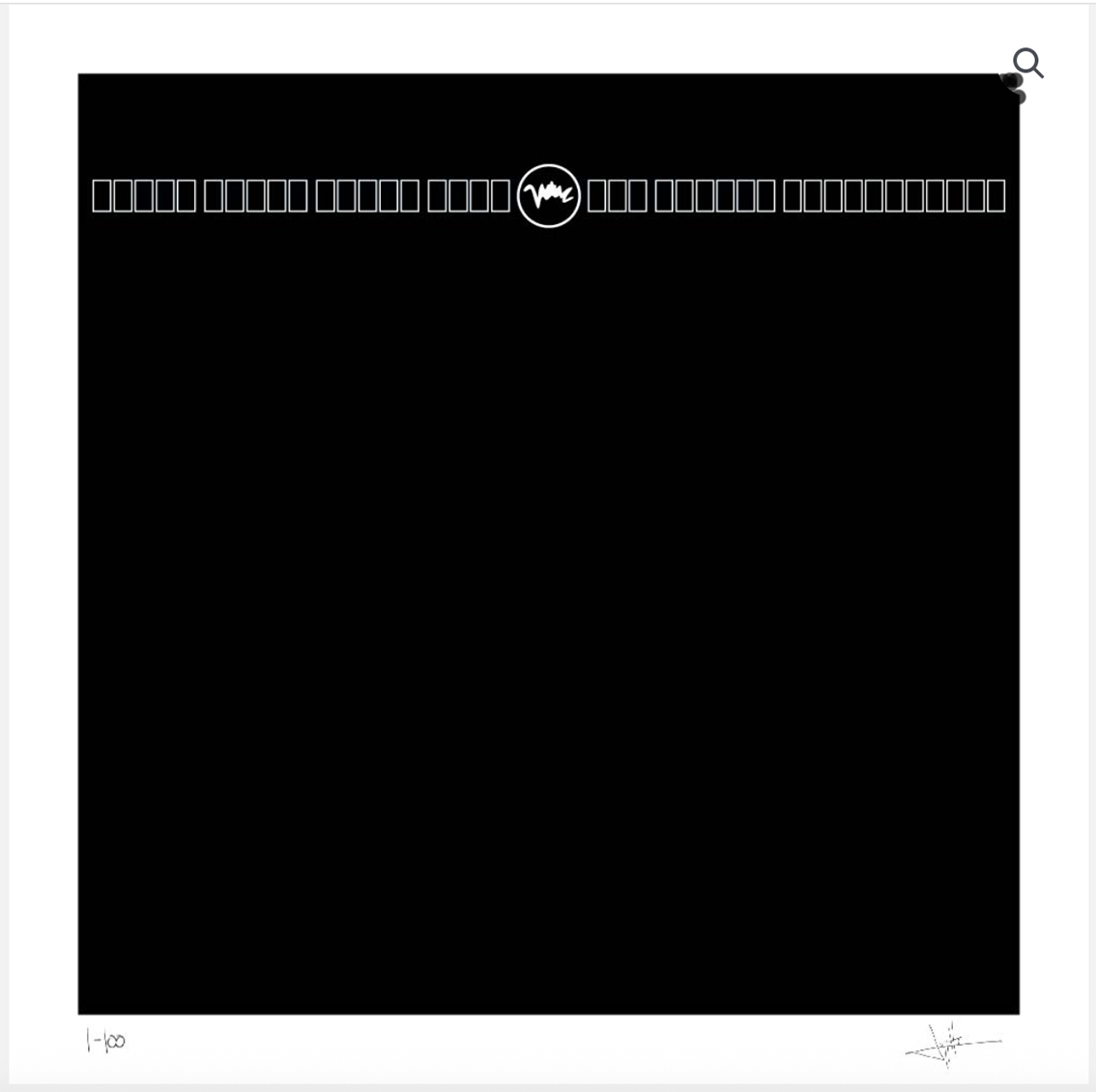
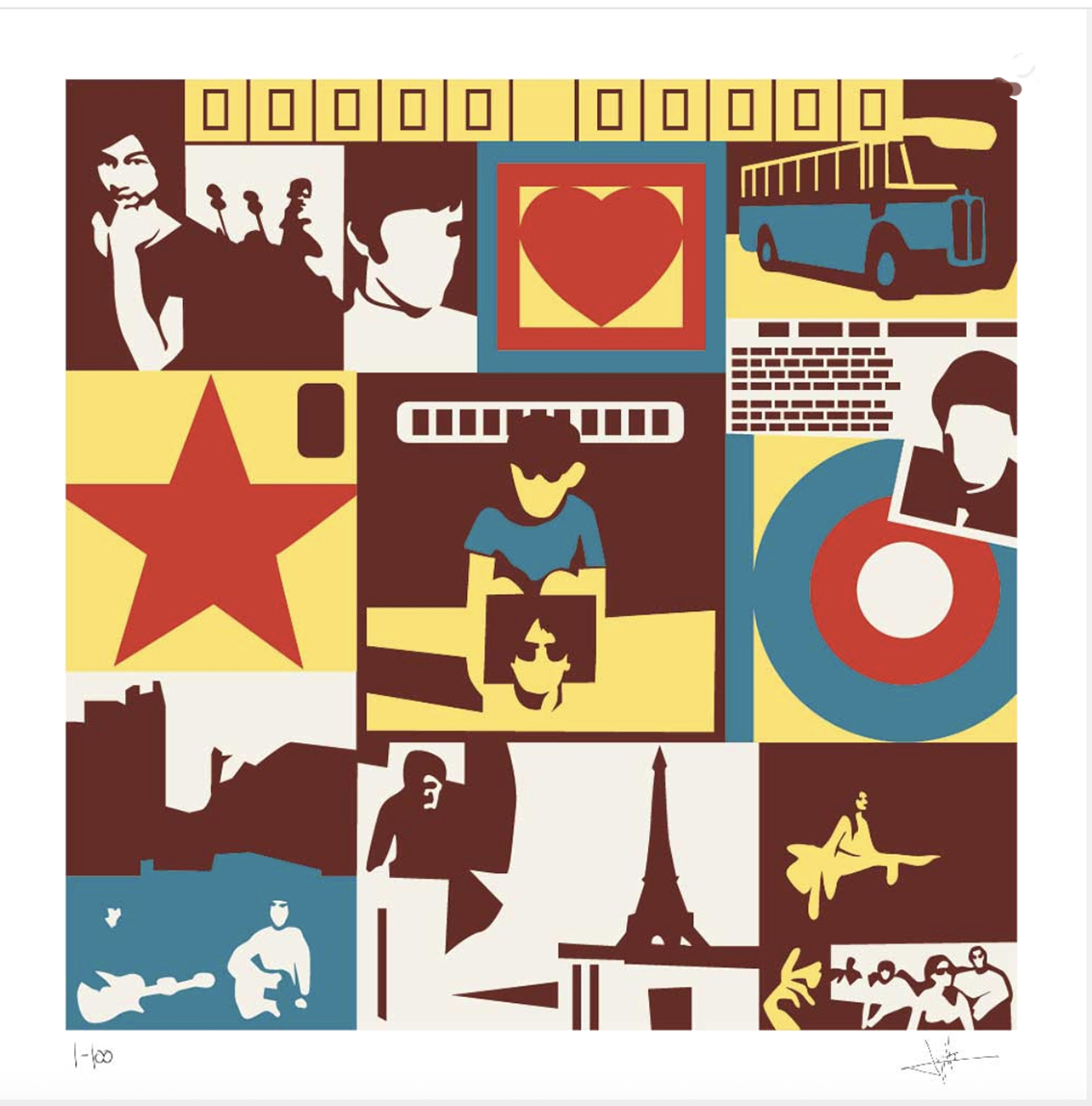
Recognise it? It’s obvioulsy Aretha Franklin’s “I Never Loved a Man the Way I Love You” but with all the detaiil removed. AN Internet seach followed and turned up the creator Luzzatti.es, who has reimagined a wide range of covers thst he sells on his website for €50 each. He produces limited editions of 50 prints each 30 X 30 cm)s (11,7 x 11,7 inches).
Eduardo Luzzzatti is a graphic designer based in Valencia, Spain, who says this project is his way of paying tribute to the designers, photographers illustrators and artists who created the covers of some of our favourite albums.
He has 430 covers on his site! Obviously I immediately serched for covers by artists I collect–Andy Warhol, Peter Blake, and Klaus Voormann. Yep1 They’re are some there.
I think these minimalistic cover versions are really clever. While anyone who knows their cover art will recognise these covers there will be others who just see astract immages. Some work better thsn others–the White Light/White Heat cover doesn’t really lend itself to Luzzatti’s treatment. I’m not so happy with the Sgt. Pepper cpover eother, but the Sticky Fingers, VU & N and Revolver covers work well.
I’ve spent several years researching Peter Blake’s record cover art and found three covers that I had no idea Blake had contributed. I have now a list of thirty-six covers released over 58 years. That must be some kind of record!
Here’ my list of all I’ve been able to find to date.
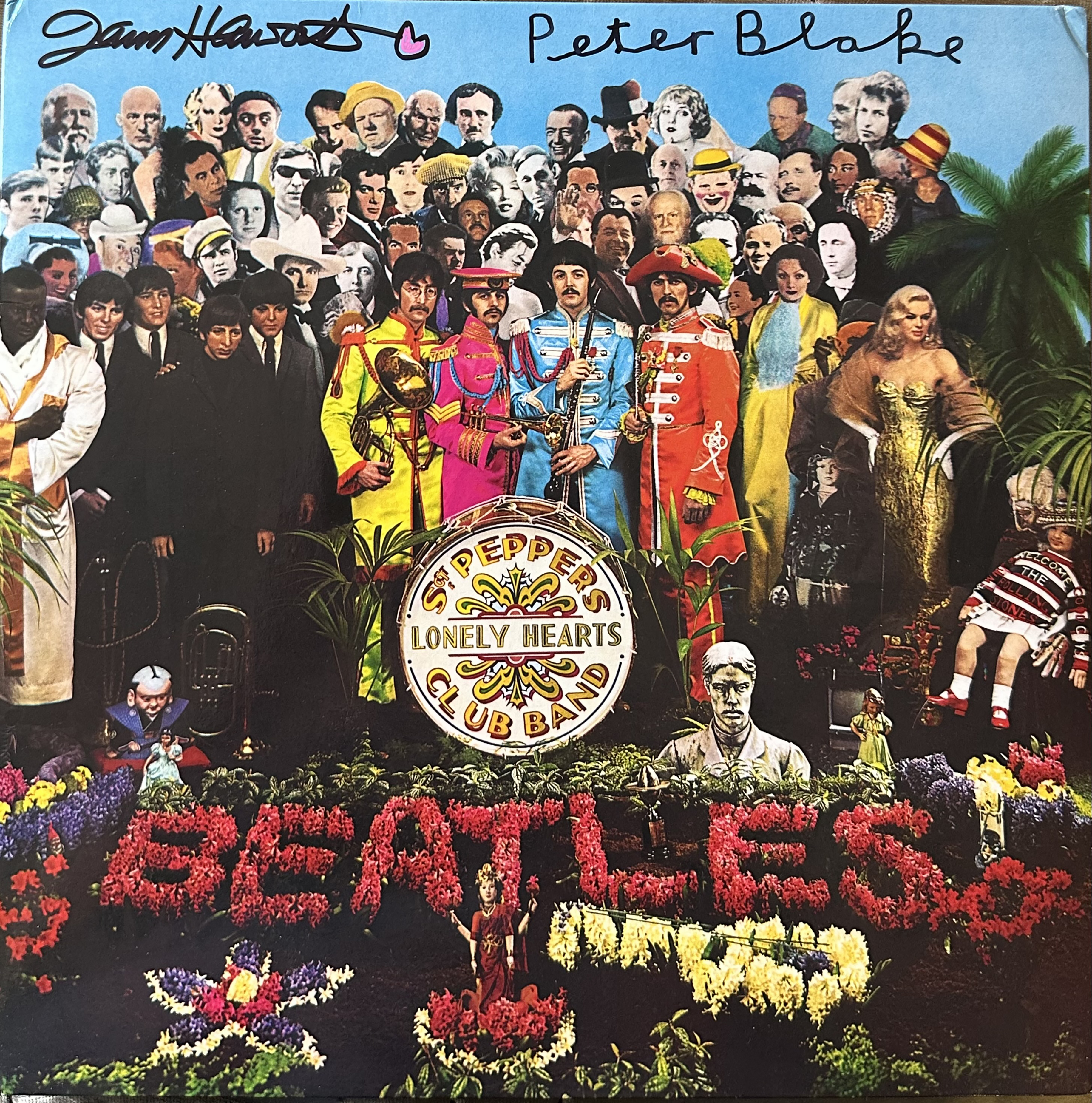
The Beatles – Sgt. Pepper’s Lonely Hearts Club Band – 1967
Pentangle – Sweet Child – 1968
Chris Jagger –The Adventures of Valentine Vox the Ventriloquist – 1974
Roger McGough – Summer with Monika –1978
The Who – Face Dances – 1981
Landscape – Manhattan Boogie Woogie – 1982
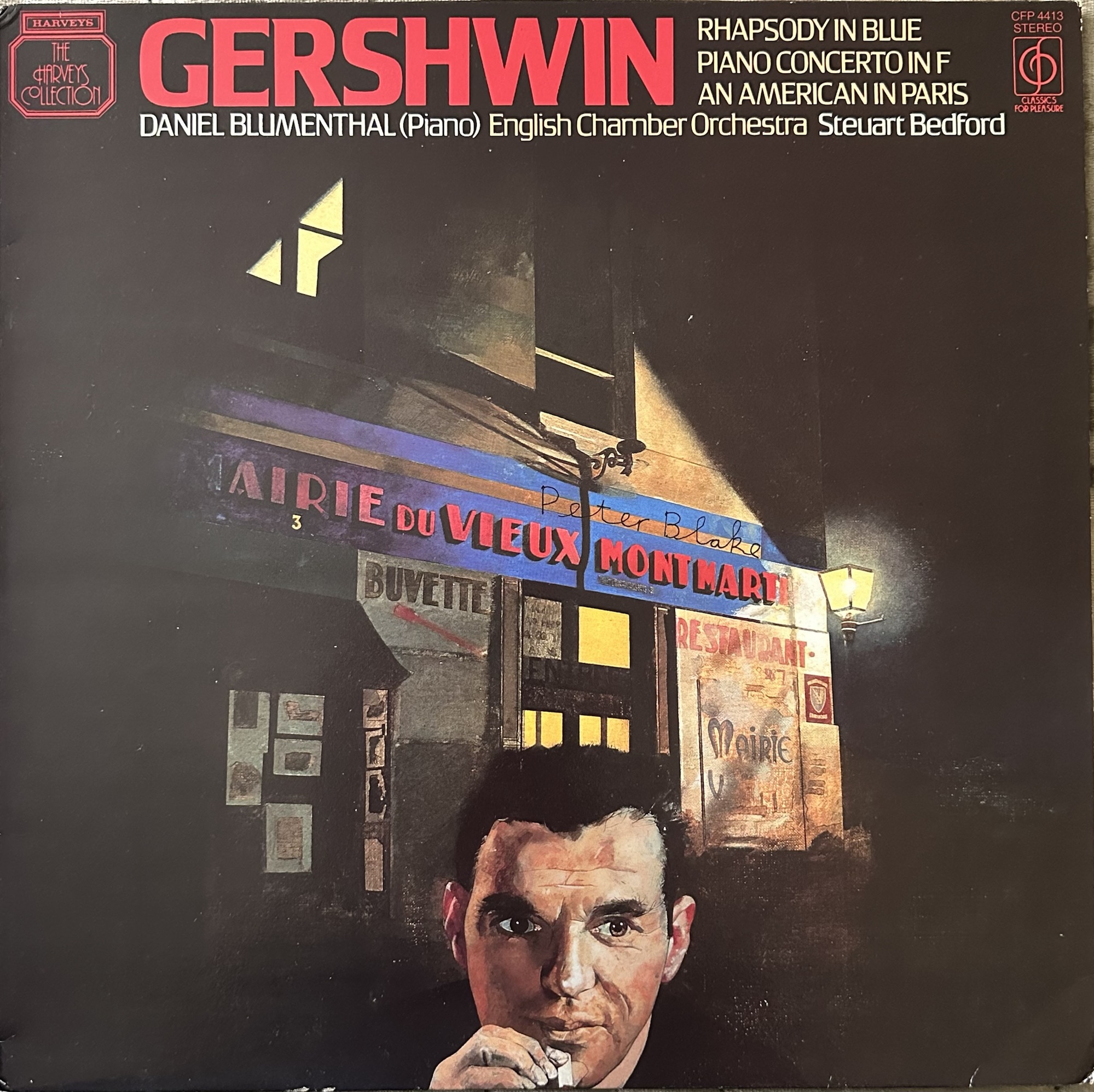
Daniel Blumenthal – Gershwin / Grofé – Rhapsody in Blue / American in Paris / Piano Concerto in F – 1983
Band Aid – Do They Know It’s Christmas? – 1984
David Sylvain — A Little Girl Dreams of Taking the Veil — 1986
Ian Dury – Apples and Apples / Byeline Brown – 1989
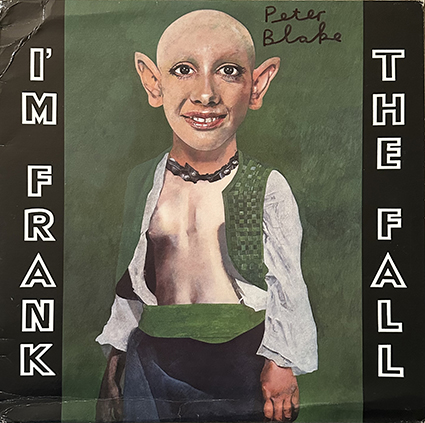
The Fall – I’m Frank –1990
Eric Clapton – 24 Nights and Wonderful Tonight – 1991
Paul Weller – Stanley Road – 1995
A Stranger Shadow – Colours – 1995
Various Artists — Brand new Boots and Panties – 2001
Robbie Williams – Swing While You’re Winning – 2001
Brian Wilson – Getting’ in Over My Head – 2004
The Who — Live at Leeds – 2006
Various Artists – John Peel: Right Time, Wrong Speed 197-1987 – 2006
Eric Clapton – Me and Mr. Johnson – 2006
Oasis – Stop the Clocks and Champagne Supernova – 2006
The Blockheads – Staring Down the Barrel – 2009
Brian Wilson & Peter Blake – That Lucky Old Sun – 2009
Ben Waters – Boogie 4 Stu: A Tribute to Ian Stewart – 2011.
Madness — Oui Oui, Si Si, Ja Ja, Da Da — 2012
Paul Weller – Dragonfly — 2012
Eric Clapton — I Still Do — 2012
Eric Clapton Madison Square Garden — 2012
Eric Clapton 70th Birthday Celebration — 2012
John Cooper Clarke — The Luckiest Guy Alive — 2018
The Who – WHO — 2019
Eric Clapton — The Definitive 24 Nights — 2023
Mark Knopfler’s Guitar Heroes — Going Home (Theme from Local Hero) — 2024
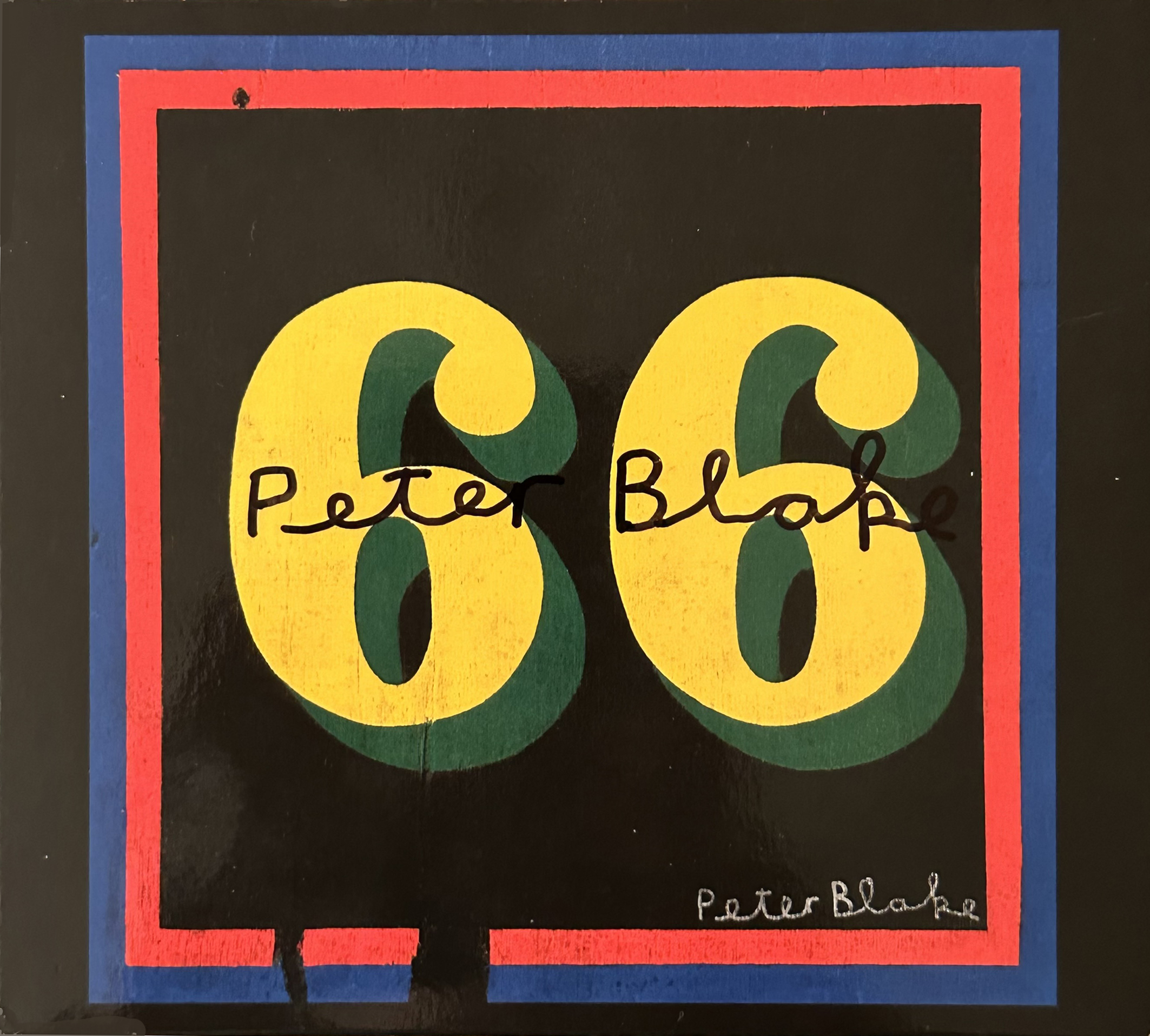
Paul Weller – 66 — 2024
Band Aid 40 — Do They Know It’s Christmas? — 2025
Hot Chip — Joy in Repetition
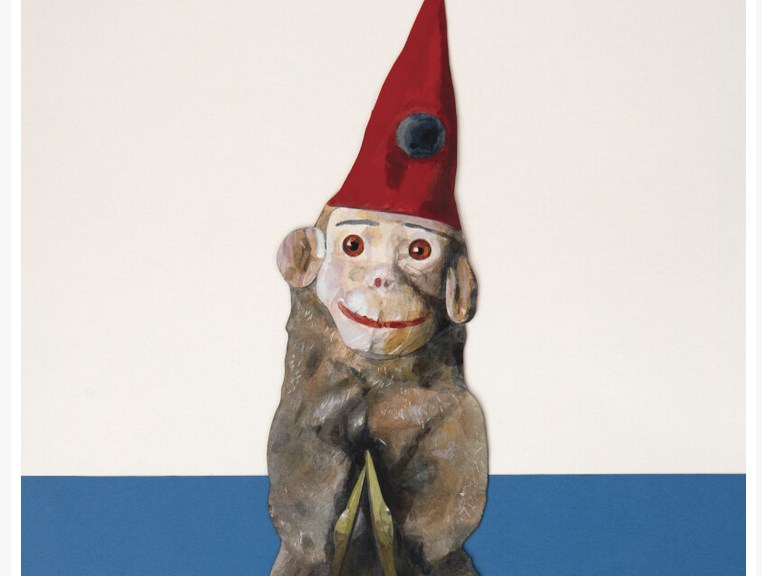
Peter Blake’s latest cover, by thr band Hot Chip, uses his watercolour painting of one of his mechanical, wind-up minkeys that repeatedly plays cymbals when started.
This double album of the band’s greatest hits was releaased on Friday 5th September 2025.
That’s quite impressive. Most, if not all, of his recent covers have been done for friends and the Hot Chip cover is no exception, being done as a favour to frontman Alexis Taylor, Blake’s friend.
Brian Donnely (born 4th November 1974 in Jersey City, New Jersey) is an American artist and designer iiving in Brooklyn. Took the artist name KAWS purely because of the way the letters appeared while still a teenager. He moved to New York where he began his career s a graffiti artist. He has graduated to fine art, paintings, sculptures and prints including record cover art.
I got a email recently offering me the chance to pre-order a record with a KAWS designed cover and that gave me the idea to try to find as many KAWS covers as I could. Searching the webb I have thus far found seventeen cover designs, the earliest from 1999 and the most recent to be released in July 2025.
So, here we go.
Number 1.
The Propellerheads—Take California and Party–12″ single released on the Wall of Sound label in 1999.
Number 2.
Cherie—Cherie—CD released on the Ape Sounds label. Cherie is a Japanese moodel, singer aand songwriter. This is her second CD, released in 2002. Guy Minnebach pointed out the tiny text above Cherie’s mask that says ”Peel slorly and see.” Now where have we seen that before? Of course! Beside the banana on the cover of the Velvet Underground & Nico! So KAWS is here directly referencing Andy Warhol! You can peel off the mask to reveal Cherie’s face.
Number 3.
DJ Hasebe—Tail of Old Nick EP–Limited edition six-track 12″ EP released in 2002 on the Sweep Inc / WEA Japan labels. DJ Hasebe is a Japanese DJ, hip hop artist and producer born 1971. This EP has become rare and very expensive.
Number 4.
DJ Hasebe—Old Nick 2-track promotional sampler, released 2002 with an outline version of the KAWS figure on the label.
Number 5.
DJ Hasebe—Old Nick Radio Show–CD released in May 2002 by WEA Japan.
Number 6.
Towa Tei—Sweet Robots Against the Machine:–12″ released on the Rhjythm Republic label in 2003. Towa Tei is a producer, remixer, DJ, artist and creative director, born Yokohama, Japan, in 1964.
Number 7.
Various Artists compilation–Heavy Volume 2–Single-sided LP in abook with KAWS’ reimagination of various record covers.
Number 8.
Kanye West—808s & Heartbreak–2LP + CD–Rock-A-Fella Records, 2008. Kanye West, born 1977, probably needs no introduction, having being married to Kim Kardasian between 2014 and 2022. He currently uses the name Ye.
Number 9.
Clipse–Til the Casket Drops–12″ LP–Get on Down Records–2009. Clipse are a gangsta rap duo ade up of No Malice and Pusha T formed in 1992. This was their third album.
Number 10.
Screenshot
The Scotts—The Scotts--7- and 12-inch singles with coloured vinyl or as picture discs. Released on Travis Scott’s Cactus Jack label. Travis Scott and Kid Cudi formed The Scotts in 2020 for this single release.
Number 11.
J-Hope—Jack in the Box–Single-sided 12″ LP–Released by Bighit Music in 2022. J-Hope, born in 1994 is a South Korean hip hop, rap and dance pop star.
Number 12.
Kid Cudi—Man on the Moon: Trilogy–Box Set 3 x reissue 2LPs–released by Republic Records in 2022. Kid Cudi, born 1984, is Scott Ramon Seguro Mescudi and also uses the moniker Kud Cudi.
Number 13.
Snoop Dogg—Doggy Style–12″ LP. This is a 2023 reissue of the album originally released in 1993, released with reimagined cover art as part of Interscope Records 30th anniversary celebration.
Mumber 14.
Kid Cudi—Insano–2LP–Released 2024 by Republic Records.
Number 15.
Clipse–Let God Sort EM Out–LP–released July 2025 on the Interscope label. Clipse return after a sixteen-year hiatus with a new album. To my mind the finest KAWS cover design so far.
Here’s another artist whose record cover art I don’t really collect. But as you probably know by now I do have a penchant for Pop Art and I put Ed Ruscha in that class. However… I did pick up the Beatles’ Now and Then / Love Me Do single on seven- and twelve-inch vinyl, so I have the beginnings of an Ed Ruscha collection.
Yesterday (18th May, 2025), I went to Stockholm’s Wetterling Gallery to see the Ed Ruscha exhibiton Figure It there and was honoured to be given a guided tour by Björn Wetterling himself. He also dug around for a copy of the exhibiiton catalogue which is housed in a twelve-inch record sleeve. Thus I have two Ed Ruscha record covers, so I decided to see what other covers he has made.
First off, there’s Paul McCartney‘s 2020 album McCartney III, which wasn’t designed by Ruscha but he provided the typography on the front cover. Photography was by Mary McCartney, so Paul kept that in the family.
The first cover Ruscha painted was for Mason Williams ‘1969 album Music.
2. Ruscha did the title on the cover of Talking Heads‘ 1992 compilation album Sand in the Vaseline. The cover art, however, is credited to Frank Olinsky and Manhattan Design.
3. Van Dyke Parks released a seven-inch single in 2011 called Dreaming of Paris / Wedding in Madagascar (Faranaina) and used a photo of Ruscha’s Paris print on the cover.
4. The two remaining memebers of the Beatles, with the help of AI reworked John Lennon‘s demo of Now and Then and in 2020 released it as a single on seven-, ten-, and twelve-inch vinyl coupled with a Giles Martin remastered version of the Beatles‘ first single Love Me Do. This time Ruscha designed the cover.
5. In 2023, Interscope Records celebrated its thirtieth anniversary and invited several “fine” artists to reimagine the cover art of many of the label’s back catalogue. Damien Hirst reimagined twelve of Eminem‘s covers and Richard Prince reimagined Nine Inch Nails‘ The Downward Spiral cover. Ed Ruscha reimagined 2Pac‘s All Eyez on Me album from 1996. There were two versions; a picture disc version in a ‘limited’ edition of 500 copies and a black vinyl edition of 100 copies that included a giclee print of the cover art signed by Ruscha. The picture disc edition sold for USD 100 and the 100 copy edition for USD 2,500!
6. Dead End. This is the cover from the Wetterling Gallery‘s recent Ed Ruscha exhibition. The Dead End print looks like it’s made of metal but it is actually a multi-layered print on hand-made paper. The typeface is Ruscha‘s typical Boy Scout Utility Modern with its squared off, geometric letter forms. Insted of a record, there is a card insert along with the actual catalogue.
I haven’t been able to find any more Ed Ruscha covers so I might be tempted to try to collect the few that I don’t actually have.
I don’t normally write about record cover artists that I don’t collect. However, A friend has nagged me about William Eggleston’s covers and I felt I had to look into them.
Eggleston, born July 27th, 1939 in Memphis, Tennessee, was apparently an introverted child who his mother described as “a brilliant but strange boy”. He taught himself to play the piano and drawing. He was drawn to visual media and collected postcards and cut out pictures from magazines. Eggleston first became intrested in photography while at Vanderbilt University in Nashville and bought his first camera after a friend who recognised his fascination with visual imagery and his interest in mechanics suggested he buy a camera.
He turned to colour photography and in 1976 the Museum of Modern Art organised the first exhibion of Eggleston’s photographs–an exhibition that for the first time showed colour photographs. This seminal show was accompanied by the Catalogue Willim Eggleston’s Guide and showeed, for the first time, that colour photography could be raised to the level of art. Two of the photos in this book would turn up on record covers.
Eggleston has had many impressive exhibitions since.
Record covers
1. Eggleston‘s first record cover image was on Big Star’s album Radio City, released in 1974. The cover featured Eggleston’s 1973 photograph Red Ceiling. Alex Chilton (1950-2010) was a founder member of Big Star. Eggleston was a good friend of Chilton’s parents and Alex’s father championed Eggleston’s work. Alex knew him well and also admired his work, so it was natural to ask Eggleston for an image for Big Star‘s album, In addition Eggleston was later to play piano on Nature Boy, one of Big Star‘s songs on their third album.
2. Alex Chilton‘s 1979 album Like Flies on Sherbert features Eggleston’s Dolls on a. Cadillac photo from his Los Alamos series made between 1965 and 1974. Again, Chilton asked his friend for a suitable cover image.
3. Green on Red, from Tucson, Arizona, was a quartet made up of Dan Stuart, Jack Waterson, Chris Cacavas and Chuck Prophet. The band released their fourth long player Here. Come the Snakes in 1988 with Egglesgon’s Near the River at Greenville, Mississipi from 1975 on the cover.
4. Primal Scream went to Ardent Studio in Memphis to record Rocks and recorded their 1992 EP Dixie Narco there.Intgerestingly, Big Star had recorded Radio City at Ardent studio and Alex Chiltern’s mother had an art gallery in Memphis showinfg Eggleston’s photography. It seems likely that Primal Scream would have been exopsed to Eggleston’s work during that visit to Memphis and resulted in the band using four of Eggleston’s photos on record sleeves.
5. Another Big Star album came out in 1993 when the re-formed band made up of Alex Chilton, Jody Stephens and new recruits Jon Auer and Ken Stringfellow from the Posies released Live at Missouri University. Once again Chilton turned to Eggleston for a cover image. The picture of a ceiling fan is reminicent of the Red Ceiling photo on the band’s Radio City cover. the photo is titled Washington D.C:, 1970.
6. The following year (1994) Primal Scream used a cropped version of Eggleston’s Troubled Waters on their 1994 Give Out But Don’t Give Up album. According to Primal Scream the image of a Confederate Flag was a reference to the fact that the band had been to the South to Memphis to record with legendary producer Tom Dowd.
7. Gimmer Nicholson moved in the same Memphis circles as Eggleston and recorded his Christopher Idyll album in 1968, produced by Terry Μanning, a photographer and friend of Eggleston. Eggleston had helped edit the photography on Mannings’s own 1970 album Home Sweet Home. Nicholson‘s Christopher Idyll was first released as a limited edition LP in 1981 and later as a CD in 1994.
8. The title of Jimmy Eat World‘s 2001 album Bleed American echoes the title of Eggleton’s photo, which is also from the Los Alamos series (1965-1974). The photo shows sports trophies on top of a cigarette vending machine supposed to rerpresent “the fragilityof success.”
9. The photo on thee cover of The Derek Trucks Band‘s Soul Serenade album is Eggleston’s Untitled (Near Minter City and Glendora, Mississippi) from 1970 and is the first to come from the William Eggleston Guide book.I haven’t been able to establish a direct connection between the band and Eggleston, but the fact that the band comes from the American South makes using a photo from a fellow southener (Eggleston) logical.
10. Chuck Prophet, as previously mentioned, was previously a member of Green on Red and was a confirmed Eggelston fan. His Age of Miracles album was released in 2004. The photo, from 1975, was of Eggleston’s friend Martha Hare spaced out on half a Qualude taken in Memphis. It would turn up again on Primal Scream‘s 2006 single Country Girl.
11. Primal Scream seem to like Eggleston’s work as the band released two singles in 2006 with cover photos by him. Here’s the cover of Country Girl. The other was Dolls. (see No. 12)
12. David Berman, formed the Silver Jews in New York together with Stephen Malkmus and Bob Nastanovich from Pavement in 1989. Berman was living in Memphis when the band’s Tanglewood Numbers came out in 2005 and he felt that one of Eggleston’s photos from Memphis suited the album’s cover.
13. The second Primal Scream single from 2006 was Dolls with Eggleston’s Untitled, Memphis, 1972-73 photo on the cover. I’m not sure who the model was on this one.
14. It is unclear why Joanna Newsom decided to use a modified version of Eggleston’s Kenya, 1980 photo on the cover of her 2007 release Joanna Newsom and Ys Street Band E.P. The cover shows a rotated version of the original photo. Eggleston’s original has the branch sticking out from the left of the picture. The record’s title is supposed to be a play on Bruce Springsteen’s E. Street Band.
15. Spoon, a band from Austin, Texas, released their seventh album, Transference, in 2010 and selected Eggleston’s photo of his nephew from his Sumner, Mississippi, series. This photo was also included in the 1976 MoMa exhibition of Eggleston’s owork and included in the exhibition catalogue.
16. 2017 William Eggelston’s Music, his first release of his own musical improvisations with two tracks by well-known composers; Lerner & Loewe‘s On The Street Where You Live and Gilbert & Sullivan’s Tit Willow.
17. Eggleston‘s second full-length recording came out in 2023, when he was 84 years old! This album contained one of his own improvisations and five “standards”; Ol’ Man River, Smoke Gets in Your Eyes,Over the Rainbow, That’s Some Robert Burns and Onward Christian Soldiers (which occupies the whole of side two. The title, 512, comes from the flat where he recorded the album,
18. J. Spaceman (Jason Pierce) and John Coxon, part of Spiritualized, one of my favourite bands, released a double album entitled Music for William Eggleston’s Stranded in Canton on 18th October 2024. They first performed the musical score in a show at the Barbican Gallery in 2015 but the record wasn’t released until nearly ten years later. Stranded in Canton is Eggleston’s 1974 raw Memphis film shot in bars and on street corners and showing Eggleton’s friends carousing, playing music and firing pistols into the night sky.
The album cover shows stills from the film rather than separate photographs. I have the standard edition but there is a deluxe white vinyl version with extra photos and a booklet and a different cover image (see the lower picture.)
I would advise anyone who wants to start collection any designer’s, illustrator’s or photographer’s record cover for simpliccity’s sake choose one with a maximum of, say, 200 covers to collect. That would rule out the likes of Alex Steinweiss (who has been estimated to have produced over 2,500 covers) or Anton Corbijn or even Rob Jones (I started collecting his covers but gave up), who designs many covers for Jack White’s Third Man Records.
I started collecting record covers by the artist known as Banksy–whoever he may be–in around 2005 not thinking there would be too many to find. So far my collection includes 180 items, admittedly with a few doubles, but I’m getting dangerously near the 200 cover limit!
Here’s my list as of May 2025. I make no claim that it is complwete. One can always find covers with minor details with Banksy art.
Artist–Title–Format–Label–Cat No. –Year Released
1. Mother Samosa[1]— The Fairground of Fear — Printers proof of cassette inlay — Mother Samosa — 1993
2. Mother Samosa* — Oh My God It’s Cheeky Clown — Printers proof of cassette inlay — Mother Samosa –1994
3. Revolucion X--Canciones electorales–Cassette — Not on label — 1997 (?)
4. One Cut — Cut Commander — 12” — Hombre Records — MEX 006 1998
5. Capoeira Twins — 4 x 3 / Truth Will Out — 12” promo — Blowpop Records — BLOWP 001 1999
6. One Cut — Hombre Mix — CD — Hombre Records — 666017004020 (CDX002) — 1999
7. Various Artists compilation — The Next XI — Sleazenation No 2, Sept 1999 — Wall of Sound — IMPRESS SN 01 — 1999
8. One Cut — Grand Theft Audio — Double LP — Hombre Records MEX 024 — 2000
9. One Cut — Grand Theft Audio Sampler — 12” promo — Hombre Records — MEX 025 — 2000
10. One Cut — Mr X / Rhythm Geometry — 12” — Hombre Records — MEX 029 — 2000
11. One Cut — Underground Terror Tactics — 12” — Hombre Records — MEX 016 — 2000
12. One Cut — Armour Plated, X-Rated — CD promo — Hombré Records — MEX 024cd — 2000
13. Monk & Canatella — Do Community Service — CD — Telstar Records — TDC 3112 — 2000
14. Various Artists — We Love You… So Love Us — LP — Wall of Sound AMOUR 1 — LP 2000
15. Various Artists — We Love You… So Love Us — CD — Wall of Sound — 72438491421 (AMOUR1CD) — 2000
16. Dynamic Duo / Nasty P — Skateboards — CD promo — Turntable Masochists — 2000
17. Dynamic Duo — Styles by the Dozen — 12” — Complex Broad — CB001 — 2000
18. Various Artists — Monkeys With Car Keys — CD — Natural Born Productions — 2000?
19. The Promise — Believer — Red vinyl LP — Deathwish — DW124 2022-07-15.
176. The New York Folk Music Hall of Fame–Eternal Bridges: Songs of Peace, Hope & Freedom–CD–NYFMHoF–8,88296E–2023
177. Fist2Fist–Hold the Gun–CD EP–Not on label–none–year?
I know you would like to see pictures of each release but there just isn’t time to add them. If I have missed any important releases, please feel free to cotact me in the Comments and I’ll try to add them.
My series of paintings of records covers continues. I’ve now done seven: The Ramones, UFO’s Strangers in the Night, Kraftwerks’s Die Mench Maschine, Ian Dury’s Juke Box Dury, Led Zeppelin I, The Clash, and most recently the Sex Pistol’s Never Mind the Bollocks and the Velvet Underground & Nico with its removeable banana.
While I was busy painting these, I was reading Andy Warhol’s & Pat Hackett’s Popism: The Warhol ’60s and I came to 1966 when Warhol describes his first meeting the Velvet Underground in late 1965 and his interest in “getting into the music scene”. Warhol and Paul Morrissey had planned a Velvet Underground concert in early 1965, but the locale turned out to have been previously booked, and desperate, Paul and Andy overheard a conversation that the Polish Dance Hall, the Dom, on St Mark’s Place, was free during April and so Warhol rented it to put on what he intitially called the Erupting Plastic Inevitable—it wouldn’t be called the Exploding Plastic Inevitable until later.
Warhol put a half-page ad in the Village Voice:
Come blow your Mind The Silver Dream Factory Present ERUPTING PLASTIC INEVITABLE with Andy Warhol The Velvet Underground and Nico
It was at the Dom, at one of the Plastic Inevitables, that Warhol met Eric Emerson who would later come to influence the Velvet Underground & Nico’s album release. At the end of April ’65, the Velvets along with other bands played at the opening of The Cheetah Club on Broadway and 53rd Street.
Warhol describes how he put up the money to rent a couple of days’ studio time at “one of those little recording studios on Broadway”. He was, of course, referring to the Scepter Studio run by Norman Dolph. According to Popism, Warhol, Paul Morrissey, Tom Wilson and Little Joey (whom Warhol describes as “The Factory gofer) were the only people in the control room (though I would guess Dolph was there, too.)
I think “put up the money” is something of a euphemism. Rumour has it that he paid Dolph with a Campbell’s Soup Can painting! Another of Warhol’s ways of settling accounts without having to dip into his pockets. According to Blake Gopnik, author of the definitive Warhol biography, Warhol “paid ” Giuseppe Rossi, the surgeon whon saved his life after he was shot by Valerie Solanas in June 1968, with seven Soup Can prints—apparently Rossi wasn’t worth the full set of ten prints!
Warhol says that the Velvets hadn’t included Nico originally as they didn’t want to be seen as a “back-up band for a chanteuse.” Warhol says “ironically, Lou had written the greatest songs for her to sing. Her voice, the words, and the sounds the Velvets made all were so magical together.”
When the lease on the Dom lapsed at the end of April, Warhol says they “only had time to record half the album in that Broadway studio” — “All Tomorrow’s Parties, There She Goes Again and I’m Waiting for the Man“. However, thanks to the discovery of the Scepter acetate, we now know that almost the full album was recorded. Dolph, in aaddition to owning the studio, was a sales executive at Columbia Records and sent the tape to Columbia but they declined, as did Atlantic Records (objecting to the drug references) and Elektra Records.
In May ’65, Warhol & the Velvets went to Los Angeles where Tom Wilson rerecorded I’m Waiting for the man, Venus in Furs and Heroin. The final track, Sunday Morning was recorded in Mayfair Recording Studios in Manhatten, in November 1966. MGM’s subsidiary company Verve Records agreed to release the album.
In Popism, Warhol describes his initial ideas for the cover design were a series of plastic surgery images, and Warhol had “sent Little Joey (the gofer) and his friend Dennis to medical supply houses for photographs and illustrations of nose jobs, breast jobs, ass jobs etc.—they brought me back hundreds!” Luckily, Warhol ditched that idea in favour of the now famous banana.
Warhol goes on to tell how he watched “a tall guy with dark curly hair step out of the elevator carrying a big manila envelope under his arm. … The guy didn’t know who to talk to and he just started wandering around, looking at the canvases, the screens, the vunyl, the plastic, the crumbling walls. If anybody “received” people at the Factory, it was Gerard (Malanga), but he’d just gone out to mail invitations to one of his poetry readings. The guy walked three-quarters of the way through the Factory till he saw me sitting in my corner and almost jumped—it was so hot, I hadn’t moved for an hour. He handed me the envelope. It was the from the artwork department at M-G-M records.“
Warhol doesn’t say any more about the contents of that envelope. Did it have the famous rear cover picture with Eric Emerson’s head? When the album was eventually released in March 1967, Emerson demanded payment for the use of his picure, forcing Verve Records to recall as many albums as they could and sticking a black label over the back cover photo. They re-released the album with Emerson airbrushed out of the frame.
The rear cover with the sticker covering Emerson’s face.