Andy Warhol’s first ever retrospective exhibition opened on 15th January 1968 and ran until 17th February. This year, to mark the 50th anniversary of that groundbreaking show, Moderna Museet in Stockholm has created a new show, called “Warhol 1968” as a sort of rememberance of the earlier exhibition. This exhibition runs from 15th September 2018–17th February 2019. The exhibition will transfer to Moderna Museet’s Malmö site, opening on 30th March and running until 8th September.
The current exhibition in Stockholm includes eight record covers bearing Andy Warhol’s art. The exhibition’s curator John Peter Nilsson has decided to try to include all Warhol’s record covers produced during his lifetime in this new exhibition and has asked me if I would lend my record covers to the exhibition along with some other related pieces of Warhol art.
It will be a wonderful opportunity to show a total of seventy-seven record sleeves, LPs, EP boxes, 12″ and a few 7″ singles, some of which have never been shown in public before.
My friend, Lars Magnell, CEO of Wag the Wall has promised to lend his company’s fantastic Magic Vinyl Display frames in which to hang the covers to show them at their best .
As anyone knows who has been following my blog, I’ve been collecting record covers by Sir Peter Blake for a long time. I’ve also been to numerous gallery shows and museum exhibition of Peter Blake’s art. I also have a number of exhibition catalogues from a various Peter Blake exhibitions. In addition I have several books on record cover art and one by graphic designer Richard Evans–who I guess is a Peter Blake fan too.
Richard Evans (born 30th March 1945 (as he states on his web page the same day as Eric Clapton) is a graphic designer, artist and photographer who has designed record covers for a great many artists including Robert Plant, Van Morrison, World Party, Pete Townsend and has been “official” designer to The Who since the mid 1970s.
Richard Evans published his book “The Art of the Record Cover” in 2010 and it is a chronological guide to record cover design and includes, at the end, a section on how to design one’s own record cover.
Richard Evans – The Art of the Record Cover–A History and How to.
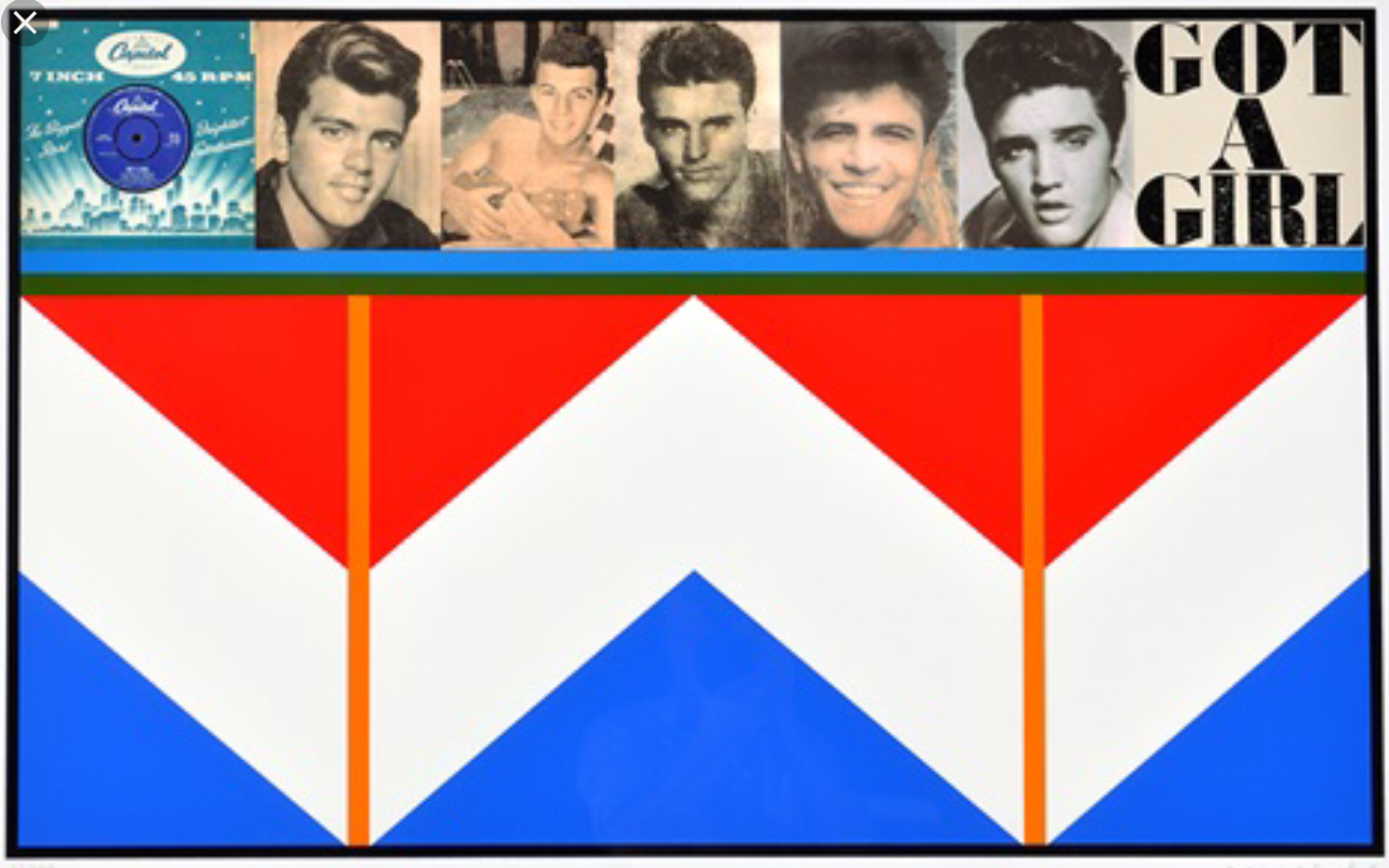
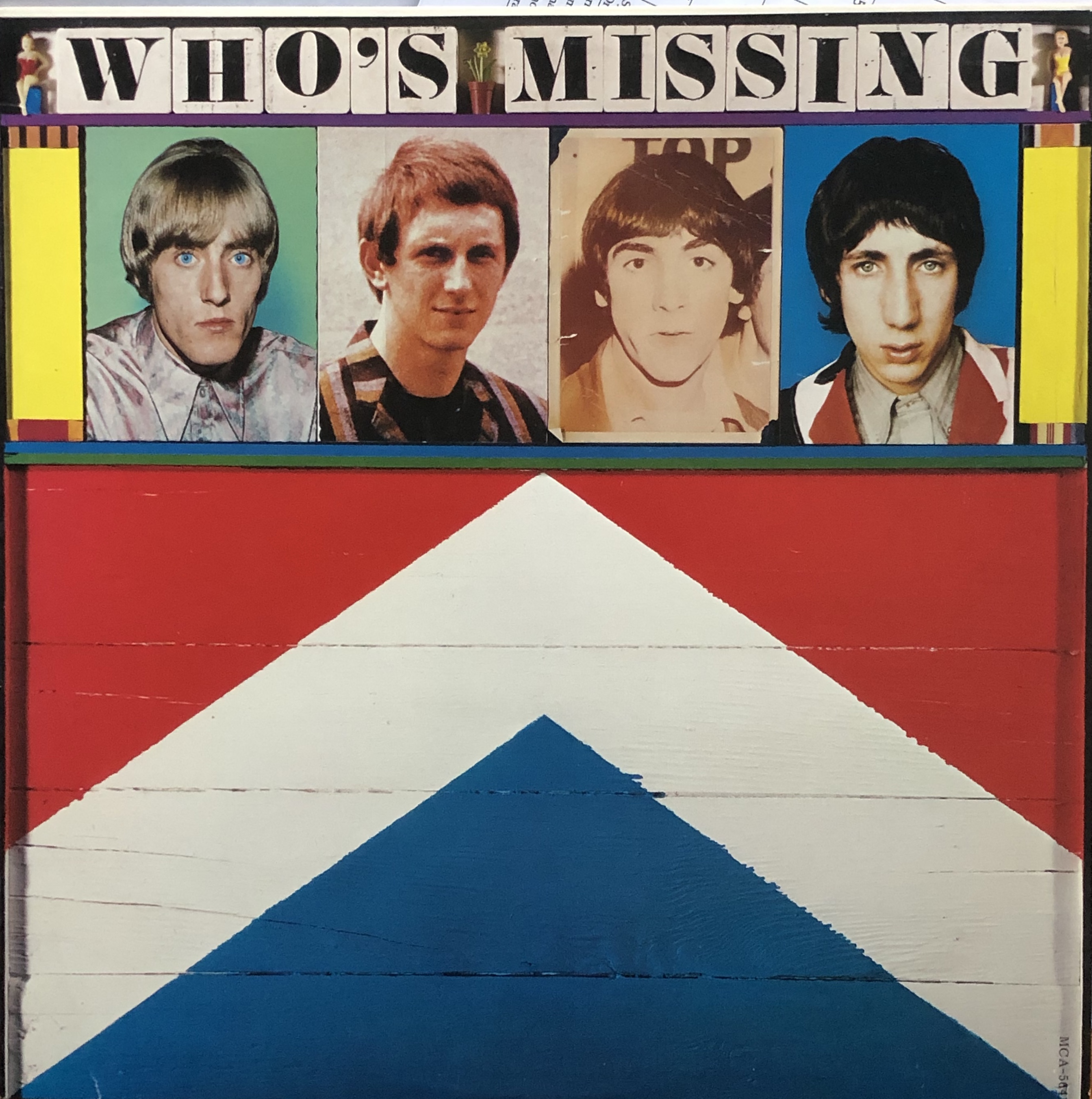
One of Richard Evans’s covers for a 1985 compilation album by The Who called “Who’s Missing” features tracks not previously available on LP and the cover–to another fan of Peter Blake’s art–seems inspired by Blake’s 1960-1 painting/collage “Got a Girl” (the title comes from a 1960 single by The Four Preps (Capitol 4362)).
Peter Blake — “Got a Girl” 1960-61.
Richard Evans’s cover for The Who’s “Who’s Missing”.
This album was only released in America and I have been looking for a copy to keep beside my Peter Blake covers for several years, and I finally found one in my favourite Stockholm record emporium.
You already know that I am inordinately proud of my collection of records and CDs with cover art by the artist known as Banksy. Many of the vinyl releases with Banksy‘s cover art, particularly the “unofficial” ones, were released as limited editions. Dirty Funker (just one of DJ Paul Glancy‘s aliases) released two remixes as 12-inch singles with cover art by Banksy: “Let’s Get Dirty“, from 2006, appropriated Banksy‘s famous Kate Moss portrait, and “Future“, released in 2008, featured Banksy‘s “Radar Rat” design (in five different limited edition covers, probably each of 1000 copies).
a. Front of first pressing of Dirty Funker’s “Let’s Get Dirty” 12-inch single.
b. Back of first pressing of Dirty Funker’s “Let’s Get Dirty” 12-inch single.
There were two editions of the “Let’s Get Dirty” 12-incher, both limited–the first edition, which showed only Banksy‘s Kate Moss portrait with no artist, title or tracklisting, or even a barcode. The front image showed Kate‘s head against a red background, while on the rear cover she had a pale green background. This edition must have been significantly more limited than the second edition which showed Kate‘s portrait with a Dymo strip over her eyes on the front cover giving the artist and record’s title. On the rear the strip was placed over Kate‘s mouth giving the tracklisting.
Second pressing with “Dymo” band
b. back of second pressing of Dirty Funker’s “Let’s Get Dirty” 12-inch single.
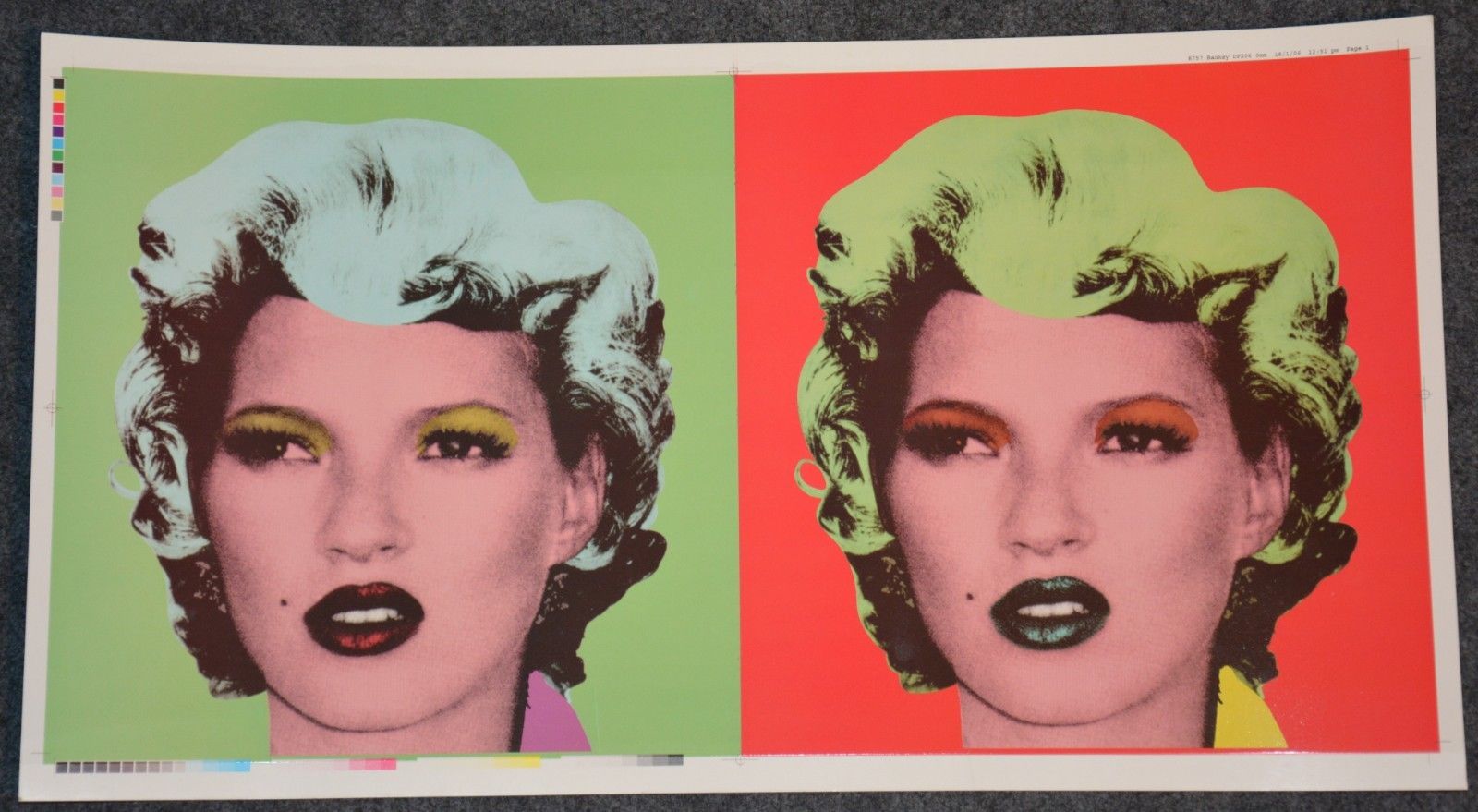
This week a printer’s proof of the first edition “Let’s Get Dirty” cover was advertised on Ebay. The seller had bought it in 2007 and now was sadly selling it. He thought there might have been about ten copies printed in 2006 (the print is dated 18th January 2006) and makes an interesting addition to both my Banksy and my collection of record and CD covers featuring Kate Moss.
Printer’s proof sheet for the “Let’s Get Dirty” cover.
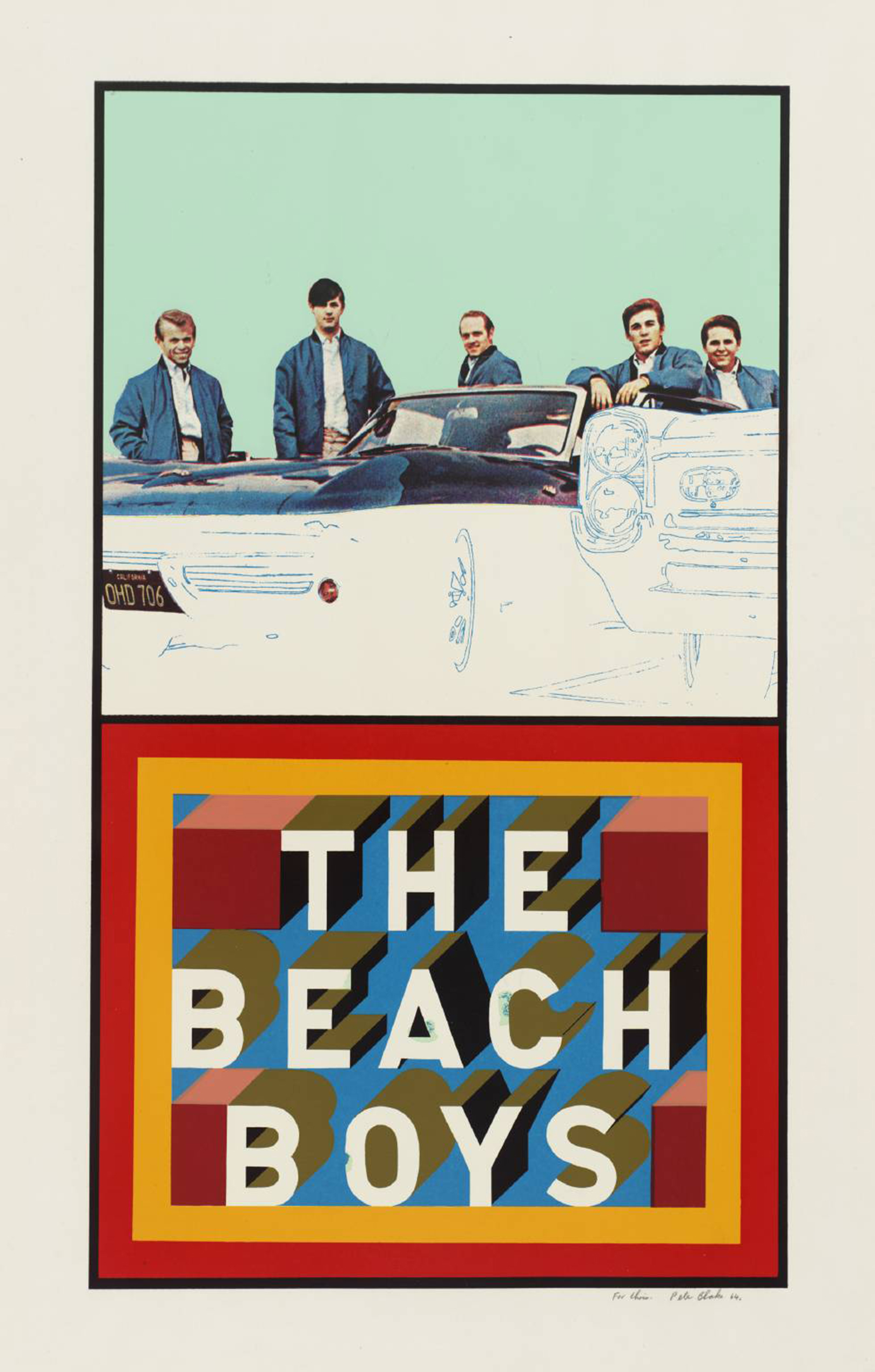
I don’t know if Peter Blake and Brian Wilson are chums, but there’s little doubt that Peter Blake knows about Brian Wilson‘s music. One of Blake‘s earliest works was of the cover of The Beach Boys’ LP “Shut Down, Vol 2” in his 1964 print “The Beach Boys“.
Peter Blake’s 1964 print “The Beach Boys”
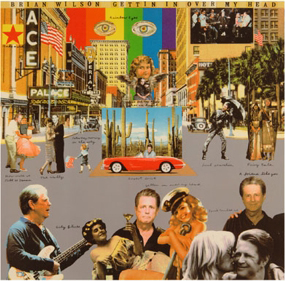
Actually, the image wasn’t taken from the album cover. but from a music paper advertisement for the album. Blake designed the cover for Brian Wilson‘s 2004 album “Gettin’ In Over My Head“.
Gettin’ In Over My Head cover.
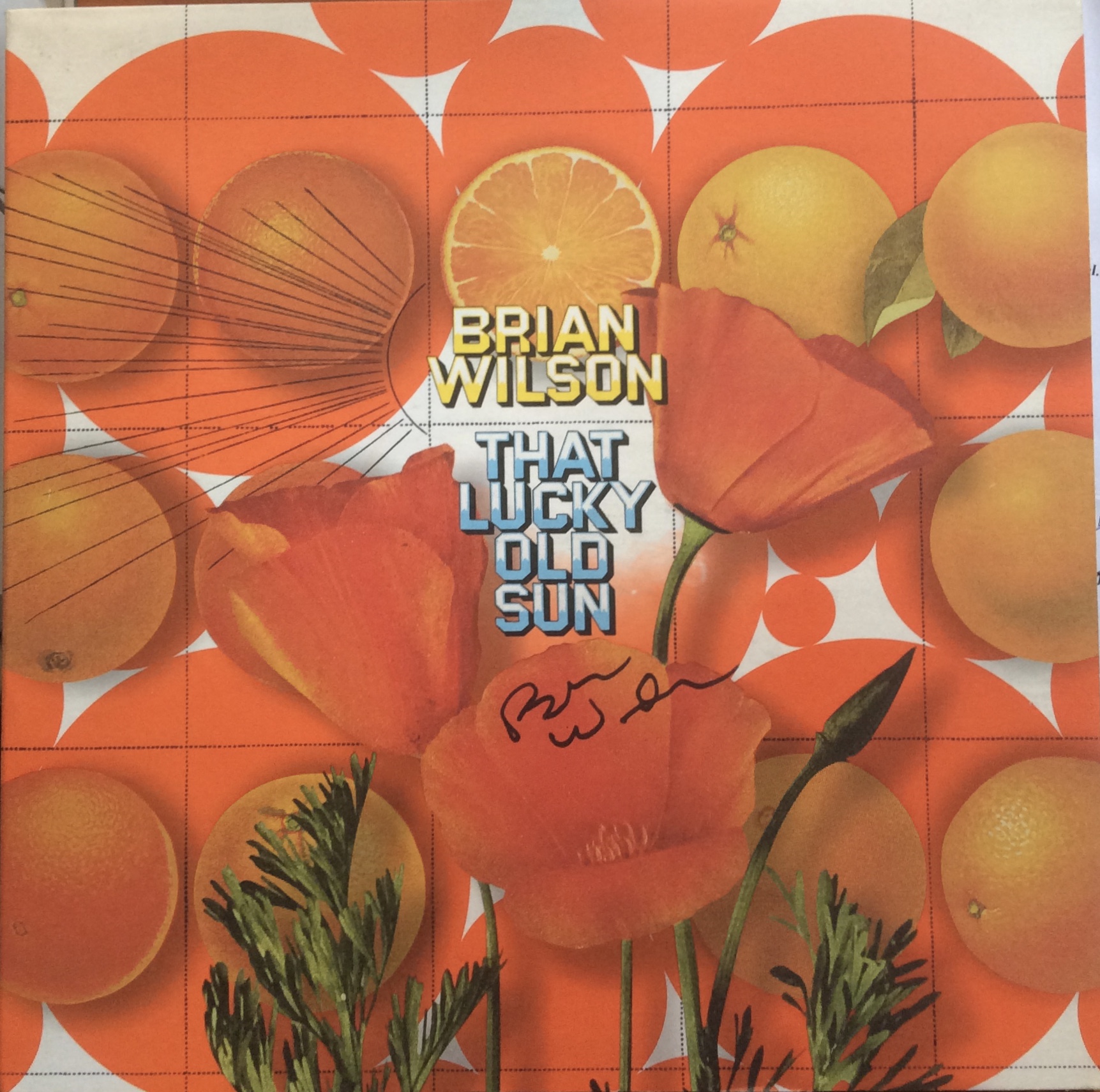
In 2007 Brian Wilson put together an audio presentation called “That Lucky Old Sun” and toured with it. He released the music as his eighth full length the following year. The cover for the LP and CD was designed by Martin Venezky / Appetite Engineers and the art director was Tom Reccion.
Brian Wilson’s “That Lucky Old Sun” LP cover.
In 2009 Genesis Publications, in England, published a box set of the “That Lucky Old Sun” with a 56 page book pf interviews written by Harvey Kubernik with an introduction by Peter Blake, each book signed by both Brian Wilson and Peter Blake. The set, produced in an edition of 1000, includes twelve seriegraphs by Peter Blake each illustrating a song from the album as well as three facsimile sheets of music and a VIP pass and “one of the first pressings” of the “That Lucky Old Sun” CD .
Genesis Publications’ “That Lucky Old Sun”.
Now to my quandry–should this set be included in a collection of Peter Blake‘s record cover art? I have included the Genesis Publications’ “Limited Edition 24 Nights” box set with it’s book of Blake drawings from Eric Clapton‘s 1980 and 1981 concerts as the cover of the “24 Nights” album was actually by Peter Blake. However, in the case of the “That Lucky Old Sun” set, the record’s cover art was NOT by Peter Blake. To put you out of your misery, I have found a set at a reduced price. So I’ll add it to my Peter Blake collection.
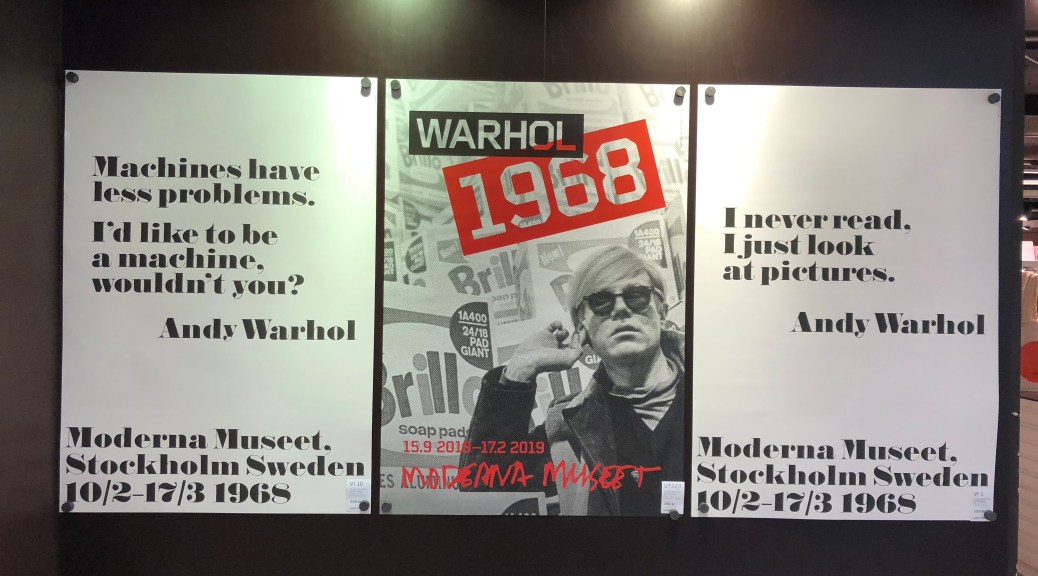
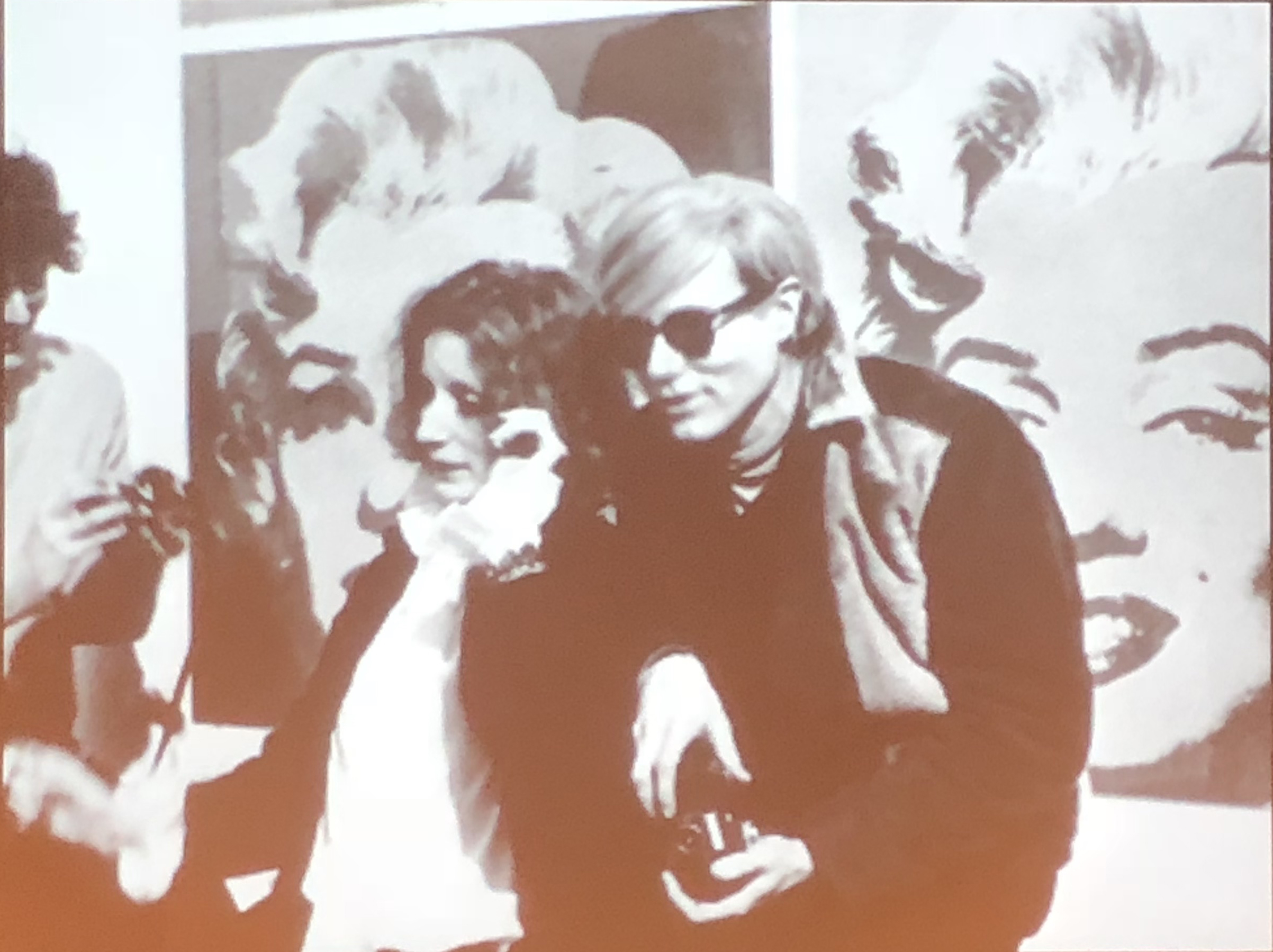
Andy Warhol’s first international museum retrospective took place at Stockholm’s Moderna Museet from February 10th to March 17th 1968. A new exhibition entitled “Warhol 1968” was the museum’s way to remember this groundbreaking show on the 50th anniversary of the original.
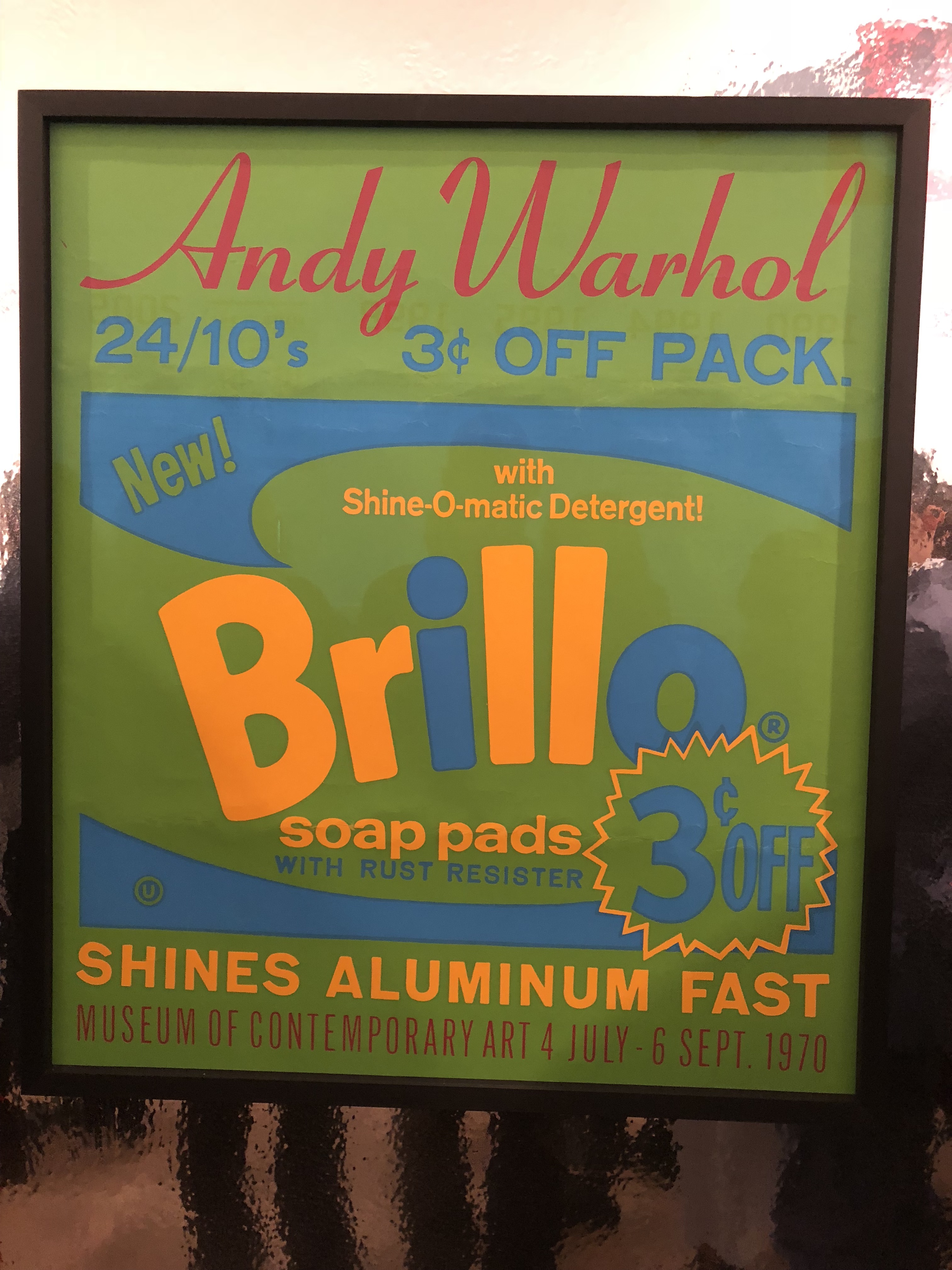
By 1968 Warhol was already famous but remarkably there had not been any retrospective exhibitions of his work at any art institution. Pontus Hultén, then Moderna museet’s director, met Kasper König at a dinner party. At the time, König worked with Claes Oldenburg in New York and knew many of the New York artists of the period. He also knew Swedish ex-pat Billy Klüver, who acted as Pontus Hultén’s New York contact with American artists. Billy and Pontus were old chums, having met as students in a Student film club. König put the idea of an exhibition to Warhol. Hultén and art critic Ole Granath wanted it to be a multimedia event with paintings, Brillo boxes, helium-filled balloons and films and it seemed that Warhol agreed. There was just one little problem–Moderna Museet had very limited funds. Importing 500 of Warhol’s Brillo boxes would be too expensive, so Andy suggested Hultén had the boxes made locally, but even that proved beyond the museum’s budget. Finally the ordered 300 real Brillo cartons from the Brillo company and these had to be assembled upon arrival! Even the idea of the silver helium-filled balloons fell by the wayside as the balloons themselves were difficult to manufacture and the helium was prohibitively expensive–so the ingenious Hultén and Granath painted plastic garbage bags silver and filled them with air. They didn’t float like the helium filled balloons, and proved to become highly static and attract enormous amounts of dust! Also Warhol’s films never materialised. Apparently there was concern that showing the films in Stockholm might tarnish their reputation.
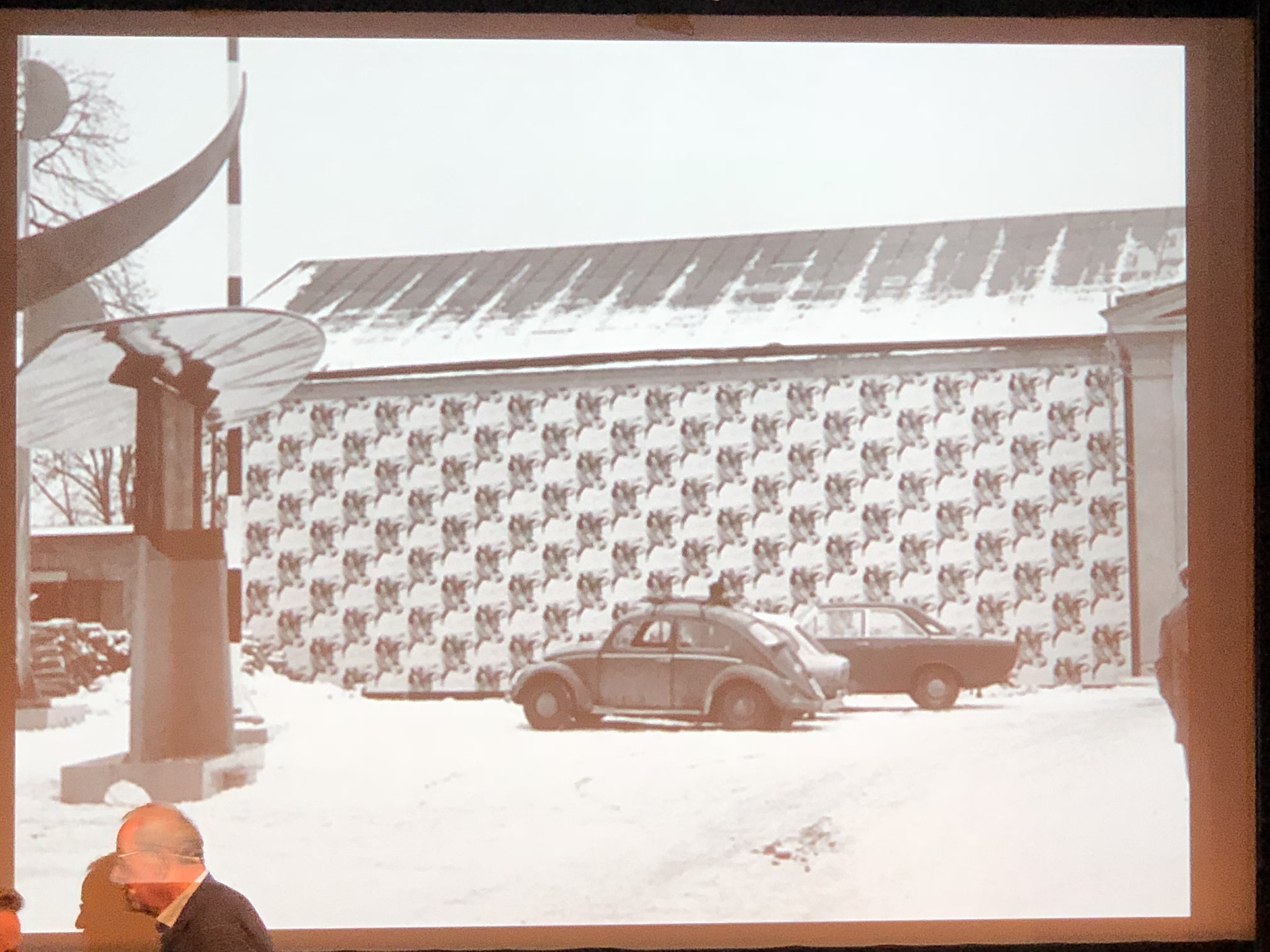
Hultén wanted Warhol’s “Cow” wallpaper to decorate the outside of the Museum, but hanging it in the cold of the Swedish winter wasn’t easy. In the end Granath had to set up scaffolding clad with hardboard and let the Museum’s decorator hang the wallpaper.
Kasper König was invited to Stockholm for the exhibition, but being young and unemployed he cashed in his plane ticket and stayed in New York. Andy Warhol made the journey to the exhibition as did Billy Klüver.
Billy Klüver was an engineer interested in art and helped artists make mechanical art works. In March 1963 he interviewed the eleven artists involved in the Popular Image exhibition which was to run at the Washington Gallery of Art from April to June 1963. Klüver produced an LP record of the interviews. He then suggested to Andy Warhol that they silkscreen covers for the records and together they made Warhol’s “Giant Size $1.57 Each” record covers. They made five variations, the “Giant Size” motif silkscreened in black on plain white covers as well as on covers spray painted red, green, yellow and orange. It is not known how many covers they printed. They were not used at the exhibition. Instead a catologue with cover image by Jim Dine, who was probably a bigger name than Warhol in 1963, was used on the envelope that contained both catalogue and record. It seems, however, that Billy Klüver had stored the covers in his cellar and some of the white covers (unsigned and unnumbered) were sold at the Moderna Museet retrospective in 1968.
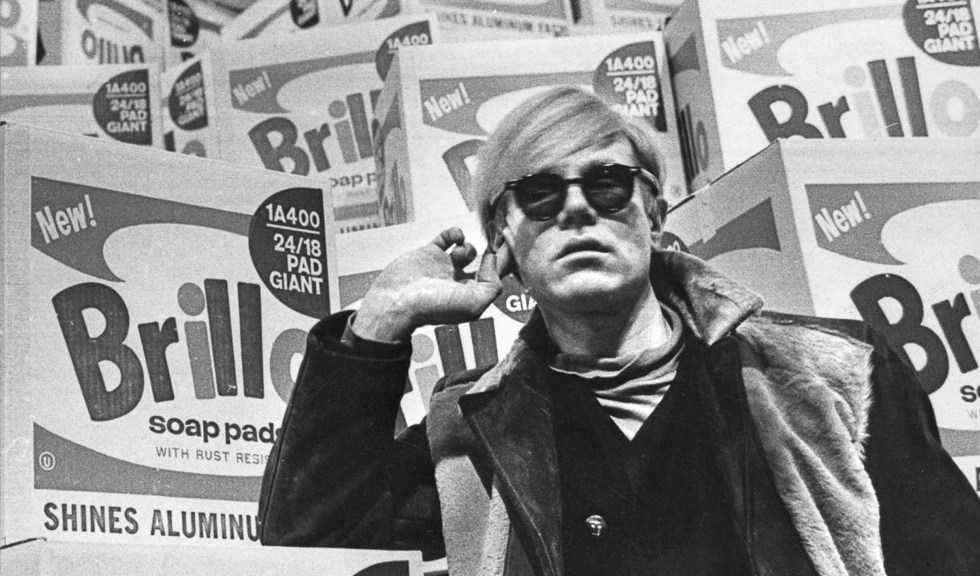
Andy Warhol at Stockholm’s Moderna Museet, 1968.
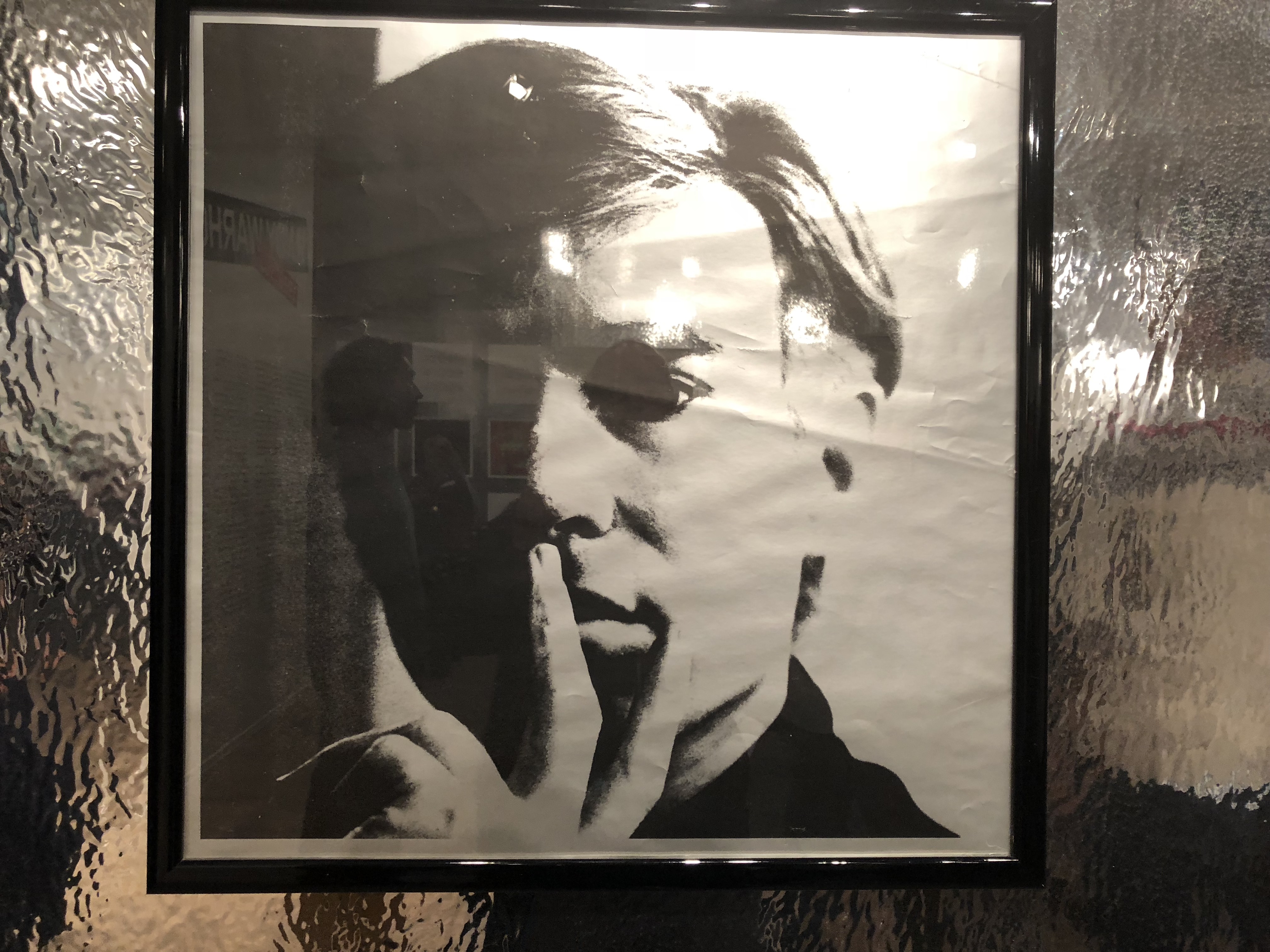
Warhol 1968 — the 2018 exhibition The exhibition was curated by John Peter Nilsson and ran from 15th September to 17th February 2019. This was not intended to be a Warhol retrospective but a reminder of Warhol’s first international retrospective. Various works were on show–Brillo boxes with an explanation of Pontus Hultén’s reproduction boxes made in 1990 for a series of European exhibitions. The story of these “fake” boxes can be read here. New boxes made specially for this show were on display. Original artworks included Warhol’s self portrait,
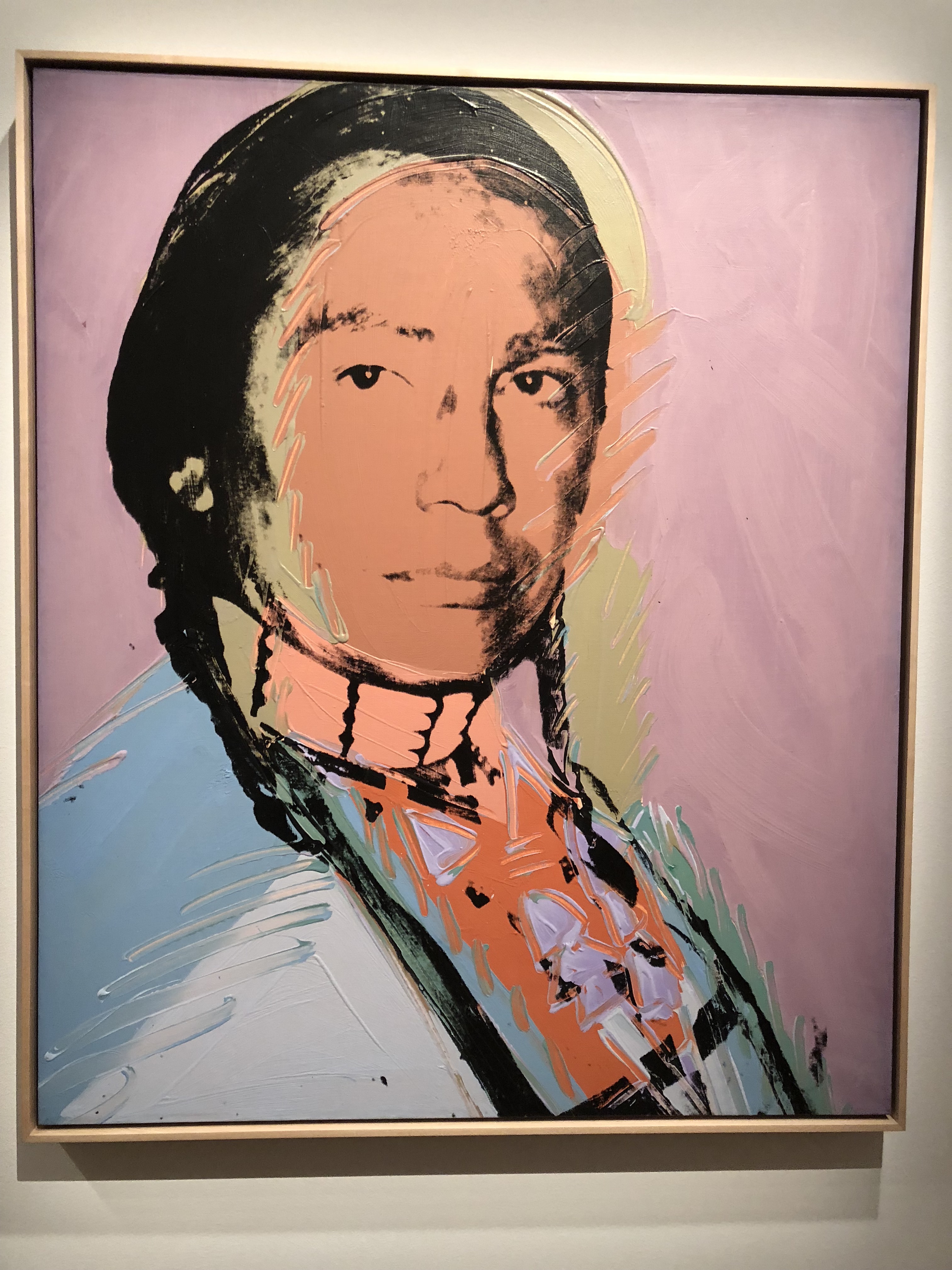
His portrait of Russel Means
Russell Means by Andy Warhol.
A Brillo silkscreen
There was even some of the original 1968 “Cow” wallpaper from the Museum’s facade outside the exhibition hall.
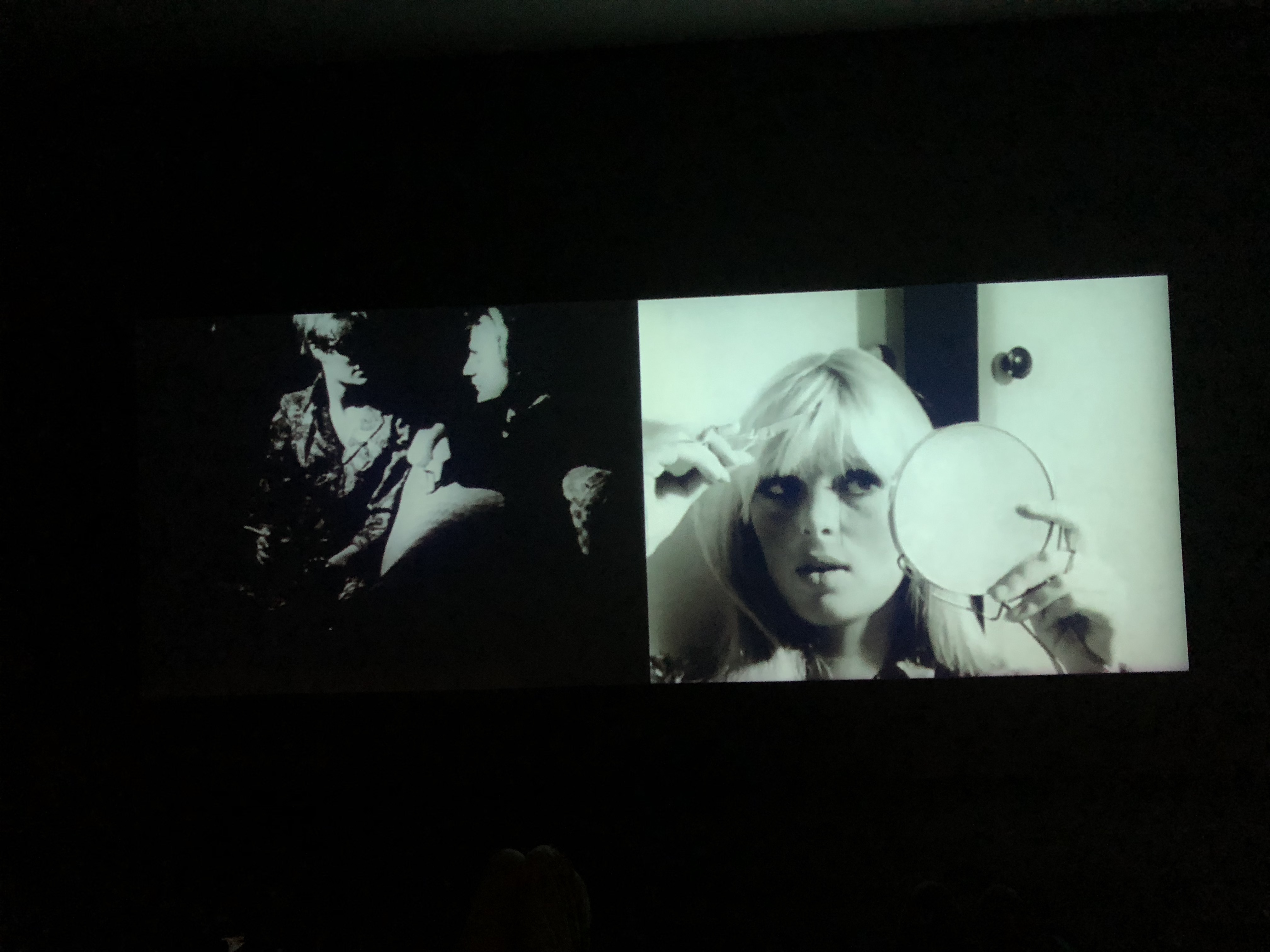
A digital copy od Chelsea girls was running in a screening room
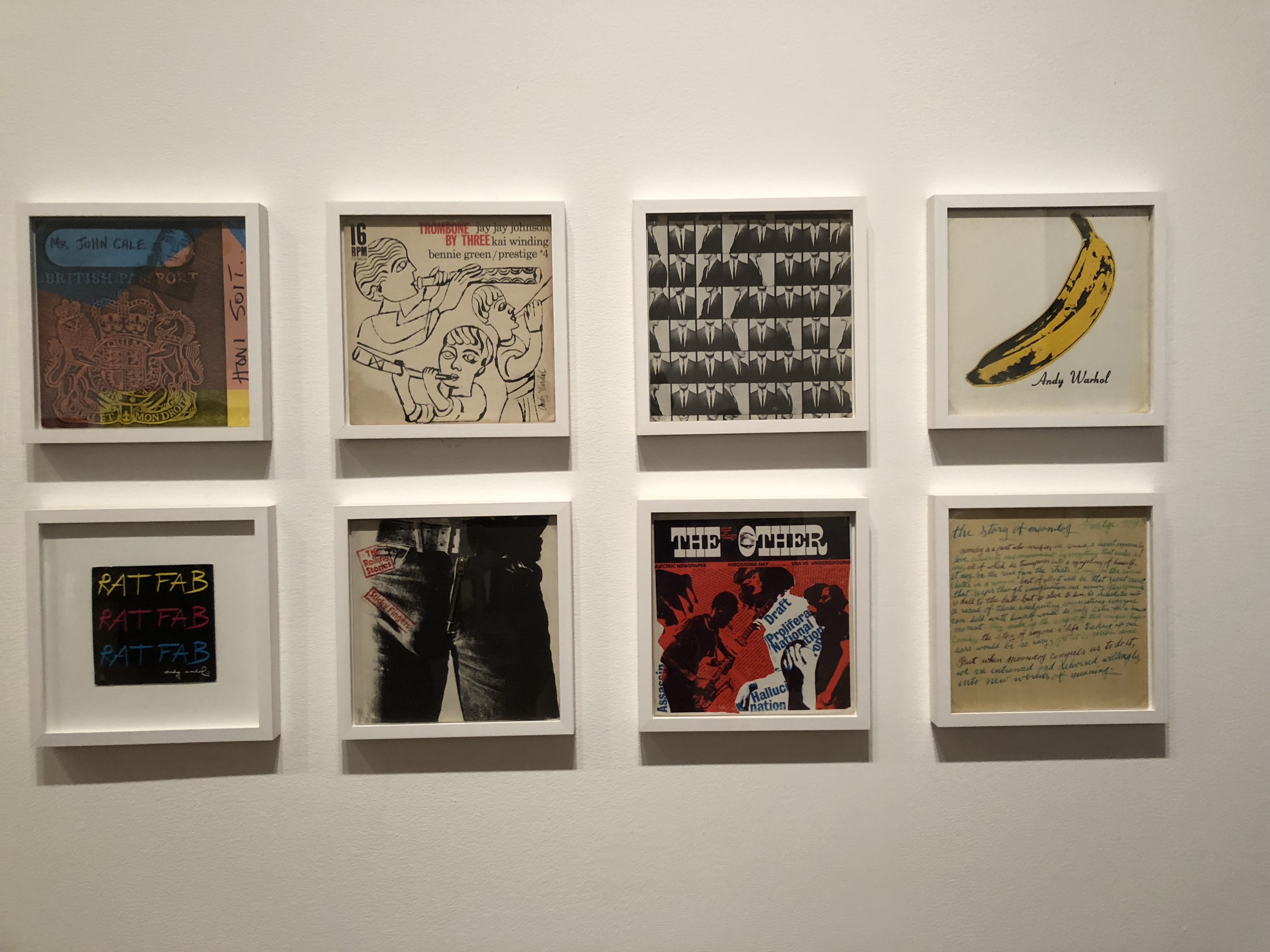
Obviously, I went looking for record covers! There were eight on show as one left the exhibition. These were from the collection of Susanna Rydén Dankwardt.
Record covers. Seven by Warhol (the East Village Other cover is not by him).
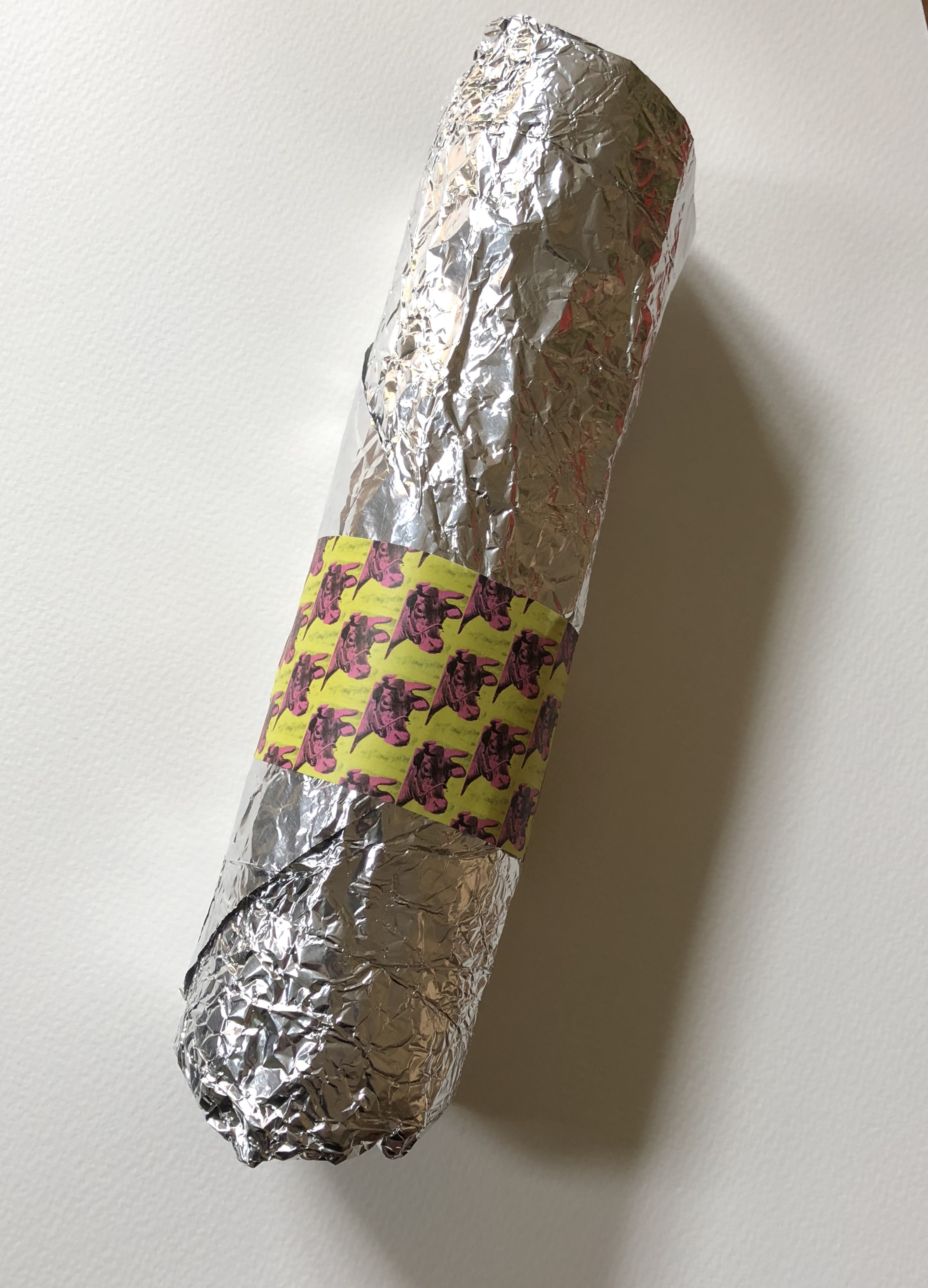
Before the official opening of the exhibition, there was an introductory talk by Moderna Museet’s current director Daniel Birnbaum and Kasper König (who made it this time) telling the story of the 1968 show. Afterwards, John Petr Nilsson, the exhibition curator gave a talk about the current show and asked Ole Granath about details of the original 1968 exhibition. Ola Granath then opened the exhibition. Drinks and snacks were on sale at the preview–there was a very nice wrap with a chanterelle salad wrapped in silver foil and sealed with a “Cow” sticker.
The exhibition is on until 17th February 2019, so I suggest you go and see it.
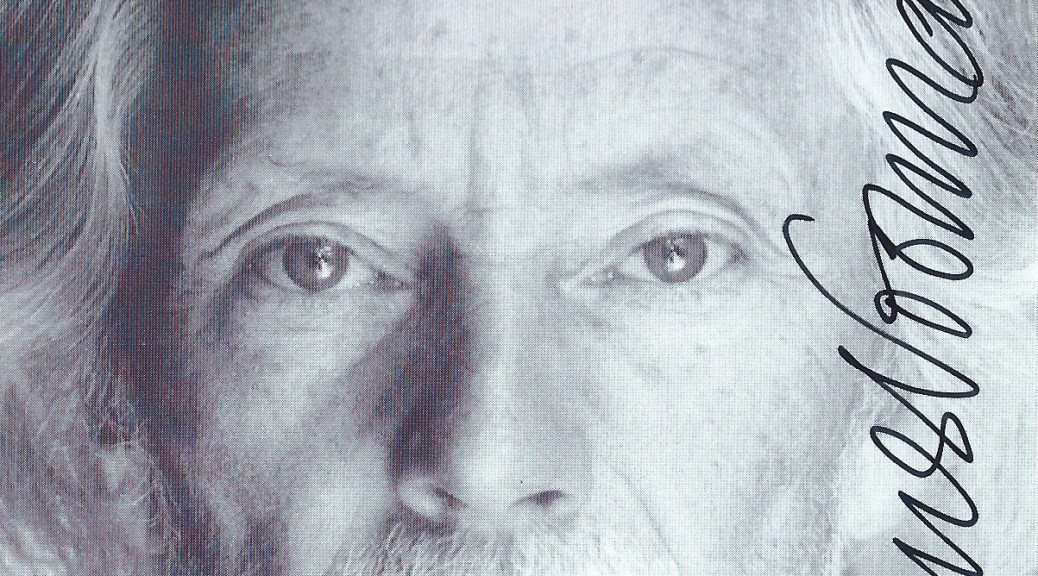
Klaus Voormann celebrated his 80th birthday on 29th April 2018. He has given his many fans a belated birthday present in the form of a book reviewing his more than 60-year career as a graphic artist. He calls the book “It Started in Hamburg” and is available from his website.
The slipcase for the limited edition of “It Started in Hamburg”.
The cover for the limited edition of “It Started in Hamburg”.
Klaus Voormann‘s career started at art school where he obviously developed a special interest in record sleeve design, making–as he states in “It Started in Hamburg“–with a fascination for the cover art of Blue Note Records. The book features a number of mock ups of record sleeves by jazz artists including Sonny Rollins, Jimmy Guiffre, Sonny Stitt, Bob Cooper and Bud Shank.
Voormann was truly the right man in the right place in 1960s Hamburg. Together with Astrid Kirchner he stumbled on The Beatles playing Hamburg’s Star Club, befriended them and showed one of his record cover designs to John Lennon. He played in the German group The Eyes, designing the cover of one of their singles and designed the cover for British band The Typhoons‘ German release of The Ventures hit “Walk Don’t Run“.
The Eyes “She / Peanut Butter” single cover drawn by Klaus Voormann.
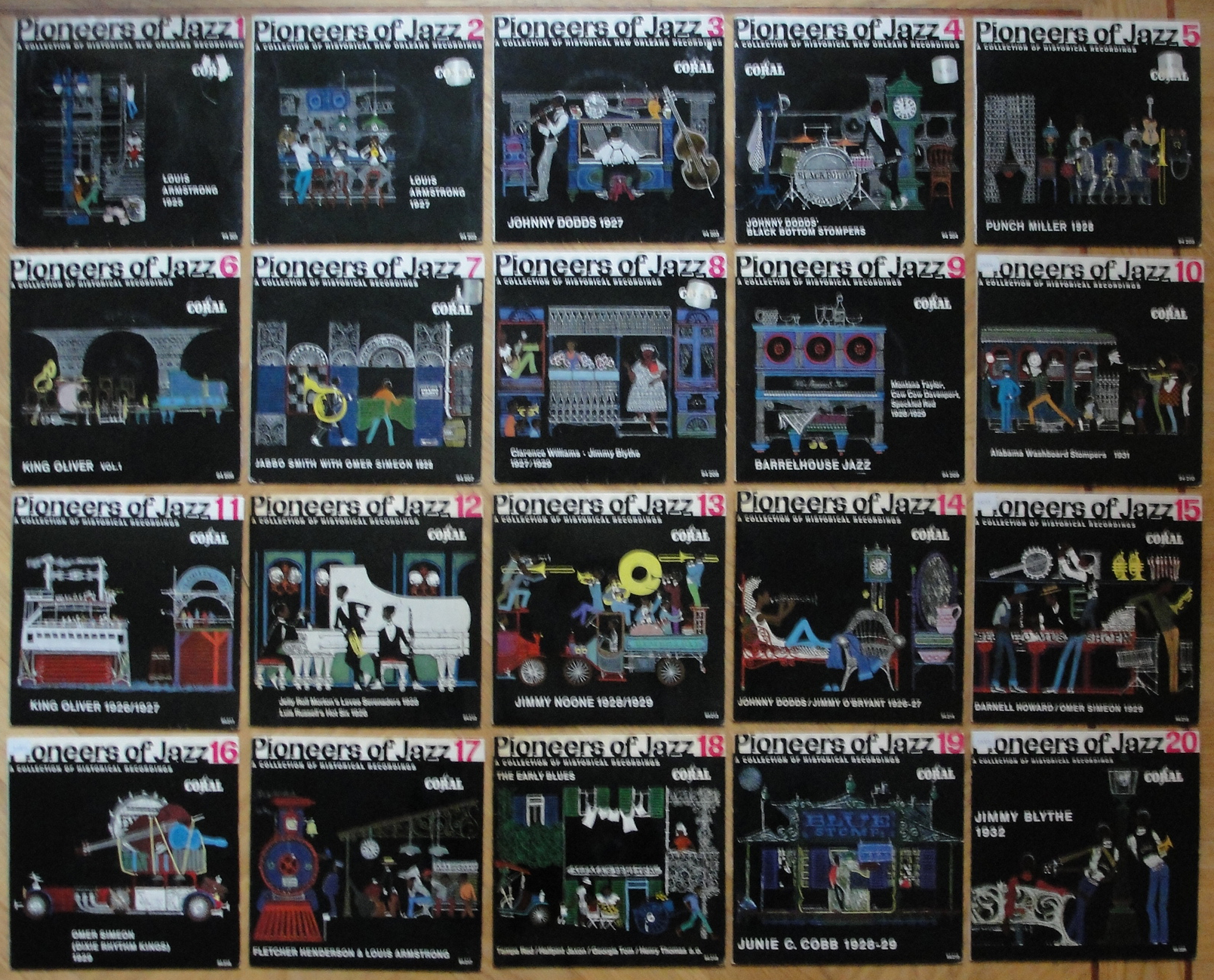
In 1962 he was asked to design the covers for a series of twenty jazz EPs called “Pioneers of Jazz” on Deutsche Grammophon’s German subsidiary Coral Records. At about the same time he drew the cover for an LP entitled “Ver nie in Bett Programm gemacht“, said to be a recording of a radio programme.
All twenty of Coral Records series “Pioneers of Jazz” released in 1960 with cover illustrations by a young Klaus Voormann.
Voormann moved to London in the mid sixties. In March 1966 John Lennon phoned him and asked him to design the cover for The Beatles’ album “Revolver”, for which he was to win a Grammy. Besides graphic design, Voormann continued his musical career joining Manfred Mann‘s band in 1966 when Paul Jones left and Mike D’Abo took over the role of singer. He designed the cover for the band’s 1966 album “As Is“, released in October that year.
“It Started in Hamburg” summarises Voormann‘s career. The 221 pages are divided into two sections: open the book one way and the text is in English. Turn the book over and you can read it in German. However, there does not seem to be any duplication of pictures. A few of Voormann‘s early attempts at producing jazz covers (see above) are included along with thirty-four of his published covers. There are pictures of the covers of ten of the “Pioneers of Jazz” series, along with one of the two Bee Gees covers (“Idea“)he designed and details of how cover art for The Beatles “Anthology” series came about. The limited edition comes with a USB with excerpts from Klaus’s film “Making of The Beatles “Anthology” artwork”, and little additions like an original drawing from the serial “Revolver–Birth of an Icon” and some film negatives.
His poster design and the design for his recent book “Revolver–Birth of an Icon“, about the design of the cover for “Revolver“, are also represented. His graphic self portrait and portrait of John Lennon remind me of some of Chuck Close‘s portraits, graphically breaking down their faces.
Voormann’s 2017 self-portrait for Zeit magazine.
Voormann’s portrait of John Lennon.
“It Started in Hamburg” is an important addition to any collection of Klaus Voormann’s art–my copy of the limited edition of turned out to be No. 3/80. I offer my sincere congratulations to Klaus on his 60 years of art and music. May he continue for many more!
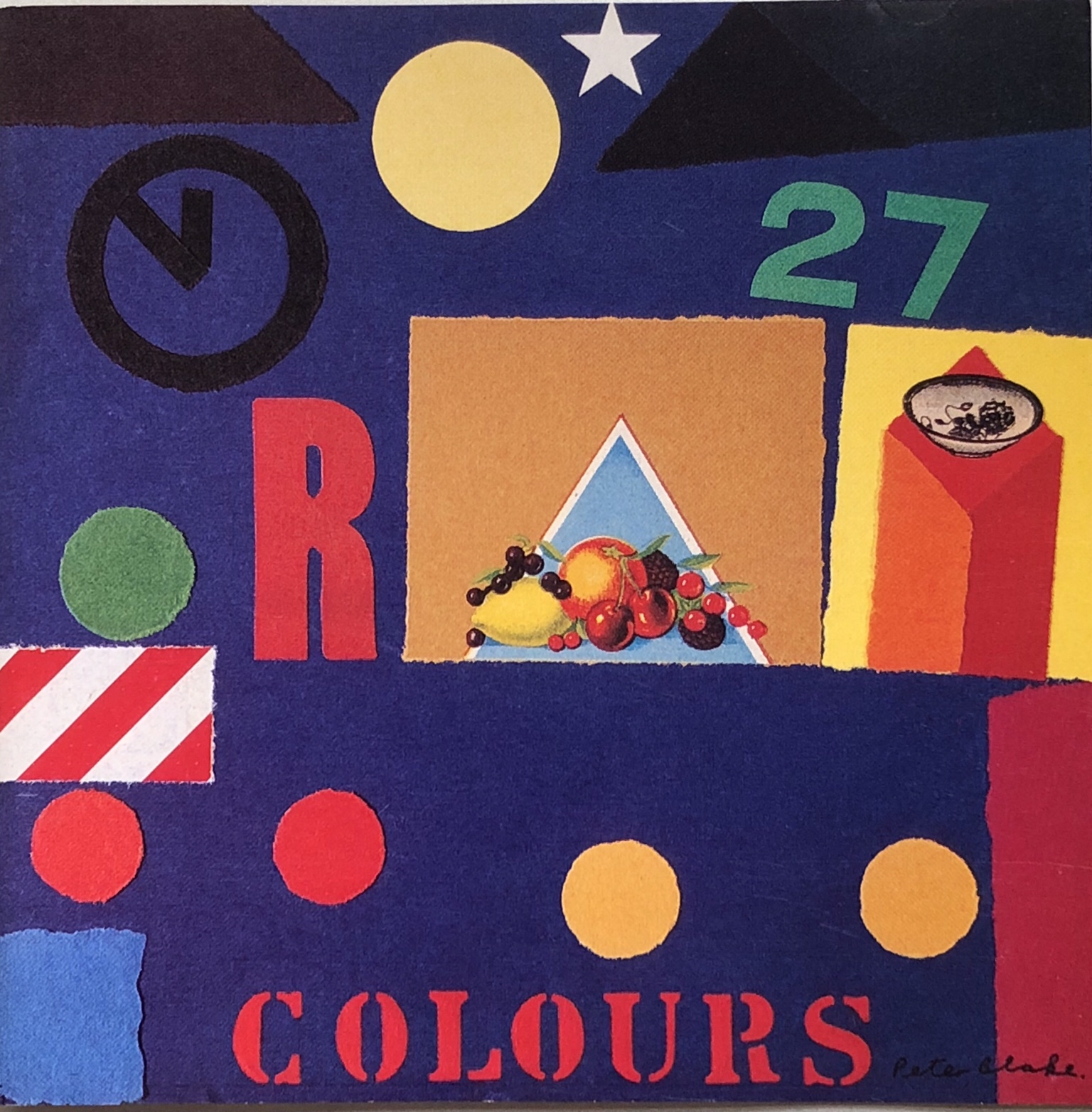
I have been searching for record covers designed by Peter Blake for several decades, but never come across this one before. Advertised on Ebay with a starting price of £0.99, was a CD titled “Colours” by a trio calling themselves A Stranger Shadow. Never heard of them, and apparently nor have many others as I can find no information on Internet music sites such as Allmusic, Discogs or Rateyourmusic. A Stranger Shadow are/were Paul Wilby (bass guitar, piano, vocals), Diana Jones (acoustic guitar, vocals) and Anne Harris (violin, percussion, vocals). They seem onlyto have recorded this one fourteen-track album, released in 1995. Discogs lists a 1984 7″ single by Paul Wilby titled “Nobody Needs You/Animosity Crept in” but that’s all I have found.
The booklet cover, is a sort of collage, and is signed at lower right by the artist. But how did this unknown group manage to get Peter Blake to design the cover? Was their record label — Mixed Bag Records — involved?
It would be wonderful if this album had also been released on vinyl, but I suppose record companies assumed in 1995 that vinyl was dead.
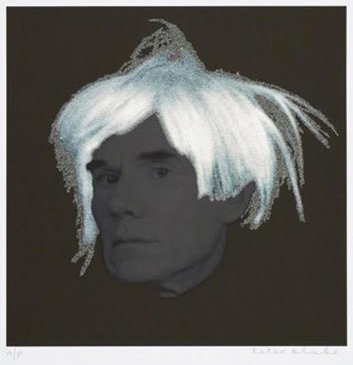
Andy Warhol was born in Pittsburgh, U.S.A., on 6th August 1928. Today he would have been 90 years old. His art is still a major influence on graphic design.
I haven’t had any reason to write about Peter Blake‘s art recently. As far as I have been able to find out, he hasn’t done any record covers since Eric Clapton‘s “I Still Do” album—which was not actually designed by Peter Blake, but Clapton chose to use one of Blake‘s 2015 portraits of him as the cover art.
At last I have something to add to my collection. I saw a print of Peter Blake‘s “Live at Leeds 2” for sale on Ebay and made an offer, which was accepted. The print was an artists’ proof (No. viii/xxv).
Sir Peter Blake’s “Live at Leeds 2” silkscreen print.
Some background: As everyone knows, The Who played the Leeds University Refectory on Valentine’s day 1970 and the 3-hour concert was recorded and released only 3 months later on 16th May 1970 as The Who’s “Live at Leeds” album. During preparations for The Who’s upcoming 2006 tour, Andy Kershaw, an alumnus of Leeds University—and who had had a hand in booking the band to play that historic 1970 concert managed to persuade the two remaining original band members to return to the Refectory as part of their planned 2006 tour.
In February 2005 Peter Blake opened a unique gallery dedicated to his music artwork at Leeds University’s School of Music. Among the prints on permanent loan to the gallery are ”Sgt. Pepper’s Lonely Hearts Club Band”, Band Aid’s ”Do They Know It’s Christmas”, The ”Live Aid” poster design, Paul Weller’s ”Stanley Road” cover art, The Who’s ”Face Dances” as well as albums by Eric Clapton, Brian Wilson and Ian Dury.
I haven’t been able to work out exactly how Sir Peter Blake became involved but suspect that Pete Townsend—a long-time friend of Blake’s—might have suggested that the artist design a poster for the return concert and Blake turned to the cover art of the original “Live at Leeds” album for inspiration. The gatefold cover of the original “Live at Leeds” album was designed by Graphreaks (Wikipedia credits Beadrall Sutcliffe with the design). Blake took the cover design and added the date of the original concert (14.02.70) at the top and that of the return (17.06.06) at the bottom and a large red “2” at bottom left.
Peter Blake made a limited edition print of the design–a silk screen using 14 colours plus glaze in an the edition of 250 + 25 artist proofs–and published in 2006. Peter Blake donated a copy to Leeds University’s collection of his prints.
Back to my print. The seller in the U.K. sent the print rolled, inside a large sheet of 200 g paper and wrapped in bubble plastic all put inside a wellpapp outer. There was no poster tube to prevent crushing and—not surprisingly—the package arrived crushed with the print considerably creased. After email discussions with the seller, I was advised to lodge a ”damaged item” report with Ebay, which I did sending photos of the packaging and the damaged print. And to my total amazement, the following day Ebay refunded the total cost of the print and shipping! So the print has cost me nothing!
My collection of Peter Blake prints. The ”Live at Leeds 2” print joins my collection of Peter Blake prints started in 1968 when I bought ”Babe Rainbow” at Gear in Carnaby Street for, I think, 30/- (£1.50 to those of you who don’t remember predecimal currency). Wikipedia says it cost £1.00, but I think I paid 30/-.
I went to the Tate Gallery Peter Blake retrospective in 1983 and bought the catalogue which contained a limited edition print of the ”Owl & the Pussy Cat” print, which comes in an envelope stating ”Each reproduction has been signed by the artist”! The print was only included in the first 12,000 copies of the catalogue.
In 2009, when Jan Wimander, then director of Piteå Dansar och Ler Festival, and I decided to put on an exhibition of Peter Blake’s record cover art, called ”Peter Blake ’Pop’ Art” at Piteå Museum. We wanted to show LP covers but two of Blake’s covers–The John Peel compilation album ”Right Time, Wrong Speed, 1977-1987” and The Blockheads’ ”Staring Down the Barrel” were only available on CD so we wanted larger images for the show. We found a copy of Peter Blake’s portrait of the late John Peel that he created for Warner Brothers Music for the cover of Peel’s CD on Ebay. This was a limited edition of 45 copies–we got No. 5. I also approached The Blockheads to try to get hold of a promotional poster for their 2009 album ”Staring Down the Barrel”. I was told they didn’t have one, but referred to Peter Blake’s printers The Coriander Press and after month or so an artist proof of the cover art, signed by Peter Blake, arrived just in time for the exhibition.
In 2010, the late Daniel Brant, director of the A and D Gallery in London’s Chiltern Street, contacted me and asked if I would like to display my collection of Peter Blake’s record covers in the Gallery that would be hosting the launch of a new series of Peter Blake’s prints ”I Love London” and ”I Love Recycling”. John Wimander and I both flew over for the opening and met Sir Peter, who signed my ”Babe Rainbow” print as well as a book and the catalogue of our Piteå exhibition. We were both given prints of the ”I Love London” and ”I Love Recycling”!
So now my collection contains
– Babe Rainbow
– The Owl & the Pussycat
– John Peel
– The Blockhead’s ”Staring Down the Barrel”
– I Love London
– I Love Recycling, and (finally)
– Live at Leeds 2
A further Blake record cover art.
While researching the “Live at Leeds 2” print I came across another collaboration that I probably should have included in my collection of Peter Blake‘s record cover art. In 2007 Brian Wilson recorded his “That Lucky Old Sun” album and in 2009 Genesis Publications produced a lavish box set including a CD of the album, a book signed by both Brian Wilson and Peter Blake and 12 limited edition Peter Blake prints illustrating the songs. This deluxe production was produced in an edition of 1000 copies.
Genesis Publications limited edition “That Lucky Old Sun” by Brian Wilson and Sir Peter Blake.
I shall have to start saving my pennies to get hold of a copy.
A year ago, in June 2017, I saw a picture of what I thought must be a previously unrecognised Warhol cover in the book “Adman–Warhol Before Pop”, the catalogue of an exhibition held at the Art Gallery of New South Wales in 2017.
Nicholas Chamber’s exhibition book published by the Art Gallery of New South Wales.
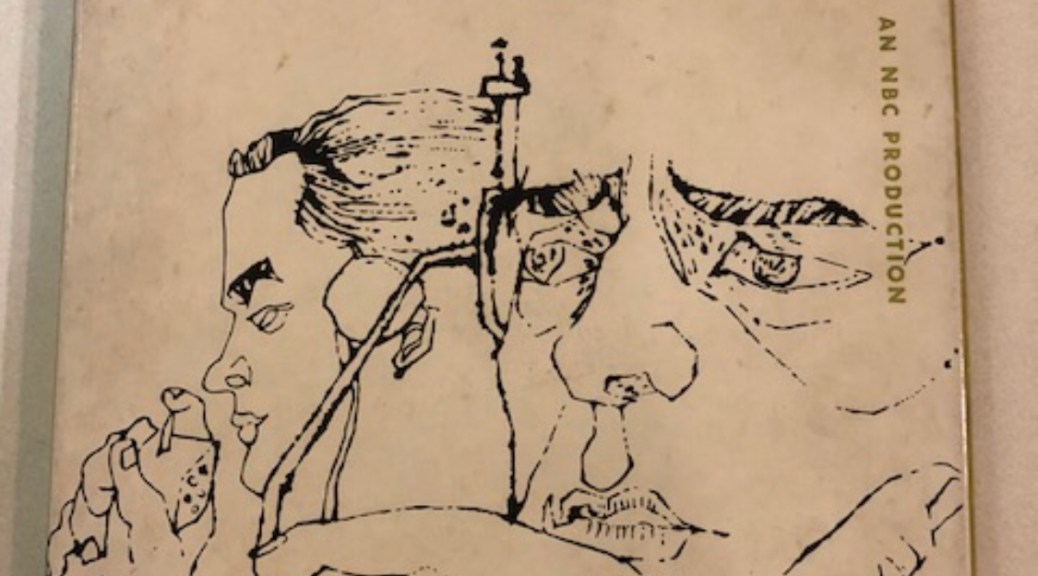
Page 97 in “Adman-Warhol Before Pop” with a picture of the cover slick for an recording of an NBC radio programme called “Voices and Events”.
I saw that the picture had to be a slick for a box set like the elusive “Night Beat” box owned by renowned Warhol collector and author, Paul Maréchal. His copy of the “Night Beat” box, first shown at the “Warhol Live!” exhibition in Montreal in 2008, was thought to be the only one in existence.
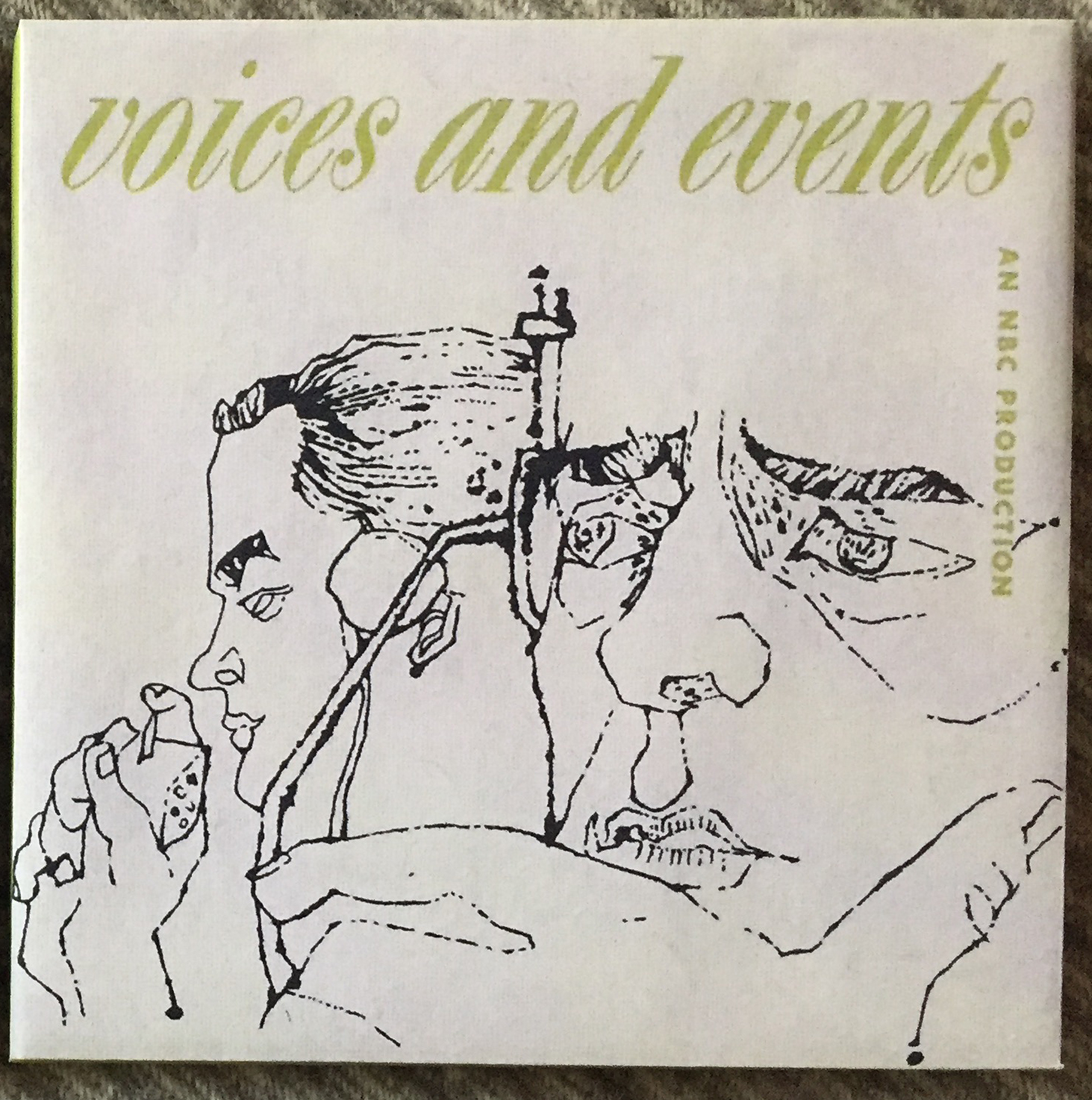
Having previously made mock-ups of the “Night Beat” box, I knew how I could make similar mock-ups of the, as yet undiscovered, “Voices and Events” box pictured in the “Adman–Warhol Before Pop” book.
So I started a search for RCA EP boxes to use as the basis for the new set of boxes. It took several weeks to find a seller, but I finally managed to find a record store in Minneapolis that had many and was willing to sell them. I had photographed the slick from the “Adman” book and my local printer had printed ten slicks and within days of the arrival of the boxes I had made a limited edition of the “Voices and Events” box.
The “Voices and Events” box set.
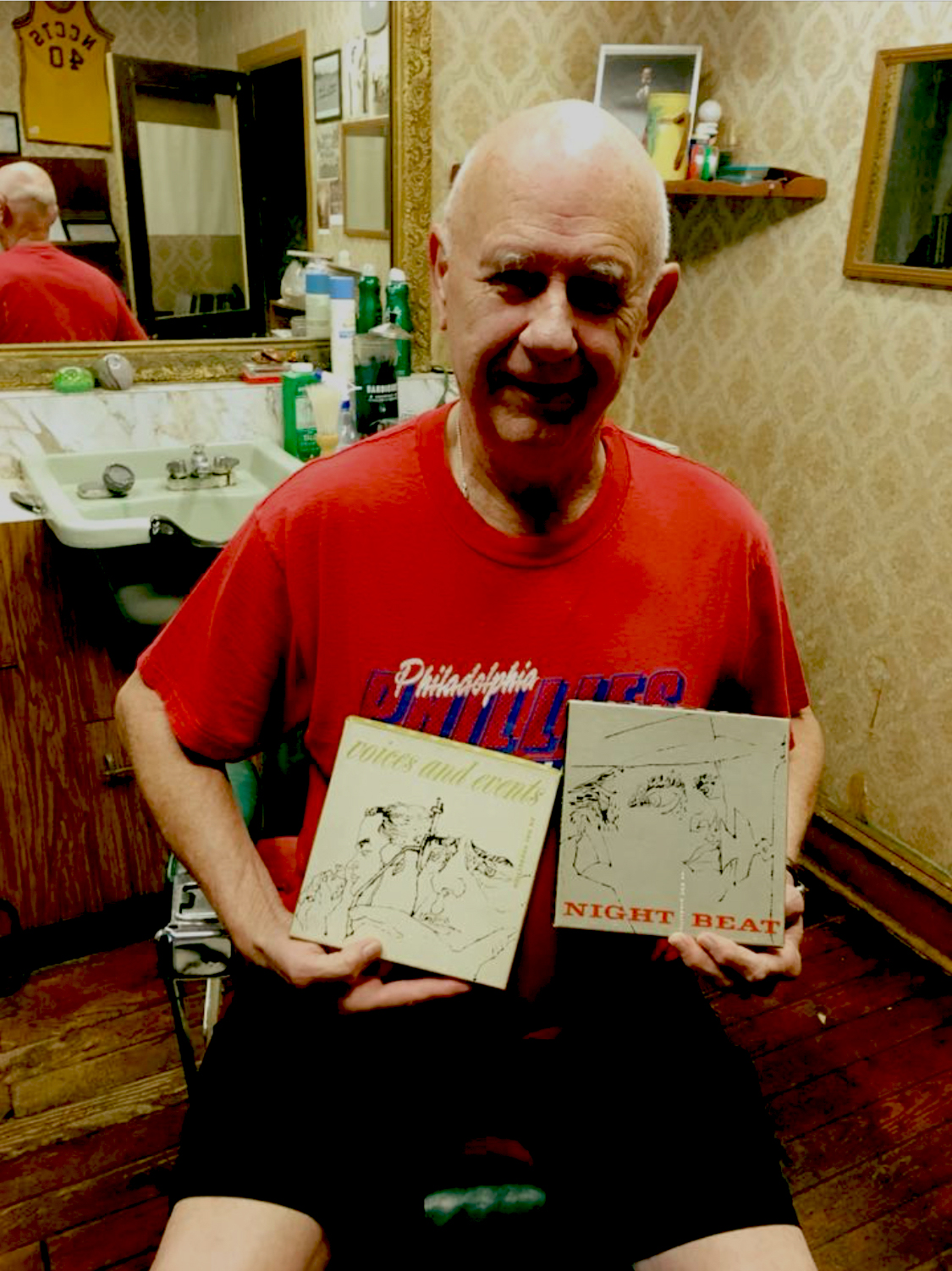
In March 2018 I was contacted by Lou Mancini, in Phoenixville, Pennsylvania, who said he had found a couple of rarities and wondered what they might be worth. He attached photos of the “Voices and Events” box and said the other rarity was the “Night Beat” box. I was stunned! I replied that I had no idea of the value of the boxes–they were the rarest of the rare!
Lou Mancini with the “Voices and Events” and “Night Beat” boxes that he found.
Lou promised med photos of the “Voices and Events” box, so that I could verify the accuracy of my mock-up. They seemed identical! In addition Lou later sent a photo of the insert inside the lid of the box, which I also managed to copy.
The boxes are complete with records and all packaging intact. A fantastic find by Lou. They are now going to be added to Guy Minnebach’s magnificent Warhol collection.
I still have two of my facsimile copies of the “Voices and Events” box if anyone would like to buy one.
















 recordart