Tag Archives: Recycling

Two New CDs with Peter Blake Art and Some Other Covers.

I have a pretty impressive collection of record and CD covers with Pweter Blake’s art. Over the years I’ve managed to get many of them signed by Sir Peter and just before Christmas I got hold of two more CDs beautifully signed by Sir Peter. My agent popped round to Blake’s home with a few CDs and asked Chrissy if she could ask Peter to sign them. Chrissy knows that signed items can go for quite large sums but this time she took them to her husband who signed them beautifully.
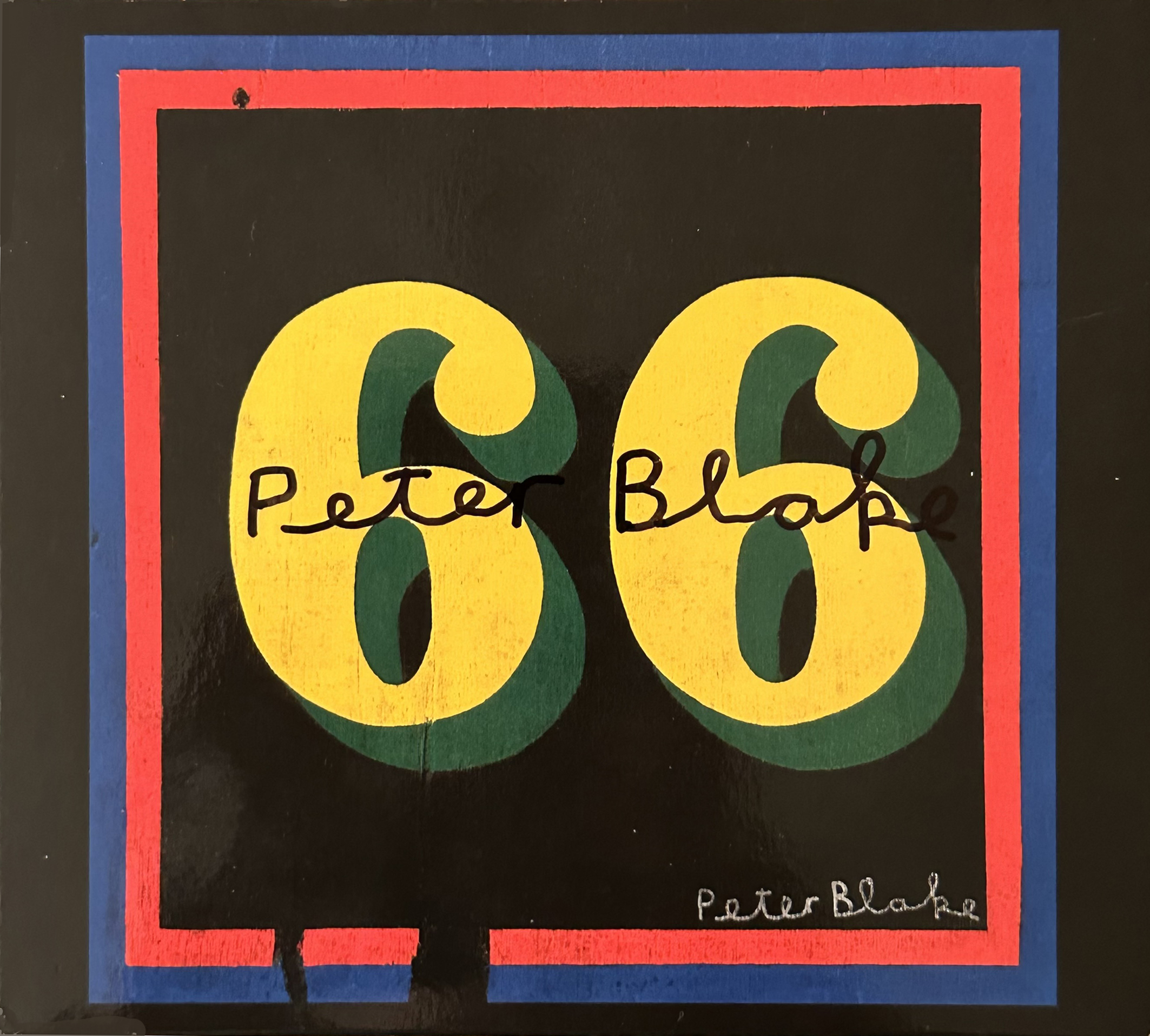
Paul Weller’s 2024 album “66”.

I really like this cover. It’s traditional signwriting and I like to dabble in signwriting myself as I’ve had a longterm love of typography. Peter Blake studied tyypogrpahy at Gravesend College and many of his album covers show his expertise with various forms of type. The inspiration for Paul Weller’s cover came from the fact that Weller’s 66th birthday was the day after this album was released and Weller wanted the album called “66“. Blake delved into his collection of old signs and found a butcher’s sign advertising something for 6d (six old pence) and copied the typeface.

Blake has published several series of prints of various alphabets and even published boooks of them. Other typefaces that Blake has used include some victorian lettered tiles that he has used on several covers, the first being Paul Weller’s Stanley Road. There have been many since. Type sourced from old alphabets appeared on Madness’ 2012 album Oui Oui, Si Si, Ja Ja, Da Da. However, the typeface Blake obviously likes best is hhis own handwriting! It stands out on the Madness cover but appeared as early as on the Who’s Face Dances album. Other styles he has used include rubber stamped and stencilled letters.
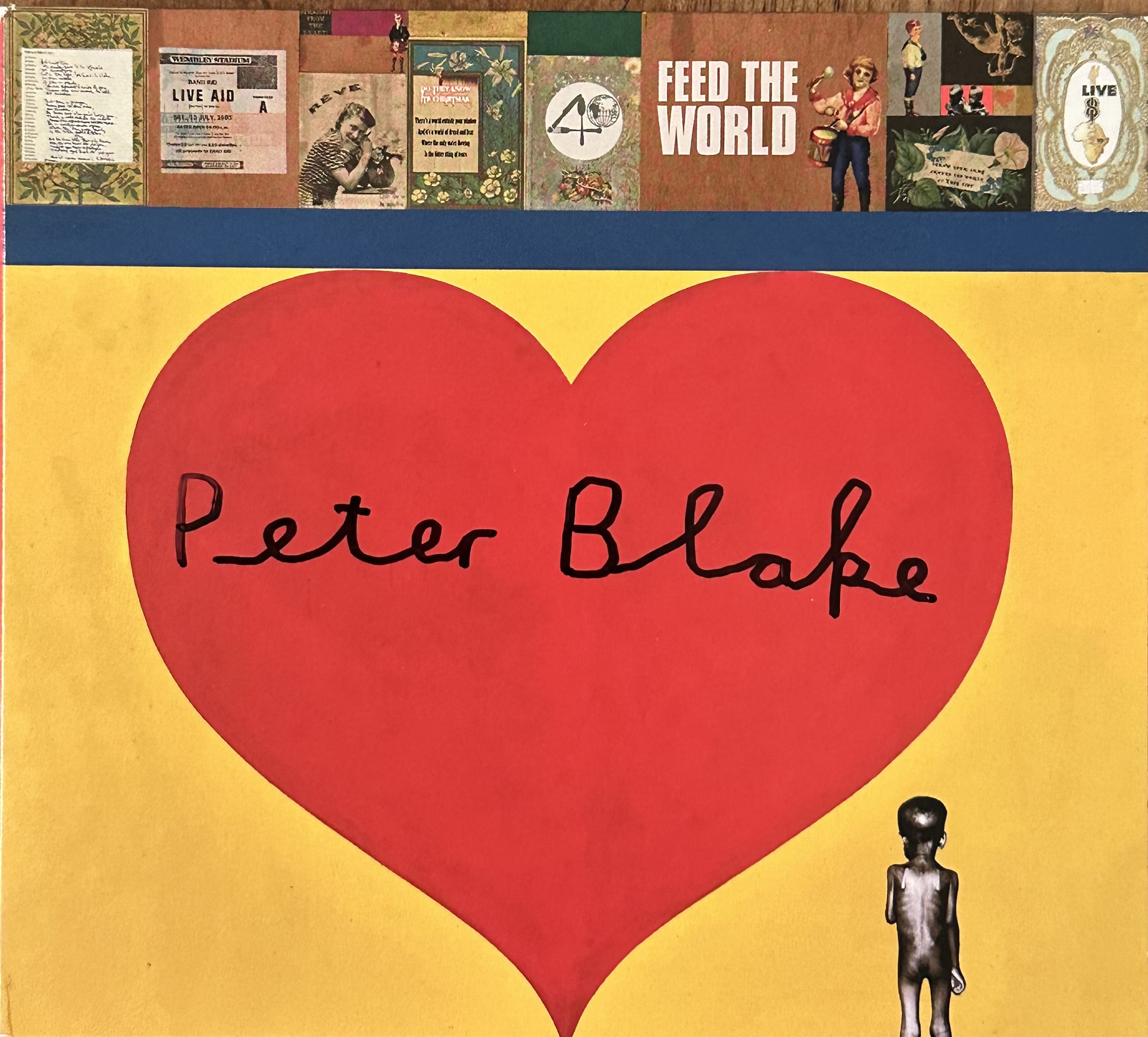
Band Aid 40’s “Do They Know It’s Christmas?” CDEP.

The Band Aid 40 cover is one of my favourites as it is a prime example of Blake’s recycling. In 2010 he made two series of prints, one said “I Love Recycling” and the other “I Love London”. When I met Him and Chrissy at the opening of the exhibition of these prints I showed my collection of Blake’s record covers at the Galllery and he gave me a set of these prints.
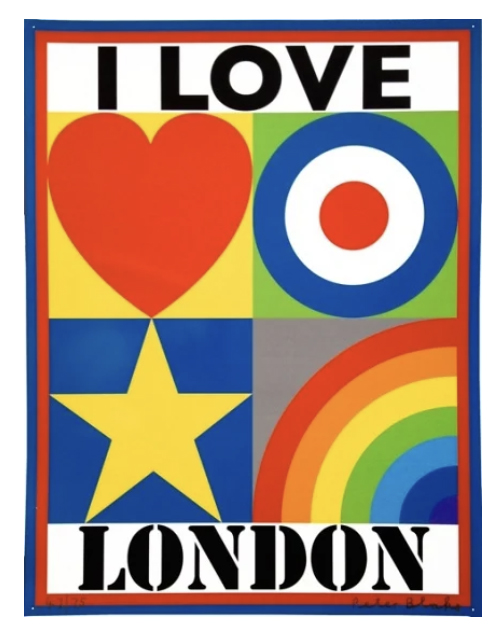
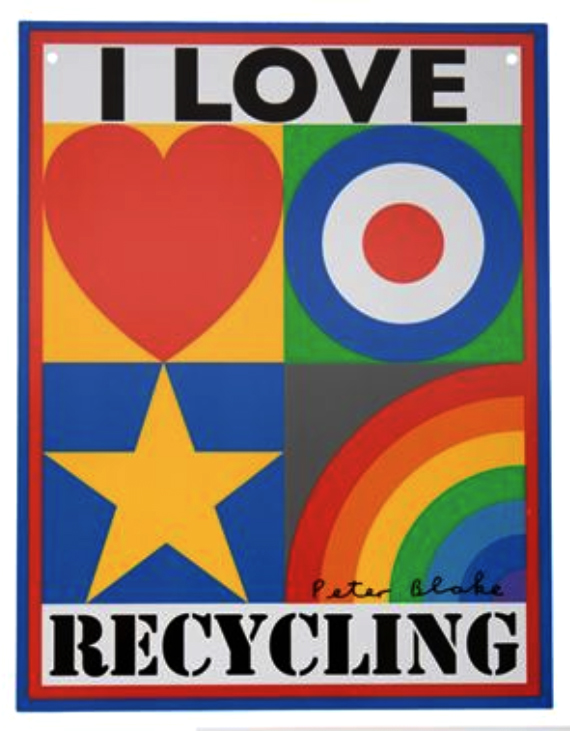
The Band Aid 40 cover is a recycled Blake design from 1959-60. Originally a painting called Valentine (for Pauline Boty) that he gave to his lover Pauline Boty.
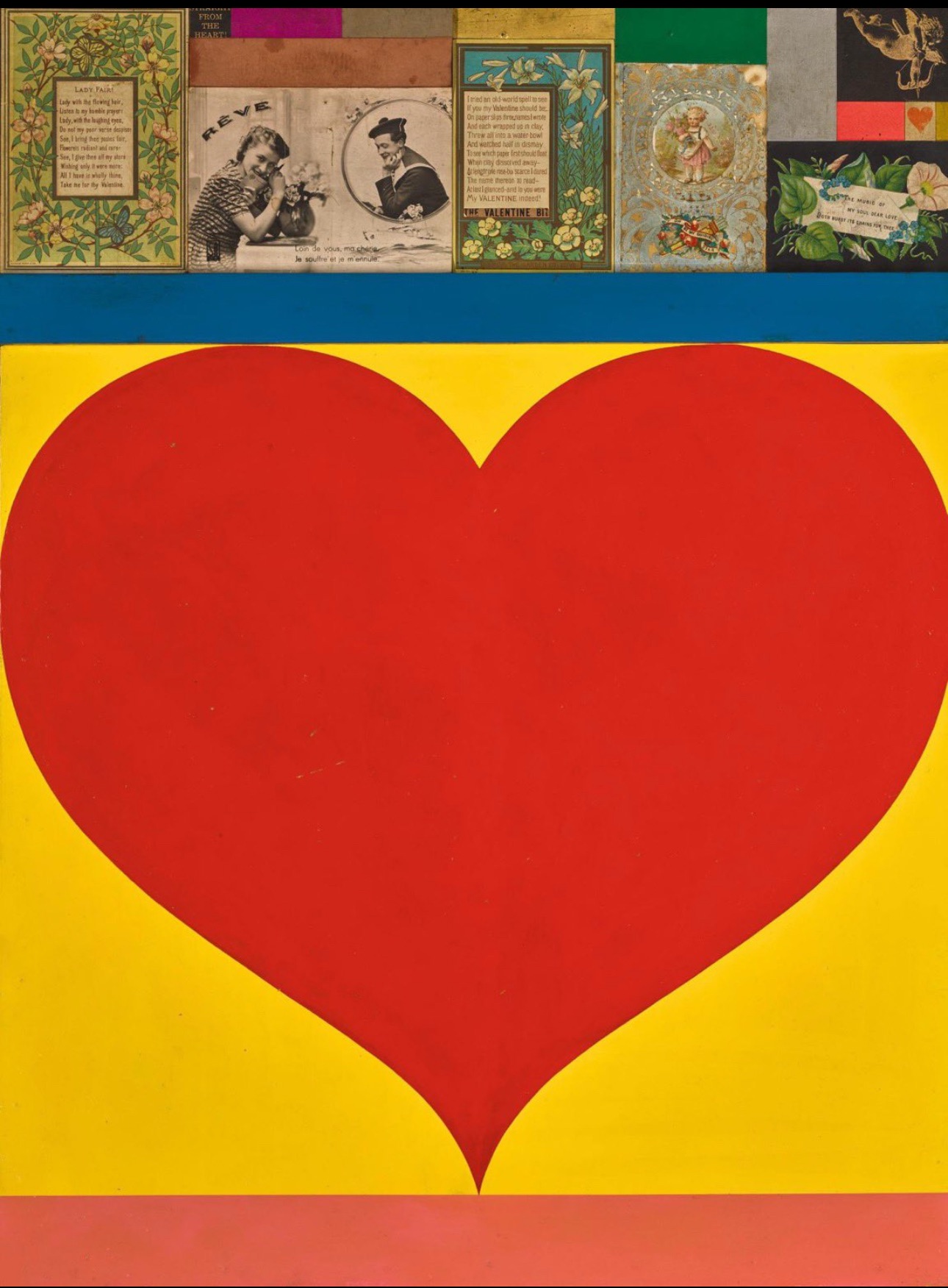
Valentine (for Pauline Boty)

These two CDs covers have what I consider the best examples of Peter Blake’s autograph. I haven’t seen better placed signatures before–and I have many examples in my collection, He usually signs LP covers with smaller signatures, sometimes almost invisible, like on this 1983 album cover.
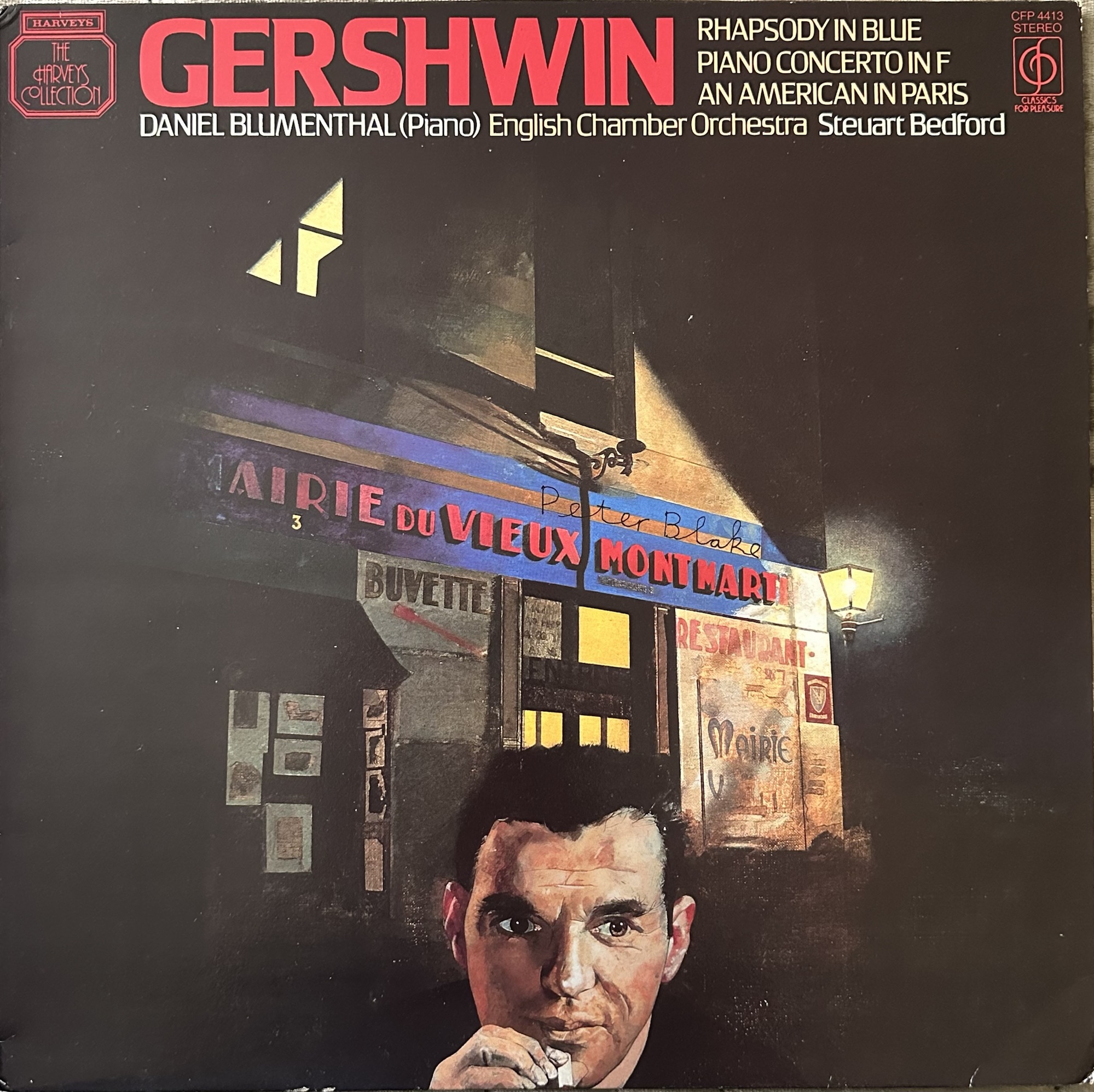
Gershwin – Signed album cover. Blake’s signature is visible just above the “ux Montmartre”

Perhaps the rarest cover with Peter Blake’s art is the 1990 promotional EP I’m Frank by the Manchester band the Fall that was only released in America. How the Fall (or their American record label, Fontana) came to use Blake’s 1981 Nadia painting is a mystery.
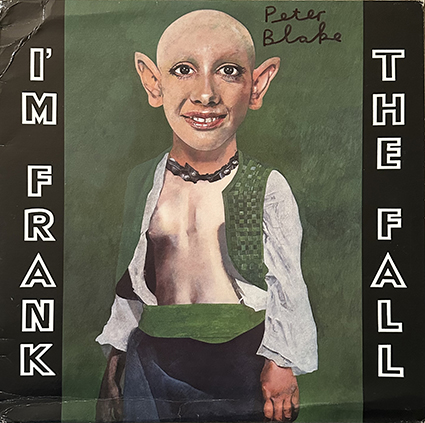
Peter Blake’s 1981 painting Nadia on the cover of the Fall’s “I’m Frank” EP.

And if there is one cover in my Peter Blake that is really special, it has to be my copy of the Beatles’ Sgt. Pepper’s Lonely Hearts Club Band, signed by both designers Jann Haworth and Peter Blake.
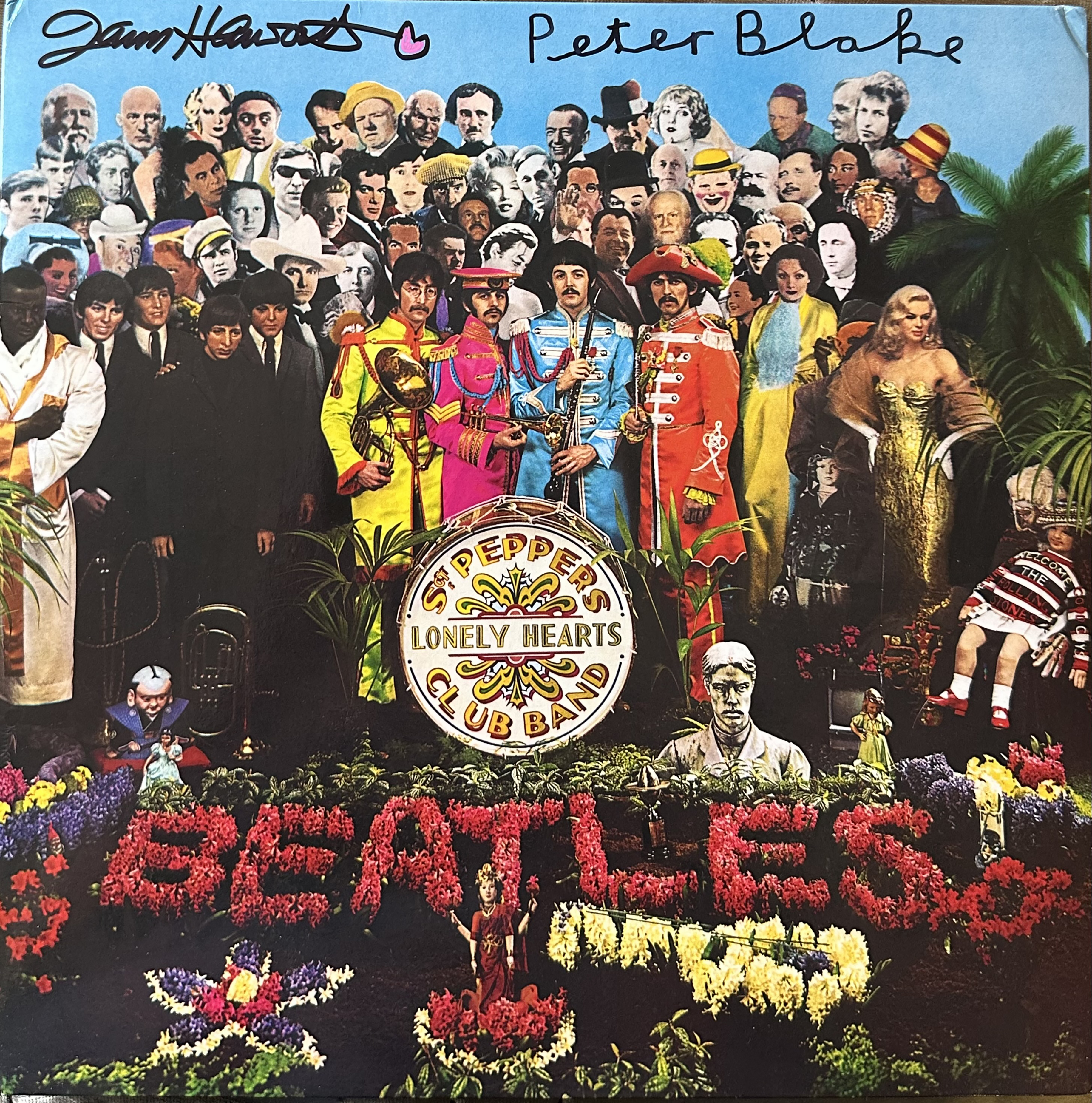
I’ll tell more stories about Peter Blakes record and CD cover art in a book that I hope will see the light of day sometime soon.

My Visits to the Recycling Depot and Meredith Willson’s “The Music Man”.

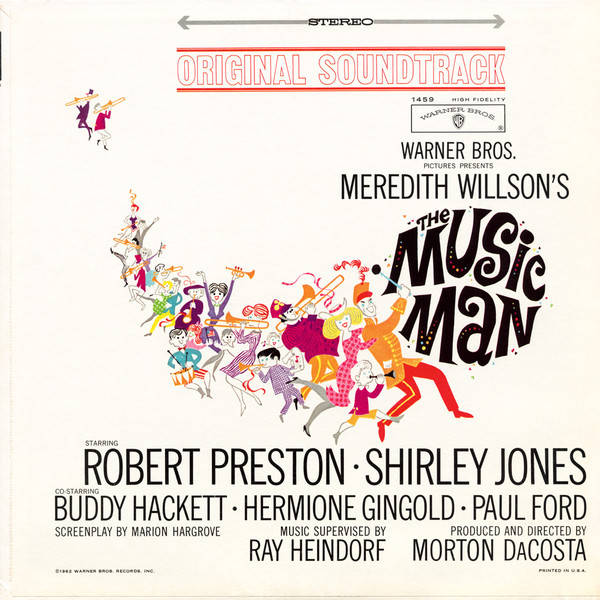
I was brought up on musicals–pre Andrew Lloyd-Webber musicals–like South Pacific, Oklahoma, Annie Get Your Gun and West Side Story. My father’s favourite was Show Boat. I think my favourite has turned out to be Meredith Willson‘s “The Music Man“, a story of a trickster and fraud who sells boys’ bands and is himself tricked by falling in love with a town’s librarian. The show had its American premiere in 1957 and several of the songs became hits, not least “‘Til There Was You“, which was covered by many artists, including Peggy Lee. The Beatles heard Peggy Lee‘s version and it became a standard in their Hamburg days and was one of the songs they sang in their audition for Decca records in 1962. The song even appeared on the “With the Beatles” album. Paul McCartney has been quoted as saying that he didn’t know the song came from “The Music Man” until much later.

The Music Man
The cover of the 1962 original soundtrack recording of “The Music Man”.

Several times a week I trudge off to the recycling depot with detritus resulting from the shopping done in the previous days. I cannot get my head round the amazing amount of plastic, paper, metal and glass that two people can generate in such a short time. And just thinking about the environmental consequences of
a. producing all that material, and
b. recycling it all
makes my mind boggle!

I almost long for the “good old days” when one could go into the grocery store and pick biscuits out of a tin (the broken ones were cheaper), have your ham sliced in front of you knowing that it was home cooked and not delivered to the shop in a plastic pack. Meredith Willson‘s and Franklin Lacey‘s characterised this type of highstreet shop in the “Rock Island” introduction/overture to “The Music Man” as “a little 2 by 4 kinda store“.

So, what’s “The Music Man” got to do with recycling? Well, the opening scene/overture is set on a train with a crowd of travelling salesmen on their way to River City, Iowa. They get into a discussion on the conditions for notions salesmen (itinerant salesmen who went from town to town knocking on doors to sell their wares). The discussion is orchestrated to sound like the noise of a train. One of the salesmen suggests that the decline in sales is due to the arrival of the Model-T Ford, which allowed people to travel to town to buy their goods. Another suggests that it wasn’t the Model-T at all, but the establishment of department stores (“modern, departmentalised grocery stores”, in the words of the song). However, a third salesman chimes in with the REAL reason why  travelling salesmen have hit on harder times. He blames packaging of goods:

“Why, it’s the U-needa biscuit
Made the trouble
U-needa, U-needa,
Put the crackers in a package, in a package,
The U-needa biscuit
In an air-tight sanitary package
Made the cracker barrel obsolete, obsolete.”

Yet another salesman confirms that the cracker barrel indeed disappeared like a list of other things:
“Cracker barrel went out the window
with the Mail Pouch cut plug chawin’ by the stove
Changed the approach of a travelin’ salesman
Made it pretty hard.”
And the first salesman bemoans the loss of other things:
“Gone with the hogshead, cask and demijohn. Gone with the sugar barrel, pickle barrel, milk pan,
gone with the tub and the pail and the till.”

And there you have it–the link between “The Music Man” and recycling! If the Nabisco Company hadn’t put its Uneeda biscuit in “an airtight sanitary package”, packaging of groceries might never have become the problem it is now and I wouldn’t have to visit the recycling centre several times a week!