Tag Archives: band-aid-40

Two New CDs with Peter Blake Art and Some Other Covers.

I have a pretty impressive collection of record and CD covers with Pweter Blake’s art. Over the years I’ve managed to get many of them signed by Sir Peter and just before Christmas I got hold of two more CDs beautifully signed by Sir Peter. My agent popped round to Blake’s home with a few CDs and asked Chrissy if she could ask Peter to sign them. Chrissy knows that signed items can go for quite large sums but this time she took them to her husband who signed them beautifully.
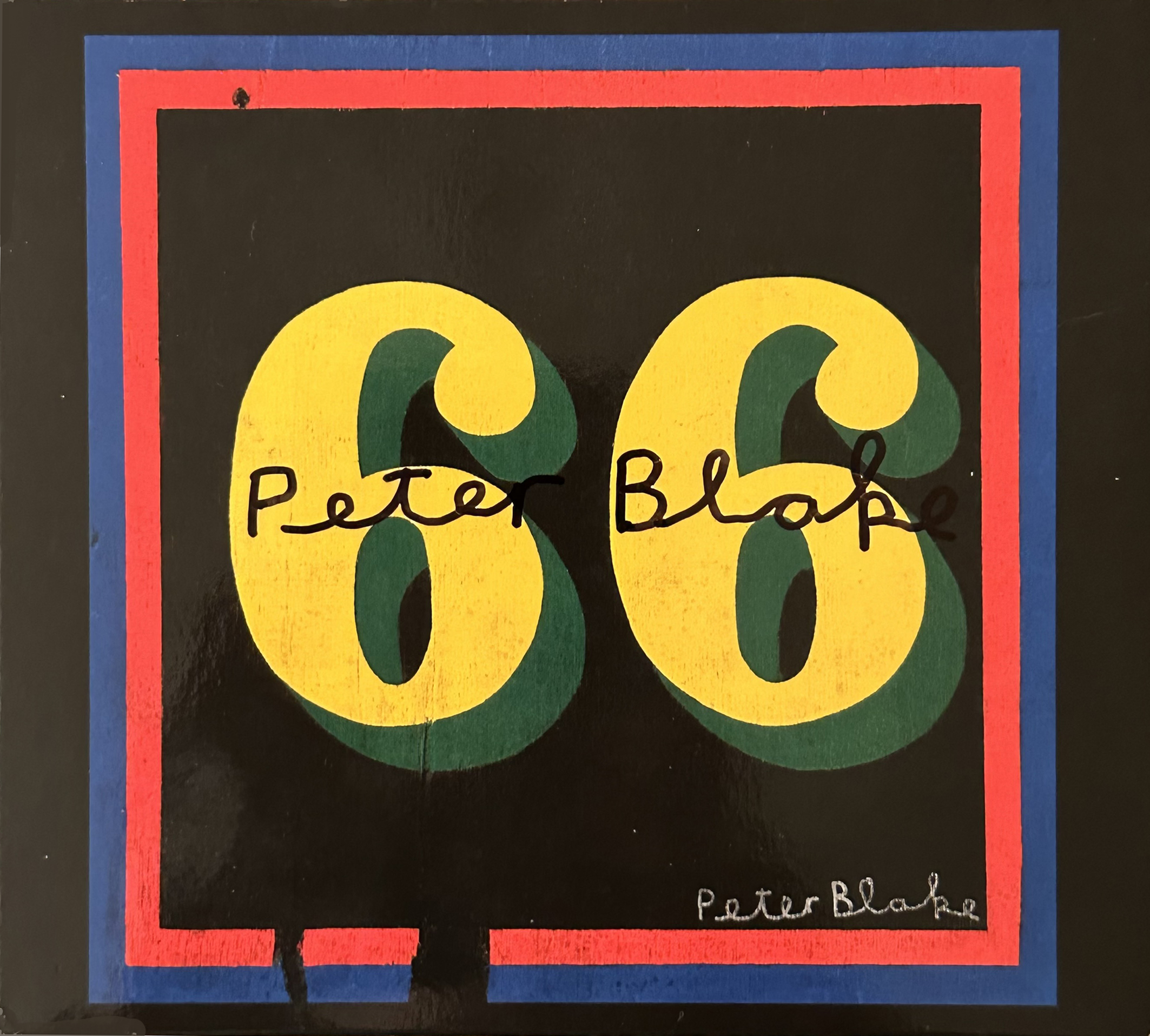
Paul Weller’s 2024 album “66”.

I really like this cover. It’s traditional signwriting and I like to dabble in signwriting myself as I’ve had a longterm love of typography. Peter Blake studied tyypogrpahy at Gravesend College and many of his album covers show his expertise with various forms of type. The inspiration for Paul Weller’s cover came from the fact that Weller’s 66th birthday was the day after this album was released and Weller wanted the album called “66“. Blake delved into his collection of old signs and found a butcher’s sign advertising something for 6d (six old pence) and copied the typeface.

Blake has published several series of prints of various alphabets and even published boooks of them. Other typefaces that Blake has used include some victorian lettered tiles that he has used on several covers, the first being Paul Weller’s Stanley Road. There have been many since. Type sourced from old alphabets appeared on Madness’ 2012 album Oui Oui, Si Si, Ja Ja, Da Da. However, the typeface Blake obviously likes best is hhis own handwriting! It stands out on the Madness cover but appeared as early as on the Who’s Face Dances album. Other styles he has used include rubber stamped and stencilled letters.

Band Aid 40’s “Do They Know It’s Christmas?” CDEP.

The Band Aid 40 cover is one of my favourites as it is a prime example of Blake’s recycling. In 2010 he made two series of prints, one said “I Love Recycling” and the other “I Love London”. When I met Him and Chrissy at the opening of the exhibition of these prints I showed my collection of Blake’s record covers at the Galllery and he gave me a set of these prints.

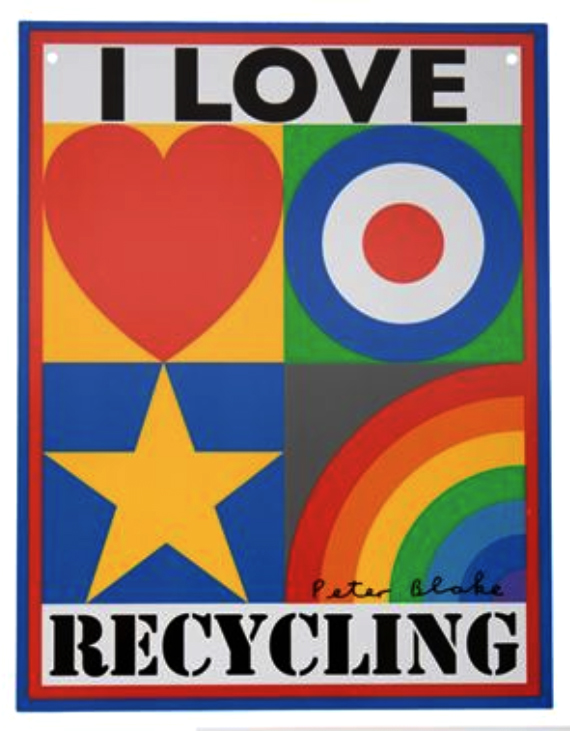
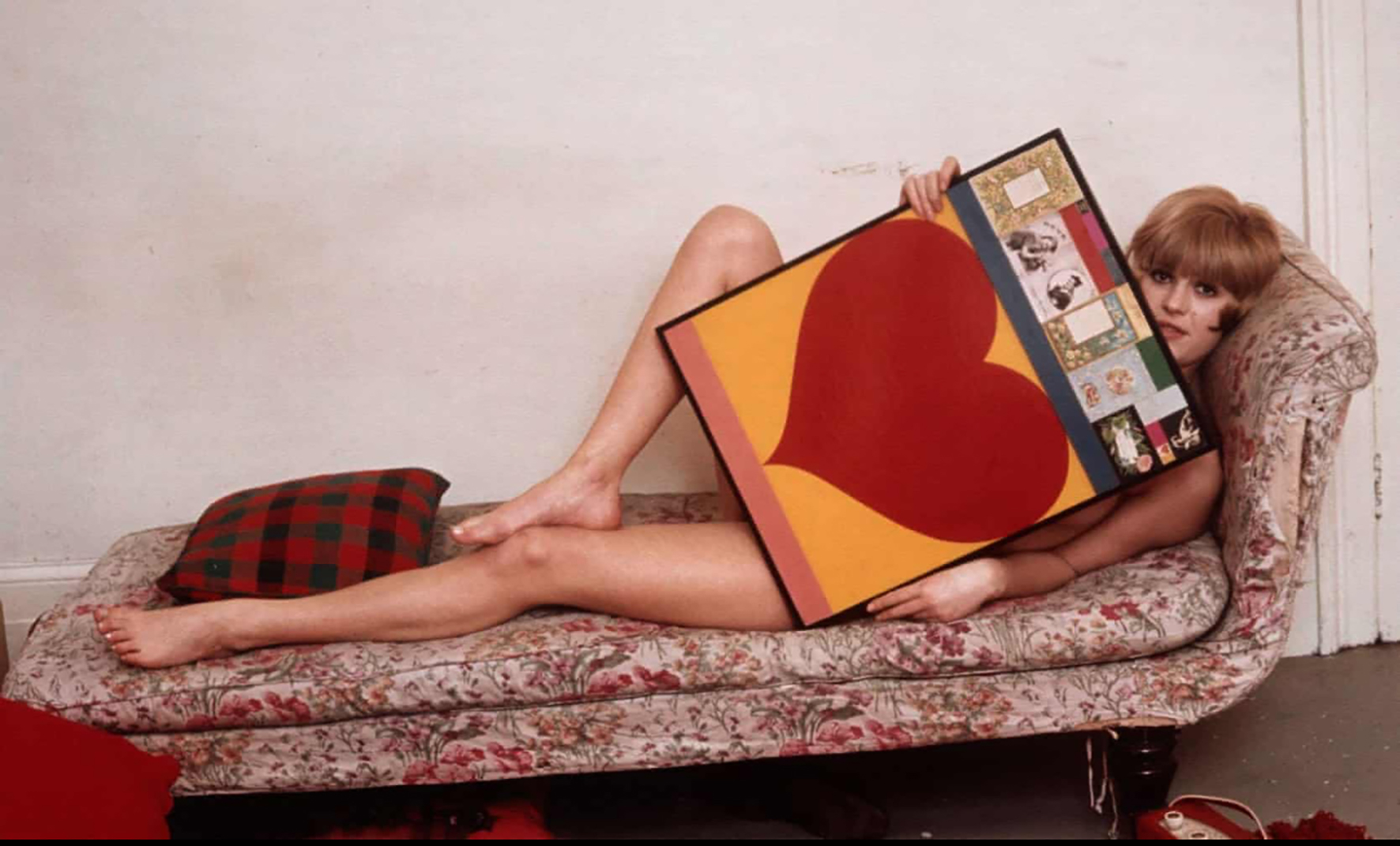
The Band Aid 40 cover is a recycled Blake design from 1959-60. Originally a painting called Valentine (for Pauline Boty) that he gave to his lover Pauline Boty.
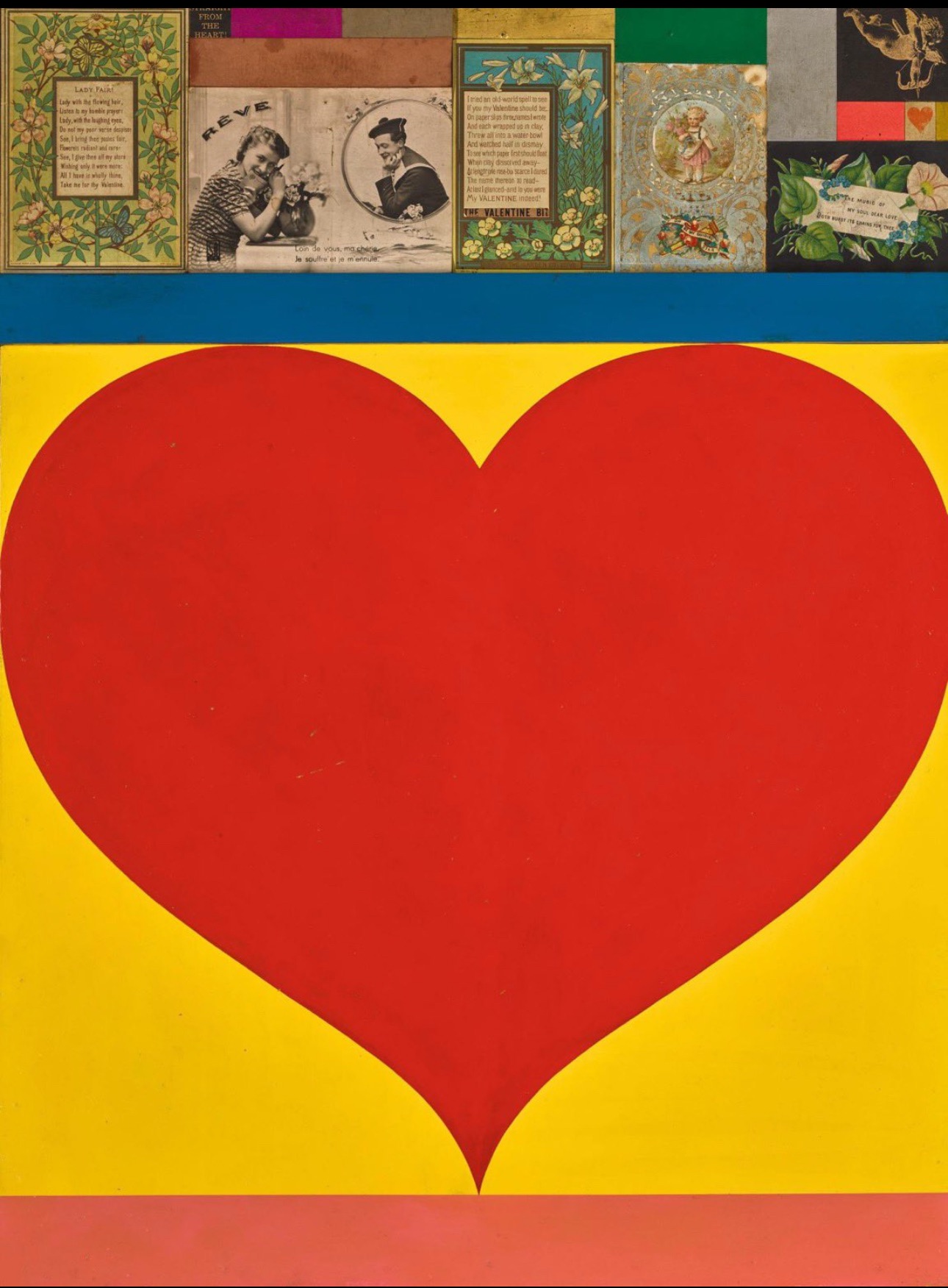
Valentine (for Pauline Boty)

These two CDs covers have what I consider the best examples of Peter Blake’s autograph. I haven’t seen better placed signatures before–and I have many examples in my collection, He usually signs LP covers with smaller signatures, sometimes almost invisible, like on this 1983 album cover.
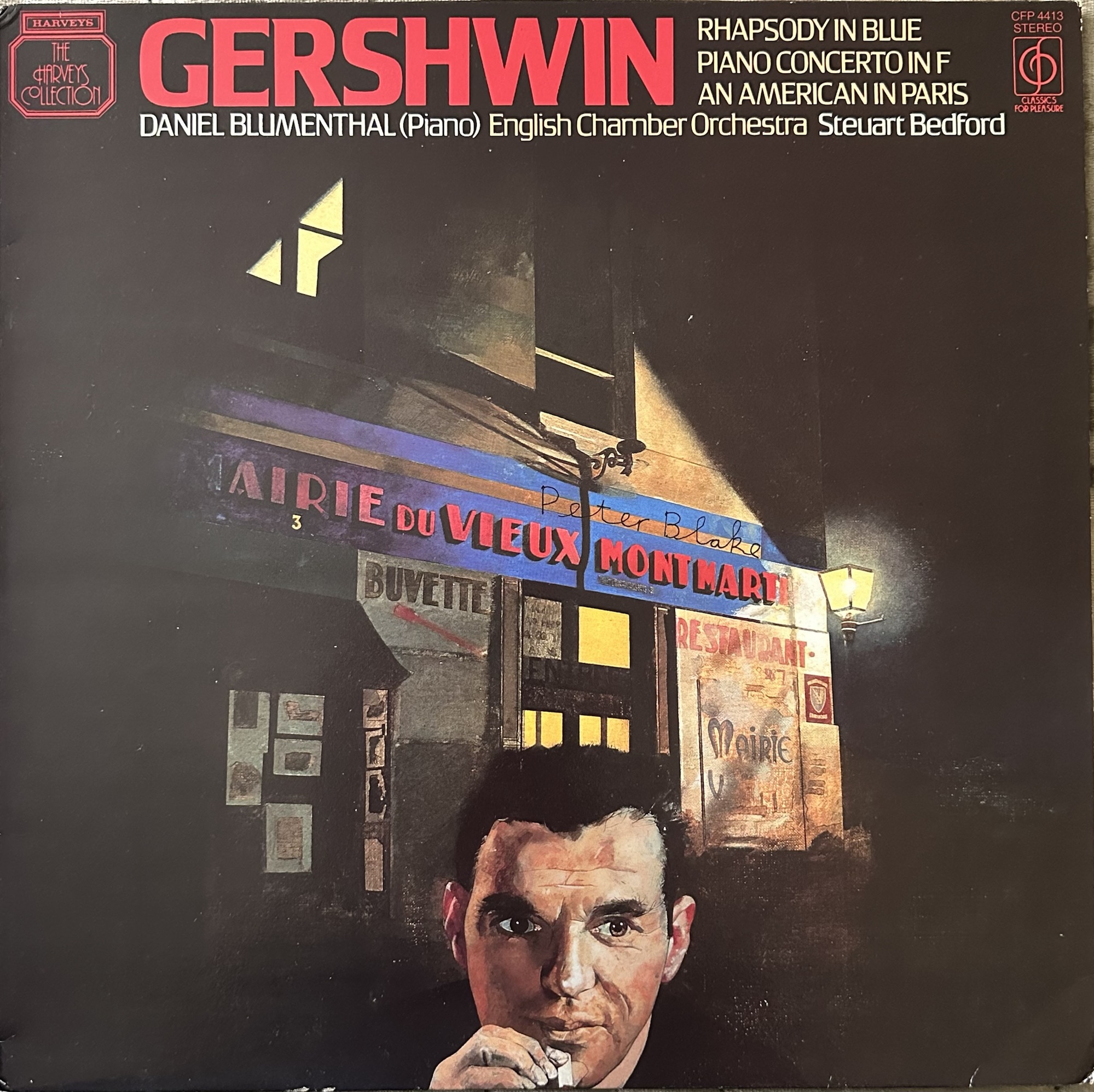
Gershwin – Signed album cover. Blake’s signature is visible just above the “ux Montmartre”

Perhaps the rarest cover with Peter Blake’s art is the 1990 promotional EP I’m Frank by the Manchester band the Fall that was only released in America. How the Fall (or their American record label, Fontana) came to use Blake’s 1981 Nadia painting is a mystery.
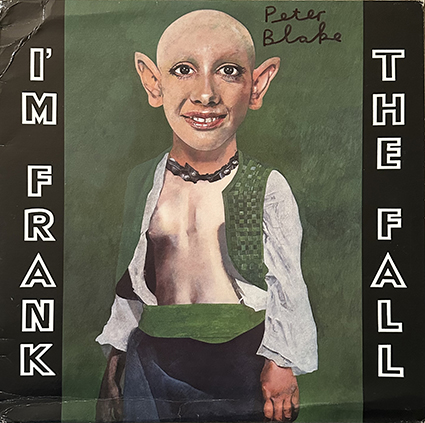
Peter Blake’s 1981 painting Nadia on the cover of the Fall’s “I’m Frank” EP.

And if there is one cover in my Peter Blake that is really special, it has to be my copy of the Beatles’ Sgt. Pepper’s Lonely Hearts Club Band, signed by both designers Jann Haworth and Peter Blake.
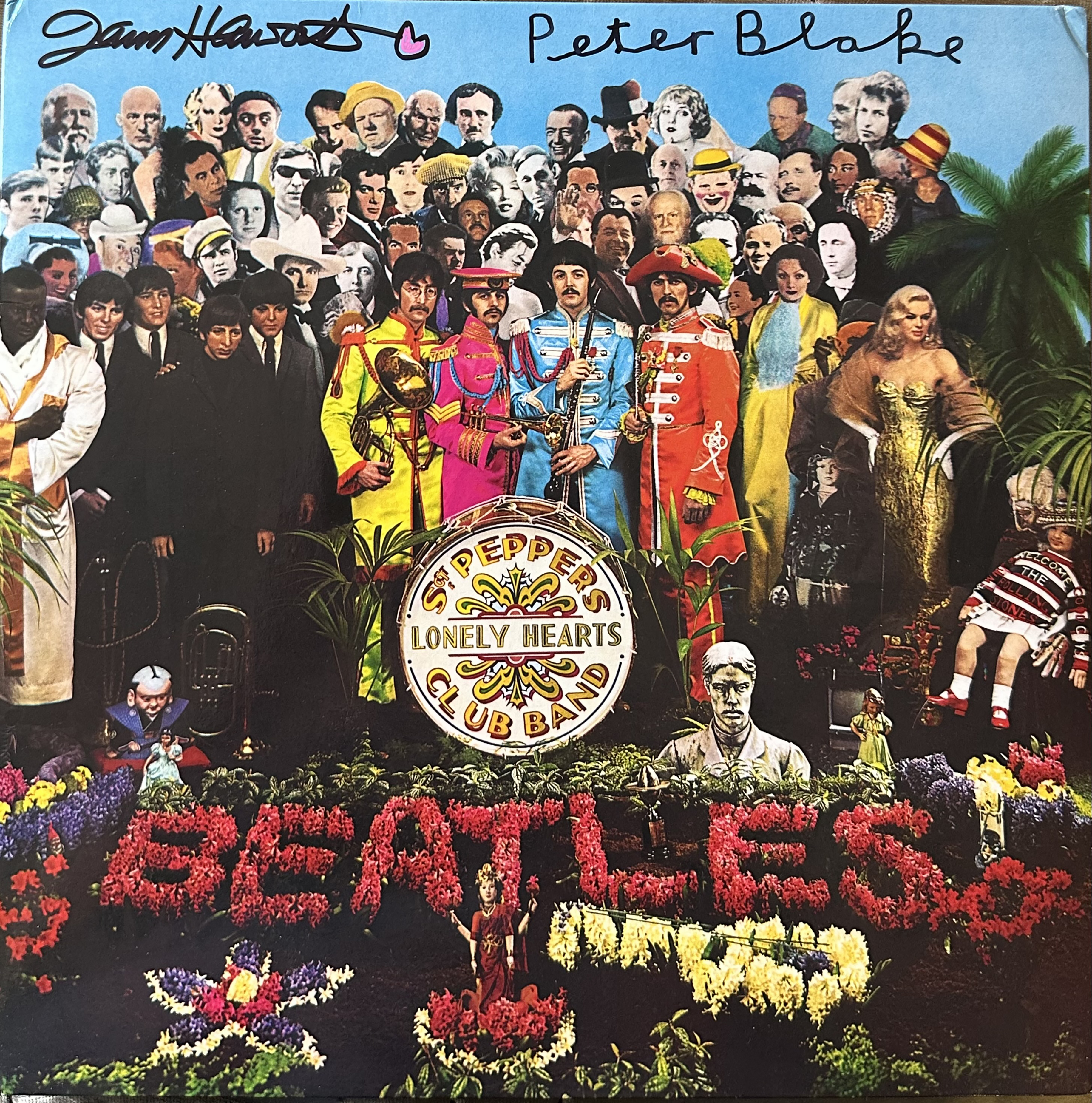
I’ll tell more stories about Peter Blakes record and CD cover art in a book that I hope will see the light of day sometime soon.

A Valentine Lost: Peter Blake’s Pattern of Heartbreak.

When Sotheby’s offered Peter Blake’s painting “Valentine (for Pauline Boty)” for auction in 2019, they described the two artists as “inseparable.” The work sold for £287,500—a significant sum for what appeared to be a simple valentine. But this wasn’t just any love token. It was evidence of a relationship that would shape Blake’s emotional life and set a pattern of loss that would haunt him for decades.

Robert Fraser opened his famous art gallery at 69 Duke Street in London in 1962 and attracted the cream of pop art artists to the gallery’s roster: Richard Hamilton, Derek Boshier, Peter Blake, Colin Self and Jann Haworth. Fraser’s gallery attracted visitors from the world of film, music and art. He was the first to show American pop artists such as Andy Warhol and Jim Dine in London. The Beatles and the Rolling Stones were gallery regulars—Robert Fraser helped Paul McCartney build his art collection.

There was one English pop artist who wasn’t represented by Groovy Bob Fraser. She was Pauline Boty (1938-1966), a polymath: pop artist, poet, radio programme host, actress and dancer. You could have seen her bopping to the music on TV’s “Ready, Steady, Go”. She studied at the Royal College of Art from 1958-61 alongside Peter Blake, David Hockney and Derek Boshier.

Wikipedia describes her as “the heartbreaker of the sixties art scene. Talented and outspoken, she was loved by countless men…” Boty and Blake became inseparable. Between 1959-60, Blake painted a valentine for her, simply titled “Valentine (for Pauline Boty)”.

Peter Blake: Valentine (for Pauline Boty), 1959-60.

There’s Lewis Morley’s famous photograph of Pauline holding the Valentine painting.

Boty and Jann Haworth were the only two women among the pop artists at the time. Haworth, like Blake, was represented by Robert Fraser and had solo shows at his gallery as well as a joint exhibition with Peter Blake, Derek Boshier and Colin Self.But Boty’s romantic life was complicated. She was having an affair with TV director Philip Saville (who was already married) while involved with Blake. Then in June 1963, after a whirlwind ten-day romance, she married literary agent Clive Goodwin. Blake—and Saville—must have been devastated.

Blake’s response was swift. Just one month later, in July 1963, he married the other female pop artist, Jann Haworth, whom he had met at a party while she was a student at the Slade School of Art. Another whirlwind romance. The newlyweds immediately left for an extended honeymoon in California, where Jann’s father, Academy Award-winning art director Ted Haworth, lent them his Stingray sports car. They drove to Malibu listening to the Beach Boys, and Ted got Blake access to a film studio storeroom filled with props from the Elizabeth Taylor film Cleopatra. They were still in California in November when President Kennedy was assassinated.

Pauline Boty’s remarkable artistic and acting career ended abruptly when, in 1965 while pregnant, she developed a malignant tumour. Boty refused abortion and treatment as it would harm the foetus. Her daughter Katy was born on 12th February 1966, and Pauline died on 1st July, aged only 28. The “Valentine” painting passed to her husband Clive Goodwin until his death in 1977. It was later acquired by art collector Muriel Wilson (1933-2018), who donated it to the Pallant House Gallery in Chichester along with many other works from her collection.

Blake and Haworth remained together for sixteen years, founding the Brotherhood of Ruralists in 1975. But in 1979, history repeated itself. Haworth met author Richard Severy and left Blake. Devastated, Blake left Somerset and the Ruralists and returned to London. He was reported to have been unable to work for almost a year after this separation—a testament to how deeply the loss affected him.

When the Valentine painting came up for sale at Sotheby’s in 2019, it was featured in an article titled “Unrequited Love and Peter Blake’s Pop Art Valentine.” But the image had clearly stayed with Blake. Sixty-five years after its creation, it reappeared on the cover of Band Aid 40’s 2024 single “Do They Know It’s Christmas?”—suggesting that his feelings for Boty, and that moment in time, had never entirely left him.

There’s another possible legacy of Blake’s relationship with Boty that art historians may have overlooked. Boty was herself an accomplished collage artist. While the textbooks credit Joseph Cornell and Kurt Schwitters as Blake’s influences in collage, perhaps the woman who was ‘inseparable’ from him during those formative years played a more significant role than history has acknowledged. It wouldn’t be the first time a male artist’s female partner influenced his work without receiving credit.

Blake met artist Chrissy Wilson in 1980, soon after returning to London, and they married in 1987 after his divorce from Haworth was finalized in 1981. They are still together after more than 40 years—perhaps Blake had finally found lasting love.

Haworth and Severy remained together until Severy’s death..