
Sticky Fingers was the Rolling Stones eighth full length U.K. album, released on April 23rd 1971. And when you ask anyone with any interest in record design what record covers did Andy Warhol design the answer will generally be: the Banana cover (The Velvet Underground & Nico) and the one with the zip.
Andy Warhol had the idea to design a record cover with a working zip. He photographed one of his associates’, Jed Johnson ‘s jeans from the waist down to the mid thighs Some say it was Joe Dallesandro, but I disagree). He also photographed someone wearing jeans from the rear. No one is exactly sure who’s rear this was. Once Warhol had designed and photographed the cover images and the underpants hidden under the front cover, Craig Brown put the package together including the inner sleeve. An additional design first was the inclusion of John Pasche’s tongue logo, the first time this appeared anywhere.


The album was released in the United Kingdom with the band’s name over the right hip pocket and the title on the right thigh. In the United States both title and band name were placed on the belt towards the right.
Some people have manged to separate the right edge of the front cover to allow it to open and reveal the underpants beneath and called this a gatefold cover. However, the only true gatefold version was produced in New Zealand in 1973, with the record being inserted from inside the gatefold as opposed to the normal top insertion on all other issues. In addition this cover had a printed, non-functioning zip.


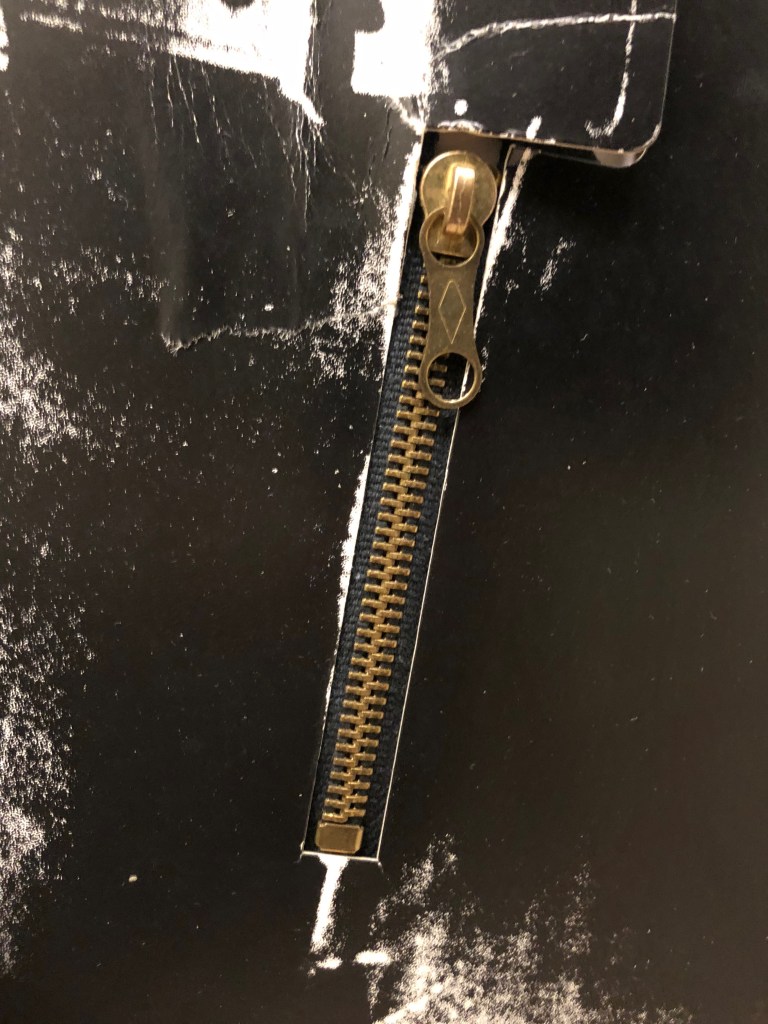
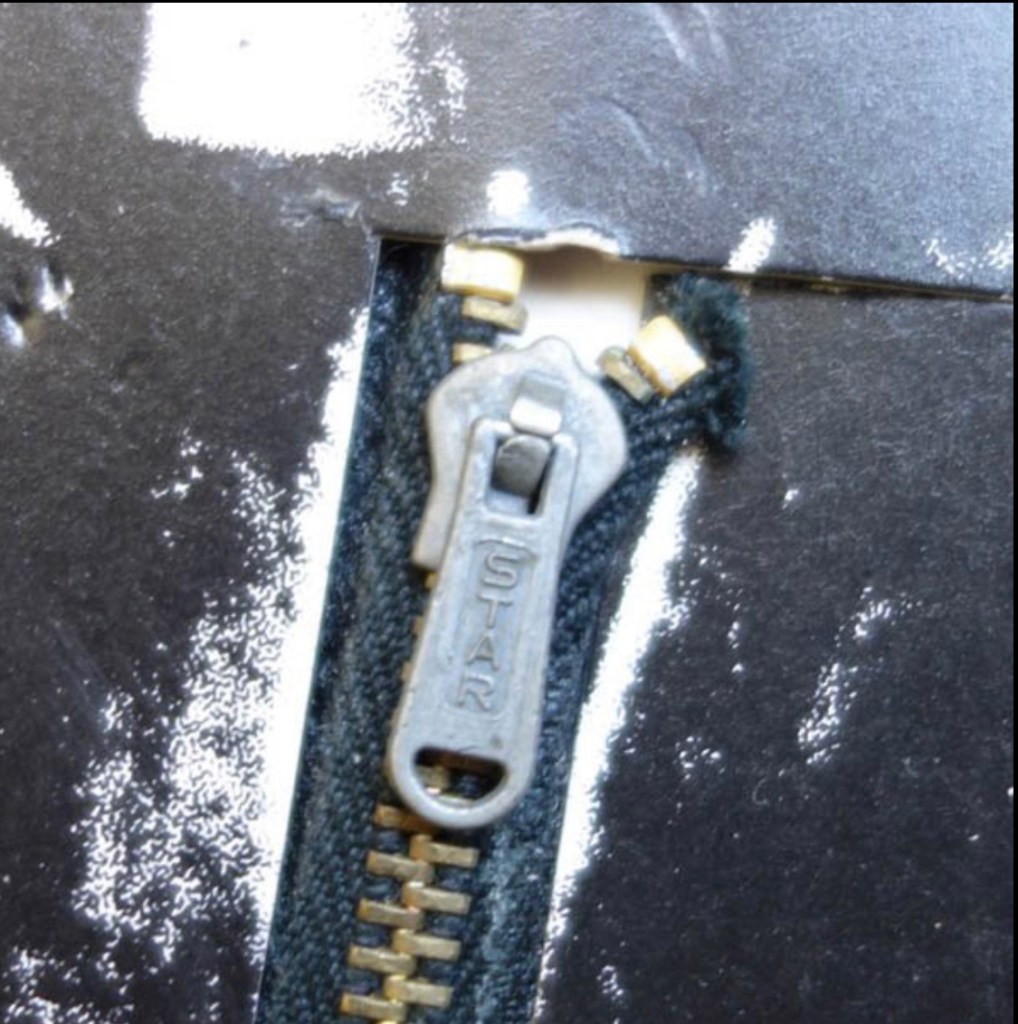
There are variations of the zip, too. The standard zip has a small pull tag. There were a small number of early U.K. pressings with a larger pull tag, the Pan tag (as PAN is inscribed on it), and there is apparently a third variation on the U.K. version with the STAR pull tag. I’ve never seen one of those, but there’s a picture on Discogs.com.
The standard zipper on German pressings of the album had a much larger pull tag, similar in shape and size to the Pan tag.
Several reissues of the Sticky Fingers album have appeared over the years, many of which, like the New Zealand gatefold mentioned above, have had printed, non-working zips. There are a couple of special issues that are worthy of note here: in 2015 Polydor Records released an expanded version as a limited edition double LP with working zip with John Pasche’s tongue design as the zip’s pull tag. In 2020 the company reissued the original album half-speed mastered and pressed on 180g vinyl, but the cover of this album had a printed, non-functioning zip.


There a re myriads of variations of the Sticky Fingers cover released in other countries. I do not collect these but I do have all the variations described in this short post in my collection, bar the U.K. PAN zip pull version. I am not sure I need to include that as well.
 recordart
Good work, Doc! Somewhen the zipper on the cover of my “Sticky Fingers” album began to stuck.
That’s tough! Actually I don’t really think the zips were meant to be opened… Come to think of it, I’m Not sure I ever tried to open the zip on any of my copies…
I bought the “Sticky Fingers” album with the original zipper for 20 bucks when it came out. Today that’s art. For the famous banana cover of Velvet Underground & Nico from 1967, Warhol used a similar trick – you could “peel” the banana in the first editions of the album (“peel slowly and see” was small on the cover).
There are several versions of The original VU & N album with peelable banana. The problem with the original cover was caused by Eric Emerson demanding a fee for allowing his face to appear on the back cover (the so called ’torso’ cover). Since Emerson died it has been possible to reissue the album both with a peelable banan AND the original ’torso’ back cover.
All the best
Richard
Thanks for you information!
Would it be a bit creepy to get out the Greek pressing (with zipper) and played with it? (Asking for a friend).
Hi! Well I don’t know what to tell your friend. I don’t know anything about the Greek pressing. Discogs has pictures, but I don’t see anything to play with (except the record).
I just bought a A4/B4 first German pressing with a YKK pull tag… discogs and other websites show rounder and bigger pull tags. wandering if it’s ok or maybe the cover comes from another pressing…
What a brilliant question! I know very little about German pressings of the Sticky Fingers album and have only seen two types of zip pull. I can’t say which belongs to which pressing. Sorry.
There must be a real expert out there somewhere who can answer your question. Good luck!
This album came out when I was 13 years old. My friend’s hippie mom took us to the record store to look for other albums, I don’t remember which albums, but probably Black Sabbath or Led Zeppelin or both. A Sticky Fingers album with the shrink wrap removed was on the featured display at the end of a record rack. My friend’s mom picked up Sticky Fingers, unzipped the zipper and in a rather loud voice said “What a gyp! I don’t get to see his dick?”
Ha ha!
I’ve been looking through my copies of Sticky Fingers (I have six or seven) and found I have a rare(ish) first pressing. Perhaps I’ll get around to posting somthing about the various issues sometime.
Actually, part of this article is incorrect. The “tongue” that appears on this album is NOT John Pasche’s logo – it is, in fact, Ernie Cefalu’s logo.
The zipper tag on mine says “swift” and it’s a working zipper
Interestingly, in Spain, the original cover was censored by the Franco regime.
They tried their best to explain to the Ministry’s censorship department that there was nothing wrong with it, but they insisted on the intention and lust hidden behind the photograph. After explaining the problem to Atlantic, through whom Hispavox received distribution for Rolling Stones Records, they decided to contact the band’s office. A few weeks later, a huge transparency arrived with a composition done by John Pashe and Phil Jude.” The illustration devised by the two was composed of amputated female phalanges in a can of Fowlers West India Treacle syrup, which, in Pashe and Jude’s opinion, contained the thickest liquid molasses. But it looked like blood, which, in my opinion, resulted in a gore effect, indicating that for Franco, sex was out-of-limits while violence was ok. “They gave me free rein to design whatever I wanted on the condition that I was quick so as not to miss the album’s release date,” Pashe would reveal years later.
Also the track “Sister Morphine” was censored. In a handwritten note by censor Gregorio Solera and signed in Madrid on April 28, 1971 under the seal of the General Directorate of Popular Culture and Entertainment of the Ministry of Information and Tourism one could read: “We estimate that all of these [songs] are authorizable except the one titled Sister Morphine, which is a chant to drugs.” Instead, a live version of Let It Rock (released by Chuck Berry in 1960 through Chess Records) was included, which, while it ruthlessly destroyed the configuration of an album whose song sequence had been long thought out, turned the Hispanic edition of Sticky Fingers into an even more coveted gem for collectors.
Thanks, Manfred, for this fascinating piece of history. I knew about the Spanish cover but hadn’t heard of the substitution of the Sister Morphine track. I don’t have a copy of the Spanish version as the cover isn’t by Andy Warhol.